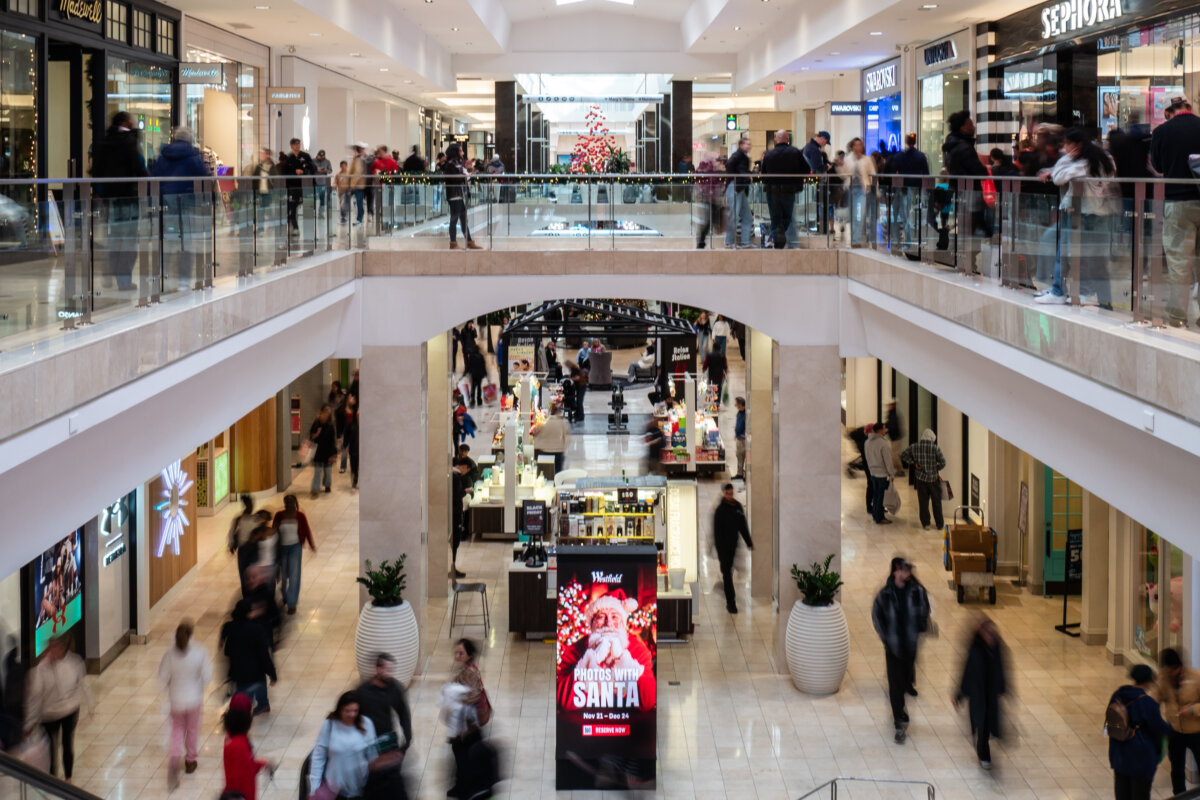

Retailers are lowering prices and focusing on more personal advertising as consumers face difficult economic conditions and heightened concerns about affordability.
Retailers such as Walmart, Best Buy, Target, and Macy’s are already courting shoppers with discounted gifts and targeted campaigns emphasizing the emotional appeal of gift-giving.
Overall, holiday retail sales are projected to increase in 2026 by 4.2 percent over 2025 totals, according to the National Retail Federation. Total spending is expected to reach $1.01 trillion between November and December, up from $972 billion in 2025.
Deloitte estimates that retail spending from November through January will reach between $1.70 trillion and $1.71 trillion, an increase of 4 percent to 4.8 percent from the previous year.
Yet, retailers may still face difficulty competing for shoppers’ attention as they feel financial pressure this season.
In an October Drive Research survey of 1,405 U.S. adults, 44 percent of holiday shoppers said they expected to spend less this year, up from 33 percent in 2025. Among those planning to cut back, 76 percent cited rising living costs as the reason they are reducing spending.
A Sprout Social survey of consumers in the United States, the UK and Australia found 56 percent plan to reduce holiday spending due to economic conditions.
Cost-Conscious Shoppers
The holiday shopping season follows midterm elections in which voters indicated concern about prices and the economy.
Consulting firm Teneo called it a K-shaped holiday economy, with higher-income households maintaining spending while lower-income families expect to spend less.
A Teneo survey of more than 1,700 U.S. adults found median expected spending of $680 per household, down from $750 in 2025.
The survey said households earning less than $50,000 per year were expecting to spend $300 during the holidays, down from $400 in 2025. Middle-income families are expected to spend $800, which is down 20 percent from 2025.
Higher-income households will spend about the same in 2026 as they did in 2025. Those earning $150,000 or more expect to spend $2,000.
The NRF survey, conducted by Prosper Insights & Analytics, found more than half of consumers said the economy will shape their holiday budgets. Of those, 31 percent plan to comparison-shop online more often.
Consumer sentiment remains low, although it has shown signs of improvement. The University of Michigan’s preliminary November reading rose to an index of 51, up from 48 in October. It is the highest since August. A final November reading is expected on Nov. 20.
A survey by logistics company Kenco found that 18 percent of North Americans plan to spend less, down from 28 percent last year. The survey said 59 percent named pricing and inflation as their biggest worry heading into the holiday shopping season.
Adobe expects online sales to hit record numbers this year with $275.1 billion spent between Nov. 1 and Dec. 31, up 6.7 percent from 2025.
NRF President and CEO Matthew Shay said in a press release, “Retailers are prepared to meet that demand with competitive prices, value and choices for every budget.”
Earlier Ads, Lower Prices
Retailers are trying to win over budget-minded shoppers even before Black Friday and Cyber Monday.
The NRF survey found that 64 percent of shoppers are likely to wait for Thanksgiving weekend to do most of their holiday shopping. Separately, 43 percent planned to begin browsing and shopping before November.
A Sprout Social survey said 69 percent of those surveyed were worried about tariff-related price increases and 36 percent plan to shop earlier to avoid possible price hikes.
Adobe expects online sales in October to increase 8 percent over 2025, reaching $95.8 billion thanks in part to Amazon’s Prime Big Deal Days that ran from Oct. 6 to Oct. 7.
Walmart is hosting three major shopping events: Nov. 12 to Nov. 15, Nov. 23 to Nov. 29, and Nov. 30 to Dec. 2, according to a company press release.
Walmart said the events target consumers looking to save money as they finish their holiday shopping, with thousands of gifts under $20.
Most new holiday items at Target cost $20 or less, including thousands priced at $5 and under. The retailer also announced luxe-for-less gifts, including 100 percent cashmere, pajamas, and decor.
Retailers are offering lower prices to help offset costs after the Supreme Court struck down tariffs President Donald Trump imposed under the International Emergency Economic Powers Act.
Walmart received $2.9 billion in refunds and delivered more than 11,000 rollbacks during the quarter ending in July. Target said it will use its $994 million in refunds that led to lower prices.
Selling Feeling Over Discounts
Teneo says the definition of value is becoming more personal.
“Across the board, value matters, but what constitutes value is increasingly personal, spanning price, quality, convenience and experience,” Dan Stolarski, Teneo’s head of U.S. retail, wrote in the firm’s holiday outlook.
Deloitte’s Natalie Martini, U.S. retail and consumer products leader, said shoppers still want to make the holidays special for friends and family “while also making deliberate choices about how they spend.”
Experts told The Epoch Times a more personal focus could give retailers an edge in this economy, with some leaning harder on emotions as shoppers prepare to spend.
Melissa Alcruz, chief marketing officer at Mr. Short Sale, has 35 years of experience as a branding and marketing executive in leadership positions with NBCUniversal, USA Network and MTV.
She highlighted two campaigns that take different approaches to holiday advertising.
Alcruz said Nordstrom is selling the feeling, not the price tag.
“In 2025, Nordstrom’s ‘Oh, What Fun!’ holiday campaign featured Kyle MacLachlan in a whimsical, entertaining approach to holiday shopping. The emphasis was on the fun and excitement of finding the perfect gift,” Alcruz said.
“For 2026, Nordstrom has taken a different direction with its ‘Let’s Dance’ campaign, set to David Bowie’s music. The emphasis has shifted toward family, connection, shared experiences and the joy of being together.”
The strategy, Alcruz said, was interesting coming from an upscale retailer.
In contrast, Alcruz said Walmart’s 2026 campaign is about making affordability feel good.
Walmart’s “Who Knew?” campaign had actor Walton Goggins as the Grinch in 2025, using humor and nostalgia to reinforce the retailer’s emphasis on value, Alcruz said.
In 2026, Goggins is Ebenezer Scrooge alongside the Muppets in “A Who Knew Caro” commercial, Alcruz said.
Alcruz said Walmart already has an advantage with a strong association with low prices. She said the campaign reinforces the idea that shopping there doesn’t mean compromising on the holiday experience.
“Nobody wants to spend the holidays being constantly reminded of what they can’t afford. People want to feel good about the things they can afford. Walmart understands that humor and nostalgia can deliver a message about value without making the whole conversation about money,” Alcruz said.
Target is also streamlining the buying experience with AI tools to help shoppers find what they want faster. Ask Target will help shoppers find gift inspiration and narrow their choices with more ways to discover the perfect gift.
While most companies are touting lower prices on thousands of gifts, one expert said leaving pricing out of ad campaigns is a risk worth taking this year.
Andie Howard, founder of Blonde Girl TV Productions, said companies like Amazon got their advertising right by leaving prices out of their advertising campaign and going for an emotional hook.
“Prices change by the hour, and any shopper can find a lower one in seconds on eBay or Poshmark, so a price in a commercial doesn’t win loyalty. Emotion does. Price messages work better in the cart than in the commercial,” Howard said.
“The real affordability war is happening inside these retailers’ own websites, in the sponsored listings and deal placements shoppers see right before they buy.”
If a commercial is shouting “lower prices” throughout, it can actually be a harder sell for retailers to draw shoppers in, Howard said.
Whether the dozens of ad campaigns actually work is up to the consumer, Alcruz said. And good branding isn’t just about convincing someone to make a purchase. She said it’s about creating a relationship that makes them want to choose you again.
Despite the different approaches retailers are taking, Alcruz said consumers are ultimately looking for more than the lowest price.
“I think one of the biggest mistakes marketers can make is assuming that being cost-conscious means a consumer is exclusively interested in finding the cheapest possible product,” Alcruz said. Price and value aren’t necessarily the same thing.