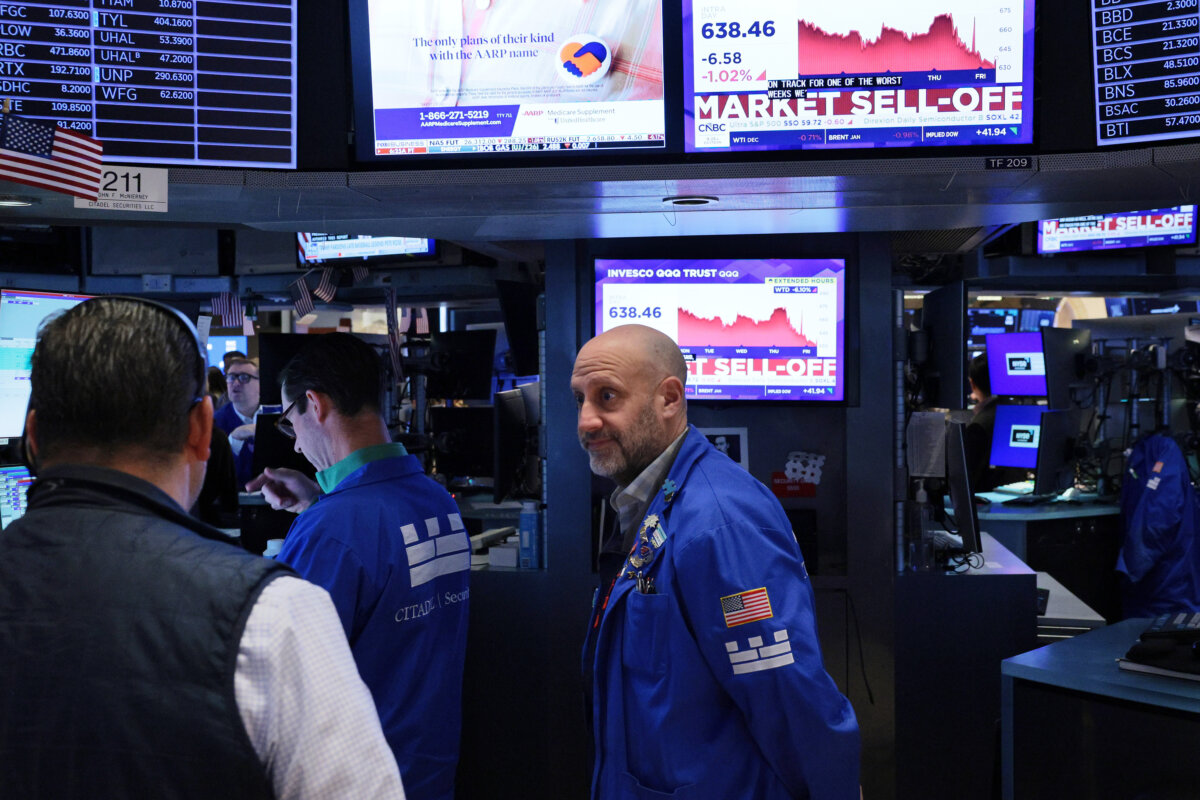

New inflation data and new tariffs are putting pressure on U.S. stocks ahead of Thanksgiving.
The tech-driven Nasdaq Composite Index fell about 1,000 points, or around 4 percent, to below 23,000 on Nov. 25. It is down about 2 percent this year.
Shares of Nvidia and Claude maker Anthropic slumped around 6 percent and 4 percent, respectively.
Blue-chip stocks also took a hit, with the Dow Jones Industrial Average falling about 700 points, or more than 1 percent, to below 50,000.
The broad-market S&P 500 tumbled about 200 points, or around 2.6 percent, as it struggled to hold 7,000.
Despite intense Wall Street volatility in recent weeks, both indexes have held on to this year’s gains of more than 2 percent.
“It’s odd to think that a strong labor market (and strong consumer) is the greatest threat to technology stocks at the moment,” Jamie Cox, managing partner for Harris Financial Group, said in a note emailed to The Epoch Times.
GDP growth was revised up for the third quarter, from 3.4 percent in the initial estimate to 4.3 percent, according to the Bureau of Economic Analysis. This was driven by positive changes in business investment and consumer spending.
Unemployment claims also tested their lowest levels in almost six decades again this year.
“Any data which support a higher Fed Funds rate ironically puts a lid on the major indices,” Cox said. “The economy is super strong right now, but the Fed is about to kill it.”
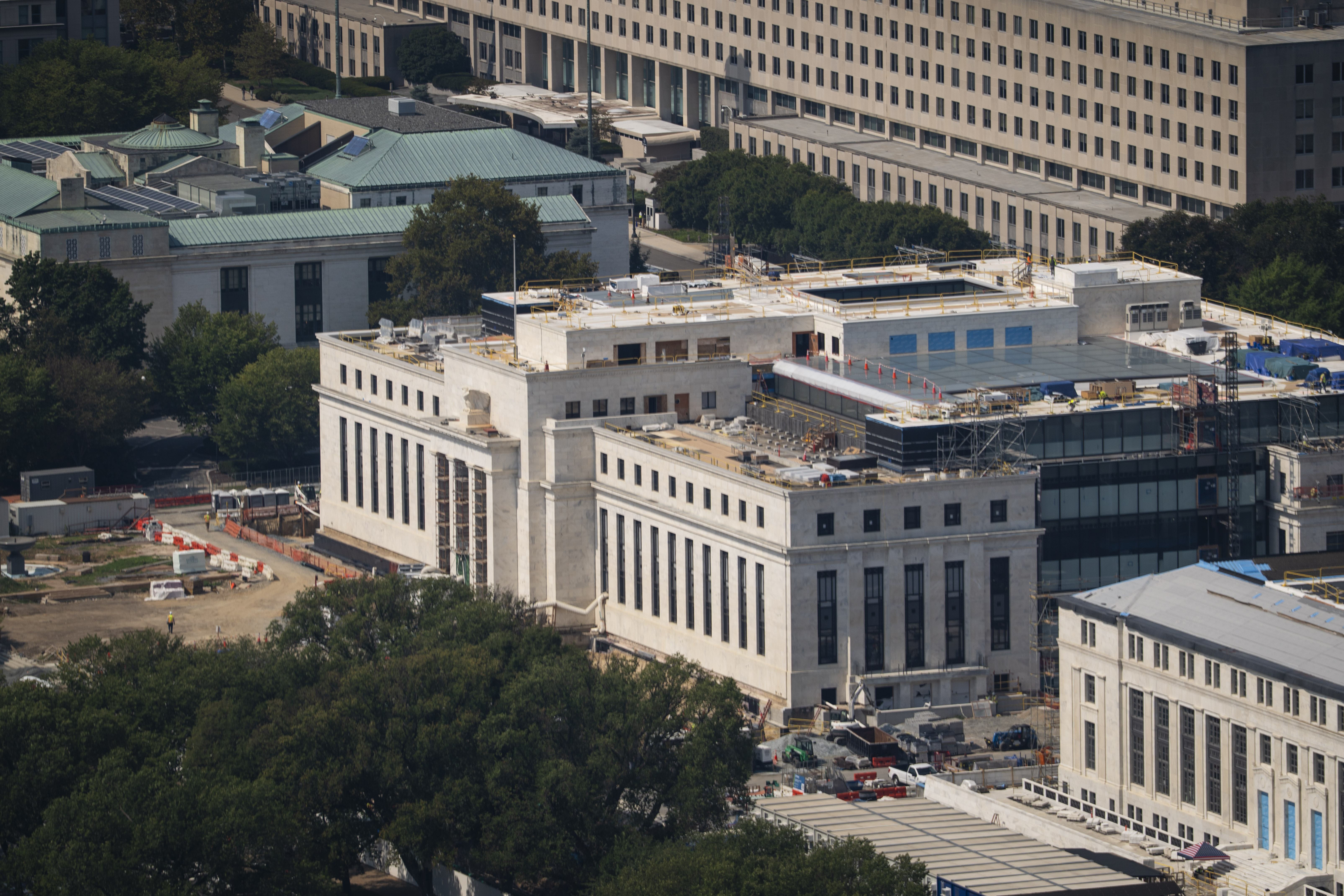 The Federal Reserve in Washington on Sept. 17, 2026. (Madalina Kilroy/The Epoch Times)
Gold plunged 3 percent, while silver declined more than 5 percent. Industrial metals also sank, with copper, palladium, and platinum falling between 2 percent and 5 percent.
Cryptocurrencies continued to sink midweek, with bitcoin and ether sliding about 2 percent.
Traders sought shelter in U.S. Treasury bonds as yields were mostly in the red.
The benchmark 10-year yield—a key rate that influences a wide range of business and consumer lending products—fell to around 4.8 percent. The 30-year also dropped to 5.22 percent.
The U.S. Dollar Index—a gauge of the greenback against a weighted basket of currencies—held steady, keeping its year-to-date gain at nearly 6 percent.
PCE Inflation, New Tariffs
Financial markets digested October’s personal consumption expenditures (PCE) price index. While a lot has happened on the energy front this month, traders widely expect the Federal Reserve to raise interest rates.
Last month’s annual PCE inflation rate rose to 3.8 percent—in line with economists’ expectations—from an upwardly adjusted 3.7 percent.
Excluding food and energy, the 12-month core PCE inflation rate climbed to a higher-than-expected 3.3 percent, from 3.1 percent in September.
On a monthly basis, headline and core PCE inflation each rose 0.3 percent, matching the consensus forecast.
“The question is no longer whether the Fed will raise rates at its next meeting on Dec. 8–9. It will,” Joseph Brusuelas, chief economist at RSM US, said in a note.
“The more important is if the Fed will raise rates in January.”
Futures market data show a 92 percent chance of a quarter-point rate hike next month, according to the CME FedWatch Tool. As for January, traders are roughly split on whether the Fed will follow through on a third increase since September.
Communications from the U.S. central bank—interviews, speeches, and meeting summaries—indicate that further policy tightening will likely be warranted.
A higher-for-longer environment could be a major headwind for the U.S. stock market, especially as more investors grow fearful of Big Tech’s spending spree and debt.
“There’s the massive spending needed to build AI infrastructure, the pressure on free cash flow at hyperscalers, … and the need for these companies to raise money through equity or bond issuance,” Ipek Ozkardeskaya, senior analyst at Swissquote Bank, told The Epoch Times in an emailed note.
Rising borrowing costs are additional threats to the artificial intelligence-fueled market climate, she added.
Markets were under further strain after the White House unveiled a new suite of tariffs targeting 14 major U.S. trading partners, including China, the European Union, and Japan.
The new proposed tariff rates, unveiled after a Section 301 trade investigation that began earlier this year, range from 15 percent to 35 percent.