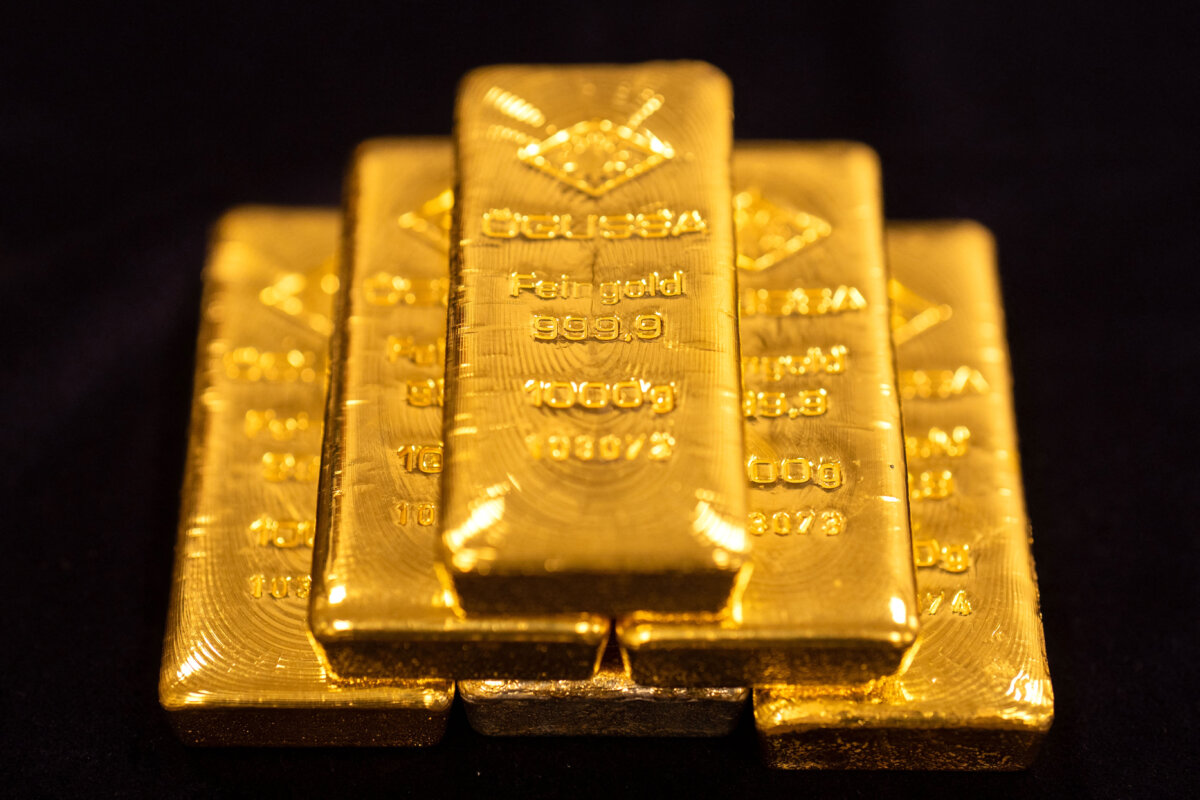

Gold prices hit the lowest level in more than 14 months amid concerns about interest rate hikes and the equity market selloff.
Spot gold opened at about $3,622 per ounce on Friday and closed at about $3,538, down about 2.3 percent from the open. Prices were last at this level in early September 2025. Gold has fallen more than 18 percent so far year to date.
Gold declined for every single trading day this week, with the largest drops occurring on the last three days beginning Wednesday.
Gold and interest rates typically have an inverse relation—when interest rates go up, gold prices can decline. Minutes of last month’s Federal Reserve meeting released Wednesday showed that almost all Fed officials expect further interest rate hikes ahead in order to contain inflation. Officials had kept rates unchanged in a range of 3.75 to 4 percent last month.
The 12-month inflation rate remained above the 3 percent level from March through September, the latest available. The next Fed meeting is scheduled for December.
“The shift in the macro backdrop has weighed on gold, with higher rate expectations and a stronger dollar reducing its appeal. The equity sell-off may also have prompted some investors to sell gold to raise cash,” Ewa Manthey, commodities strategist at ING Bank, said in a Nov. 20 post. “We expect gold to remain vulnerable while rate expectations and the dollar remain elevated.”
The U.S. dollar index strengthened this week. A stronger dollar can make precious metals such as gold, which are priced in dollars, more expensive for buyers using other currencies. This can dampen gold demand and put downward pressure on prices.
In the U.S. equity market selloff, the Dow Jones Industrial Average declined by 1.93 percent on Friday, and the NYSE Composite Index fell by 2.08 percent. The Dow fell by over 8 percent this week, with the NYSE Composite Index declining by more than 7.5 percent.
The equity selloff was driven by factors such as fears of anti-AI policies in Washington after Democrats’ midterm wins, Anthropic’s initial public offering marginally reducing liquidity for other tech stocks, and the Fed’s hawkishness on interest rates, Dan Ives, senior managing director at Yorkville Ives, said in a Nov. 20 post on social media platform X.
Gold prices, influenced by these factors, registered a decline on Friday and for the week.
Gold and Equity Selloff
Gold usually acts as a safe haven investment, attracting investors during uncertain times.
The fact that gold prices declined while equities were being sold off showed that investors were more concerned about issues such as monetary policy, Ole Hansen, head of commodity strategy at Saxo Bank, wrote in a Nov. 20 post. Investors used gold as a source of cash to cover losses in other assets, he wrote.
Still, the long-term case for gold had not weakened as much as prices had, Hansen said, citing central bank diversification as an “important source of underlying demand” and resilient gold ETF holdings.
Global central banks publicly reported 228 metric tons of net gold purchases through September this year, which is 7 percent lower than the same period in 2025, according to a Nov. 4 report from the World Gold Council.
Poland led with 123 metric tons through September, followed by China at 103 metric tons. Turkey was the largest seller with 82 metric tons in net sales, followed by Russia with 62 metric tons.
For the most recent third quarter, gold ETFs reported net inflows, reversing the outflows seen in the second quarter. “The inflow seemed to be driven by mounting concerns over fiscal sustainability and inflation, among other things,” according to a Nov. 3 report from the Council.