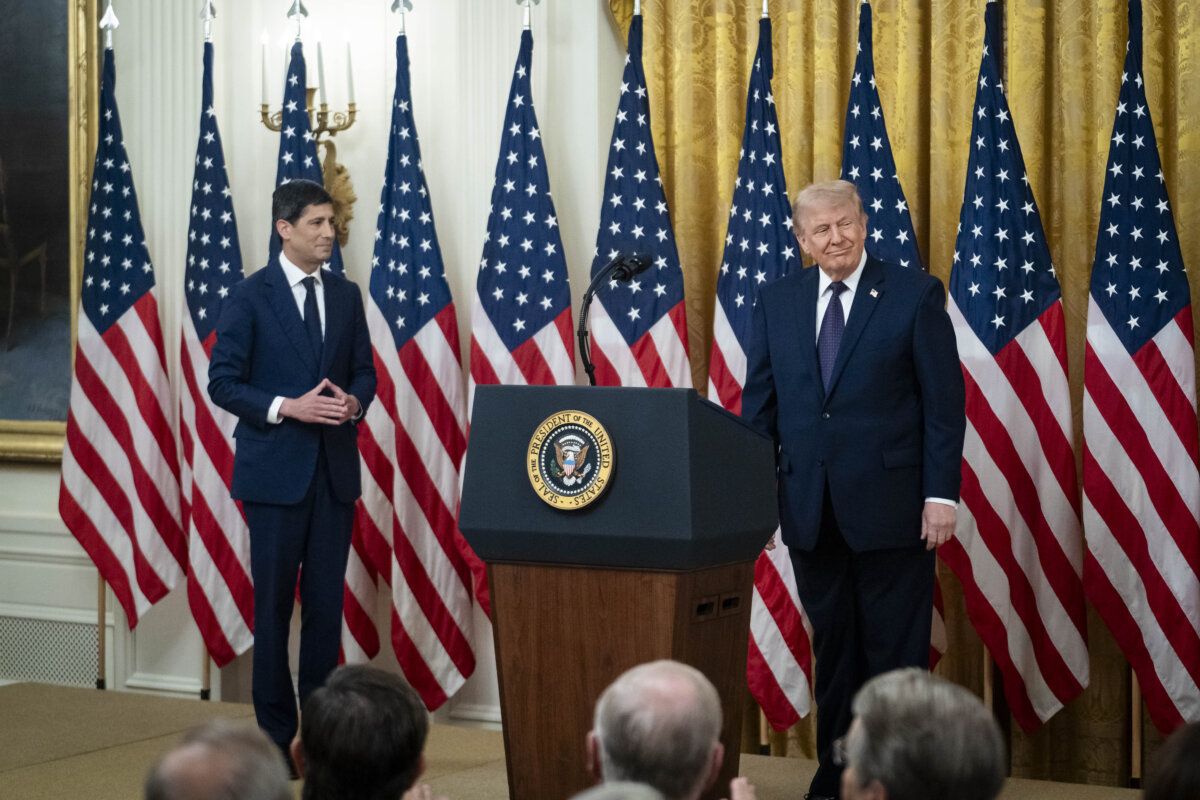

President Donald Trump said that the Federal Reserve should lower interest rates, arguing on Nov. 20 that they were high because the central bank was “very political.”
Financial markets widely expect the Fed to raise interest rates by a quarter point at next month’s policy meeting, and officials are anticipating more rate hikes heading into 2027.
But the president thinks the Fed should not be tightening monetary policy under current economic conditions.
“Interest rates are too high because we have a very political Fed, and I’m not blaming the chairman, by the way,” Trump told reporters on Nov. 20. “I’m blaming the fact that we have a very political Fed.”
Trump said the central bank raises rates after positive economic data. “It should be the opposite,” he said.
Chairman Kevin Warsh and his colleagues voted to follow through on the Fed’s first rate increase in more than three years in response to elevated inflation.
The benchmark federal funds rate—a key policy rate that influences business and consumer borrowing costs—currently sits in a range of 3.75 percent to 4 percent.
Trump has often spared Warsh criticism, noting that his pick to lead the central bank has to deal with his colleagues.
Consumer prices climbed in October, but early estimates suggest a slowdown in November amid falling energy costs.
Recent comments from Fed officials and minutes from October’s meeting suggest officials are planning for further tightening in the coming months.
The Fed will hold its next two-day meeting on Dec. 8 and Dec. 9.
Trump, going back to former Chairman Jerome Powell, has repeatedly called for lower interest rates.
Days before the September Federal Open Market Committee meeting, Trump threatened to halt commerce with countries that have a trade surplus.
“Without the United States agreeing to allow them their big surpluses, and we could stop that immediately, they would no longer be considered financially elite!” he said in a Sept. 4 Truth Social post.
“Lower the rate, or I’ll stop trading with countries with which we have a deficit.”
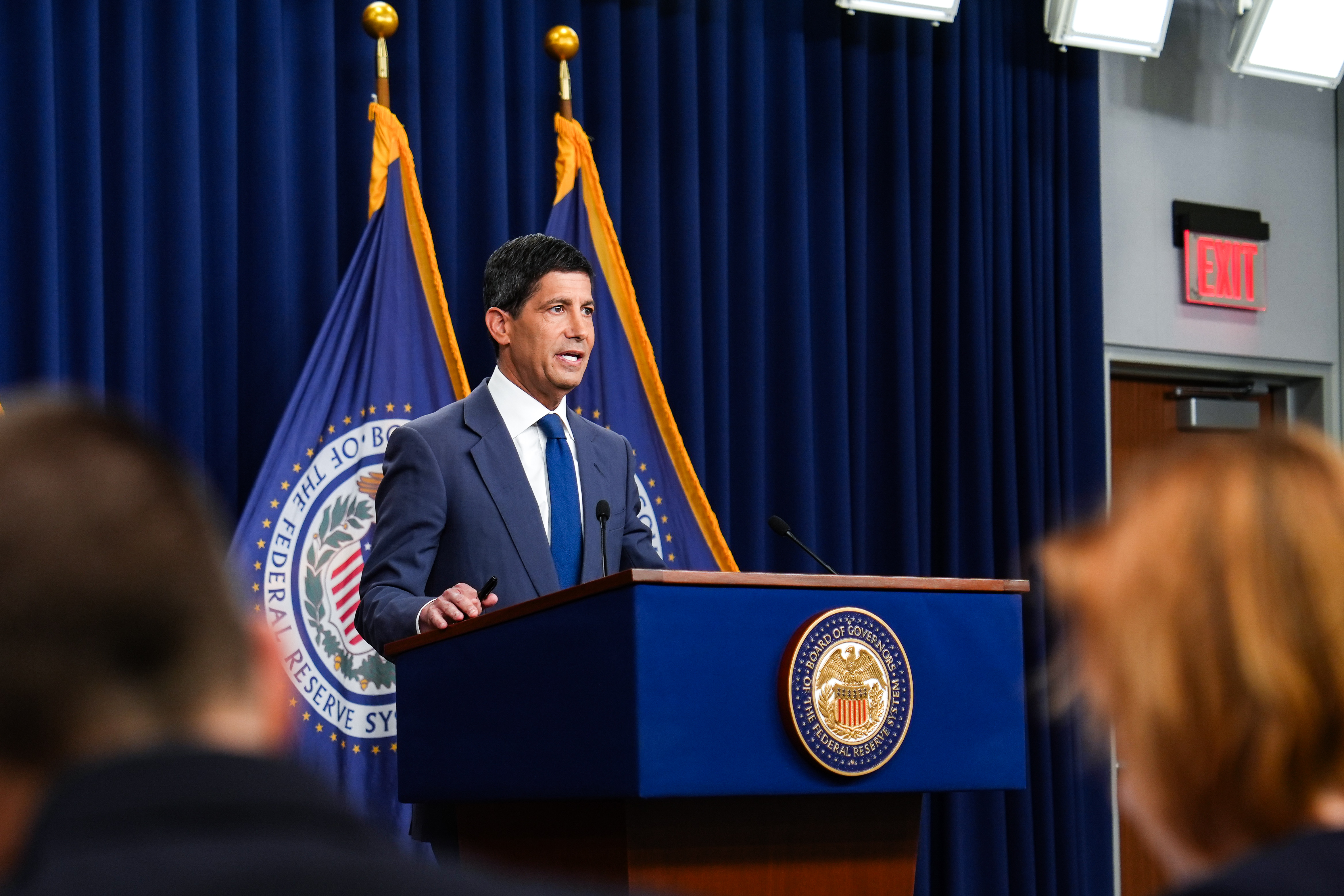 Federal Reserve chairman Kevin Warsh speaks during a press conference in Washington on July 29, 2026. (Madalina Kilroy/The Epoch Times)
Meanwhile, in remarks to the media on Friday, he said that if the Fed lowered rates, the United States would bolster its credit and achieve greater economic growth of “15 or 20 percent, not 4 percent.”
The U.S. economy expanded at an annualized rate of 3.4 percent in the third quarter, from 2.2 percent in the second quarter. Looking ahead to the final three months of 2026, the Atlanta Fed’s GDPNow Model projects 3.2 percent growth (as of Nov. 18).
Paying Off the Debt
The president also suggested it would improve the federal government’s fiscal health, arguing that cutting interest rates would help the United States “pay off the debt very rapidly.”
“That’s the way it should work. But we do it in reverse,” he said.
The Congressional Budget Office, a nonpartisan budget watchdog, forecast last month that the U.S. government will spend about $20 trillion in interest on the national debt, representing around $200 billion per month by 2036.
In fiscal year 2026, the United States paid more than $1 trillion in interest on the debt, one of the largest budgetary items.
The national debt is currently above $40 trillion.
The new Congress is set for another debt ceiling showdown as the federal government reaches the $41.1 trillion limit set by the One Big Beautiful Bill Act.