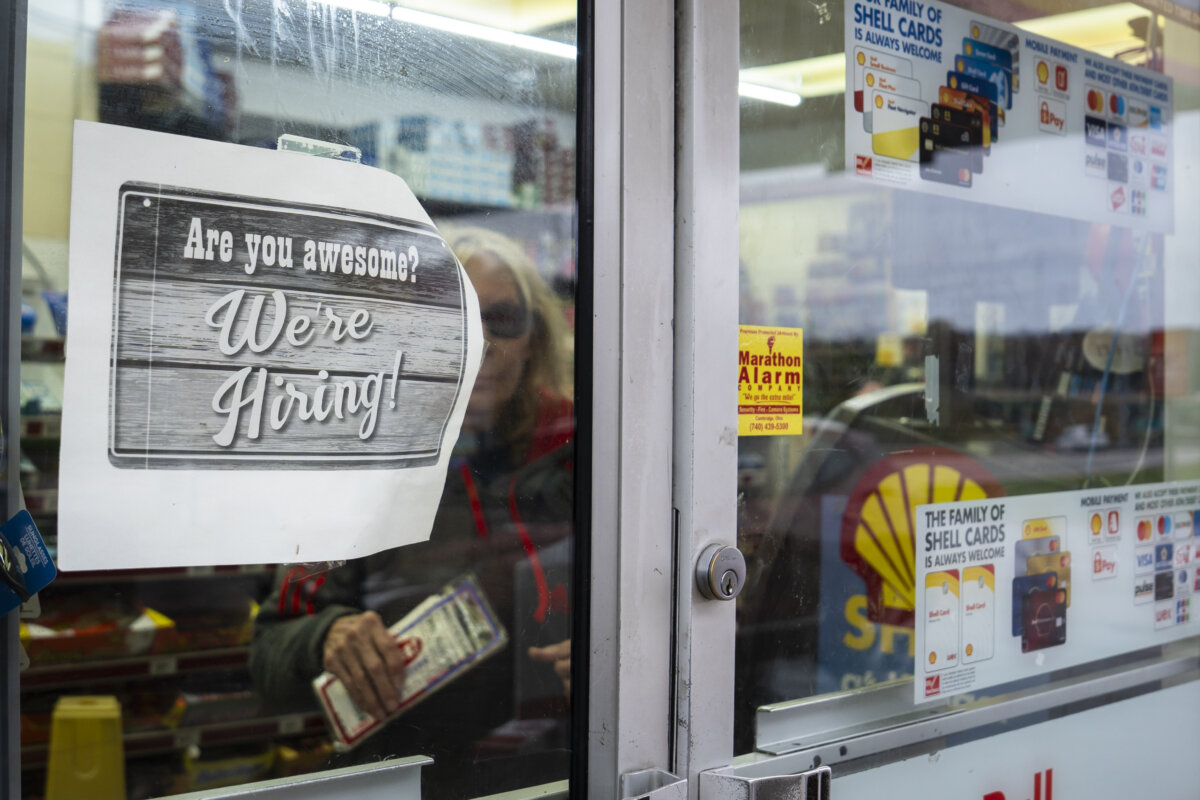

Weekly unemployment benefit claims rose to a one-month high last week, but new government data show the lack of widespread layoffs has kept levels below historical averages.
Initial jobless claims jumped by 9,000 to 200,000 for the week ending Nov. 7, according to the Department of Labor. This is the first time the number of Americans filing applications for unemployment benefits reached 200,000 since early October.
Claims have been in a historically low range of 188,000 to 230,000 this year, as companies remain reluctant to reduce headcount amid economic uncertainty.
The latest reading came in above the consensus estimate of 195,000.
Removing week-to-week volatility, the four-week average was unchanged at 195,250.
A range of metrics suggests employment conditions have strengthened recently.
The U.S. economy added 165,000 jobs last month—far higher than economists expected—and the unemployment rate unexpectedly dipped to 4.1 percent. Almost all of that growth came from the private sector.
October’s planned job cuts by U.S.-based employers fell 71 percent from last year. With fewer than 44,000 announced layoffs, it was the lowest October total since 2023.
“Any way you look at it, the labor market remains solid,” economists at RBC Economics said in a Nov. 6 note.
“By almost every measure, the labor market looks exceedingly healthy despite persistent inflation.”
The Labor Department also reported that recurring unemployment claims fell to 1.7 million, lower than the market forecast of 1.71 million.
This measure gauges the number of Americans currently receiving unemployment benefits. It has trended steadily downward since November 2025.
Economists attribute this to an easier time finding new jobs. Individuals could also be exhausting their benefits, as many states cap eligibility at 26 weeks.
“Despite the sluggish economy, the labor market is picking itself back up. A handful of frontline industries currently have job openings and have seen major hiring advances,” Deborah Saneman, CEO at Würk, said in a note emailed to The Epoch Times.
Job postings on Indeed have risen steadily since the June bottom, climbing about 4 percent as of Nov. 4.
Seasonal Hiring Boom
As the October jobs report showed, broad-based hiring has been fueled in part by the holiday season.
Seasonal hiring plans are up 26 percent from a year ago, according to global outplacement firm Challenger, Gray and Christmas. October’s jump was driven by Amazon and UPS, which announced seasonal hires of 300,000 and 100,000, respectively.
Other major companies have also announced seasonal openings, including Best Buy, Dick’s Sporting Goods, Michaels, Target, and Walmart.
The latest hiring announcements could reflect optimism that shoppers will be in the Christmas spirit, despite broader cost-of-living concerns.
The National Retail Federation estimates this year’s holiday sales will surpass the trillion-dollar mark, supported by more than 4 percent growth in November and December.
“This year’s forecast reflects our confidence that consumers will prioritize the holiday season even as they remain mindful of their budgets,” Matthew Shay, the group’s president and CEO, said in a news release last month.
But some of this gift-giving may be paid for using debt.
Americans’ credit card balances reached a record $1.29 trillion in the third quarter, according to the New York Federal Reserve. This is up 67 percent from the first quarter of 2021.
“With prices up an average of 30 percent since 2019, millions of Americans have depleted their savings and taken on debt to make ends meet,” Ted Rossman, principal consumer finance analyst, said in a statement to The Epoch Times.
“Household budgets are reaching a breaking point. The past two months have been our busiest months for debt management plan signups in more than 15 years.”
The New York Fed reported that total household debt surpassed $19 trillion for the first time last quarter.