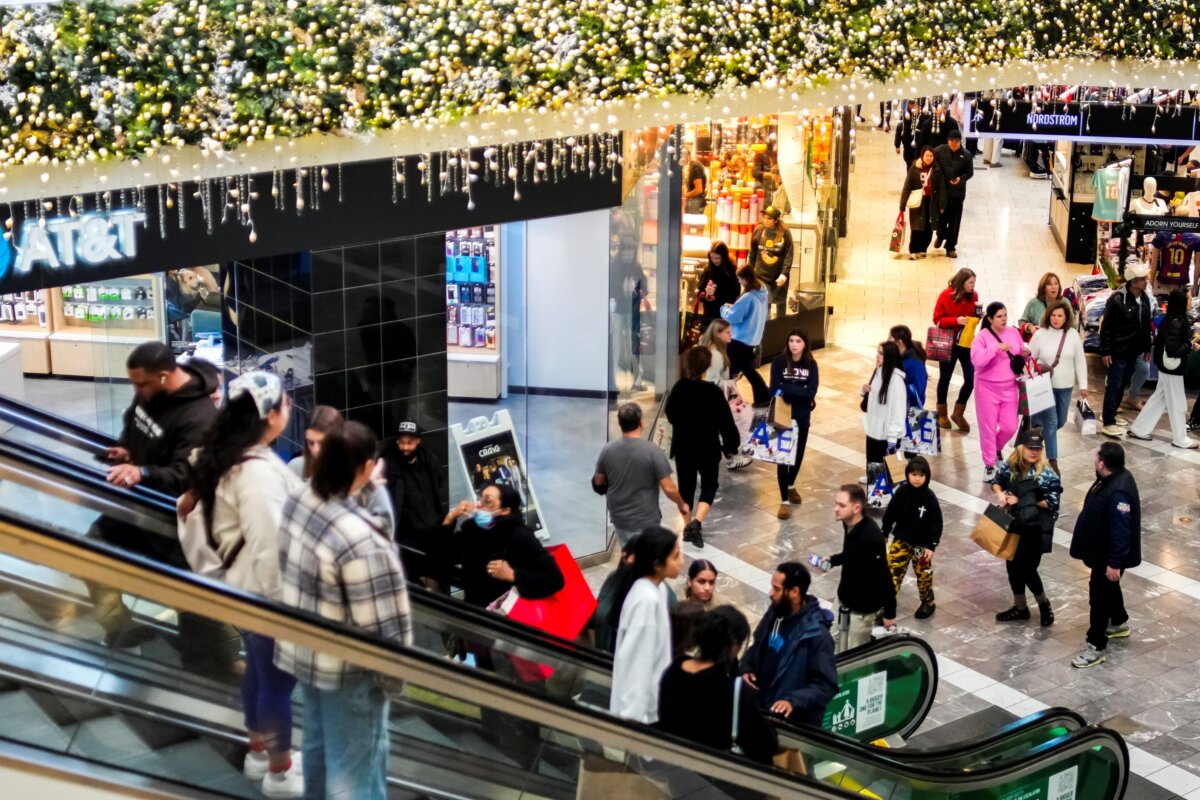

U.S. consumers are expected to spend more this holiday season, but much of the increase will be due to higher prices as shoppers remain selective about gifts and travel, according to Visa’s latest outlook.
Retail sales in November and December are projected to rise 4.5 percent from a year earlier, marking the strongest holiday sales growth since 2021, economists at the payments company said in a report released Thursday.
However, much of that growth is expected to reflect higher prices rather than an increase in purchasing activity.
Visa expects prices for holiday-related goods to rise 3.4 percent, leaving inflation-adjusted spending growth of just 1.1 percent, down from 1.3 percent last season.
“Higher inflation will inflate holiday spending,” the report’s authors wrote.
The findings are based on Visa’s 2026 Holiday Spending Shift Survey, which polled more than 1,000 U.S. adults in late September.
Shoppers Plan Bigger Budgets but Seek Value
Consumers surveyed for Visa’s outlook said they plan to spend an average of $777 on gifts, up 5.6 percent from $736 last year.
Yet larger budgets do not mean shoppers are becoming less price-conscious. Approximately one-third of respondents earning less than $100,000 said they intend to switch to cheaper brands or stores.
“Consumers are still spending, but they’re making deliberate choices about where their holiday dollars go,” said Michael Brown, Visa’s principal U.S. economist.
Retailers will benefit from one additional shopping day this season compared with last year, which Visa expects to provide a modest boost to sales.
Higher Travel Costs Could Favor Gifts
Rising travel costs are expected to redirect some holiday spending toward merchandise.
More than half of survey respondents placed travel and live events at the top of their wish lists. But only 15 percent said they were prioritizing spending on experiences, compared with 27 percent prioritizing physical gifts.
Visa’s economists analyzed anonymized credit-card transactions for airline tickets booked in September for departures between Nov. 1 and Jan. 15, 2027. They found that households earning more than $200,000 were the only income group to expand both holiday airfare bookings and spending, compared to last year.
“Nearly every other income group pulled back sharply, suggesting that high costs are increasingly limiting holiday travel to only affluent households,” they wrote.
That shift could benefit retailers as households redirect money they might otherwise have spent on trips.
“With fewer consumers planning to travel this holiday season, more spending may be directed toward gift-related purchases in stores and online,” the authors wrote.
Other Forecasts Point to Continued Growth
Visa’s outlook is broadly consistent with that of the National Retail Federation, which forecasts a 4.2 percent year-to-year holiday sales growth to a little more than $1 trillion.
The trade group expects consumers to prioritize the holiday season while remaining attentive to their budgets.
Retailers are taking a measured approach to staffing. NRF projects between 325,000 and 375,000 seasonal hires, compared with approximately 356,000 last year.
“We head into the holiday season with strong spending momentum, as consumers remain the bright spot in the economy,” Mark Mathews, NRF’s chief economist, said in a statement.
“At the same time, inflation, rising gas prices and pressure on household spending will affect consumers differently across income groups.”







