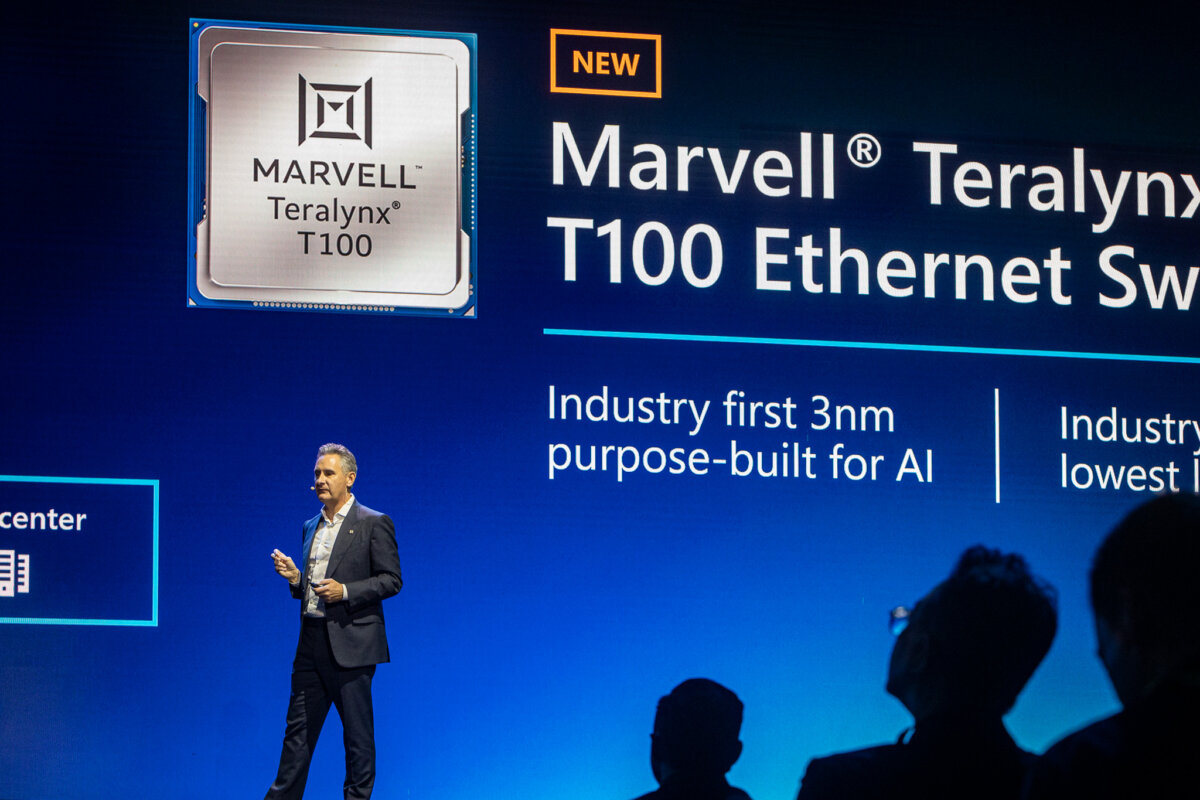

Chipmaker Marvell Technology will purchase optical-components maker Lumentum in a $115 billion deal, the companies announced on Nov. 2.
The acquisition of Lumentum strengthens Marvell’s arsenal in the artificial intelligence-driven race against rival Broadcom.
Under the agreement, Lumentum shareholders will receive 4.5 shares of Marvell common stock for each share of Lumentum common stock they own, a premium of almost 24 percent over the Oct. 28 closing price.
Once the transaction closes—estimated for the first half of calendar year 2028—Marvell stockholders will own about 67 percent of the combined company, and Lumentum investors will own approximately 33 percent.
Despite growing Wall Street concerns about capital expenditures—also known as capex—Marvell’s purchase signals that the company still bets on the AI spending boom. If so, the data center-fueled demand for optical components would persist and outstrip supply.
“AI infrastructure is undergoing a fundamental architectural shift toward optical connectivity, creating an opportunity that comes along once in a generation,” Matt Murphy, CEO and chairman of Marvel, said in a news release.
The merger is Marvell’s largest purchase since its $10 billion buyout of Inphi in 2021.
According to Michael Hurlston, president and CEO of Lumentum, the combined company can capitalize on a $550 billion opportunity, creating “significant, sustainable stockholder value” for the foreseeable future.
“Surging AI data traffic requires rapid hardware innovation, and this combination enhances our ability to deliver next-generation solutions at scale,” Hurlston said.
Shares of Lumentum and Marvell fell by about 4 percent and 2 percent, respectively, before the opening bell.
Both companies have benefited from chip demand.
In August, Marvell notched a deal to supply chips to Alphabet for its AI processors, potentially worth up to $120 billion in sales through fiscal 2033.
In March, Lumentum joined a strategic partnership with Nvidia to produce advanced optics technology.
U.S. and global tech stocks have come under immense pressure over the past month. This has been driven in part by a growing chorus of Big Tech companies reporting negative free cash flow caused by massive AI capex.
Alphabet and Amazon logged negative free cash flow this earnings season. Meta’s data center spending also exceeded its operating cash flow.
While AI spending has fueled the tech-led rally in recent years, Mark Malek, chief investment officer at Siebert Financial, said it could now be a bigger near-term threat to the stock market than the midterm elections.
“Investors are increasingly demanding evidence that enormous AI capital expenditures will generate returns that justify their cost,” Malek said in a note emailed to The Epoch Times.
The tech-heavy Nasdaq Composite Index posted a losing October, suffering its worst losses since March 2025. The broad-market S&P 500 also slipped last month.
The blue-chip Dow Jones Industrial Average, however, posted a winning month, rising nearly 2 percent as traders rotated into defensive areas.
Busy First Week of November
U.S. stocks rebounded to kick off November, with the leading benchmarks in the green.
“While October left treats for the value investors, it pulled the rug out from many high growth ones,” Jay Woods, chief market strategist at Freedom Capital Markets, told The Epoch Times.
“Last week we experienced a major shift in psychology where good earnings weren’t good enough, and investors rotated into safer assets as well as many beaten-down stocks looking for value.”
Apple, meanwhile, will be the main event this week in the third-quarter earnings season. Advanced Micro Devices (AMD) will be another tech firm investors are watching.
Of the 60 percent of S&P 500 companies reporting third-quarter results, 82 percent posted a positive earnings-per-share surprise, according to FactSet Insights.
In addition to earnings and midterms, the October jobs report will also be released on Nov. 6. The consensus forecast calls for 65,000 new jobs and an unemployment rate of 4.2 percent.
Correction: A previous version of this article misnamed Marvell Technology. The Epoch Times regrets the error.