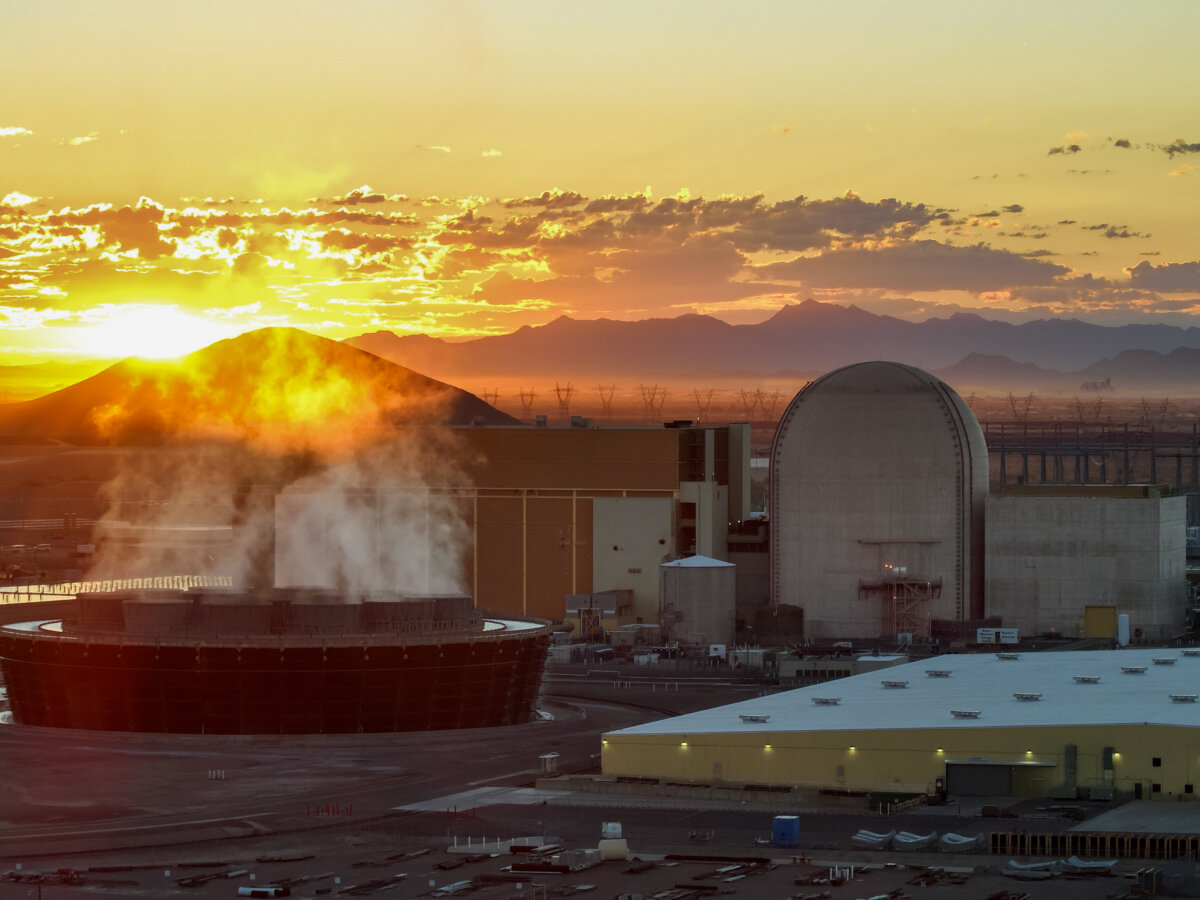

The Arizona Public Service (APS) utility company will seek to extend operations at all three units at the Palo Verde Generating Station—the nation’s largest nuclear power plant—through the mid-2060s.
The extension, which would be on top of a 20-year approval granted in 2011 and beginning in 2026, would add 20 additional years of nuclear energy generation at the plant, the company told federal regulators on March 13. If the application is approved, the facility, about 50 miles west of Phoenix, would be allowed to operate through 2067.
“Palo Verde Generating Station operates reliably and provides stable generation—helping keep the grid dependable and long-term energy costs more affordable for customers,” said Adam Heflin, executive vice president and chief nuclear officer at Palo Verde Generating Station.
The public will be able to provide comments during the license renewal process.
The plant generates more than 32 million megawatt hours each year, which is enough power to supply more than 4 million people, according to Arizona Public Service.
The Nuclear Regulatory Commission (NRC), an independent federal regulatory agency, issued the plant a license to operate for 40 years when it opened in 1986. In 2011, the commission approved a renewal application to extend operations for another 20 years, starting in 2027, allowing three units to operate through the mid-2040s.
APS is also looking into new nuclear technologies and leading an effort with the Salt River Project and Tucson Electric Power to explore and advance more nuclear generation in the state.
In 2025, the utilities applied for a federal grant with the Department of Energy (DOE) to begin finding future potential sites to build small, modular reactor facilities.
Arizona’s nuclear power plant expansion is part of a larger national trend to grow nuclear energy in the United States.
The Trump administration has pushed to accelerate nuclear power development as one way to make energy more affordable for Americans, according to the DOE.
Energy Secretary Christ Wright said that the “nuclear renaissance” will fuel the nation’s economic growth and artificial intelligence (AI) boom.
“The world needs more energy to meet the AI challenge and drive human progress—and the United States is boldly leading the way,” Wright told the General Conference of the International Atomic Energy Agency in Austria in September 2025.
“With President [Donald] Trump’s leadership, we are advancing American energy policies that accelerate growth, prioritize safety, and enhance global security.”
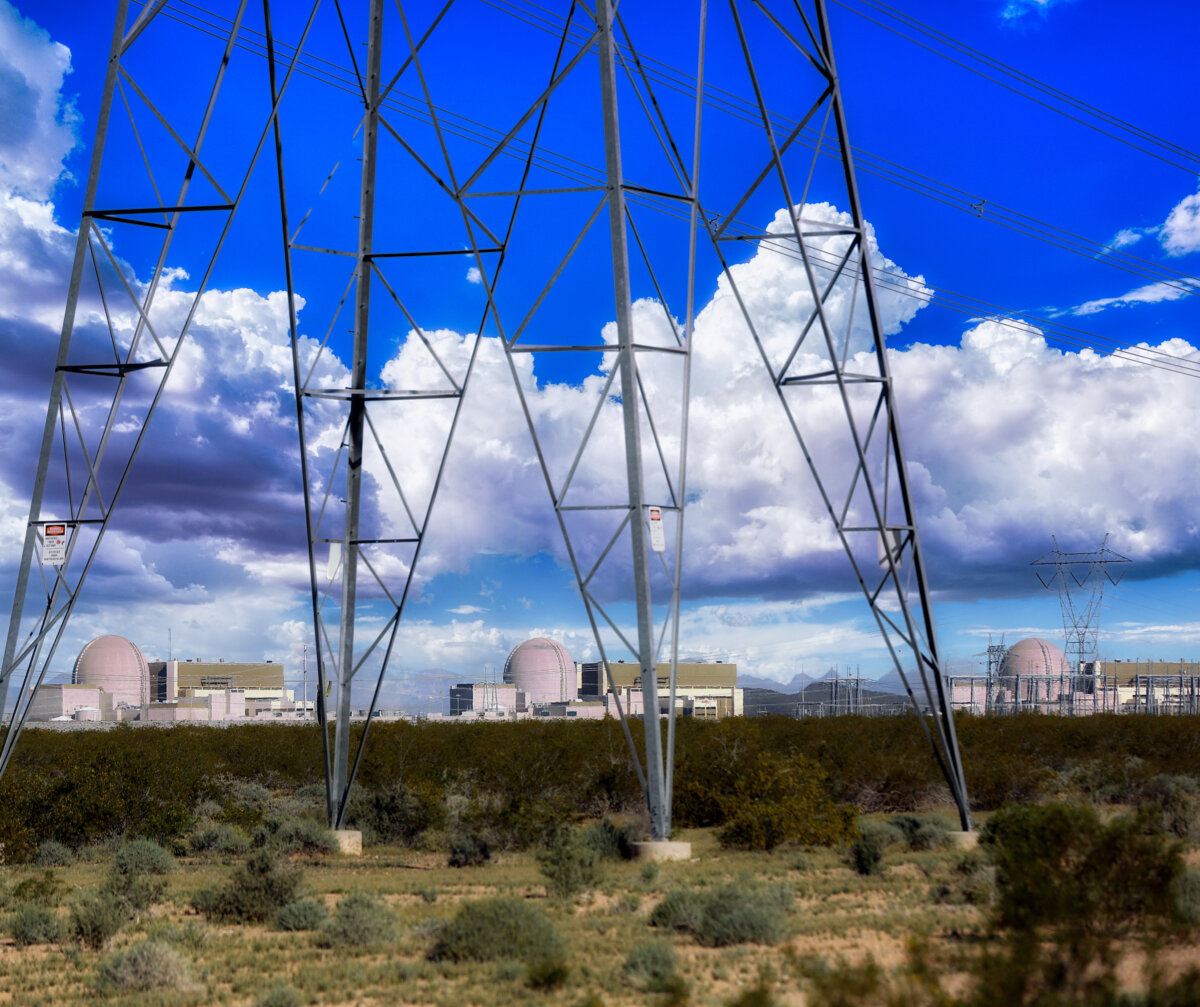
Trump has issued four executive orders aimed at modernizing the nuclear energy industry by streamlining reactor testing, deploying reactors for national security, and reinvigorating the nuclear industrial base.
Although most nuclear energy projects have bipartisan support, some environmental groups have raised concerns about waste storage.
Johanna Neumann, renewable energy director for the Environment America Research and Policy Center, said nuclear waste was a growing problem.
“The long history of overhyped nuclear promises reveals that nuclear energy is expensive and slow to build, all while still being inherently dangerous,” Neumann said in a statement on Dec. 4, 2024, after Meta announced plans to build nuclear generation to meet AI needs.
“America already has 90,000 metric tons of nuclear waste that we don’t have a storage solution for. Do we really want to create more radioactive waste to power the often dubious and questionable uses of AI?”







