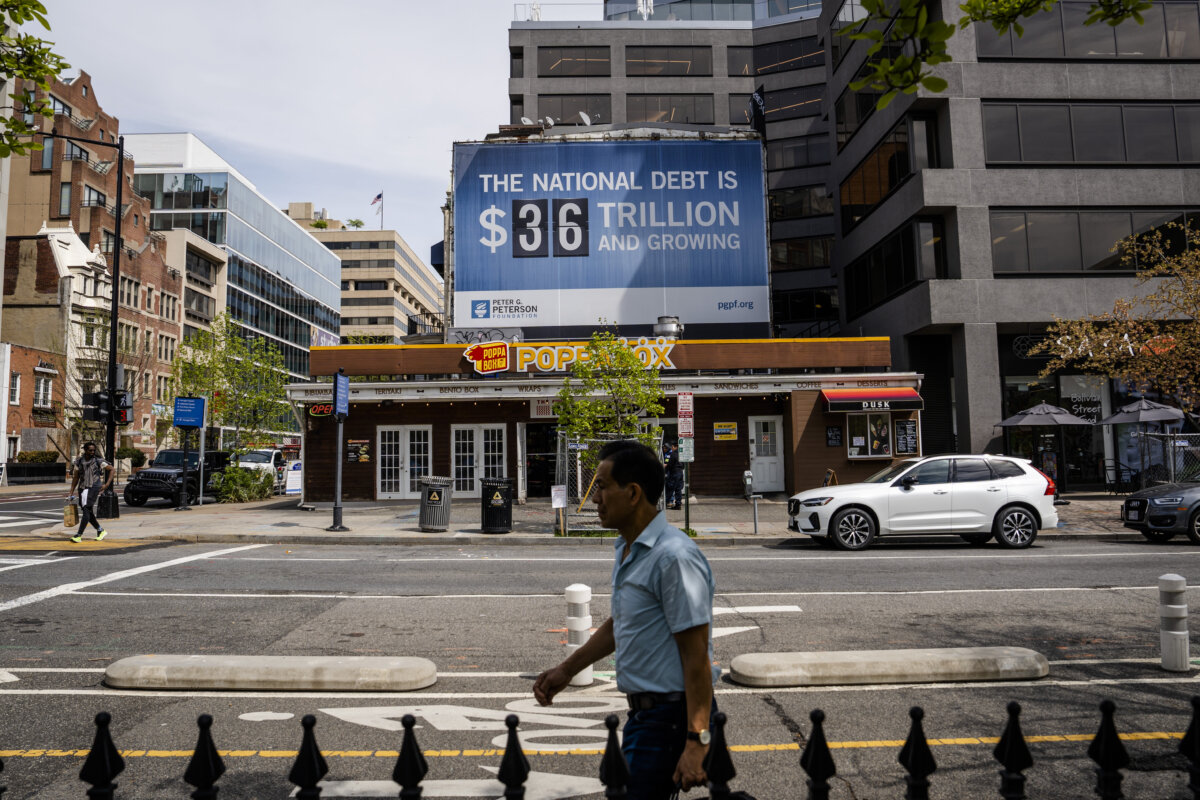

In the first three months of fiscal year 2026, the U.S. budget deficit declined 15 percent from a year earlier, according to new data released by the Treasury Department.
Fiscal year to date—October to December—the budget deficit totaled $602 billion.
This is down $108 billion, or 15 percent, from the first three months of fiscal year 2025.
Receipts for the fiscal year to date increased by 13 percent from the year-earlier period to a record $1.22 trillion.
Outlays exceeded $1.82 trillion, also an all-time high, rising just 2 percent.
The U.S. government recorded a $144.7 billion budget deficit in December 2025, a 67 percent increase from December 2024.
Last month, tax receipts jumped 6.6 percent year over year to $484.4 billion.
Tariffs—labeled as customs duties—increased by almost $28 billion, which is far higher than the nearly $7 billion collected in the previous year.
Net tariff revenues have reached $90 billion, representing a more than 300 percent year-over-year increase.
Outlays rose by more than 16 percent year over year to $629.1 billion, driven by Social Security ($134 billion), defense ($102 billion), and health care ($92 billion).
Net interest payments also climbed to $92 billion in December, hitting $270 billion in the three months.
Deficit totals would be slightly less if it were not for shifts in the timing of certain payments, the Congressional Budget Office, a nonpartisan budget watchdog, said in its latest monthly budget review.
But while federal spending has yet to take a nosedive—expenditures remain firmly above 20 percent of GDP—Washington’s improving fiscal situation has been largely fueled by better-than-expected revenues.
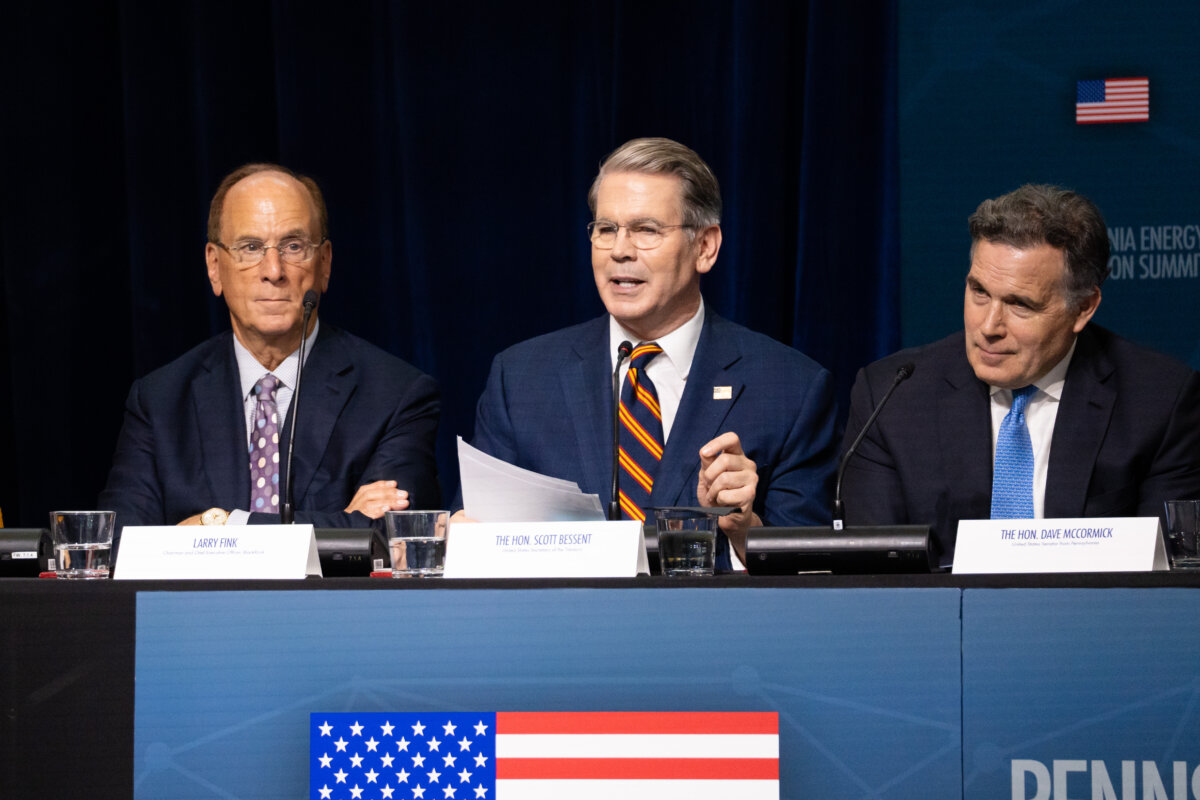
Last week, Treasury Secretary Scott Bessent estimated that the budget deficit would shrink by $300 billion to $500 billion, equal to approximately 1 percent of GDP.
“We have constrained spending, and the economy has grown roughly 6 percent nominal,” Bessent said during a Jan. 8 appearance at the Economic Club of Minnesota.
Bessent and other administration officials have stated that President Donald Trump’s policies will help the United States grow its way out of the $39 trillion national debt.
The goal, Bessent says, is to bring the deficit-to-GDP ratio down to around 3 percent—it is currently at about 5.9 percent.
Lawmakers introduced a resolution last week aiming to reduce the deficit-to-GDP ratio to this level.
“Reducing our budget deficit to 3 percent of GDP or less is an achievable goal that, if reached, would have a great impact on stabilizing our debt and growing our economy,” Rep. Lloyd Smucker (R-Pa.) said in a Jan. 8 statement.
“Our debt is the greatest long-term threat to our nation, and fixing our fiscal trajectory is essential to securing America’s economy for generations to come.”
But the road to fiscal balance remains difficult.
Fiscal Challenges Ahead
The Committee for a Responsible Federal Budget, an independent policy organization, estimates the United States is still poised to register a near $2 trillion budget deficit this year.
Additionally, the federal government is set to face another funding deadline in the coming weeks.
Jan. 30 is the date when funding for nine major parts of the federal government is scheduled to expire unless lawmakers pass additional appropriations or a stopgap measure.
“Lawmakers should come to an agreement on appropriations that avoids increasing our debt even more, restores the caps on discretionary spending, and maintains flat funding from the last fiscal year,” Maya MacGuineas, the group’s president, said in a Jan. 13 statement.
MacGuineas also encouraged officials to commit to pursuing a 3 percent deficit-to-GDP target.
The other issue for policymakers is the billions of dollars lost to fraud, waste, and abuse each year, Bessent noted this past week.
He cited a 2024 Government Accountability Office analysis that projected that as much as 10 percent—or $521 billion—of the federal budget is squandered annually.
Recovering this money, Bessent said, would be enough to pay for the president’s request for a $500 billion increase in the defense budget.
“If we need to flex up our military budget, if we can get rid of this waste, fraud, and abuse, we can finance a safer, sounder United States with that, without taking on more debt. Sounds like a pretty good outcome to me,” the secretary told journalist Christopher Rufo in a recent interview.
The administration has also strived to lower interest rates—specifically the 10-year Treasury yield—by focusing on fiscal and monetary policy.
Officials have made progress, with the yield falling to around 4.14 percent from nearly 4.8 percent a year ago.
Trump has encouraged the Federal Reserve to be more aggressive in bringing down rates, suggesting the federal funds rate should be 1 percent to lower government borrowing costs.
Americans, meanwhile, are not satisfied with the nation’s fiscal condition.
A new survey conducted by the Peter G. Peterson Foundation found that U.S. fiscal confidence is lower than a year ago.
“As the new year begins, voters are understandably concerned about America’s fiscal direction,” Michael A. Peterson, CEO of the Peterson Foundation, said in a news release.
Eighty-two percent of respondents said lawmakers should spend more time focusing on the national debt, while 79 percent called it a top-three priority for the president and Congress.