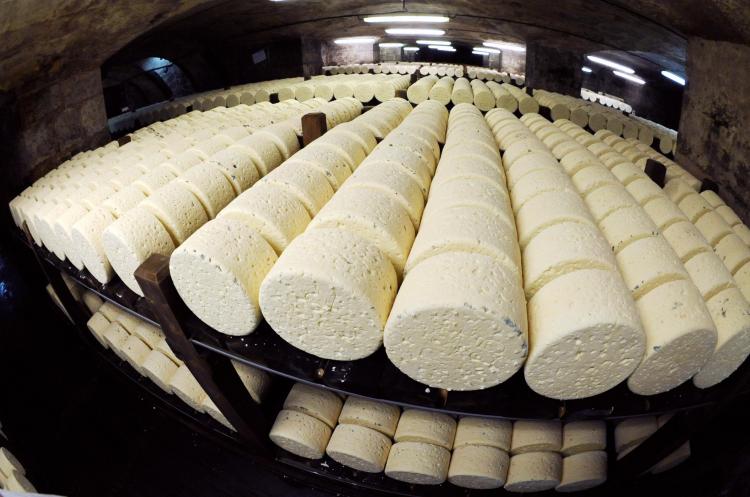

The supply chain issues and price inflation that have become a persistent feature of the global economy in recent years have resulted in an unlikely change in the European diet: an increasing prevalence of processed cheeses imported from the United States, which have become more common as high dairy costs afflict the traditional cheesemaking industries of Europe.
While Europe is famous for producing a wide variety of high-quality cheeses, the cost of producing indigenous delicacies such as camembert, gouda, and mozzarella has risen as a result of high dairy prices—a consequence of the major disruptions to the global economy from the CCP (Chinese Communist Party) virus lockdowns and Russia’s invasion of Ukraine.
In February, Europe imported 306 metric tons of cheese from the United States, several times higher than typical figures for the month. The trend was especially prominent in the Netherlands, which imported over $400,000 worth of cheese and curds from the United States.
The immediate catalyst for this change in market dynamics is the rising cost of dairy in Europe, which has become especially acute in recent months. The Russian invasion of Ukraine has resulted in scarcities of the corn used as animal feed for dairy cows in Europe, as sanctions and supply chain disruptions have resulted in a stoppage of the flow of grains from the two European breadbaskets. This has driven up the cost of dairy production in the region.
Meanwhile, as the world’s largest corn producer, the United States has not suffered from the same harms to its own dairy industry, with the country remaining largely self-sufficient for animal feed. Furthermore, such affordable processed cheeses require less dairy to produce, making them easily exportable at low cost to the cheese-deprived European peoples.
Processed cheese is a relatively new invention, first arising in the 1910s when inventors added emulsifiers to melted cheese before allowing the combined product to cool into a solid. The resultant product was favored for its low cost, long shelf life, and resistance to separating when exposed to heat.
However, such products have been traditionally disfavored by the epicurean sensibilities of most Europeans, whose tastes tend to prefer traditional varieties typical of the regions they inhabit.
The rise in American cheese imports in the old continent, while economically sensible in light of such supply constraints, is nonetheless a sign of continued globalization, which in recent decades has resulted in a decline of local traditions in the face of a globalist cultural hegemony.
In 1999, a group of French farmers famously destroyed a McDonald’s under construction in the town of Millau in protest of the impact of globalization on European life. The farmers’ act of destruction became a cause celèbre throughout the country, evoking widespread support among the French people, who are famously protective of their cultural heritage.
However much value is placed on local gastronomical culture, all things are subject to the laws of supply and demand. The growing prevalence of American cheese in Europe is a subtle reminder of the impact of the war in the region, which has caused major discontinuity in patterns of consumption and scarcities of highly valued goods.