SEARCH


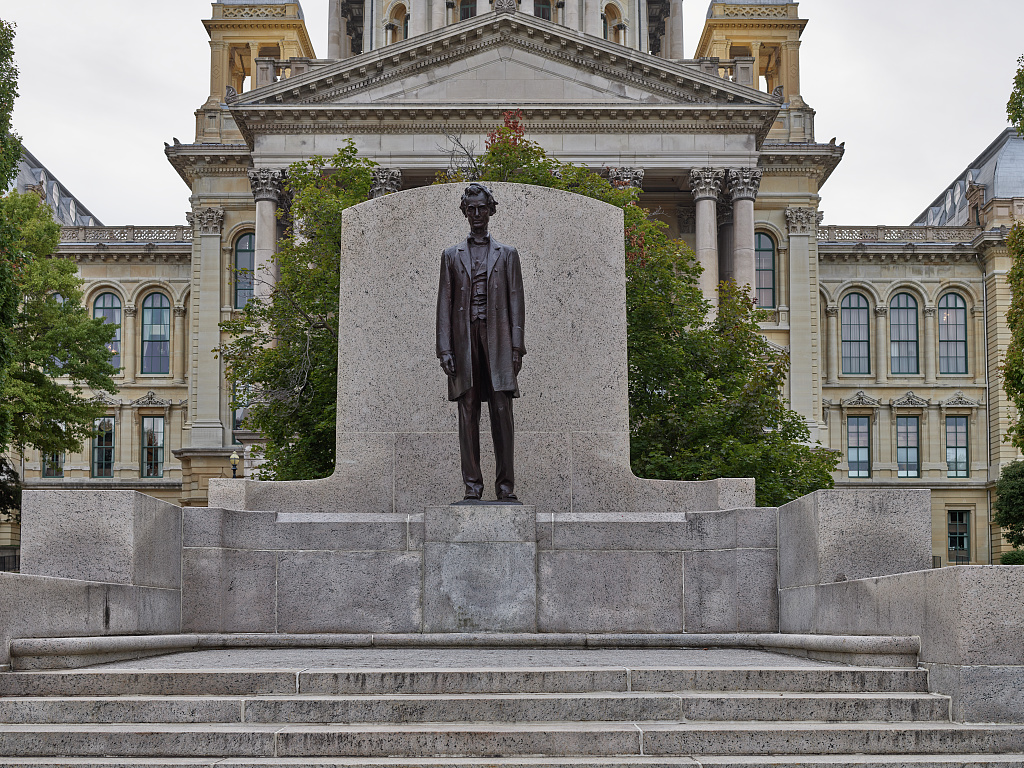
On Jan. 27, 1838, a tall, lanky lawyer delivered an address titled “The Perpetuation of Our Political Institutions” to the Young Men’s Lyceum in Springfield, Illinois. Newly arrived in that city, which would soon become the official capital of the state, Abraham Lincoln was a stranger to many in his audience, yet his speech not only was well received but also greatly enhanced his reputation. To this day, historians and others visit this speech for its insights into his later political beliefs and policies.
But there are other reasons, matters pertinent to today’s politics and culture, that Americans should take a look at Lincoln’s Lyceum address.
Starting With Gratitude
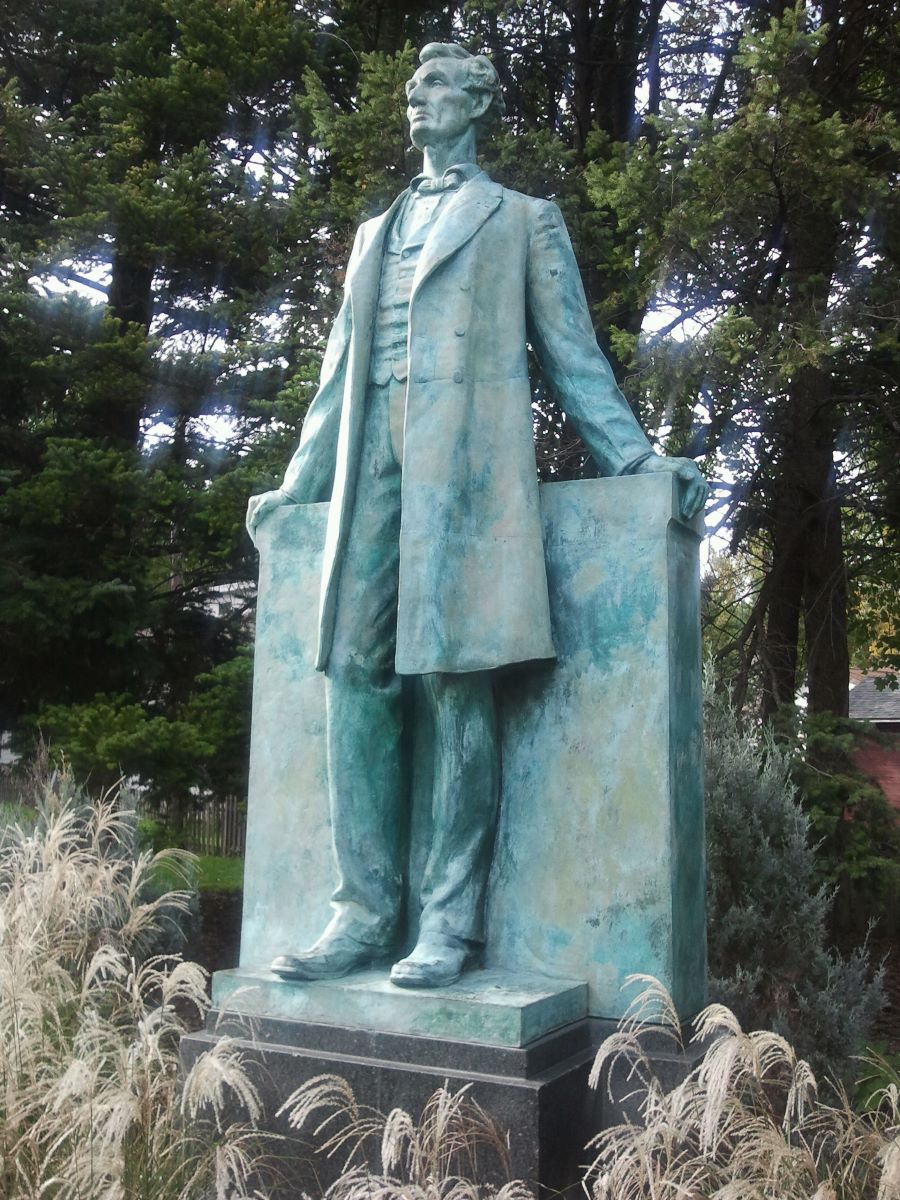
In several places during his address, Lincoln turned to our nation’s Founders, always with a sense of respect and appreciation. At the very beginning, for instance, he stated:
“We find ourselves under the government of a system of political institutions, conducing more essentially to the ends of civil and religious liberty, than any of which the history of former times tells us. We, when mounting the stage of existence, found ourselves the legal inheritors of these fundamental blessings. We toiled not in the acquirement or establishment of them—they are a legacy bequeathed us, by a once hardy, brave, and patriotic, but now lamented and departed race of ancestors.”
Almost immediately, he spoke of the debt we owe these men and women. “This task of gratitude to our fathers, justice to ourselves, duty to posterity, and love for our species in general, all imperatively require us faithfully to perform.”
In another paragraph, however, he abruptly shifted directions to address possible dangers to the country. He pointed out that these will not come from enemies abroad: “If destruction be our lot, we must ourselves be its author and finisher. As a nation of freemen, we must live through all time, or die by suicide.”
And here Lincoln reached the main point of his address.
Mobs Versus the Law
Just like today and at other times in our history, in 1838, America was contending with mob violence. Lincoln first took note of this breakdown of law and order when he said: “Accounts of outrages committed by mobs, form the every-day news of the times. They have pervaded the country, from New England to Louisiana.” He cited by way of example two vicious murders by mobs—one in Mississippi and one in St. Louis, Missouri—and then issued a statement that rings true in our time:
“Such are the effects of mob law; and such are the scenes, more and more frequent in this land so lately famed for love of law and order; and the stories of which, have even now grown too familiar, to attract any thing more, than an idle remark.”
Lincoln next carefully broke down the escalation of outrages against the judicial system. The guilty may suffer a just punishment at the hands of a mob, but soon it would be the innocent who are killed or injured “till all the walls erected for the defence of the persons and property of individuals, are trodden down, and disregarded.” Then, Lincoln brought up what he saw as the final step in this cycle of mob violence:
“But all this even, is not the full extent of the evil. By such examples, by instances of the perpetrators of such acts going unpunished, the lawless in spirit, are encouraged to become lawless in practice; and having been used to no restraint, but dread of punishment, they thus become, absolutely unrestrained. Having ever regarded Government as their deadliest bane, they make a jubilee of the suspension of its operations; and pray for nothing so much, as its total annihilation.”
One Way to Restrain Mobocracy
Lincoln offered his audience a means of reducing, if not eliminating, mob violence and the attendant destruction of the law:
“The question recurs, ‘How shall we fortify against it?’ The answer is simple. Let every American, every lover of liberty, every well wisher to his posterity, swear by the blood of the Revolution, never to violate in the least particular, the laws of the country; and never to tolerate their violation by others. As the patriots of seventy-six did to the support of the Declaration of Independence, so to the support of the Constitution and Laws, let every American pledge his life, his property, and his sacred honor; let every man remember that to violate the law, is to trample on the blood of his father, and to tear the character of his own, and his children’s liberty. Let reverence for the laws, be breathed by every American mother, to the lisping babe, that prattles on her lap; let it be taught in schools, in seminaries, and in colleges; let it be written in Primers, spelling books, and in Almanacs; let it be preached from the pulpit, proclaimed in legislative halls, and enforced in courts of justice. And, in short, let it become the political religion of the nation; and let the old and the young, the rich and the poor, the grave and the gay, of all sexes and tongues, and colors and conditions, sacrifice unceasingly upon its altars.”
This advocacy of education in the law, of reverence for its dictates, is admirable, but what if the laws are bad? Lincoln addressed this question by writing that bad laws should be repealed, but “while they continue in force, for the sake of example, they should be religiously observed.”
Here, we may disagree with the young attorney. In some cases, by religiously observing a bad law, such as the 18th Amendment, which prohibited the sale of liquor in the United States, opponents might risk extending a bad law by their compliance. On the other hand, we can oppose bad laws without indulging in mob behavior.
Another Warning for Then and Now
Though Lincoln spoke only 60-odd years after the American Revolution, he was concerned that his countrymen were already forgetting the men and women who had founded the country and served as its guiding lights. In poetic prose, he remarked on the diminishing number of those who had direct contact with fathers and grandfathers who had fought in the Revolution, and of mothers and grandmothers who had endured privation on the home front. He then noted:
“But those histories are gone. They can be read no more forever. They were a fortress of strength; but, what invading foeman could never do, the silent artillery of time has done; the leveling of its walls. They are gone.”
With the patriots’ passing, Lincoln feared that their influence would be erased as well, despite the histories and biographies that recorded their deeds.
Lincoln entertained these fears about the loss of their influence in 1838. Nearly 200 more years have left an even wider gap between us and those patriots celebrated by Lincoln, diminishing ever further their influence in the 21st century.
Another Solution
To counter this loss of the original patriots and their passion for liberty and a new nation, Lincoln put forward an unusual course of thinking and action. With these “pillars of the temple of liberty” gone, we must, Lincoln believed,
“supply their places with other pillars, hewn from the solid quarry of sober reason. Passion has helped us; but can do so no more. It will in future be our enemy. Reason, cold, calculating, unimpassioned reason, must furnish all the materials for our future support and defence. Let those materials be moulded into general intelligence, sound morality, and in particular, a reverence for the constitution and laws.”
Though neither he nor his audience could then realize it, this brief proposal—or rather, the failure to adhere to it—would loom large within 20 years. By the time Lincoln became president, hotheads in the South and North—in particular, the slave owners on one side and the abolitionists on the other—had cast coolheaded reason aside and embraced fiery passion in their rhetoric and actions. The result was a civil war that killed hundreds of thousands of men and brought ruin to the South.
Lincoln Still Speaks
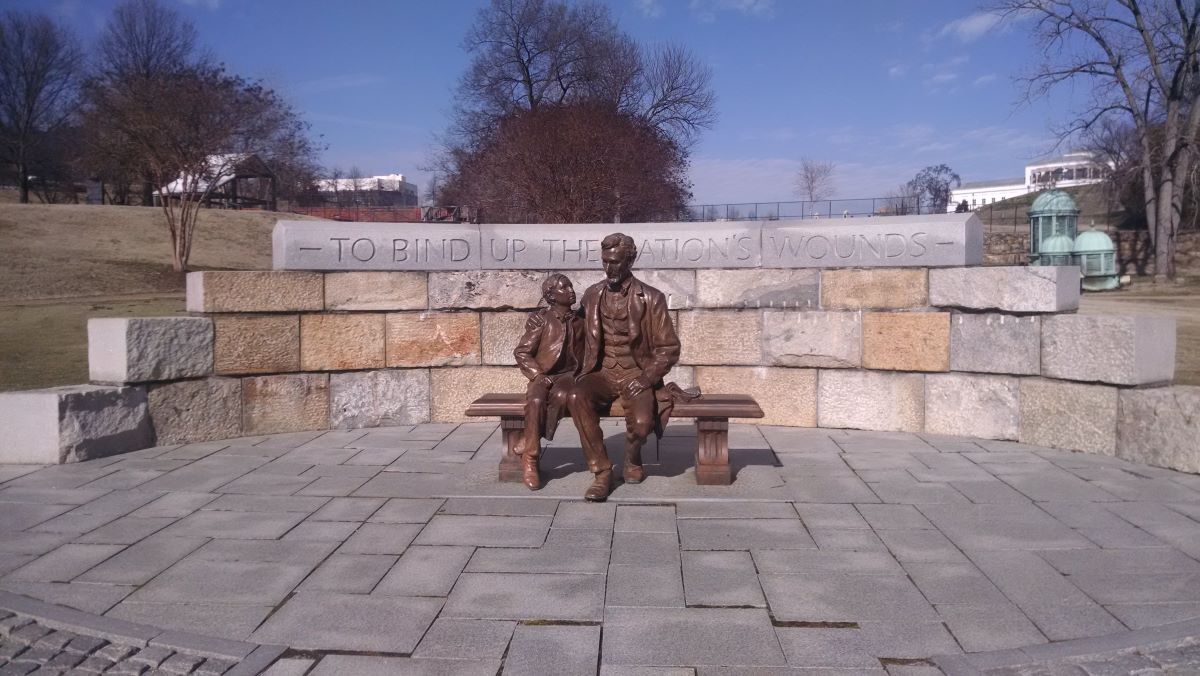
In our own age, passion appears to have eclipsed reason. Riots occur so regularly in our major cities that, unless one is living in that area, the news rarely raises an eyebrow. Mobs take to the streets and to social media to intimidate or harm opponents. Bad laws, assaults on the Constitution, and heavy-handed government have damaged our legal system and our bureaucracies, breeding deep-seated distrust of government and the courts. Political and cultural divides between Americans have caused many people to focus on causes and ideology rather than on the good of the country.
Abraham Lincoln’s Lyceum address provides no absolute or easy solutions to these problems, any more than it did in his day. Yet his speech does act as a mirror for readers, forcing us to ask whether we have ever surrendered reason and common sense for the group-think of a mob.
Just seconds after Lincoln took his last breath, dead at the hands of assassin John Wilkes Booth, Secretary of War Edwin Stanton famously said, “Now he belongs to the ages.” Whatever Stanton meant by that pronouncement, Lincoln, in his Springfield Lyceum speech, clearly delivered a message of warning and advice to our own age of discontent.
What arts and culture topics would you like us to cover? Please email ideas or feedback to features@epochtimes.nyc