SEARCH


A proactive attitude towards home maintenance often reduces anxiety and, in many cases, the fixes are easier than expected. While more serious electrical problems should be left to a licensed electrician, savvy homeowners can address some of the common minor issues themselves.
Further Flickering
A flickering light bulb is a great example: It may be unsuitable for the fixture, nearing the end of its lifespan, or simply need to be tightened. Check that the bulb is the correct type and voltage for the fixture, and that any dimmer is rated for LED bulbs. If you replace it with a new, compatible bulb and it still flickers, the problem is likely with the light fixture, its outlet, or its wall switch. The issue may also be an overloaded circuit—in which case, reduce the electrical demand by unplugging unnecessary devices.
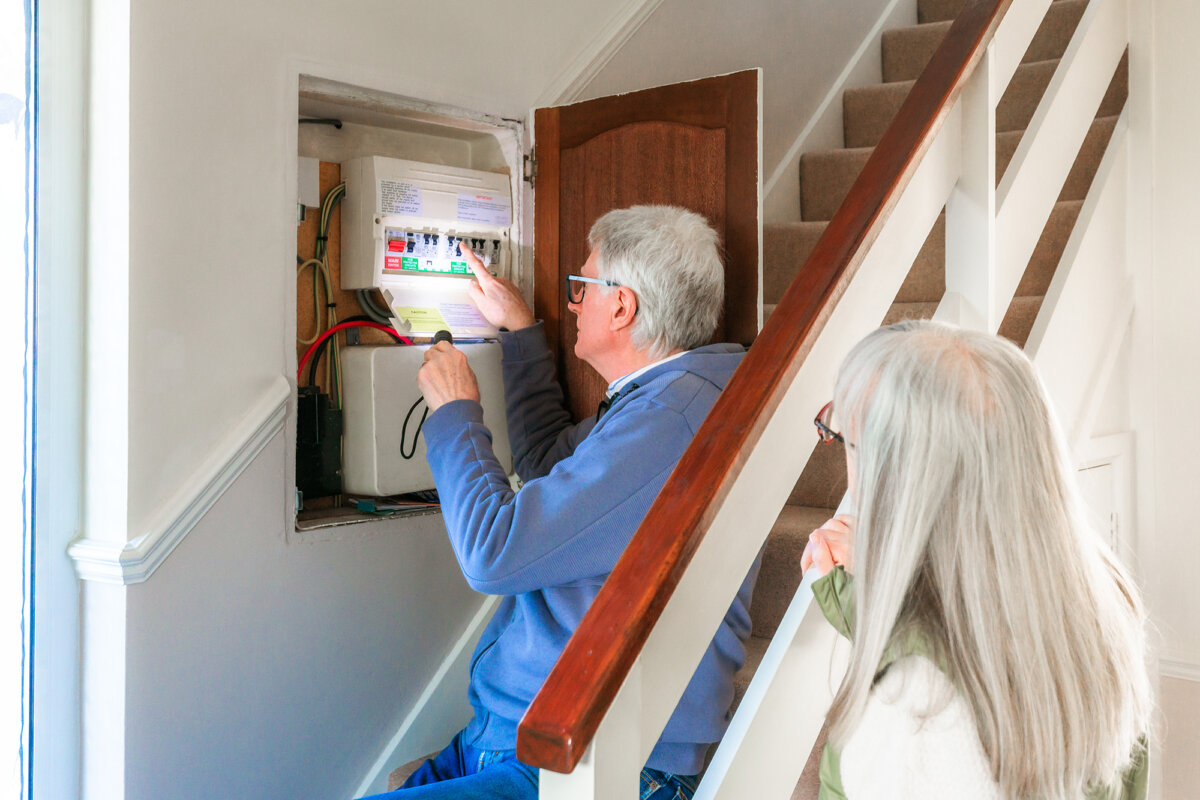
If the light flickers when a large appliance goes on, it may indicate a voltage drop. Random flickering with no apparent pattern can point to a loose wire, while flickering throughout the entire house may be a panel problem—all jobs for an electrician. Watch what they do, pick their brain, and consider the expense an educational investment.
Diagnostic Tools and Safety
Safety must always come first when it comes to electrical work, even for minor DIY issues. Here are a few safety procedures to follow and helpful tools to consider purchasing in order to avoid experiencing electrical shocks or electrocution.
To begin, always turn off the breaker before doing any electrical work. If you don’t know which breaker is the correct one, use a circuit breaker finder. These devices have a transmitter that sends a signal to an outlet and a receiver to signal which breaker is the correct one. Once the correct breaker is identified and turned off, it’s always a good idea to use a multi-meter or voltage sniffer to make sure it’s safe to work on. Don’t just trust that the correct breaker is off, even if they’re labeled.
Multi-meters indicate whether an outlet is outputting voltage (V) and measure resistance (ohms) and current (amps). A voltage sniffer (non-contact voltage tester) fits in a shirt pocket and is used to determine if AC outlets or wires are live without having to make dangerous contact. However, be aware that they have been known to give false positives or negatives when used on wires with thick insulation, when low in battery, or when held too far from the wire.
Ground fault circuit interrupters (GFCIs) can be installed in outlets or circuit breakers to monitor electrical currents and shut off power when ground faults are detected. Homeowners can also invest in handheld outlet testers with GFCI monitors. While these handy-dandy safety tools don’t indicate voltage, they can identify common wiring errors.
Tripped Circuit Breakers
Circuit breakers trip to protect wires and appliances from receiving excessive currents. So in that sense, a breaker that keeps tripping is actually doing its job. The most typical cause is an overloaded circuit caused by running too many appliances at once. A malfunctioning appliance is another common cause, and is resolved by repairing or replacing the faulty appliance.
Other reasons can include a short circuit, ground faults, or old or deteriorated wiring. For these scenarios, call an electrician. Also call a professional if you smell anything burning, you see scorch marks, your breaker feels hot to the touch, or it keeps tripping when not visibly overloaded.
Electrical Surges
Power surges can be caused by overloaded circuits, faulty wiring, or a large appliance generating a surge throughout the entire electrical system as it cycles on and off. Lightning strikes and power grid problems are also common culprits. Blackouts can result in power surges when the electricity comes back on.
Many electrical companies advise proactively protecting your sensitive electronics with individual high-quality surge protectors. If the budget allows, consider whole-house surge protection integrated into the electrical panel.
________________________
Supplementary Situations
Overlamping happens when you install a light bulb with a higher wattage than a fixture is designed to handle. It can melt wires and potentially cause an electrical fire. Don’t do it.
Electrical Shocks
An open grounding wire, reversed polarity (when hot and neutral wires are connected to the wrong terminals), and worn-out receptacle blade grips on an outlet plug can all lead to shocks. Carefully use an outlet tester to determine the fix, or call an electrician.
Dead Outlets
No power at an outlet? If it’s a GFCI outlet, press the reset button. If this doesn’t work, or it’s a regular outlet, reset the breaker. Still not working? It could be a bad connection, a loose screw, or damaged wires. If there are scorch marks or a burning odor, turn off the breaker, and call a professional immediately!
Windy Flickering
Swaying power lines, tree branches coming into contact with the lines, transformers that vibrate or hum on a windy day—all of these can interrupt electricity’s flow. Check the weatherhead (where the power connects to the house) to make sure the wiring isn’t frayed. If it is, contact the utility immediately. Repair/replacement may be free.