SEARCH



For many people, Marian Anderson’s name immediately conjures up the image of a dignified lady giving an Easter Sunday concert on the steps of the Lincoln Memorial. Because of her race, she was prevented from performing at Constitution Hall in Washington. It was a powerful moment. The great contralto displayed grace and poise before 75,000 people at the memorial and a nationwide radio audience.
But there was much more to Anderson’s life beyond that event. Anthony Tommasini’s biography “Voice of a Century: The Life and Artistry of Marian Anderson” follows the singer’s remarkable life in a work that is equal parts invigorating and exasperating.
To its credit, the book shows Anderson was far more complex than some might realize. However, the author seems fixated on wondering why Anderson did not behave like a contemporary social justice activist in loudly denouncing the Jim Crow practices of her day.
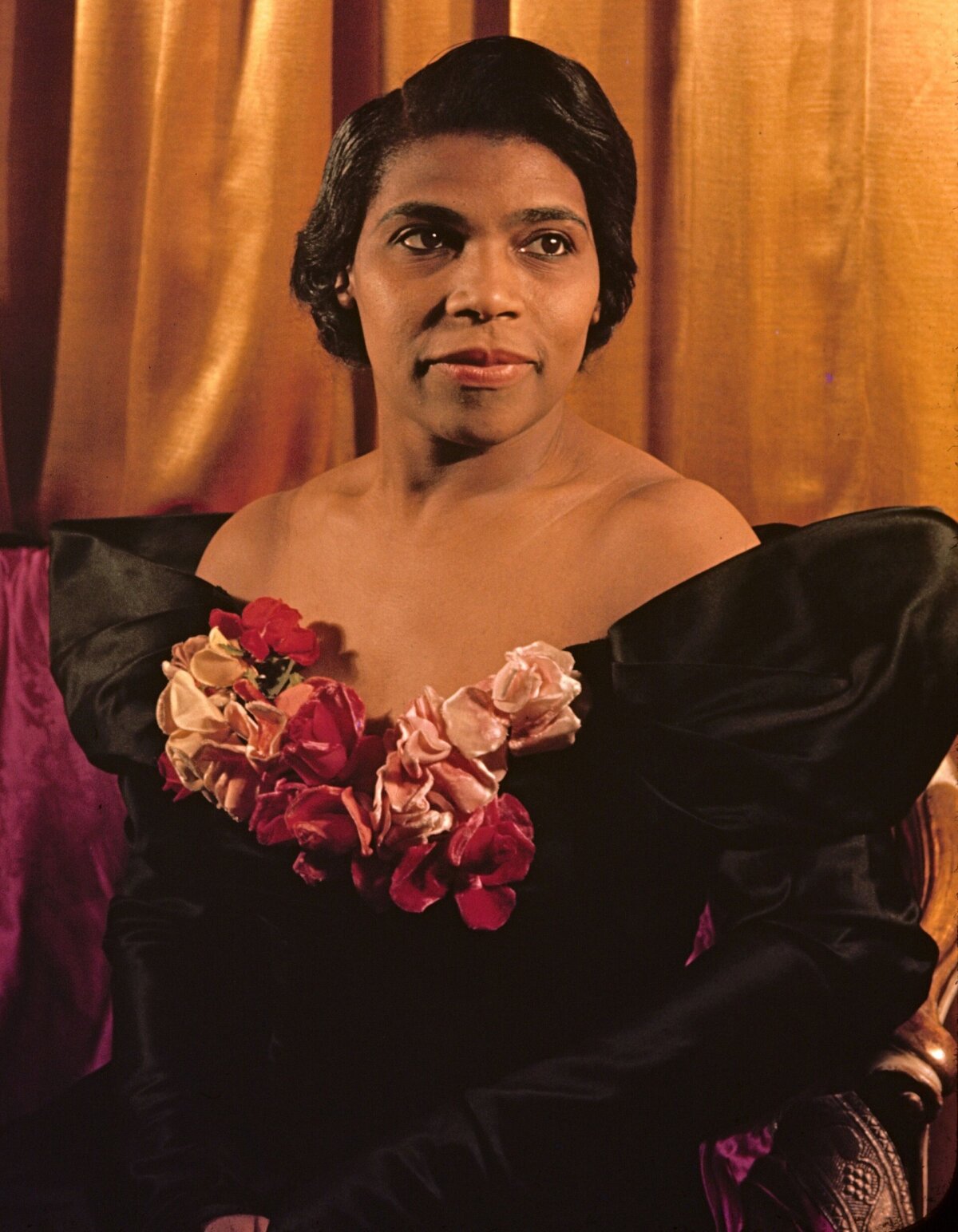
Her Formative Years
Anderson was born into a working-class South Philadelphia neighborhood on Feb. 27, 1897. Both of her parents held multiple jobs to support their three children.
The author speculates that all of Anderson’s grandparents were born enslaved in Virginia; he complains that she never publicly addressed that aspect of her family history. Tommasini injects commentary by W.E.B. Du Bois on the “lingering impact of slavery” into her childhood biographical chapter, even though Anderson never shared Du Bois’s agitation.
Anderson’s musical talent was evident from childhood. By the time she graduated from high school, she sought admission to the Philadelphia Music Academy, but was rejected because the school did not admit black students. Anderson refused to publicly identify the school in later interviews, claiming its name didn’t matter.
What mattered to her was the support of her community, which raised funds to further her music education. In 1919, she attended a six-week course in operatic literature and performance at Chicago Musical College. Tommasini laments that her 1956 autobiography didn’t mention the citywide race riots that occurred while she was in Chicago.
Anderson’s career should have taken off following her studies with the acclaimed voice teacher Giuseppe Boghetti. But her major concert recital debut at The Town Hall in New York City in April 1924 was poorly attended and harshly reviewed.
If anything, Anderson was indefatigable. A year after her poorly received concert, she was among the winners in a singing competition sponsored by the New York Philharmonic.
Further recitals were successful and she continued in her voice studies and performances across the United States and Europe. In the 1930s under the auspices of impresario Sol Hurok, she became one of the nation’s major classical singers.
Lincoln Memorial Concert
The highlight of the book, of course, is the Lincoln Memorial concert that occurred after the Daughters of the American Revolution (DAR) blocked Hurok’s plans to have Anderson perform at their Constitution Hall venue. Tommasini does a wonderful job in recalling how the concert was planned and received.
Tommasini also provides an important postscript often missed in the retelling of this story: Anderson would later perform several times at Constitution Hall and never publicly badmouthed the DAR for what occurred.
Furthermore, the author does a smashing job in piecing together Anderson’s 1955 color barrier-breaking appearance at the Metropolitan Opera. There she performed a supporting role of the fortuneteller Ulrica in Giuseppe Verdi’s “Un ballo in Maschera.”
Anderson previously spoke of wanting to pursue operatic roles, but she turned down offers in the 1930s from Prague and Moscow and declined further Met engagements after her debut.
Less Comfortable Issues
The book also uncovers some less-than-stellar aspects of her life. She had the habit of referring to herself with an imperious “we” instead of “I.”
As her American career gained steam, she unceremoniously jettisoned her original accompanist, the black pianist Billy King, in favor of Finnish musician Kosti Venhanen. King never recovered professionally and he never saw her until 1973, when she briefly visited him shortly after he suffered a stroke. She never responded to his follow-up calls and letters; he died in 1974.
Then, there is the unpleasant reality that Anderson’s contralto voice weakened over time. Tommasini points to late-career problems with “faulty pitch, wobbly sustained tones, or rough patches in what should be a smooth legato phrase.” By 1960, Ebony Magazine had the temerity to run a front-page article questioning if Anderson should retire.
Curiously, the book is missing some notable highlights of Anderson’s career. In a rare film appearance in “Christmas 1944” she sang “Ave Maria” while Leopold Stokowski conducted a multiracial chorus. The author cites her appearances at military bases and veterans’ hospitals during World War II; however, he doesn’t mention her highly publicized christening of the Liberty Ship SS Booker T. Washington in 1942.
While the author notes her appearance in a 1957 episode of Edward R. Murrow’s television program “See It Now,” he omits her 1954 appearance on Murrow’s “Person to Person” with her husband, architect Orpheus “King” Fisher. Other TV appearances are absent. These include her glowing appearance on the highly-rated 1953 variety special “The Ford 50th Anniversary Show” and a delightful turn in the “Mystery Guest” segment on the 1965 game show “What’s My Line?”
Anderson died at 96 on April 8, 1993. Despite some flaws, “Voice of a Century” captures the essence of Anderson as a multi-dimensional performing artist whose success continues to be a source of fascination and inspiration.
‘Voice of a Century: The Life and Artistry of Marian Anderson’
By Anthony Tommasini
Penguin Press: Sept. 8, 2026
Hardcover, 352 pages
What arts and culture topics would you like us to cover? Please email ideas or feedback to features@epochtimes.nyc