SEARCH


Though feelings, emotions, daily needs, and everyday enjoyments are good themselves, when given free rein, they become the unanswerable rulers of our lives. If we fail to control them, we become their slaves, and they become our masters.
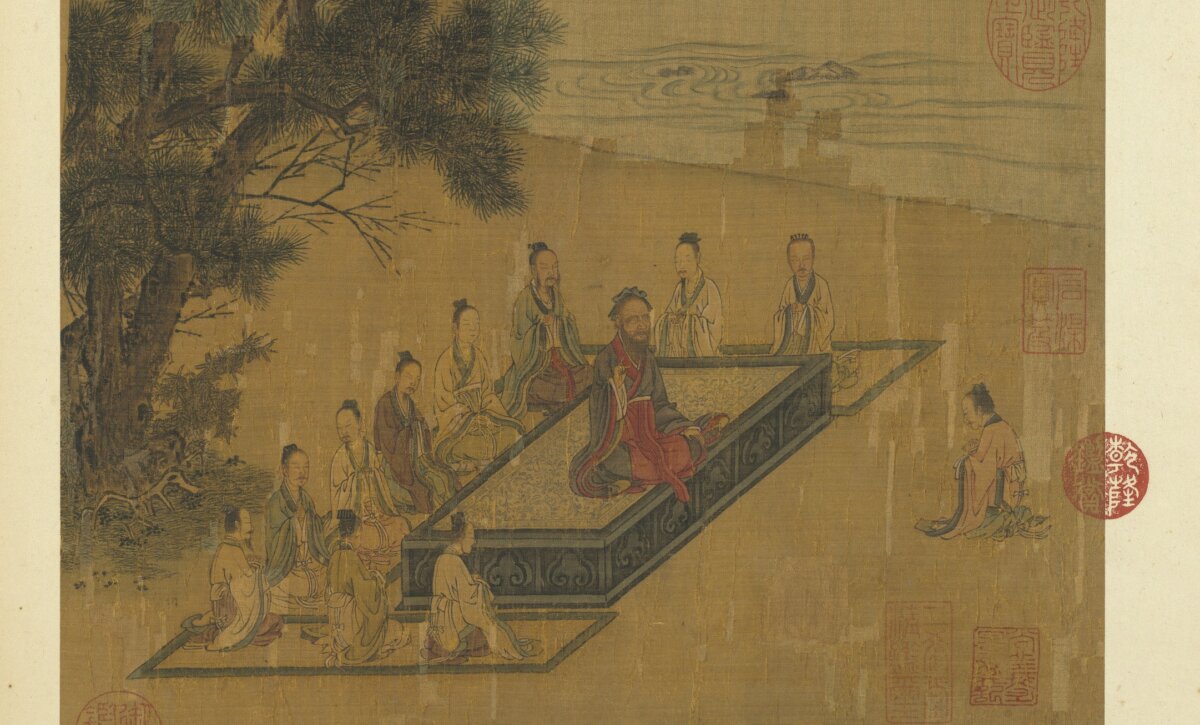
In “A Story From Confucius,” Confucius shows the dangers of lacking self-control. Self-control guides us to keep everything in check, in balance, and in order. But without it, Confucius warns that we may suffer greatly in mind and body.
Unbridled Anger
Of two of Confucius’ students, Tsze-Lu has a propensity to anger, and Nou-Wui is known for his peaceful nature. Once, Tsze-Lu and Nou-Wui fall into an argument. After the argument ends, Tsze-Lu nurses his anger and takes a long time to calm down, while Nou-Wui soon regains his peacefulness.
On another day, after one of their arguments, Tsze-Lu finds blood coming from his mouth. Panicked, he runs to Confucius for advice. He confesses that he might have to stop studying and working, fearing that he won’t live very long. He begs Confucius to aid him, since he is a kind father figure.

However, Confucius gives Tsze-Lu an unexpected answer. Confucius kindly tells Tsze-Lu: “Tsze-Lu, you have a wrong idea about your body. It is not the study, not the work in school, but your great anger that causes the trouble.” Confucius points out that, while Tsze-Lu clings to his anger with unremitting passion, Nou-Wui quickly lets go, thus regaining peace and order in his soul.
Confucius warns Tsze-Lu that if he doesn’t seek to control his anger, it will degrade his health. In his excess, Tsze-Lu will find no relief and only a swifter path to death.
Unbound and Free
To illustrate his point, Confucius provides an analogy to show how Tsze-Lu’s anger is the culprit. Confucius asks Tsze-Lu how many teeth he has, and Tsze-Lu replies “thirty-two.” Confucius then asks him how many teeth he has lost. “I lost one when I was nine years old, and four when I was about twenty-six years old,” Tsze-Lu says.
Confucius then turns from Tsze-Lu’s teeth to his tongue. Confucius asks him if his tongue is still in good shape, despite the loss of a few teeth. Tsze-Lu confesses that, yes, his tongue is still in perfect shape.
Confucius explains that, even though the teeth are tougher than the tongue, they are so “strong, and determined to have everything they desire” that they don’t yield. On the other hand, the tongue is yielding, soft, and gentle. It aids the teeth, never resisting.
Through this story, Confucius shows that self-control is key to living a healthy and happy life. For if we cling to a passion, we lose balance in our mind and body, exposing ourselves to excess strain and stress.
Thus, Confucius’s story mirrors Marcus Aurelius’s words in “Meditations”: “You have power over your mind—not outside events. Realize this, and you will find strength.” When we seek to control our passions and desires, we restore order in ourselves and, in doing so, find the ultimate strength. Self-control gives us ultimate freedom, unbound by exterior or interior forces and ruled by reason.
What arts and culture topics would you like us to cover? Please email ideas or feedback to features@epochtimes.nyc.