SEARCH


For listeners familiar with Strauss, “conservative” and “classical” are probably not the words that come to mind for the expansive symphonic works of this late-Romantic composer.
His tone poems—from his breakthrough success, “Don Juan,” to his semi-autobiographical, “Ein Heldenleben”—expand firmly on the ideals of the New German School. Strauss’s orchestral music is among the most commonly performed in the symphonic repertoire, beloved for its nuanced orchestration and advanced harmonic language.
Yet Strauss’s early music differed greatly from his orchestral essays. He wrote music in the vein of Robert Schumann and Felix Mendelssohn, early Romantics who balanced musical expressivity with clarity.
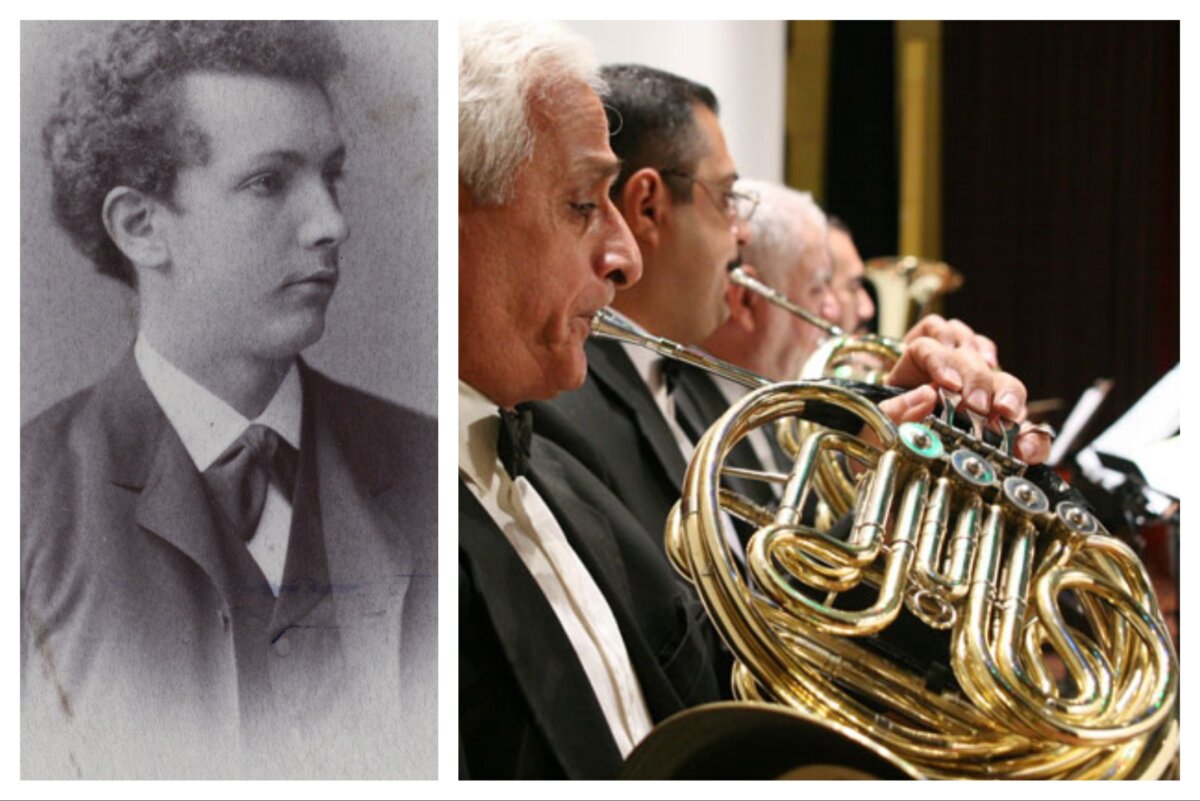
At the age of 18, Richard Strauss wrote one of the defining concertos of the horn repertoire, the Concerto No. 1 in E-flat major. Opening with an exuberant fanfare by the soloist, the work pays homage to the classical influences of Strauss’s early music.
Today’s recording of the first and second movements, Allegro and Andante, respectively, is by Hermann Baumann, with the Gewandhausorchester led by Kurt Masur. (Listen)
Just take the introduction of the Allegro of the Horn Concerto. After the declaratory statement by the soloist, the strings and winds enter with a formal orchestral response reminiscent of Mozart. When the horn enters again, this time with a luscious melody, only faint string eighth-notes support the soloist.
Listen to the violins and the soloist at 1:33. Notice how the interplay between sections weave together into a statement of extraordinary lyricism. The inspiration behind the wonderful horn-writing of the solo part can be firmly attributed to perhaps the most important musical influence of Strauss’s childhood: his father, Franz Josef Strauss.
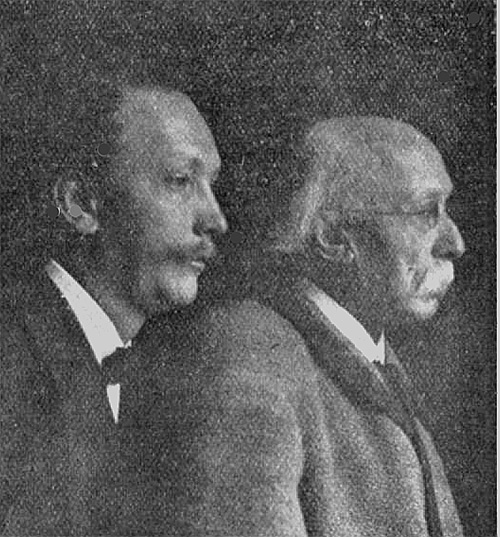
Franz Strauss wasn’t just the provider of his son’s education; he was one of the preeminent horn players of the 19th century. As the principal horn player of the Munich Court Orchestra, he was admired for his flawless technique. Not only did he introduce his son to the possibilities of the horn, but Franz also critiqued his compositions and imparted to him the music of Mozart, Haydn, and Beethoven.
At 2:50, after another fanfare in G minor, the horn continues with another wonderful melody. This time the woodwinds provide support, with flutes darting in and out of the texture. At 3:56, the music starts to build. The mood transforms from introspective to heroic, leading into an orchestral section where the strings soar in a Schumann-like fashion.
The 5:38 mark signals a completely different character. Strauss uses the lower register of the horn to bring a pensive atmosphere to life. The key of A-flat is muted, and, just when the music reaches its quietest, the horn returns.
The 8:00-minute mark features a bright melody by the soloist, a youthful tune fitting for a composer of boundless ingenuity. Eventually, the pensive atmosphere returns, the music seeming to fade off before one final exclamation by the horn.
What arts and culture topics would you like us to cover? Please email ideas or feedback to features@epochtimes.nyc.