SEARCH



Clowns, love them or hate them, you cannot help but conjure images of red noses and cheap gags. If you can think of a tune for them to dance to, chances are, you are humming the “Entry of the Gladiators.”
Originally written to showcase brass instruments’ technical capabilities, it has taken on many identities before finally becoming the present-day musical gag.
A Journey Through Time
In 1897, Czech composer Julius Fucik composed the military march that would eventually become known as the “Entry of the Gladiators.” Having studied under Antonín Dvorak, he went on to pursue a career as a musician in the Austro-Hungarian army. Fucik was fascinated by wind instruments and found a natural outlet for his interest through military music.
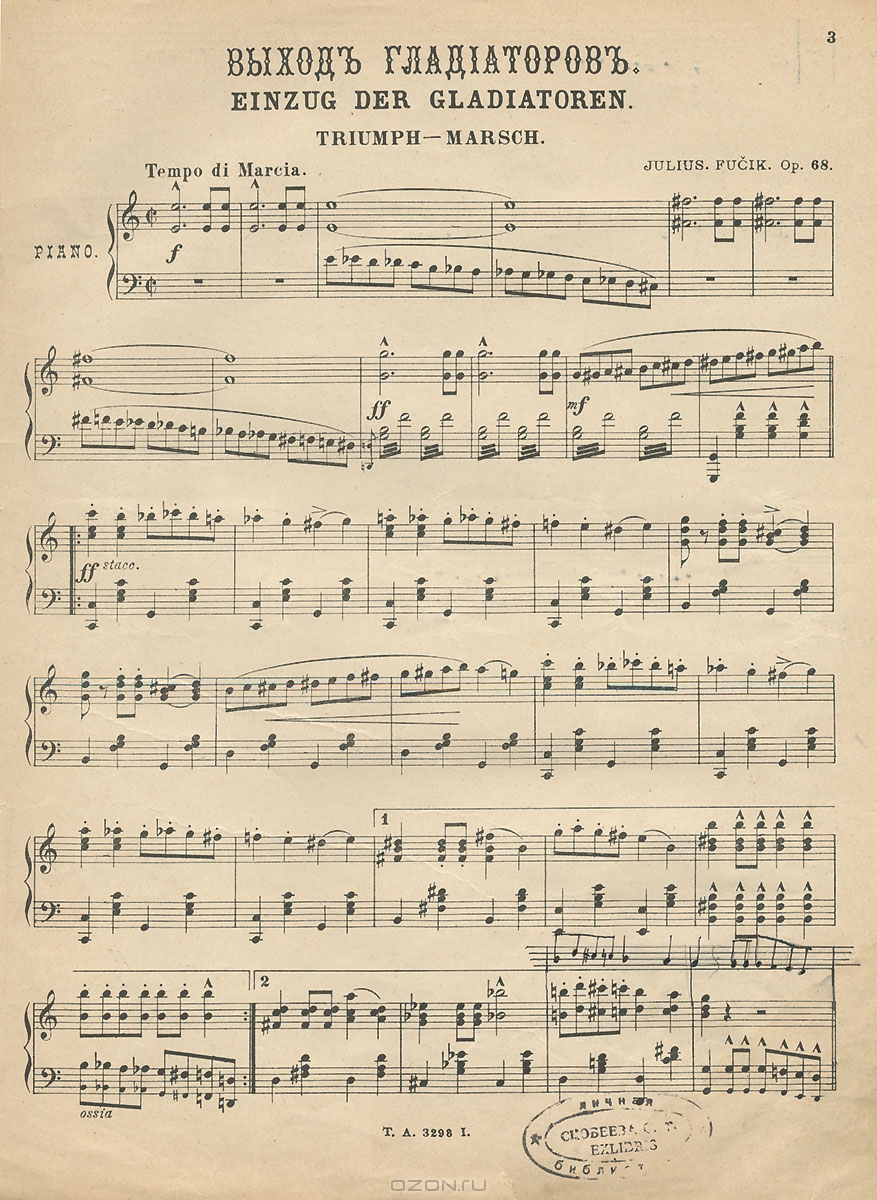
Fucik composed many marches during his career as a military musician. His works earned him comparisons to the American march composer, John Philip Sousa; and although he also dabbled in many other genres, he became known for his marches, earning the nickname as the “Bohemian Sousa.”
While string instruments remained relatively stable throughout history, the industrial revolutions of the late 19th century drove major developments in wind instruments. Improvements in metallurgy and valve and piston technology allowed brass instrumentalists to develop virtuosity. The developments smoothed note changes and made chromatic scales (notes separated by the smallest possible semitone interval) easier to play.
Fucik wanted to compose a military march showcasing the brass instruments’ chromatic capabilities. Though now known by the title “Entry of the Gladiators,” it was originally named “Grande Marche Chromatique.” Back then, it was incredibly novel for audiences to hear the brass section hula-hooping around the instrument in a style previously limited to string instruments.
Fucik did not originally intend the piece to be pictorial, but after reading about Roman gladiators entering the arena, he was inspired to add classical imagery. The march was renamed “Entry of the Gladiators.” Its stately, almost borderline tacky, character seemed perfectly suited as a description of ancient Rome’s gladiatorial games.
In 1901, Canadian composer Louis-Philippe Laurendeau, took Fucik’s march and rearranged it under the new title, “Thunder and Blazes.” The arrangement increased the tempo and added a new chaotic and comedic dimension. Circuses adopted “Thunder and Blazes” as introductory music for clowns, turning Fucik’s gladiators into a different type of spectacle.
During World War II, the march took on a darker tone. It was forced upon prison orchestras in German concentration camps. Played to inmates marching to and from forced labor, the tune became a tool for grim mockery.
Yet despite its historical connotations, at its core, the composition serves as a brilliant display of unrestrained pride and vitality. Listening to the bombastic fanfares and soaring melodies, you quickly forget the clowns, the gladiators (even the chromatics) and find yourself lost in the pompous charm of Julius Fucik’s military march, “Entry of the Gladiators.”
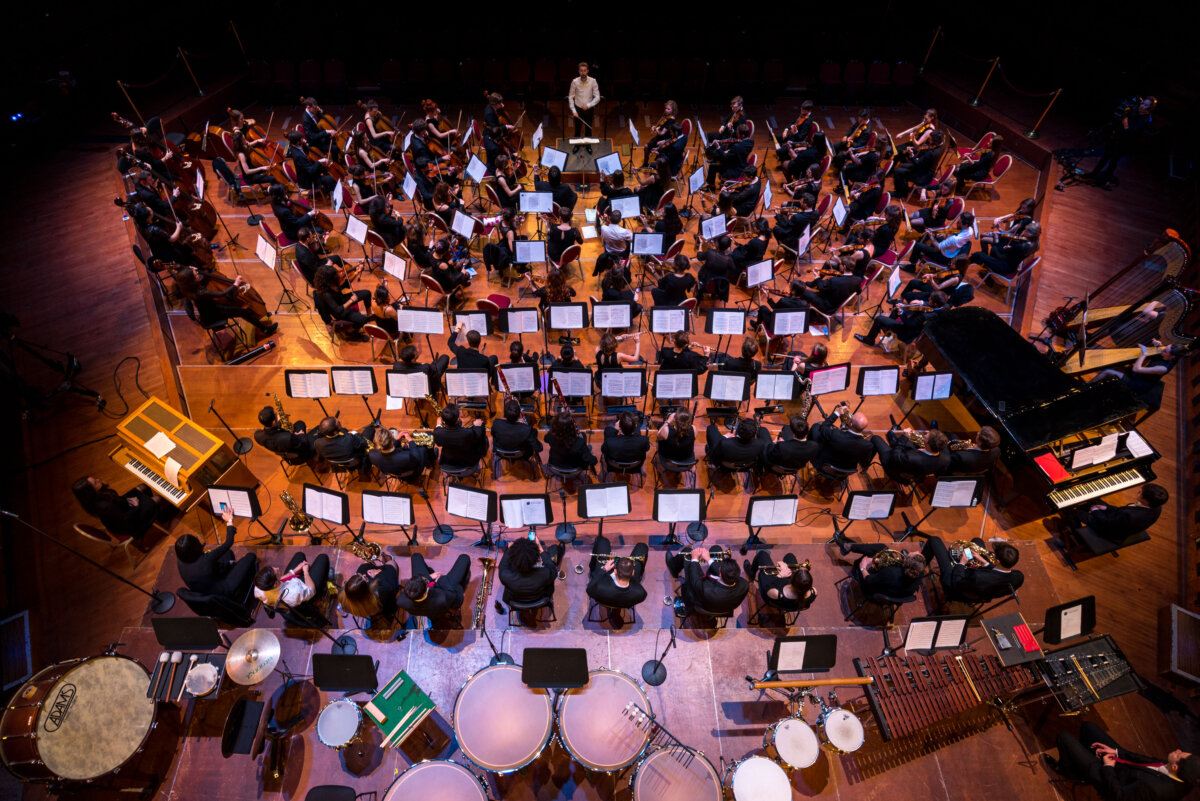
The Entry of the Gladiators
Today’s recording is performed by the Czech Philharmonic, conducted by Tomas Netopil. (Listen)
The march opens with sweeping chromatic runs in the orchestra. Suddenly, the brass launches into the iconic chromatic tune (00:12) over a cacophonous percussion accompaniment. After a rich, chesty melody in the trombones (00:46), we reach the lesser-known middle section (01:18).
Here, the woodwinds and brass replace the percussion as the martial accompaniment, while the strings spin an expansive line above them. Suddenly, a drum roll (02:05), like a fuse being lit, leads to an explosion into the finale. Euphoria pervades the ending as instruments try to out-sing one another in jubilant exultation.
What arts and culture topics would you like us to cover? Please email ideas or feedback to features@epochtimes.nyc