SEARCH


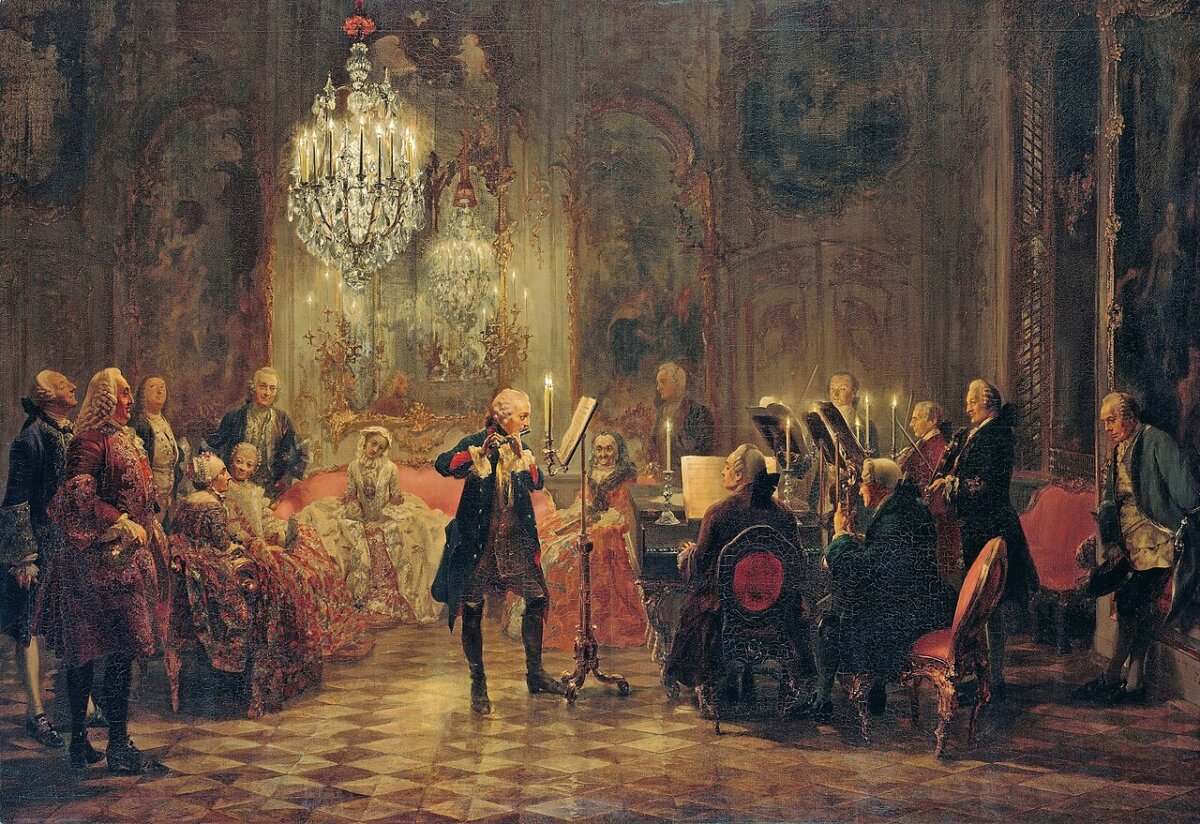
In his later years, J.S. Bach was quickly becoming antiquated. Despite pushing musical complexity to its limits, the intellectual style of his sacred expression was being rejected by the newer “Enlightened” youth. Bach was perhaps skeptical of the burgeoning classical style that moved music towards simpler forms of entertainment.
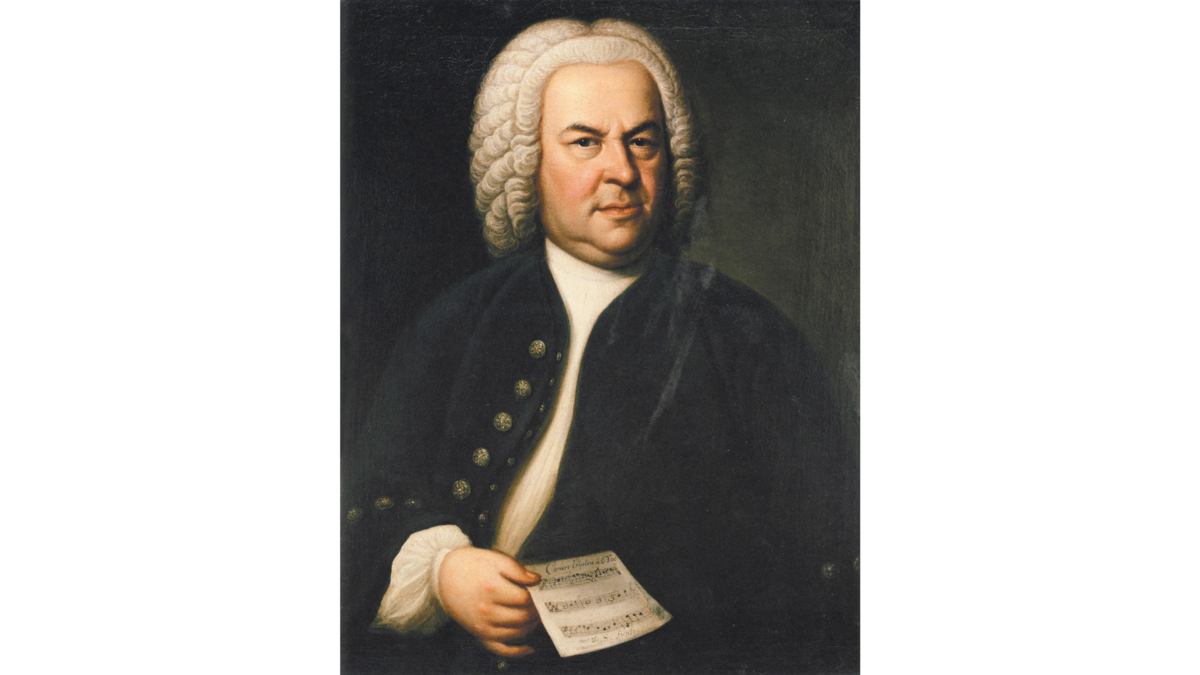
So when Voltaire’s “philosopher king,” King Frederick II of Prussia, invited the “old Bach” to meet him, Bach was understandably hesitant. However, the 62-year-old composer eventually agreed and, on May 7, 1747, went to Potsdam to meet the King.
Two Worlds Collided in Potsdam
As the man of the Enlightenment, Frederick II embraced the freedom of conscience and placed theology beneath the law. He filled his court with vanguards of the new fashionable style—among them was Bach’s son, Carl Philipp Emanuel, who served as the king’s harpsichordist. The king demanded absolute subservience, and the Bachs would accompany him on his flute and compose for his frequent concerts.
The king was curious to meet the legendary father of his harpsichordist. And when Bach finally arrived at the doorstep, the king didn’t give the composer time to rest; he rushed him to try out several new keyboards. Bach’s sudden impromptu performance did not fall short of his reputation. In a later, perhaps apocryphal retelling, Anna Magdalena Bach wrote: “So Johann Sebastian sat down and began to play, and it may be that some of the listeners realized that on that night there were two kings in the palace.”
Frederick then challenged Bach to improvise a three-voice fugue (a piece of music with three interweaving lines) with his “royal theme.” The theme, however, seemed deliberately constructed to resist fugal treatment: Later scholars speculated it was part of a “well-prepared trap” to humiliate the composer. Unfazed, though, Bach successfully improvised the fugue. The king then raised the stakes, asking Bach for a six-voice fugue with the same theme. This time, Bach understanding the unreasonable request, politely declined, and instead offered a six-voice fugue with his own theme.
The trip left a deep impression on Bach, and when he returned home, he composed a collection of music based on the “royal theme,” consisting of a three-part and six-part ricercar, 10 canons, and a trio sonata for flute, violin, and a continuo (bass line). Together they were sent to Frederick II under the title “The Musical Offering.”
Yet beneath the gift’s innocent veneer, Bach layered it with religious symbolism and hidden meanings. As a devout Christian, Bach included the epigraph “soli deo Gloria” (glory to God alone) in his compositions—the German word for “offering” can also be interpreted as “offertory.”
In the manuscript for the king, Bach wrote the acrostic Regis Iussu Cantio Et Reliqua Canonica Arte Resoluta (the theme given by the king, with additions, resolved in canonic style) that spells out RICERCAR. Literally translated as “to seek out,” ricercar is also a genre of music characterized by the interweaving of melodic lines.
Within the 10 canons, some contain the epigraph “Quaerendo invenietis” (seek and ye shall find) that references the Sermon on the Mount. The canons are presented as puzzles with various solutions for the performer to solve, with modern editions now simply presenting a standard solution, and likely allude to the Ten Commandments.
The Trio Sonata
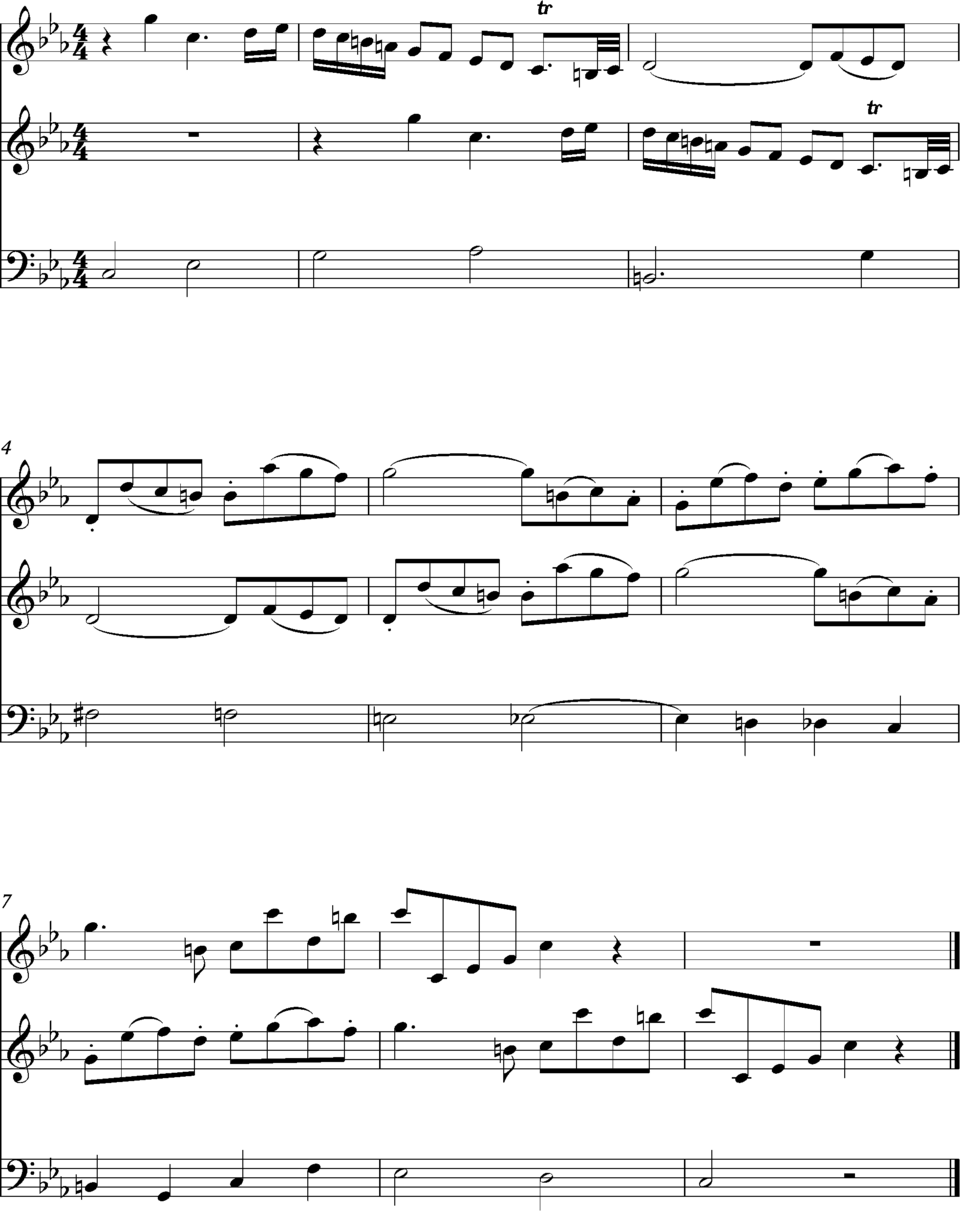
The trio sonata is unique in the collection and seems most adapted for Frederick II. It featured the king’s instrument, the flute, and contains more classical inspiration.
Today’s recording of the Trio Sonata is performed with period instruments by the Netherlands Bach Society. [Listen]
The sonata’s link to the “royal theme” is more abstract than in his other works. While the second movement’s Allegro section (06:00 to 12:00) weaves the theme into a flurry of 16th notes, the other movements merely reference the theme’s melodic contour.
The third Andante section (12:26 to 15:38) is the most striking example of Bach adapting to the musical taste of Frederick the Great. Emphasizing subtle emotional shifts and expressive silences, Bach features a short, sighing figure (12:32) throughout the movement. Unusually for Bach, he explicitly labels the dynamics “forte” and “piano” in the score to create an echo effect; not part of his old musical style, this reflects the more modern compositional language.
So was “The Musical Offering” Bach’s attempt to reconcile the past with the present? A defense for sacred counterpoint written for God? Or was it a snub toward a king’s musical tastes and his unreasonable challenge?
Regardless, the challenge birthed a collection that testifies to Bach’s genius—and a telling example of what happens when you place two kings in the same palace.
What arts and culture topics would you like us to cover? Please email ideas or feedback to features@epochtimes.nyc.