SEARCH


In March 1603, England faced a crisis. The unmarried and childless Queen Elizabeth I lay dying at Richmond Palace. A secret government report determined there were 12 different potential claimants to the throne, not counting potential foreign invaders eager to usurp a leaderless kingdom.
The eventual successor was King James VI of Scotland, Elizabeth’s closest relative; both were direct descendants of King Henry VII. James was welcomed into England as the new king, taking the name James I.
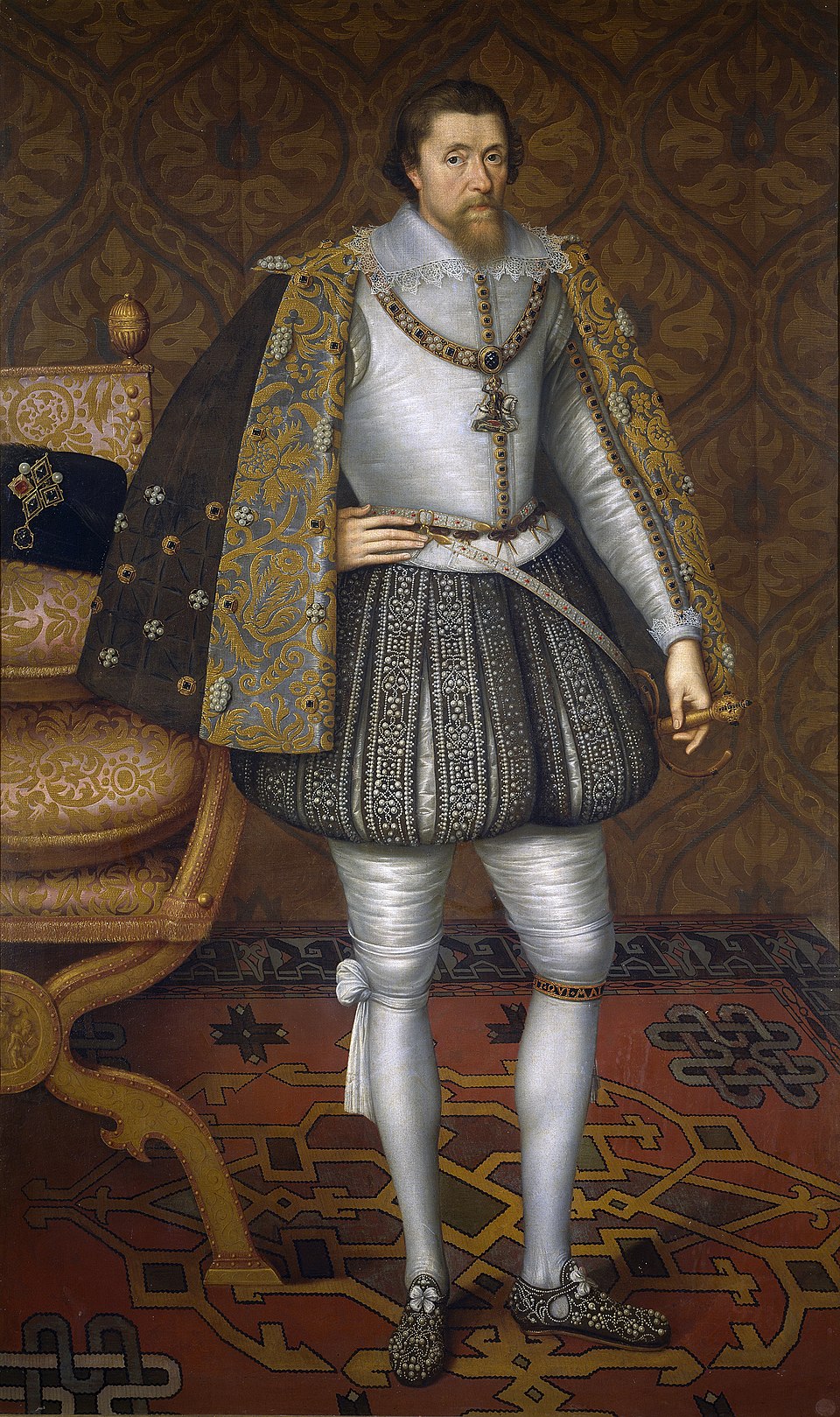
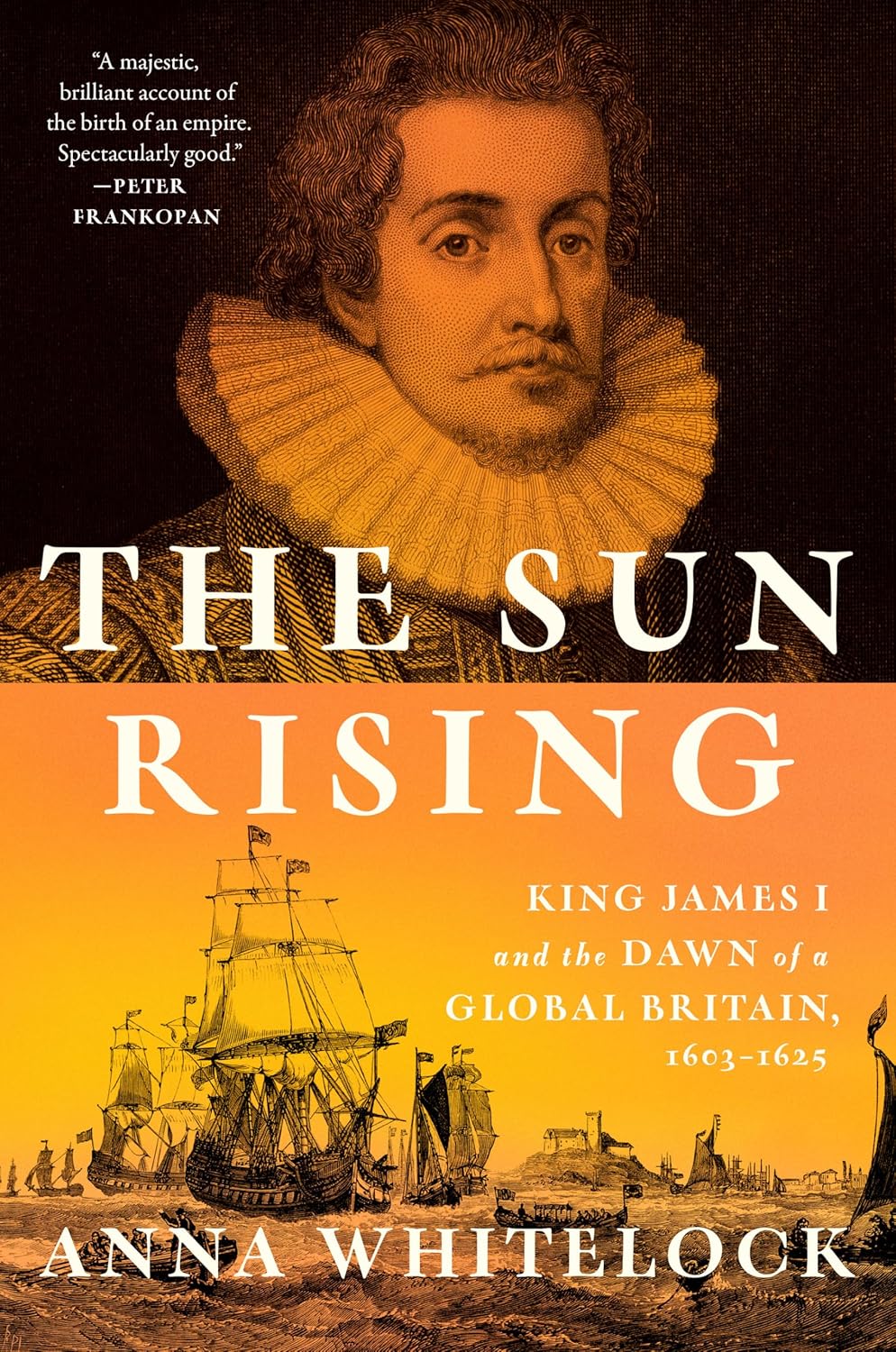
In presenting “The Sun Rising: King James I and the Dawn of a Global Britain, 1603–1625,” Anna Whitelock stresses that her book is not a biography of James but “a reframing, a ‘provocation’ which seeks to move beyond traditional accounts” and redefine James as a monarch with ambitious and innovative ideas.
Whitelock’s approach is daring. It borders on what contemporary imagemakers would refer to as a “spin.” She avoids most of the scandals in James’s court, including the salacious rumors of his alleged bisexual affairs. Nonetheless, the author presents a fascinating portrait of a pragmatic, if not wholly successful, politician.
England’s Scottish King
James ascended the Scottish throne in 1567 at the age of 13 months following the forced abdication of his mother, the ill-fated Mary, Queen of Scots. As a young adult, he recognized the possibility of his gaining the English throne.
James conducted open campaigns in his kingdom and across Europe, plus carrying on secret correspondence with confidants to Elizabeth who supported his accession. Sir Robert Cecil, the queen’s principal secretary, worked surreptitiously with James to secure power. Cecil claimed Elizabeth gave her blessing to James on her deathbed through a hand gesture; there is no independent confirmation of that action.
Whitelock details how James tried to unite England and Scotland into a merged entity. As James I, he identified as King of Great Britain. He commissioned a new flag combining the English and Scottish banners into a single design that became the forerunner of today’s Union Jack.
James urged the English and Scottish Parliaments to approve a legal merging between the kingdoms, but lawmakers balked. The combination only occurred with the Act of Union in 1707. The king’s relationship with the English Parliament remained contentious throughout his reign.
James is best remembered for commissioning a new English-language version of the Bible. He hoped this would bring together what Whitelock identifies as “the Catholic emphasis on mystery and the Puritan commitment to the clarity and accessibility of the written word.” The resulting King James Bible emerged as one of the most profoundly influential works in the history of the English language, although it fell short of James’s goal of creating a united church among rival sects.
The religious schisms of the day challenged James’s reign. The 1605 Gunpowder Plot by a group of Catholic agitators to blow up Parliament and kill the king could have been used to fuel widespread anti-Catholic persecution. James took pains to stress the plot was “the treason of a few” and not a massive conspiracy against the Protestant leadership.
He supported the Plantation of Ulster strategy of establishing Protestant English and Scottish “planters” on confiscated Irish Catholic lands. This, unfortunately, laid the foundation of conflicts that percolated for centuries.
A Global Perspective
Whitelock highlights James’s efforts to present himself as “Rex Pacificus” (peacemaker king), with the emphasis on diplomacy instead of military conflict. However, he was forced to put those noble goals aside. England’s Parliament encouraged him to send troops to the Thirty Years’ War, which was sparked in Bohemia by his son-in-law, Frederick V of the Palatinate.
James saw the need to vigorously expand the overseas colonial outposts that began in desultory efforts under Elizabeth. He hoped to establish global colonies through commerce and proselytizing rather than bloody conflict.
The new British Colonies in North America, however, were poorly prepared to operate in unfamiliar terrain, and their relations with the indigenous populations frayed quickly and violently. James reluctantly allowed the import of North American tobacco when other initial attempts at Colonial agriculture failed to produce bumper crops.
James showed his skill at geopolitical planning by introducing himself and his kingdom through correspondence to the leaders of Asia. His alliance with Shah Abbas I of Persia (today’s Iran) opened an important trade relationship.
Unfortunately, his plans to foster a new era of improved relations with Spain by having his son Prince Charles marry Infanta Maria Anna backfired. The Spanish monarchy refused to condone the wedding unless the Protestant Charles converted to Catholicism and repealed England’s Anti-Catholic Penal Laws.
Whitelock doesn’t completely avoid the human aspect of James’s reign. The book is deeply moving in detailing how the king reacted to the death of his oldest son, Prince Henry, and later to the death of his Danish-born wife, Queen Anne.
Whitelock’s James is a complex and often confounding personality full of grand intentions but mixed results. “The Sun Rising” shows that, while many of his goals remained elusive at the time of his death in 1625, he nonetheless began the process to grow a British Empire.
‘The Sun Rising: King James I and the Dawn of a Global Britain, 1603–1625’
By Anna Whitelock
Viking: Oct. 28, 2025
Hardcover, 448 pages
What arts and culture topics would you like us to cover? Please email ideas or feedback to features@epochtimes.nyc