SEARCH


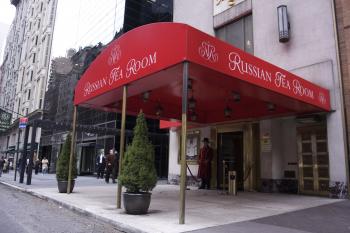
The Russian Tea Room is all about great food, culture, history, beauty, respect for tradition and art, love, and war. It is about historic Russia at its best, with its huge empire and more than a hundred ethnic groups once spanning from Europe’s borders, across Mongolia into China.
Members of Russia’s Imperial Ballet built The Russian Tea Room in 1927, ten years after the Bolshevik Revolution, to maintain the beauty and authenticity of the nation’s culture, history, and tradition. It soon became the gathering place for Russian celebrities and a meeting place for Russians expatriates.
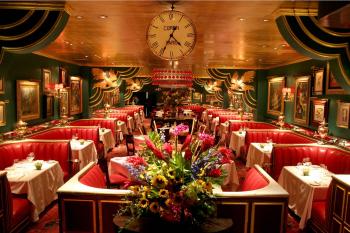
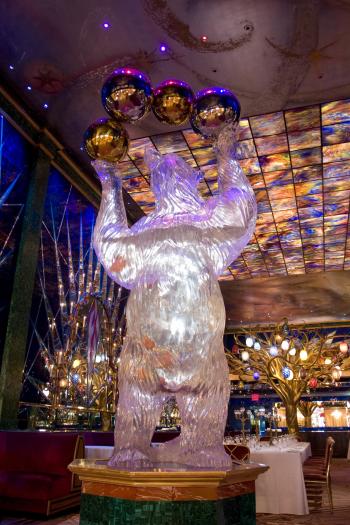
Warner LeRoy spent millions of dollars to revitalize its image. He kept a lot of original pieces, such as paintings by Chagall, Kandinsky, and Picasso. He also added a few interesting features, the 15-foot revolving glass bear aquarium, a tree with Faberge-inspired Venetian glass eggs in the Bear Room on the second floor, and the second floor lounge.
The fourth floor, my favorite room, the Hearth Room, features walls of inlaid decorative wood paneling, a fireplace, and an active diorama of the Kremlin in every season. Each room offers a rich, warm, and elegant ambience ideal for private parties and weddings.
Different menu offerings at reasonable prices make for a memorable gastronomic experience. The focus is on sustainable, fresh-from-the-farm provisions. Executive chef Marc Taxiera said, “We use the green market and local farm products, a responsible move to use them, not only because it is grown with love but to also help the suppliers grow their business.”
Classics appetizers such as Traditional Tea Room Red Borscht ($18), Seafood Blinchik ($18), and Caviar Tasting ($28), served the traditional Russian way with buckwheat blini sour cream and chopped eggs, topped with salmon and white roe make a fine start.
Main courses include Boeuf a la Stroganoff ($39), Chicken Kiev ($38), and the very popular salmon dish Kulebiaka ($36). My friends and I always appreciate the three-course Express Lunch menu at $35.00, which changes according to season.
The service by knowledgeable and well-trained staff is excellent.
Taxiera took what the essence of the Russian Tea Room was, restored it, and made it into a new classic. His grandmother who prepared the Sunday feast for the whole family inspired him to become a food aficionado. Taxiera graduated from the Institute of Culinary Education (ICE). He is a hands-on chef who spent years learning about Russian gastronomy and mentioned that the Russian Tea Room’s food is French-influenced. French chefs were cooks to the Russian czars.
The cocktail menu offers drinks with historical names. Russian dishes are often named for famous households, and it seems that applies to names of their cocktails, too. For example: Ivan The Terrible, the Rasputin, the Nureyev, and From Russia with Love consisting of champagne, Godiva chocolate liquor, and Chambord.