SEARCH


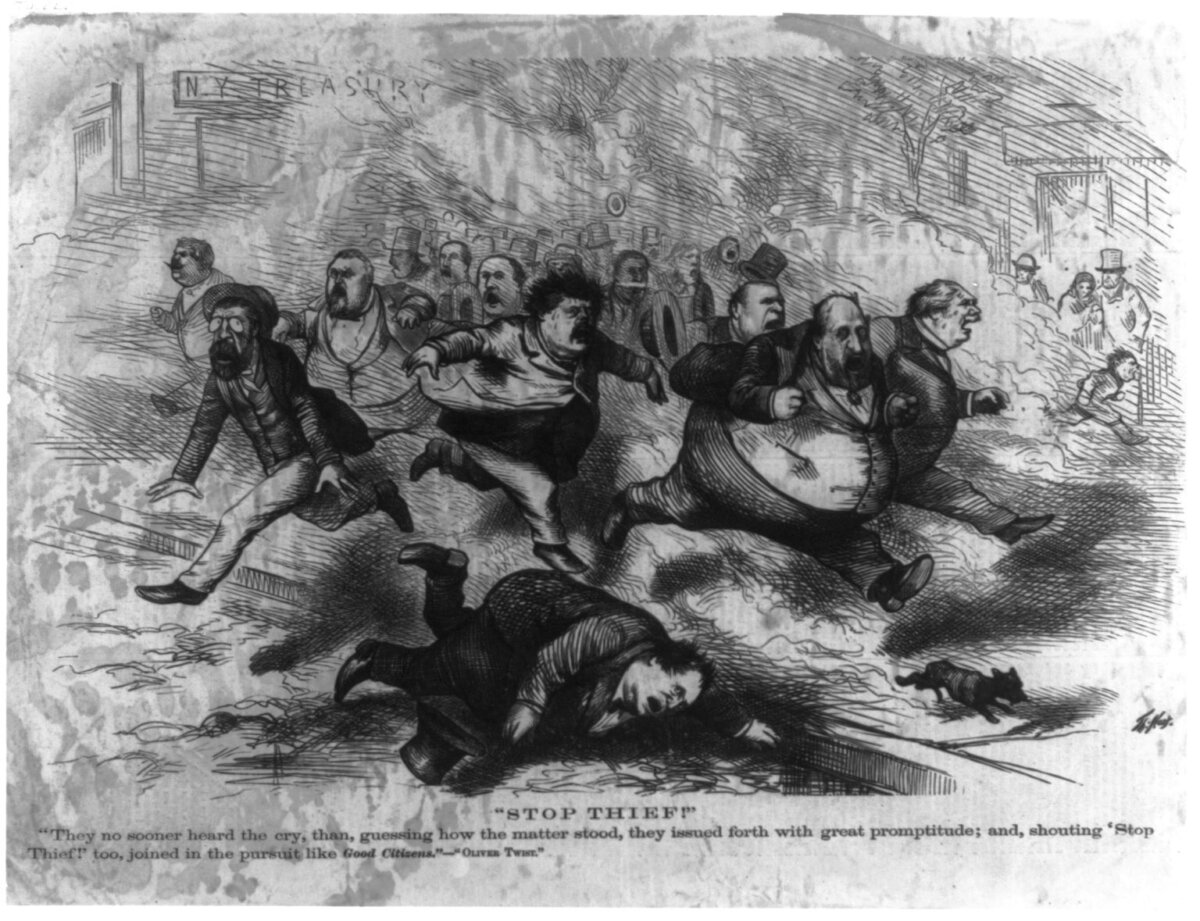
The most powerful man in New York City found himself hiding in New Jersey.
William Magear Tweed began climbing the political ladder in 1851 when he was elected alderman for his Seventh Ward neighborhood in Manhattan’s Lower East Side. The following year, he won a congressional seat but hated Washington’s slow, mundane, and disparate politics. He did not run for reelection in 1854. Instead of allowing himself to be lost in a crowd of 234 national legislators, he found his home among the tight-knit group of Democrats at Tammany Hall known as “The Forty Thieves.”
The name harkened to the classic tale from “The Arabian Nights,” but, in America, generally, and New York City, specifically, it harkened to the early 19th century when a group of Irish-Americans formed New York City’s first organized street gang. Around 1850, the gang dissolved, but the name lived on with Tammany Hall—the political machine for the city’s Democrat Party—and for good reason. The 40 aldermen and assistant aldermen of the Common Council of the City of New York had the power to appoint city officials like policemen, issue business licenses, and grant government contracts.
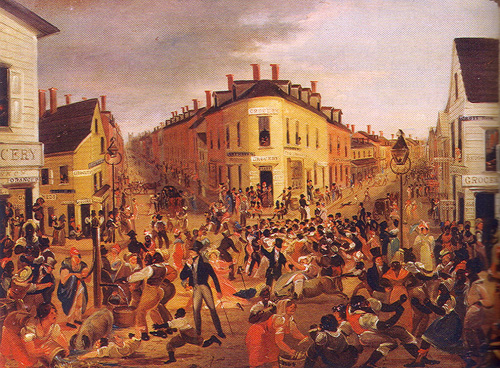
Tammany Hall paid some city officials or those employed for government contractual work immense sums of money. A carpenter was paid more than $360,000 (nearly $14 million today) for a month’s work, and a plasterer was paid more than $130,000 (more than $5 million today) for two days of work. How was it even possible to pay such amounts? The answer was through the kickbacks that those at Tammany Hall received from the businesses that were granted contracts.
When it came to completing the projects, there did not seem to be too much of a rush, especially as the money continued to pour in. For example, and possibly the most egregious, was the New York County Courthouse at Chambers Street. The cornerstone was laid in December 1861, but it was not completed until 1881. What should have cost $250,000 to build ended with a price tag of approximately $12 million.
Becoming the ‘Boss’
It was around the time of the cornerstone-laying ceremony that Tweed was maneuvering his way to the top of Tammany Hall’s power bloc. He became a school commissioner in 1856, a county supervisor in 1858, and a deputy street commissioner in 1861. During the period of rising through the ranks, the large man with an even larger personality assembled his growing list of cronies.
These corrupt politicians ultimately stole somewhere between $30 million to $200 million from the city’s public coffers. By the early 1860s, this group of swindlers became known as the Tweed Ring, fittingly orchestrated by the man they called “Boss.”
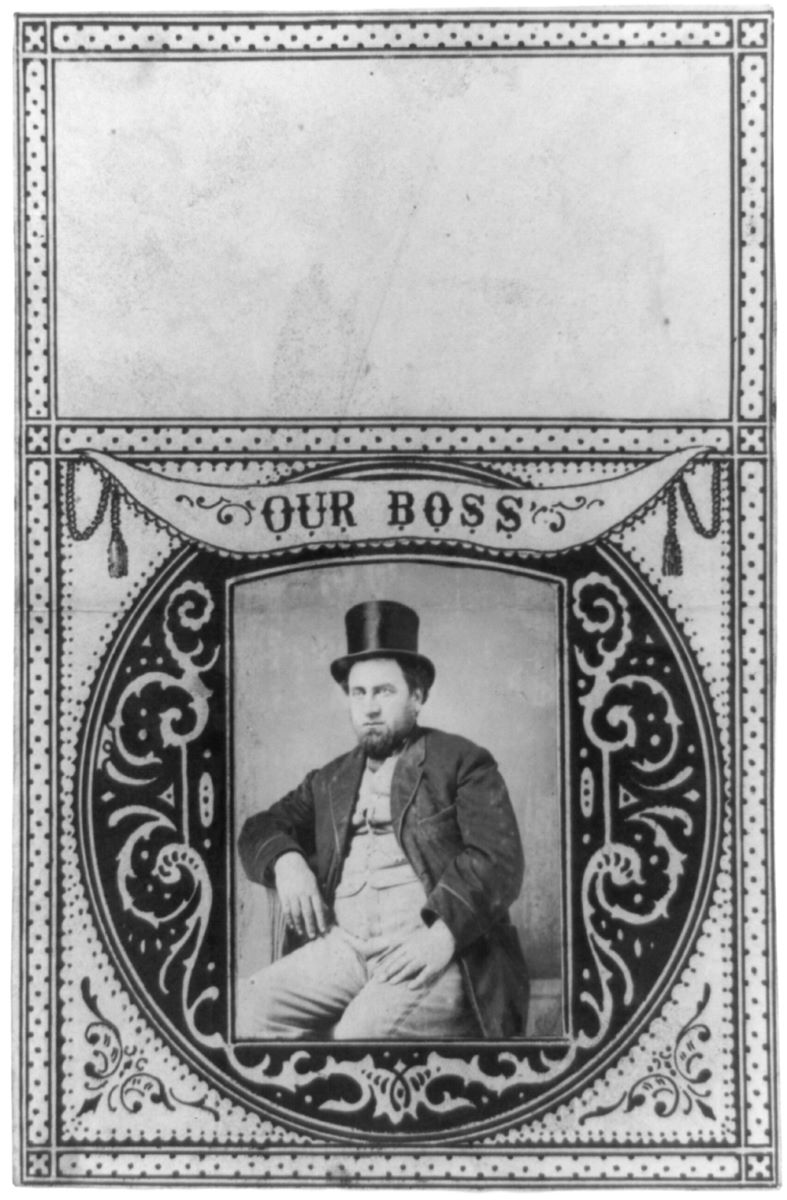
Despite the overt and outrageous corruption, Boss Tweed remained in near absolute power for about a decade. The primary reason for his staying power was that he did care about the immigrants who came through New York Harbor. He also cared deeply about their votes for his Democrat Party.
The Tweed Ring ensured these immigrants received jobs, were helped with housing, and given assistance to speedily become naturalized citizens. Tweed also donated large amounts of money to charities, though he always had more than enough for himself to pay bribes, throw extravagant parties, dress in the finest clothes, and build his Fifth Avenue mansion. Additionally, during the New York City Draft Riots of 1863, Tweed headed the charge to tamp down the violence, though it wasn’t controlled fully until federal troops arrived.
Bringing Down the ‘Boss’
With these tactics, Tweed offset his corruption enough to cause others to look the other way. For a while it worked, or at least it worked through extensive bribery. Some, however, could not be bribed, specifically, George Jones, publisher of The New York Times, and Thomas Nast, the political cartoonist for Harper’s Weekly. It was the latter, though, that worried Tweed the most.
“Stop them damned pictures,” Tweed was once heard complaining. “I don’t care so much what the papers say about me. My constituents don’t know how to read, but they can’t help seeing them damned pictures!”
The pictures and the editorials kept pounding away at the Tweed Ring. Tammany Hall nonetheless continued to bilk, bribe, and intimidate its way forward. Tweed even convinced the state legislature in Albany to pass a home-rule bill that would allow New York City to manage its own finances.
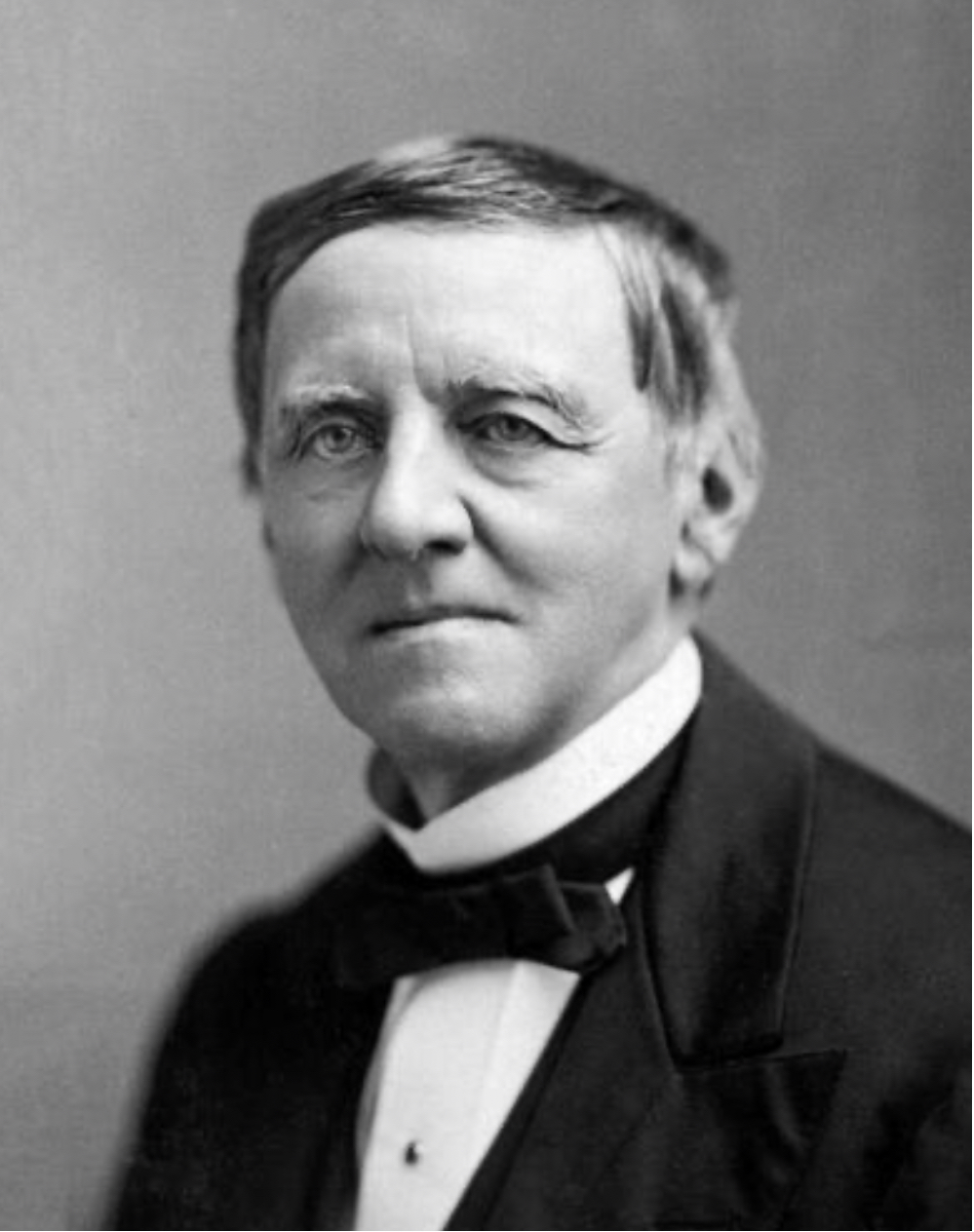
One prominent Manhattan lawyer and an uncorrupt member of Tammany Hall, Samuel J. Tilden, testified against the bill, but it passed all the same. Tilden had risen politically along with Tweed, though without the use of bribery. After he testified in the State House, he predicted that Tweed would end his career either in jail or in exile.
With its extensive political power and burgeoning coffers, however, the Tweed Ring seemed unstoppable—that is, until it slighted its own. In the summer of 1871, disgruntled lower-level members of the Ring came forward with clear, concise, and incriminating evidence about the political machine’s corruption. Among those whistleblowers was a new auditor for the city comptroller. Throughout July, the New York Times conducted an exposé.
The First Trial
An official investigation, led by Tilden, began in September. Tilden and his team had assembled a vast spreadsheet exposing the misappropriated funds. In October, Tweed and several others were indicted on the charge of skimming $6.3 million in public funds, nearly $1 million of which went straight to Tweed. The Boss’s bail was at $1 million—the largest required up to that time. Tweed paid the bail but was forced to resign from all of his positions at Tammany Hall and as commissioner of public works.
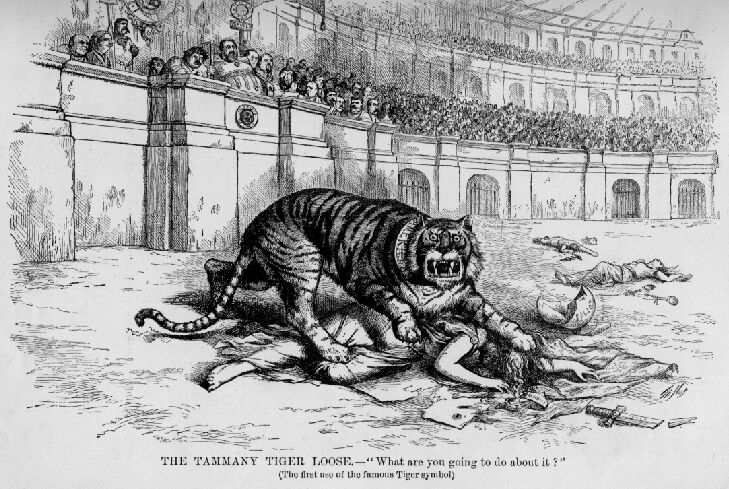
The trial did not begin until January 1873. In the meantime, Nast continued his barrage of political cartoons, including some of his most damning ones of Tweed, like that of a tiger (the symbol of Tweed’s Tammany Hall) mauling Lady Columbia in the Roman Coliseum with Tweed in the background as emperor.
The trial lasted 17 days and ended in a hung jury—thanks to a lone juror who believed Tweed guilty. It was strongly believed that the Tweed Ring had done its due diligence in tampering with the jury. Had it not been for the one juror, Tweed would have gotten off scot-free against the 220 counts against him.
Conviction and Appeal
Tweed was tried again in November. This time the prosecution took extreme measures to defend against jury tampering. The prosecutors hired a team of lawyers to check the backgrounds of the potential jurors, hired a highly experienced criminal lawyer for jury selection and, during the trial, hired four Pinkerton agents to keep eyes on the jurors.
This time, the trial was a success and Tweed was convicted on more than 200 charges. The prosecution argued to sentence Tweed to more than 100 years in prison by assigning a year to every two misdemeanor counts. The judge agreed in principle, but rather combined a larger number of the counts together, and sentenced Tweed to 12 years in prison and fined him $12,750.
Tweed’s defense counsel appealed the decision. After 19 months in prison, the New York Court of Appeals found that Tweed was indeed guilty, but that the sentencing was illegal according to the law and that counts could not be combined and that the most Tweed should have been sentenced was one year and a fine of $250.
The decision caused an uproar, which the court anticipated. The court, acknowledging Tweed’s guilt, wisely stated that if they had upheld the illegal sentencing because of Tweed’s negative public persona “[a] greater public wrong would be committed, one more lasting in its injurious effects, and dangerous to civil liberty and the sacredness of the law, by punishing a man against and without law, but under color of law and a judicial proceeding, than can result from the escape of the greatest offender, or the commission of the highest individual crimes against law.”
The Great Escape and Recapture
“Boss” Tweed was free again but not for long. The state filed a civil suit against Tweed for restitution of that $6.3 million in stolen funds. A $3 million bail was set. This bail, he could not pay, and Tweed was taken to debtor’s prison at the Ludlow Street jail to await trial. The larger-than-life politician received treatment that was better-than-the-average debtor. He was provided special privileges in jail, given carriage rides, and was allowed to visit his family members at their homes. During one of those visits in December 1875, Tweed escaped across the river into New Jersey.
His trial went on without him. In March 1876, he was found guilty. Upon hearing of his conviction and knowing the impossibility of paying back the more than $6 million, Tweed fled New Jersey and sailed to Cuba and then Spain.
Spanish authorities were soon apprised of Tweed’s escape to their country. Hoping to appease the Americans and garner sympathy regarding the colonial uprisings in Cuba, the authorities kept an eye out for the former Tammany Hall Boss.
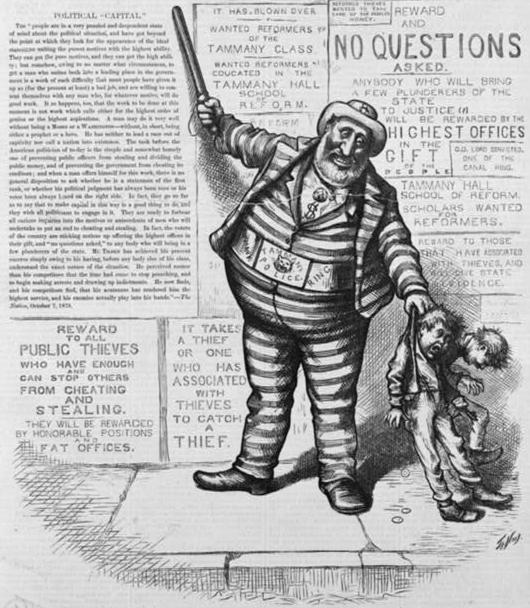
When one of Nast’s political cartoons made its rounds in Spain, Tweed suddenly stuck out like a sore thumb. He was arrested in September and shipped back to New York. In a sense, Tilden’s prediction about Tweed’s career was almost twice true: Tweed attempted to end his career in exile but instead ended it in jail.
It was during this week in history, on Nov. 23, 1876, that Tweed returned to the custody of the New York City authorities and returned to Ludlow Street jail. This time, there was no special treatment. He was treated like any other inmate. Tweed, however, spent less than two years in jail. He contracted pneumonia and died of heart failure on April 12, 1878.
Never miss a This Week in History story! Sign up for the American History newsletter here.
What arts and culture topics would you like us to cover? Please email ideas or feedback to features@epochtimes.nyc.