SEARCH


R | 2h | Drama | 2025
The Alto Knights, initially a Manhattan meeting spot for prohibition bootleggers, was turned into a social club by Mob boss Vito Genovese in the 1950s. The movie of the same name depicts the growth and development of the New York La Cosa Nostra dynasties, and the power struggle between Mafia dons Frank Costello and Genovese. It’s one of the foundational stories of American organized crime. Robert De Niro plays both of these men in the film
De Niro’s extensive career of epic Italian crime syndicate films, which includes “The Godfather Part II,” “Once Upon a Time in America,” “Goodfellas,” and “Casino,” is legend by now. So who better to give one of these leading roles to? De Niro can conjure up a Mafia don merely by donning a fedora, but giving him both leading roles was perhaps a tad over-optimistic. Watching him play both Genovese and Costello is mildly confusing. More on this later.
Mob History
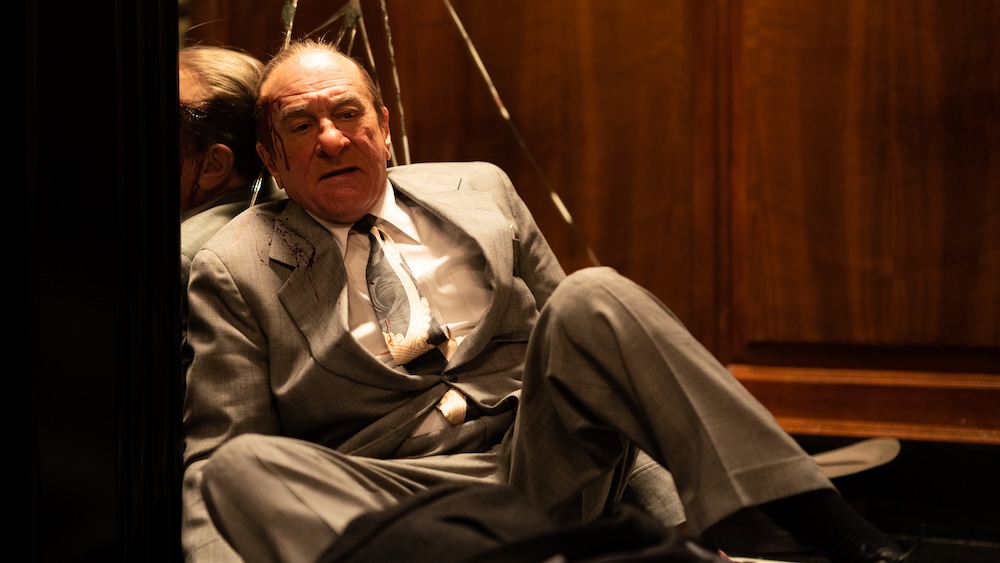
In May 1957, Vito Genovese’s hulking hitman Vincent Gigante (an exceptional Cosmo Jarvis) bungles shooting Frank Costello in the head. The bullet skims around the outside of Costello’s skull instead of blasting through it. After his failed murder attempt, the wretched goon has to endure scads of verbal abuse. (“You had one job!!”)
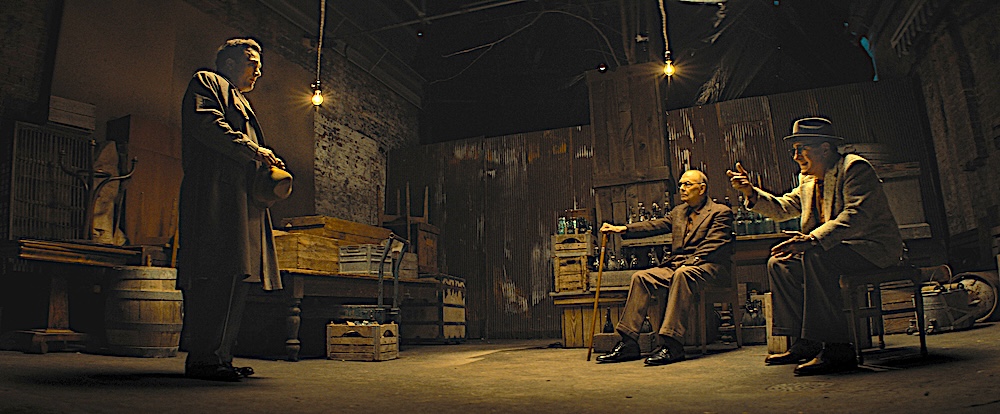
What’s going on here? Genovese and Costello’s friendship goes way back to childhood. Well, Genovese spent the World War II years in Italy, where he engaged in some espionage and intelligence work for Mussolini.
Like so many mob movies where a gangster goes to jail, and upon returning demands their old territory back, Genovese’s no different. When he returns to New York he demands his share of the rackets that Costello has been in charge of for quite some time. Costello explains that times have changed, things are no longer that cut-and-dried, and Vito needs to back off and have patience.
But Frank, a meticulous planner who avoids violence because it’s bad for business, stands in stark opposition to Vito, a vicious, highly paranoid, merciless killer. Patience is not in Vito’s vocabulary.
At Loggerheads
It’s the classic case of an unstoppable force meeting an immovable object. Costello proceeds cautiously, playing a shrewd and strategic game as he attempts to slowly distance himself from the Mafia without becoming a bullet-riddled corpse.
Speaking of bloody corpses, the Prohibition era, with its siren-call to get involved in the illicit liquor trade, was where these two started taking over the city, paying off crooked politicians and law enforcement. Period black-and-white footage, and sepia-tinted still photos (which we’ve seen before in other similar films) chronicle the early days of the Mafia throughout. These visuals of the Mob’s hay-day capture the classier, upscale attire of the period, which just makes the profuse bloodletting all the more macabre.
A Tale of Two Roberts
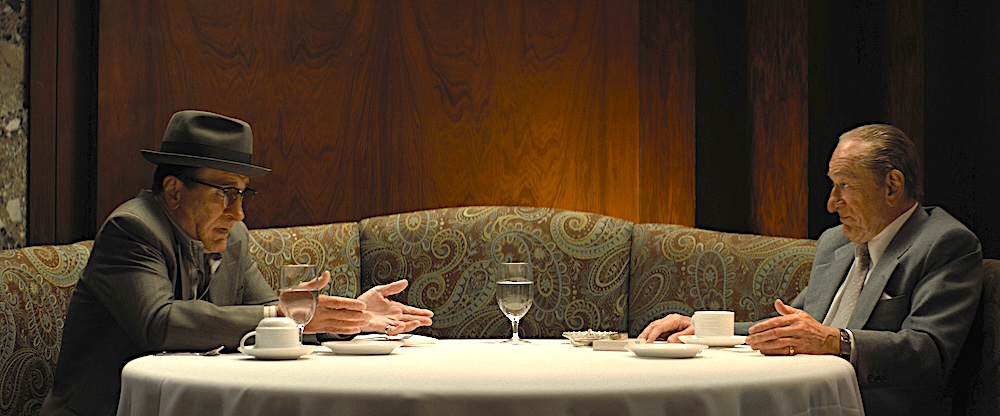
DeNiro’s Costello feels like a fully fleshed-out character, including the progression of his decades-long career, as well as the white-haired, reminiscing narrator. His Genovese, however, is like the perennially irate, paranoid Pesci of “Goodfellas”—you know the scene: “But I’m funny how, I mean, funny, like I’m a clown? I amuse you? I make you laugh? I’m here to ——’ amuse you? What do you mean funny? Funny how? How am I funny??” Genovese’s got a fair amount of that kind of paranoiac insanity going on in his head.
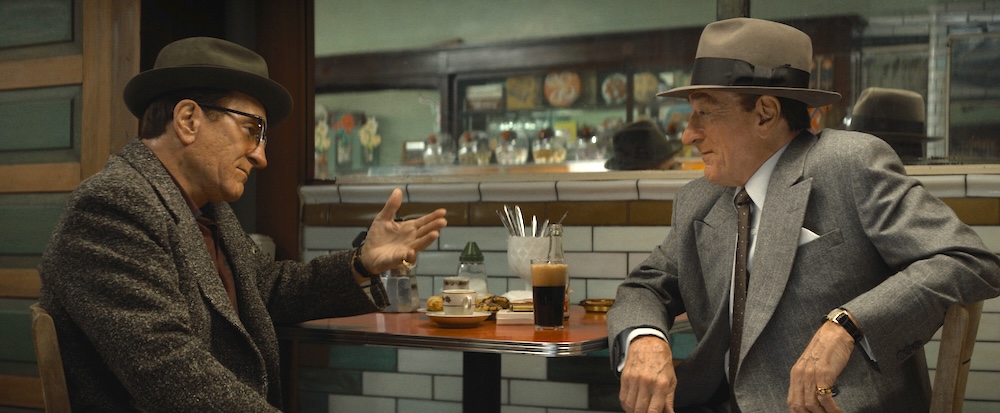
Both Costello and Genovese are given some prosthetic enhancements, Genovese more so, but he still looks pretty De Niro-ish. He sounds like him too. Like I said, it’s mildly confusing (“which one is he now?”). It works in the end, but the twofer is a purposeless gimmick all the same—there’s no shortage of actors who could slam-dunk the Genovese role.
Overall
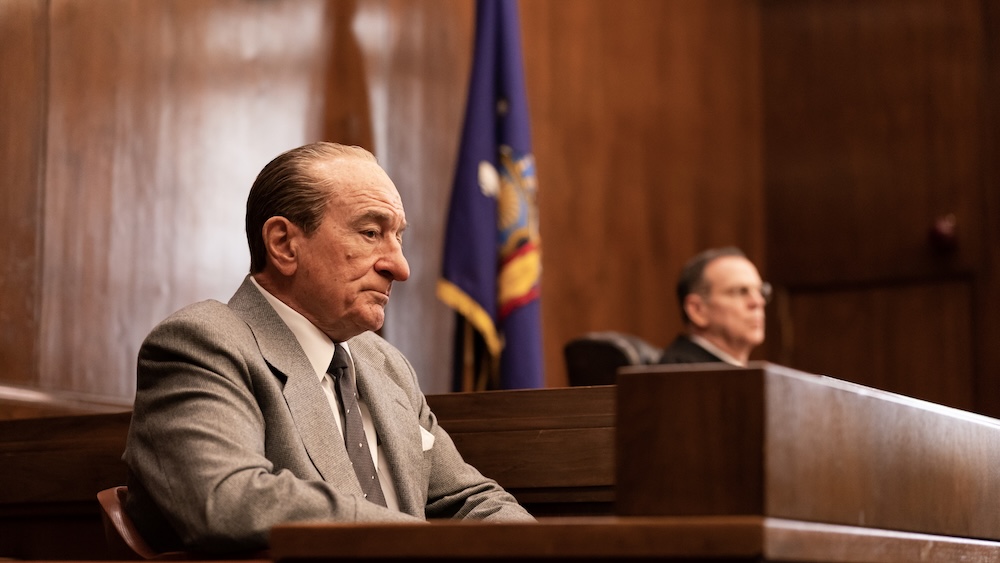
“The Alto Knights” isn’t a bad movie. The attention to period detail—especially the golden age of American automobiles—is rather delicious. As the two female leads in a world of men, Debra Messing and Kathrine Narducci as Costello and Genovese’s respective wives, add heft. It’s amusing when Costello refuses to plead the fifth in front of the Senate, while Genovese is about to have a stroke from frustration watching the proceedings on TV.
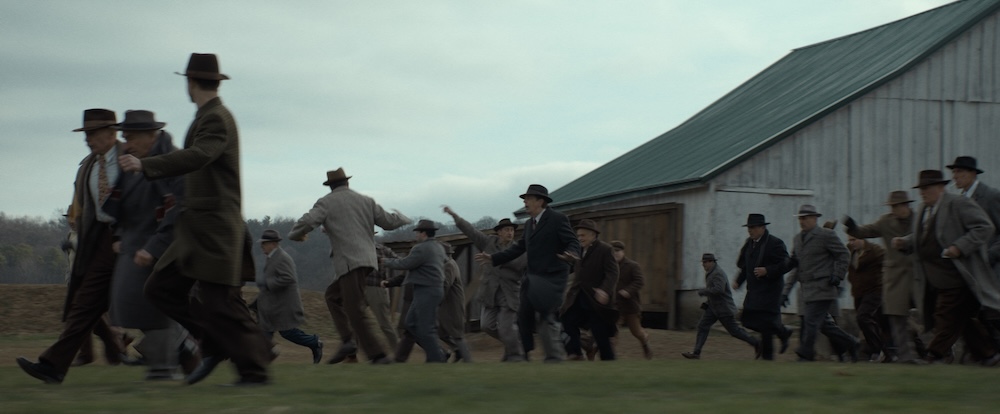
So is the historic Apalachin summit of the conglomerate country-wide heads of the Italian-American Mob, held at the home of mobster Joseph “Joe the Barber” Barbara. The fur-coat-and-fedora mass stampede for their cars, as the local cops wise up to the handcuff-bonanza taking place under their very noses—is chuckle-worthy and satisfying.
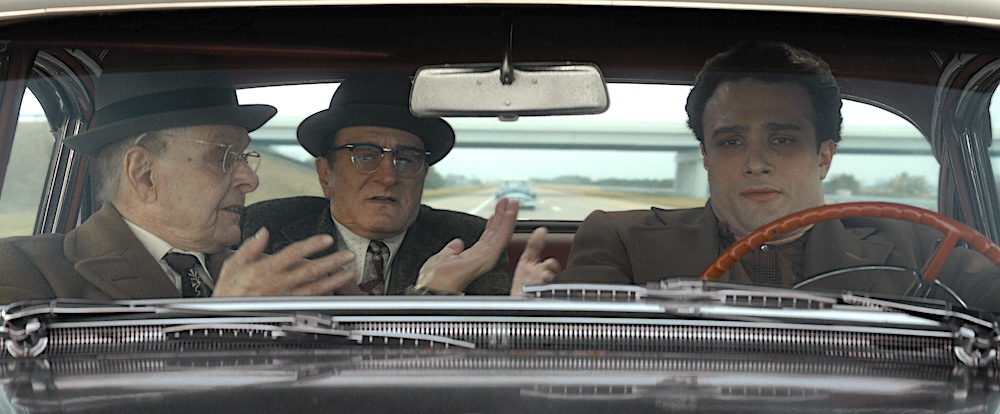
But as a gangster film, “The Alto Knights” does little more than stroll along. Unfortunately, director Barry Levinson is not Martin Scorsese.
As mentioned, the film’s outstanding performance belongs to Cosmo Jarvis playing the hitman. You might find him in the dictionary under “animal magnetism.” The combination of haunted-eyed, frightening brutality, extreme discomfort, deep shame, and a surprising vulnerability to being the butt of tough guy jokes—is an outstanding example of an actor digging deep to provide a backstory and show the humanity that lurks within the monster. Expect to see more of Jarvis.
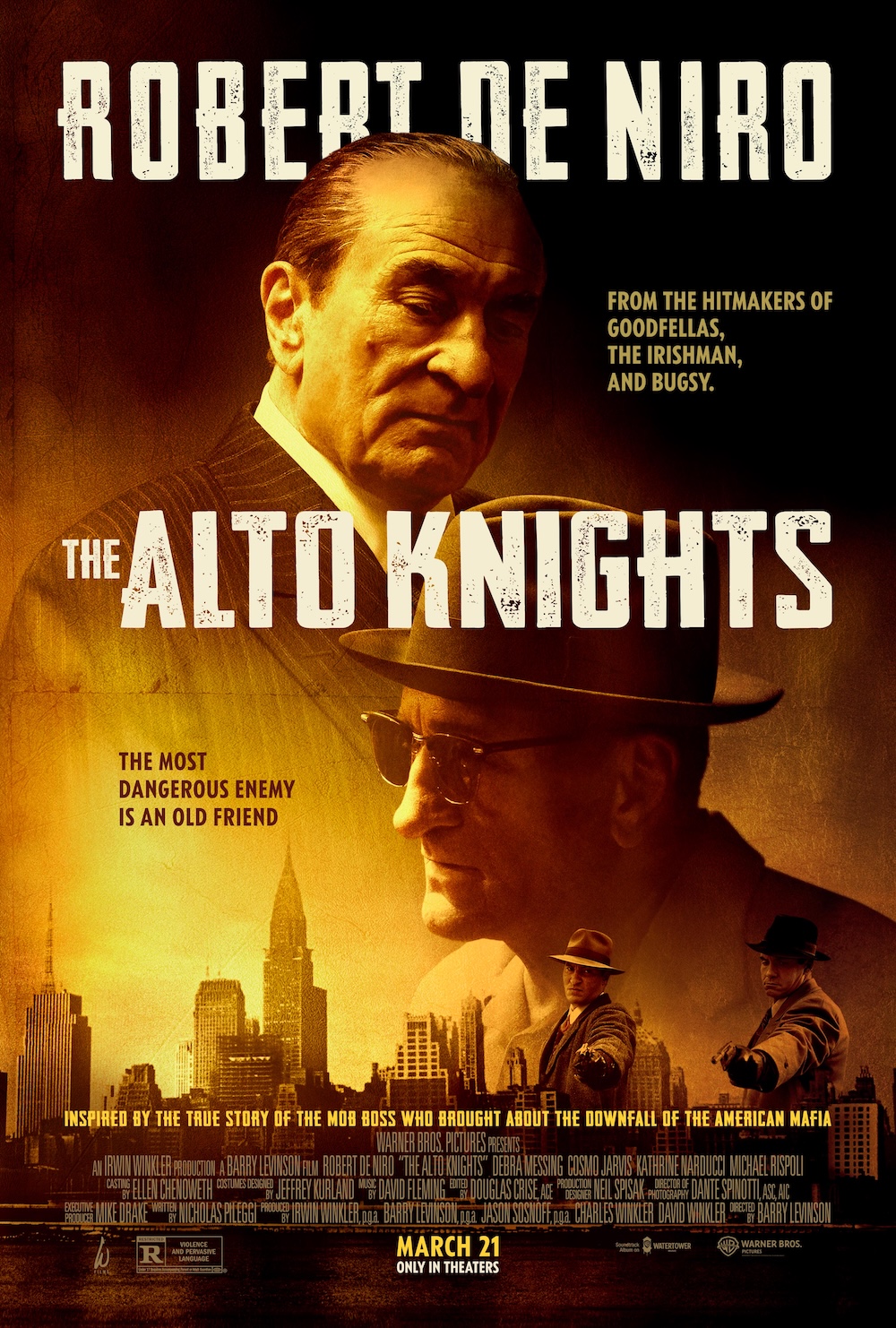
‘The Alto Knights’
Director: Barry Levinson
Starring: Robert De Niro, Robert Uricola, Debra Messing, Kathrine Narducci
MPAA Rating: R
Running Time: 2 hours
Release Date: March 21, 2025
Rating: 3 stars out of 5
Would you like to see other kinds of arts and culture articles? Please email us your story ideas or feedback at features@epochtimes.nyc