SEARCH


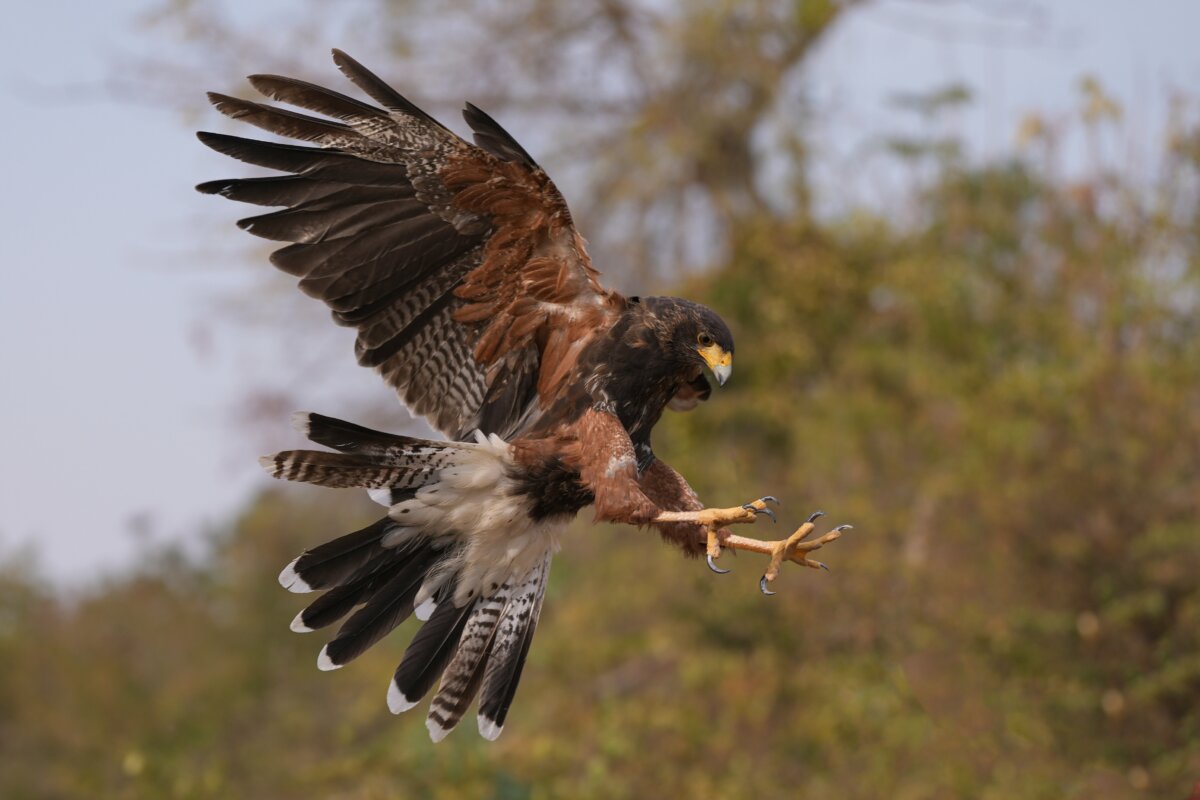
Q: I love birds, and I wanted to join the Project FeederWatch you mentioned a couple of weeks ago, but I have a problem. When I have a feeder up, hawks come and kill the mourning doves. Three hawks circle around my yard regularly. Most of the birds don’t stop in my yard anymore. Only a few blue jays dare to stop and feed, usually late in the evening.
I’m so sad; my garden and backyard always used to be full of birds. My question is: Is there anything I can do? The hawks are in control of my yard. I don’t want to harm them, but I would like to get rid of them. Please help, if there is anything I can do so my birds can come back.
A: Hawks that eat birds generally don’t circle around in the sky and don’t travel in groups unless they are migrating. Just because you can see birds flying above the feeder doesn’t necessarily mean they are at all interested in eating the other birds at the feeder, even though the birds may still scatter at their sight. Vultures do circle in groups, and sometimes red-tailed hawks do, too, but neither group will be attacking the birds at your feeder.
Hawks that eat birds find the concentration of birds near feeders to be a good thing. Their method of hunting is to wait patiently in concealment near a feeder, then strike at an opportune time. The hawk can spend less time searching for food and is more likely to find sick, injured, or weak individuals. The hunting success rate for hawks that eat birds has been researched to be less than 10 percent, so 90-95 percent of the time, they miss. The survival rate of young hawks making it to their first birthday is around 20 percent.
At the same time, a large concentration of birds (a mixed flock) at a feeder is more protected from all predators than when a bird is by itself or in a small flock because so many eyes are on the lookout. A hawk that eats a few sick birds from the flock helps keep the other birds from getting sick. Birds that eat at feeders are potentially healthier and more likely to escape being chased.
Hawks are top-of-the-line predators in an ecosystem, and they show that the area they are living in is healthier than similar areas that don’t support hawks. Songbirds are in the middle of the natural food pyramid. They eat insects and seeds, and they, in turn, get eaten. Hawks have one nest a year and at most only a few young. Songbirds often have two (and in warm climates, three or four) nests per year and four to eight young per nesting, so without hawks and other predators, songbirds could become pests.
Did any of that help? Maybe not, because it is hard to see nature in action—especially when you feel like an accomplice to the death of the birds.
By taking your feeders down for a couple of weeks, you will change the feeding pattern of most of the songbirds, which in turn will change the habits of the hawks. If some of your neighbors feed the small birds, they may not go very far, and the hawks may not either.
At this time of year, many hawks are migrating and will just be passing through. In the south, they will be staying for the winter, so they may stay in your neighborhood no matter what you do with the feeders.
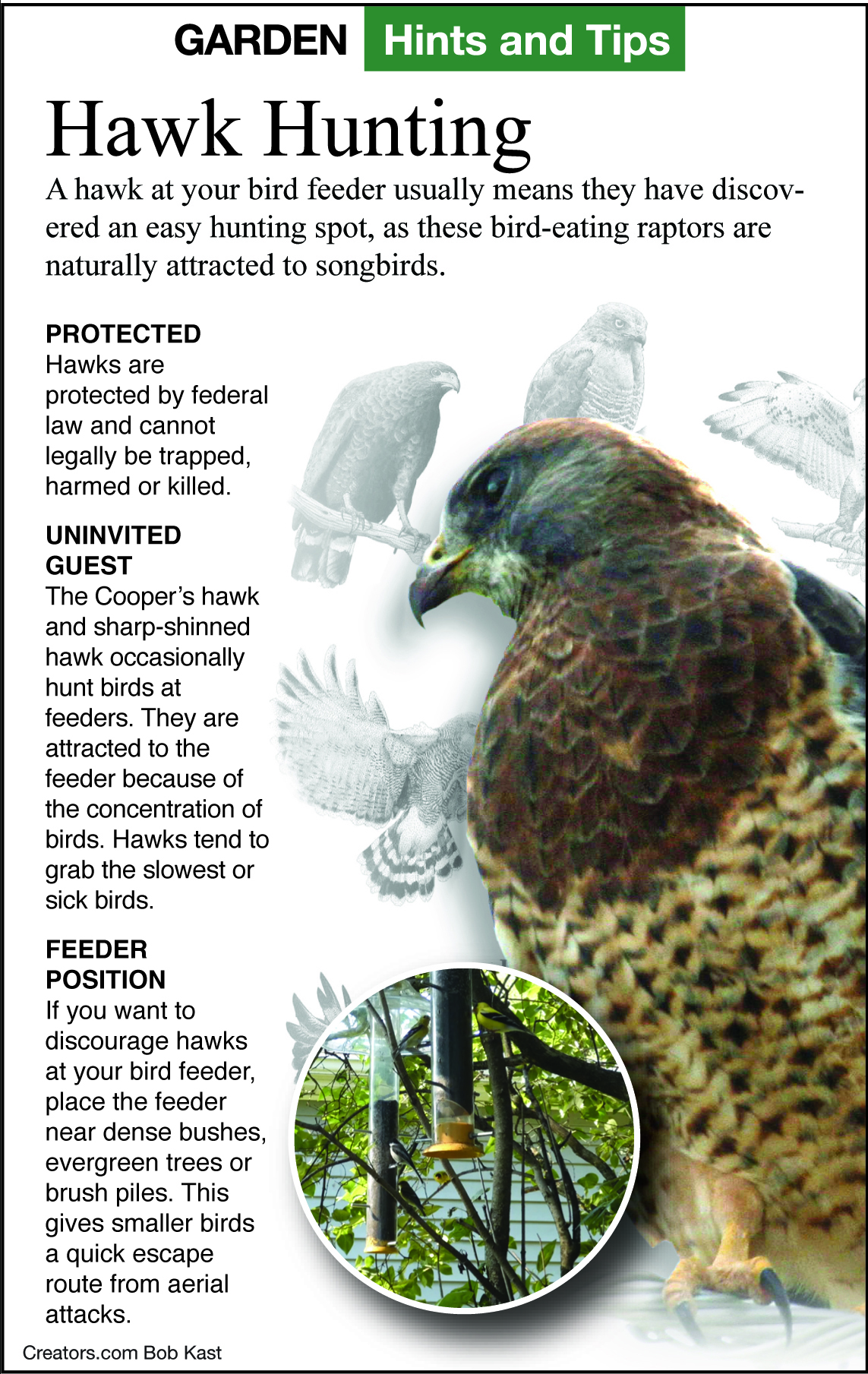
The farther a bird has to fly to shelter, the more vulnerable it is. Put your feeders near some tall shrubs. Evergreens are better than deciduous, but any are better than none. If you don’t have any, then you will want to plant some. Don’t put feeders near low shrubs that will hide cats. The shrubs will help hide the songbirds, and placing the feeders away from the house will help protect the hawks so they won’t chase a bird into a window.
 (Courtesy of Jeff Rugg)