SEARCH


This one’s for all the readers who’ve ever fallen on their faces, failed at a business, screwed up royally and destroyed a great marriage or a relationship with a child, who were or are drunks or addicts, and who’ve gotten kicked in the teeth by circumstances beyond their control.
In all these scenarios and more, you wake up one day and look at the smoking ruins of your life and wonder whether the future holds any hope of redemption, any chance to start over and do some good in this world.
In other words, this one’s for most of us, including me.
No 2nd Acts?
In notes found after his death for his unfinished novel “The Last Tycoon,” F. Scott Fitzgerald wrote, “There are no second acts in American lives.”
I first read those words about 45 years ago and have often pondered their meaning. Did Fitzgerald really believe we only get one shot at creating a good life and that once we’ve failed, there’s no coming back, no do-over in the game?
The bitterness of this aphorism deserves some sympathy, for when he wrote these words, Fitzgerald was in his early 40s and judged himself and his work a lost cause. He was broken physically and financially by a life of drinking and partying, and his publisher, Scribner’s, still had first-edition copies of “The Great Gatsby” sitting on warehouse shelves. Dead at 44 of a heart attack—some might say of a broken heart—no more than 30 mourners attended the funeral of the man now regarded as one of America’s great novelists.
His is a sad story, tragic in its way, and yet I concluded long ago that Fitzgerald was seriously mistaken. Second acts are an American specialty.
A Dead End and the Road to the White House
A West Point graduate, Ulysses S. Grant served honorably and bravely in the army during the war with Mexico. Following that conflict, in the peacetime military, he acquired the habit of drinking, sometimes to excess, which in 1854 led to his resignation from the service. Years later, Grant acknowledged that “the vice of intemperance had not a little to do with my decision to resign.”
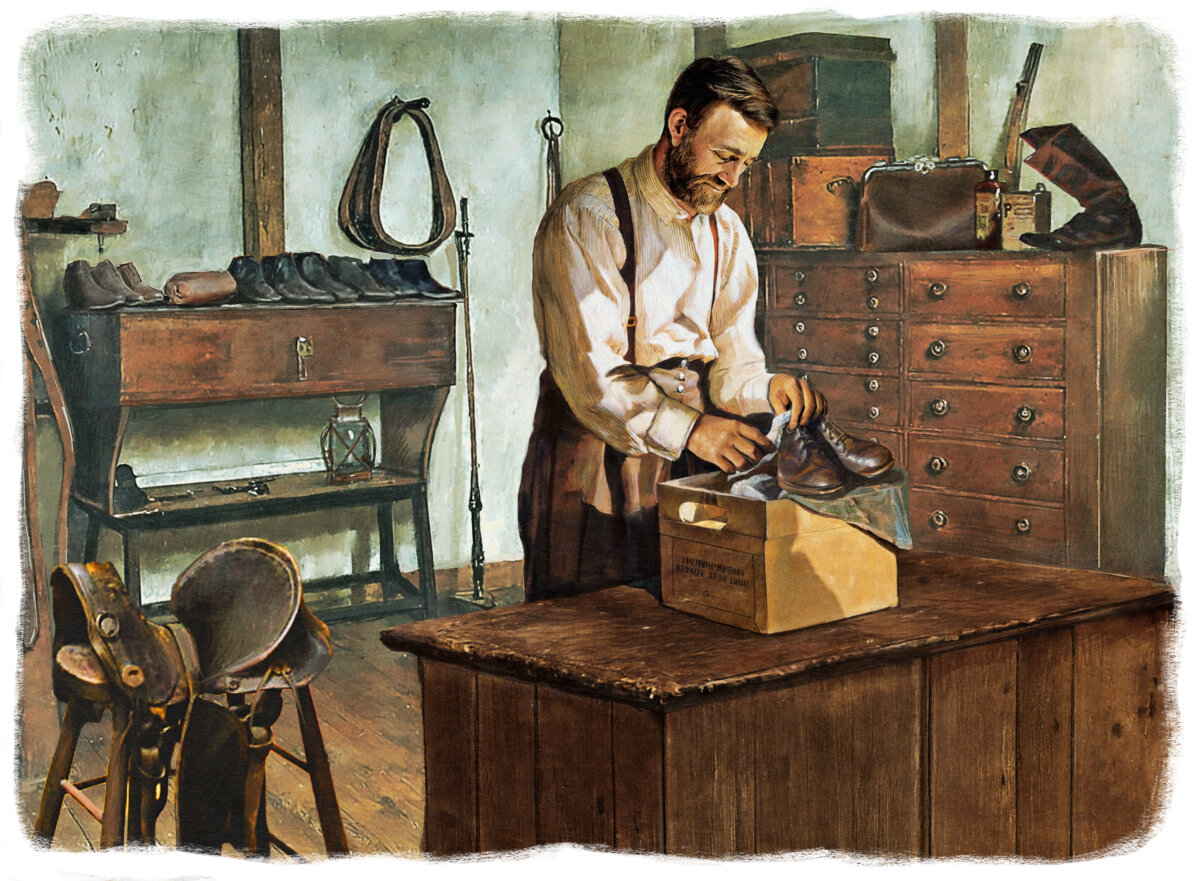
The next seven years of his life provide a stellar example of a man in defeat. Living in Missouri and Illinois, Grant failed at farming and business. At one point, he sold firewood on a street corner to earn a living, and he pawned his gold watch one Christmas, possibly to buy presents for his family. In 1860, he finally achieved some financial stability by working as a clerk in his family’s leather goods store in Galena, Illinois.
In the spring of the following year, when war between the North and South erupted, Grant joined the army, first as a recruiter, then as an organizer of troops, and finally as an officer who was intrepid in his leadership and tactics. His subsequent rise through the ranks was meteoric; in less than three years, he was the commanding general of all Union armies. In 1869, less than a decade after his clerking days, Grant became the 18th president of the United States.
Now there’s an impressive second act.
On a Stage Closer to Home
In the mid-1990s, I taught adult basic education to inmates in a state prison in Hazelwood, North Carolina. John M., a black man of medium height and a big grin who was incarcerated for burglary, was one of my students. He recognized me when he first came to class from having lived in a rental house across the street from our bed and breakfast, “though I never robbed your place,” he said. John wanted to earn his GED. He was a diligent student, put in the necessary time and effort, and easily passed the exam.
Three years later, I was walking across the parking lot of a convenience store near our B&B when a car horn snagged my attention. It was John, driving a minivan, his wife beside him and his two children in the back seat. During our brief conversation, he told me that after his release, he had used his diploma to enter a welding course at the local community college and was now making good money in that trade.
John was back in the show, performing as the star of his life’s second act.
The Takeaway From the General and the Inmate
Although vast differences of culture and experience separate these two men, Grant and John share two commonalities. First, both were 30-something failures. At an age when many adults are hitting their stride, they were washouts who were dubbed losers by many of their associates and family members. Had he lived up to that reputation, Grant would have sat out the war in Galena or else joined the army and marched in place, drawing a salary while keeping a low profile. John would have done his time in prison, then picked up his old ways after his release.
Instead, both men took hold of their lives, pushed away their failures, and changed direction. Grant’s code of duty and service to his country drew him upward through the ranks and into the thick of war. John’s awakening in prison made him realize the importance of an education and sparked a desire to become a provider for his family and a good example for his children.
The Play That Never Ends
Stories like these occur every day in America.
I know two young alcoholics, for example, who have recently quit the drink, found jobs they loved—and, in one case, a spouse—and are having the time of their lives. This spring, I interviewed a woman left paralyzed and in a wheelchair by a freak accident who has found new ways to make a difference in the lives of those around her. A mid-20s man I met only briefly suffered a physical injury that disqualified him from his years-long dream of becoming a SEAL. Today, he’s found his niche teaching history in a private boys’ academy.
We all know such people, friends or family members, or perhaps even that person staring back at us from the mirror, who were knocked to their knees by some wrecking ball of a disaster. For a while, these men and women nearly always slip into self-pity, guilt, and sadness, crushed and blinded to possibility by a world of pain.
To each of them, however, there will likely come those moments, as happened to Grant in Galena and to John in prison, when a ray of hope breaks through the cloud of their despair. In some cases, the effects of this light shining in the darkness are immediate, such as a job offer from a friend. At other times, that promise of a new beginning is such a small thing—a line from a poem, some words from a friend—that its message only gradually becomes clear.
When these pieces come together and eyes are reopened—hope and courage renewed and opportunities rediscovered—the stage is set for that great American play, “The Second Act.”