SEARCH


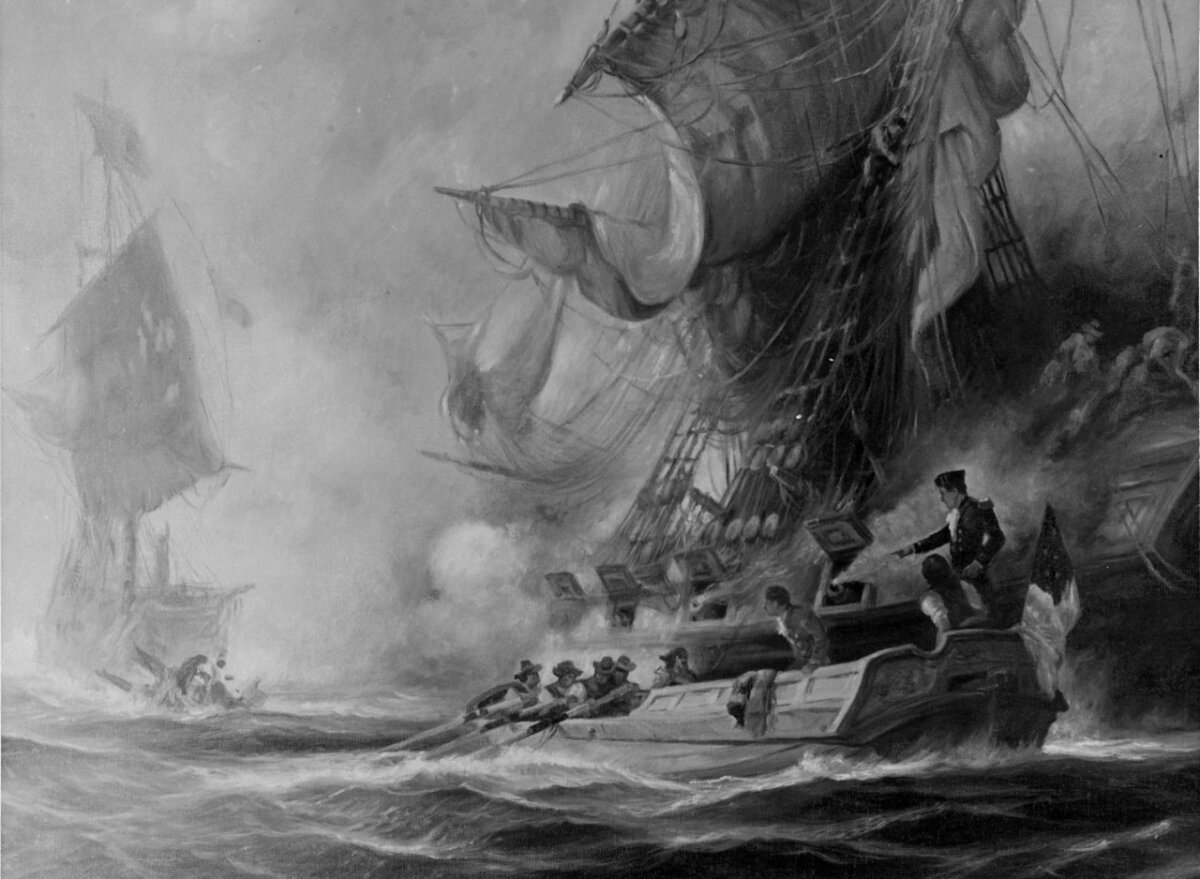
In 1793, America had a significant problem. It had no navy. The ships that remained from the Continental Navy had been retrofitted as merchant vessels. America was interested in trade with the great and small powers on the other side of the Atlantic Ocean. At this time, Great Britain and France were again at war. The French Revolution had thrown Europe into turmoil. To trade with the British summoned the ire of the French, and vice versa. But there were other dangers the American sailing vessels faced, particularly pirates. The solution to the problem was obvious.
In a letter to Secretary of State Thomas Jefferson, the American consul in Lisbon, Edward Church, wrote:
“When we can appear in the Ports of the various Powers, or on the Coast, of Barbary, with Ships of such force as to convince those nations that We are able to protect our trade, and to compel them if necessary to keep faith with Us, then, and not before, we may probably secure a large share of the Medit[erranean] trade, which would largely and speedily compensate the U.S. for the Cost of a maritime force amply sufficient to keep all those Pirates in Awe, and also make it their interest to keep faith.”
The XYZ Affair
On March 27, 1794, President George Washington signed the “act to provide a naval armament,” which would create six frigates to protect American maritime vessels from the “Algerine corsairs.” By 1797, three of the six ships launched. The arrival of the warships was pivotal, as the previous year France had begun seizing American merchant ships. Hundreds of American vessels were captured, forcing President John Adams to send a commission, composed of Elbridge Gerry, Charles Cotesworth Pinckney, and John Marshall, to France to negotiate terms. The French, represented by Nicholas Hubbard, Jean Hottinguer, Pierre Bellamy, and Lucien Hauteval, did little more than stall negotiations by making ridiculous demands.
War with France seemed on the horizon. When President Adams and members of the Federalist Party made such rhetoric overt, members of the Democratic-Republican Party demanded that Adams publish the commission’s dispatches. Adams willfully published the dispatches, though replacing the names of Hubbard, Hottingeur, Bellamy, and Hauteval, with the letters W, X, Y, and Z, respectively. This event became known as the XYZ Affair.
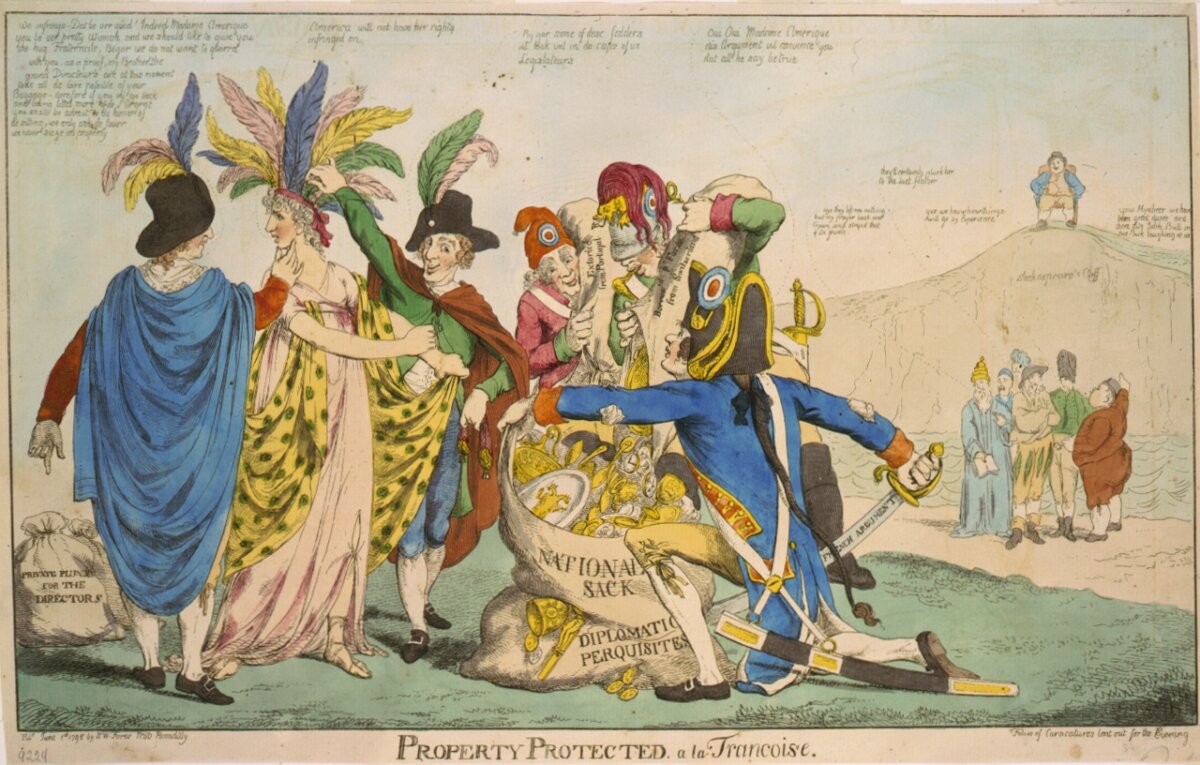
Although Congress never declared war on France, it rescinded its treaties on July 7, 1798, beginning the Quasi War, which lasted until the Treaty of Mortefontaine was signed in September 1800.
The Barbary Problem
While the Americans were struggling against the French, the Barbary nations remained a problem. Treaties were signed with these nations and tribute was paid to keep their pirates at bay, but the demands for more tribute and gifts, at times in the form of warships, only increased. American patience was indeed wearing thin. At the time the Treaty of Mortefontaine was signed, the United States had built five of the six frigates.
More importantly, a few months after the treaty signing, Adams lost the election of 1800 to Jefferson. Jefferson had long been an advocate of demonstrating naval strength against the Barbary nations, something he intended to do once he took office.
By the time Jefferson began his first term on March 4, 1801, the Pasha of Tripoli was irate. The Barbary nation had signed a treaty with America in 1796, but when the Americans gifted a frigate to Algiers, the pasha felt slighted. He demanded a frigate of equal stature.
James Cathcart, the American consul in Tripoli, sent a dispatch to Washington, relaying the pasha’s message:
“If you don’t give me a present I will forge a pretext to capture your defenseless merchantmen; he likewise says that he expects an answer as soon as possible, and that any delay on our side will only serve to injure our own interests.”
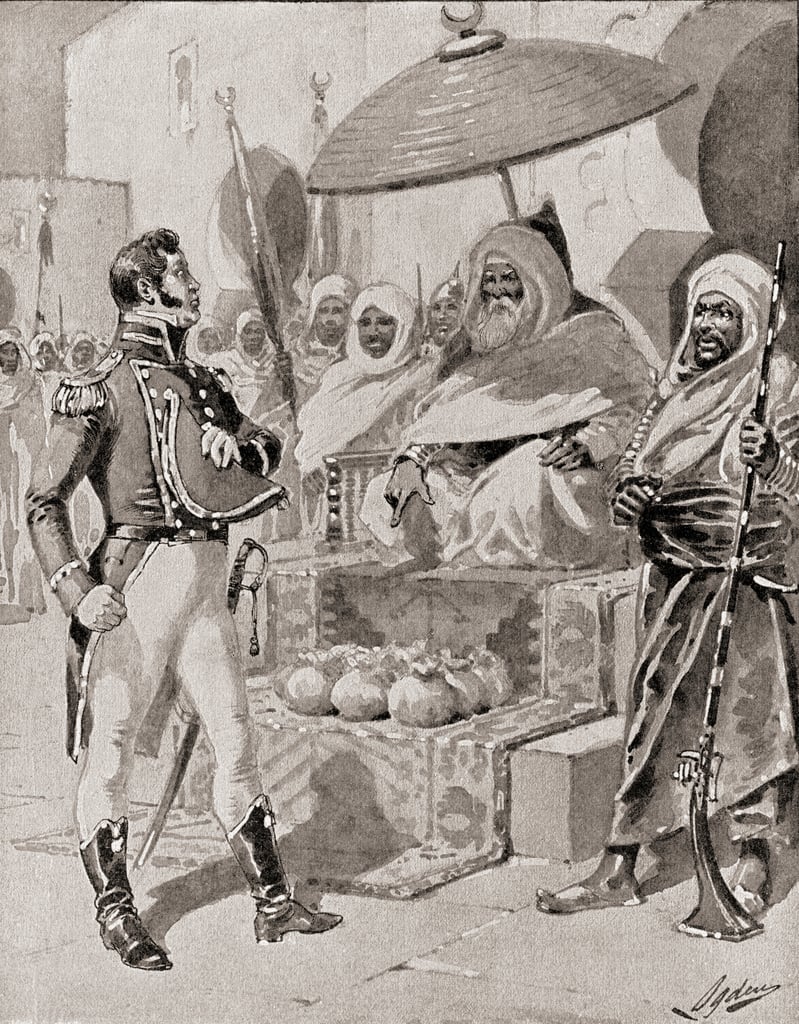
Negotiations broke down, especially after the pasha increased the tribute to $225,000 (almost $5.7 million today). Tripoli declared war on America in May 1801.
A Show of Force
It should be noted that the Barbary nations did not seize exclusively American vessels. The European empires of Great Britain, France, and Spain had long paid tribute to the pashas to avoid any commercial disruptions. Tripoli, while making untenable demands on America, had broken its peace treaty with Sweden, seized vessels, and declared war.
In response to Tripoli, Jefferson sent a squadron of ships led by Commodore Richard Dale, who commanded the 44-gun flagship President. He was joined by three other ships: the 36-gun Philadelphia, captained by Samuel Barron; the 32-gun Essex, captained by William Bainbridge; and the 12-gun Enterprise, captained by Andrew Sterett. The ships left Hampton Roads, Virginia, on June 1, but it was obvious that those in Washington had yet to receive word of Tripoli’s war declaration. Dale’s orders stated:
“Should you find on your arrival at Gibraltar, that all the Barbary powers have declared war against the United States, you will then distribute your force so as best to protect our commerce and chastise their insolence—by sinking, burning or destroying their vessels wherever you shall find them.”
“Should the Bey [pasha] of Tripoli have declared war (as he has threatened) against the United States, you will then proceed direct to that port, where you will lay your ships in such a position as effectually to prevent any of their vessels from going in or out.”
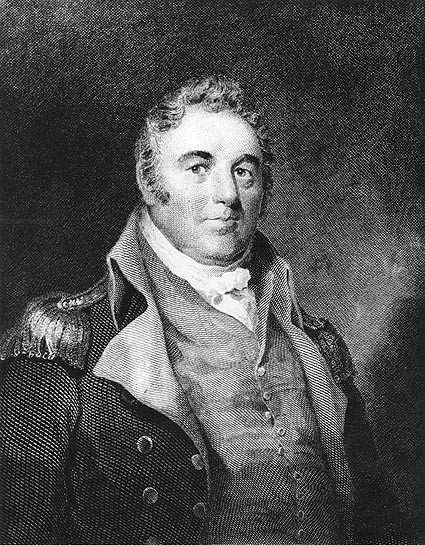
When the squadron arrived at Gibraltar on July 1, Dale learned Tripoli had declared war. When the squadron sailed for Tunis and arrived on July 17, Consul William Eaton noticed a change in the wind. While the pasha had become disgruntled against the Americans, this naval show of strength, Eaton informed Dale, had resulted in a “favorable impression … on this bey.” The disgruntledness quickly dissipated.
The Tripoli Blockade
The Americans sailed from Tunis on July 20 for Tripoli, arriving at the port on July 24. Interestingly, and actually without proper authority, Eaton made the declaration that Tripoli was under a blockade. Eaton made the declaration to the Tunisian government and the local consuls on July 23, leaving Dale unaware of the decision.
Eaton wrote to Dale on July 24, “I have blockaded Tripoli at Tunis without consulting you because this, with many other things, the want of time and pressure of Affairs let slip my memory. I trust, however, the emergency will justify the expedient. … Tripoli is in great distress—Her Corsaires are all at Sea. She is Starving in her Capital; And will be thrown into consternation at your unexpected appearance. If this position, which the good providence of God gives us, can be Sternly held a few months Tripoli will be compelled to ask peace on our own terms.”
Dale was agreeable to Eaton’s declaration. Furthermore, Eaton proved correct about Tripoli’s corsairs, or at least one. The 14-gun corsair called, fittingly, the Tripoli, was sailing outside of the blockade when it was encountered by one of the American vessels.
The First Barbary Battle
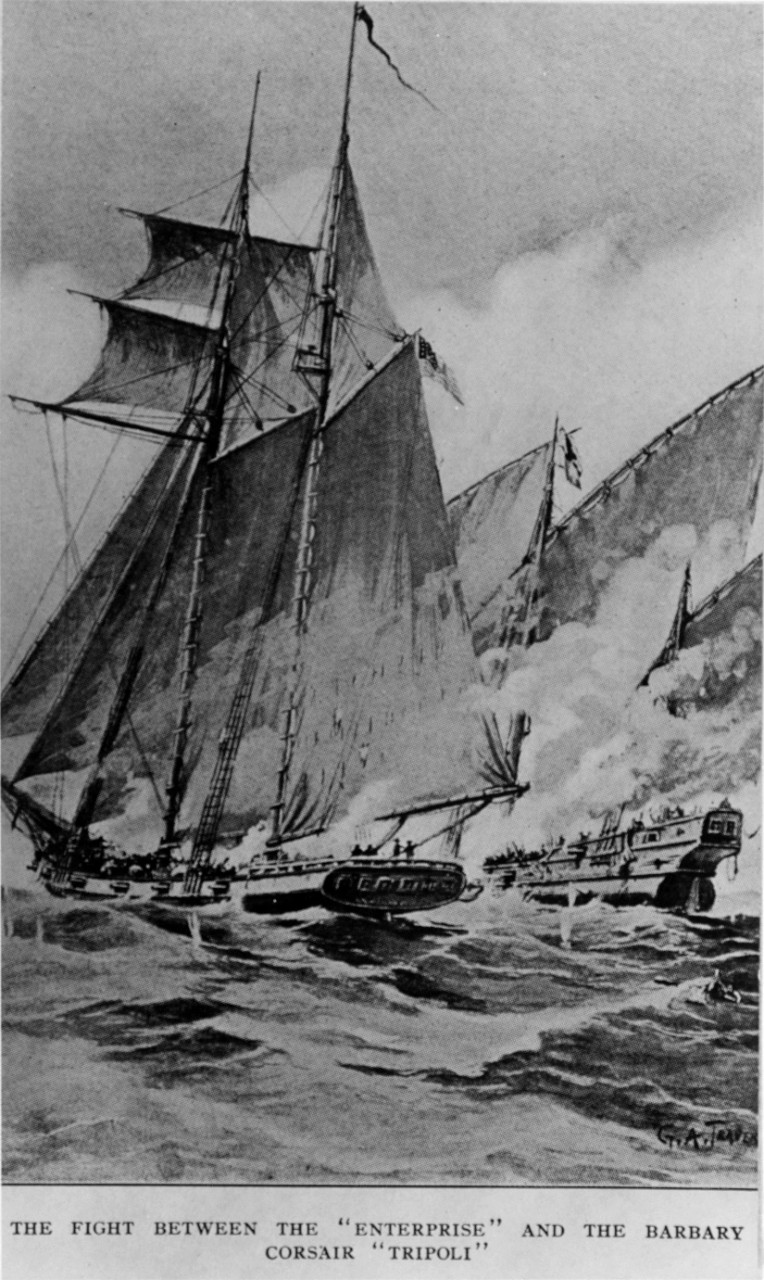
The 12-gun Enterprise, under the command of Lt. Andrew Sterett, was sailing along the coast of the island of Malta when it made contact with the Tripoli. The captain of the Tripoli, Rais Mahomet Rous, unwittingly brought his ship alongside the Americans, as the Enterprise was deceptively sailing under the British flag. Suddenly, Sterett ordered the Union Jack lowered and the Stars and Stripes raised, and ordered 20 Marines to fire on the Tripoli. It was during this week in history, on Aug. 1, 1801, that the first battle of the Barbary Wars began.
Although the Enterprise was slightly outgunned, she was not outdone. The ships fired upon each other in constant barrages for three hours. When Rous ordered his men to strike the ship’s colors as a symbol of surrender, the fighting stopped, and several Americans were sent in a small boat to accept the surrender. Suddenly, Rous ordered his men to fire, and the battle resumed. The Barbary sailors knew their best chance at defeating the American frigate was to get close, hook onto the vessel, and have the pirates board for hand-to-hand combat. Sterett never let the Tripoli get close enough.
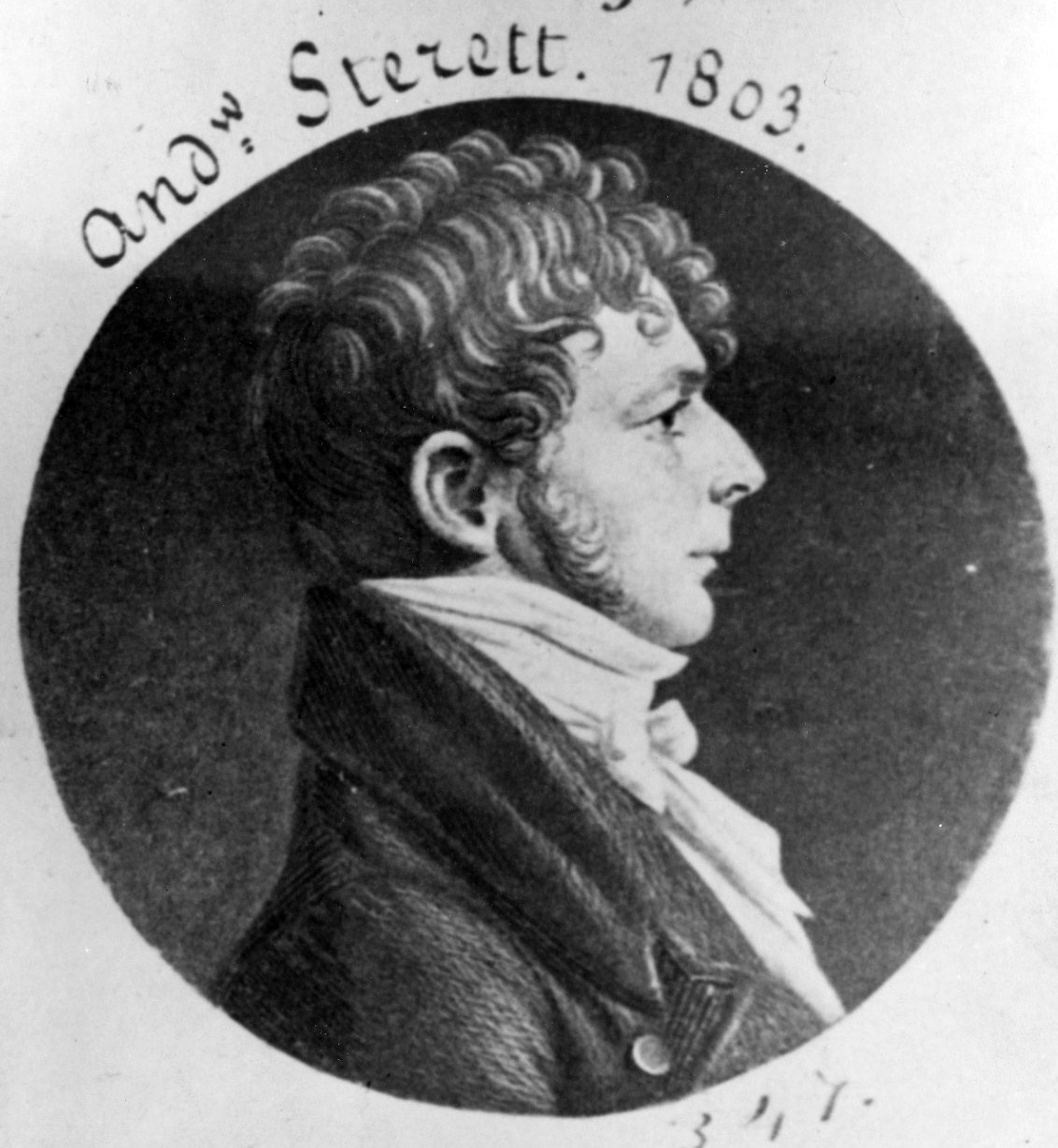
Rous again struck his colors, but just as the American small boats came near, the Tripoli opened fire again. Despite the deception, it was a losing effort. The Tripoli, along with her 90 sailors, were being decimated. Finally, after suffering an injury himself, along with his first lieutenant, Rous hauled down his flag and made his surrender unquestionable by tossing the flag into the sea.
The Tripoli suffered 18 cannonball hits, along with 20 killed and approximately 30 wounded (no American sailors were killed during the naval battle). Sterett noted the Tripoli was “in a most perilous condition.”
Although Tripoli had declared war on America, the declaration had not been reciprocated, and therefore the Americans were forbidden from taking prizes or prisoners. Having accepted the surrender, the Barbary warship was permitted to return to its port after her 14 guns were tossed overboard.
“I do myself the pleasure without further delay of expressing to you on behalf of your country, the high satisfaction inspired by your conduct in the late engagement with the Tripolitan cruiser captured by you,” Jefferson wrote to Sterett.
“Too long, for the honour of nations, have those barbarians been suffered to trample on the sacred faith of treaties, on the rights & laws of human nature. You have shewn to your countrymen that that enemy cannot meet bravery & skill united. In proving to them that our past condescensions were from a love of peace, not a dread of them, you have deserved well of your country; and have merited the high esteem & consideration of which I have now the pleasure of assuring you.”
News of the lopsided victory back in America instantly made Sterett a hero. It increased patriotic fervor, ensuring Jefferson maintained public support for the war, which continued until a peace treaty was signed in June 1805.
Never miss a This Week in History story! Sign up for the American History newsletter here.
What arts and culture topics would you like us to cover? Please email ideas or feedback to features@epochtimes.nyc