SEARCH


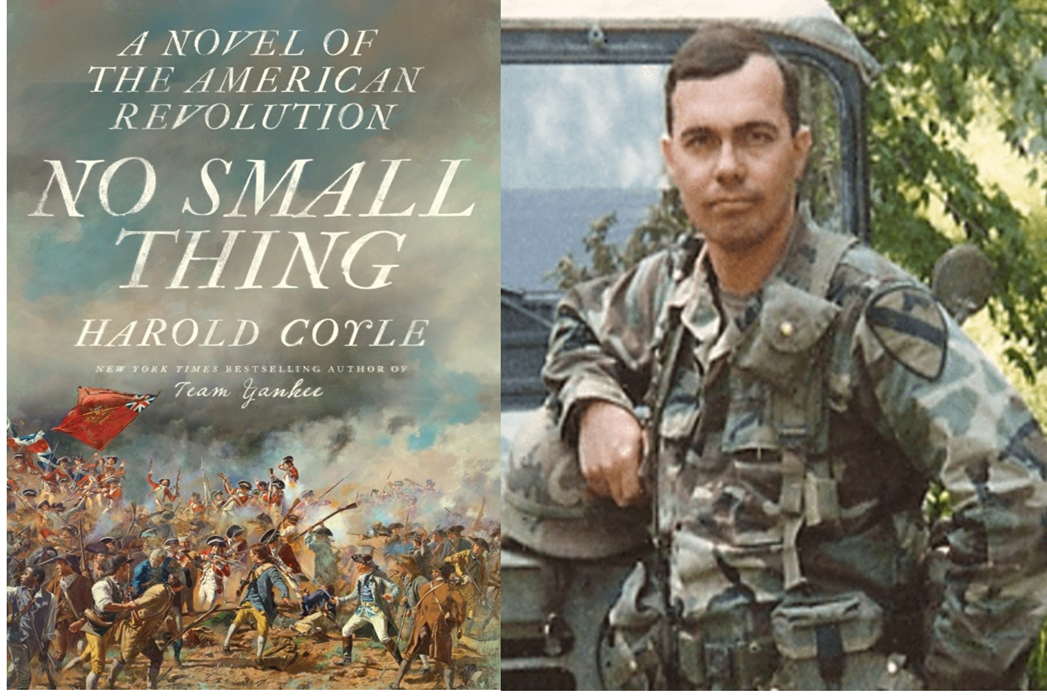
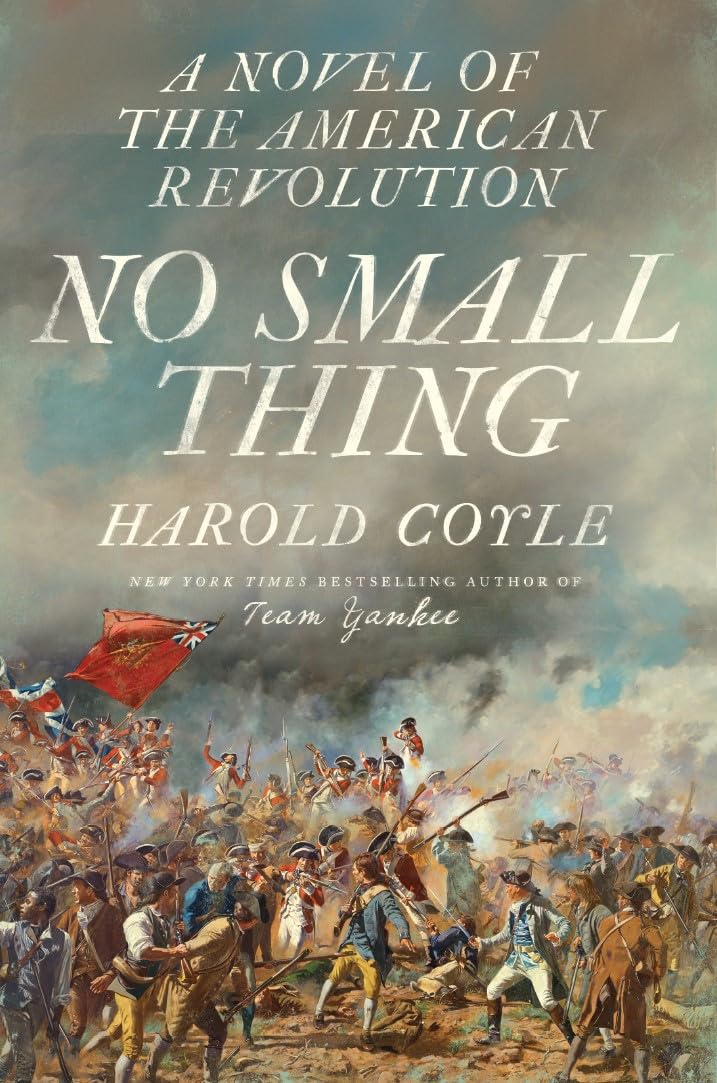
Harold Coyle’s “No Small Thing” is an ambitious historical novel that seeks to personalize pivotal moments within the epic story of the American Revolutionary War. The book features a large, diverse ensemble of characters, including American farmers, merchants, French observers, and British officers.
With scenes set during famous historical moments, such as the skirmishes at Lexington and Concord and the British evacuation of Boston, Coyle’s story culminates in the audacious patriot victory at Trenton.
“No Small Thing” aims for a ground-level view of a revolution’s brutal birth. For all of those caught up in the conflict, personal loyalties and survival instincts will be tested daily by the grinding war.

Crucible of History
This period, spanning 1775 and 1776, is one of the richest reservoirs for the early American experience. The Revolution was not a war of clear lines; it was a desperate gamble that forced individuals to decide if “liberty or death” was a philosophical concept or a literal commitment.
For his settings, Coyle chooses some of the most extraordinary military moments of this era, beginning with the bloody, chaotic trenches of the Battle of Bunker Hill. The narrative follows that conflict from contrasting perspectives: a raw American militiaman named Anthony Carter on the rebel side versus a professional British officer, James Keating, on the opposing lines.
Later on, we meet Virginian inn owners Ian McPherson and his wife, Megan, who must navigate the personal costs of war when Ian and his adopted son commit to a patriot regiment in Williamsburg. In New York, the wealthy Shields family fractures as loyalist Maj. Thomas Shields secures a war posting to Boston, prompting his son, Edward Shields, to defiantly enlist as a private in the American army.
Across the Atlantic, the French Foreign Minister enlists Anton de Chevalier to gather intelligence on the American forces. Anton takes the assignment, but his true motivation is a personal quest to find Sarah Carter, a woman he met in Quebec during the French and Indian War. These and many other characters and scenarios are depicted throughout “No Small Thing.”
Challenge of Scope
Encompassing so many aspects of the American Revolutionary War is a daunting task. Most authors would likely opt for a sprawling, multivolume epic to capture the essence of this period. However, Coyle’s choice was to create a single, concentrated volume containing a mere 418 pages. And it comes at a price.
Instead of a straightforward story, “No Small Thing” opts for a rapid sequence of vignettes, shifting to different times and locations. Coyle also includes an overly large cache of characters to convey the different moods, motivations, and perspectives that make up these complex events across many different terrains.
The ambition here is admirable, but compressing so much historical and personal background into such a confined space results in a constant need to supply contextual details. A character will pause mid-thought or mid-action while the narration pivots to an extensive explanation of, say, the logistics of forage, the customs of the peerage, or the tactical significance of a long-ago campaign.
And once you get your head around the scenario as it stands and get a taste of the moment, the story will suddenly jump ahead to the next crisis with a different character. Keeping track of 18th-century politics, social contracts, and basic character motivations with this style quickly becomes frustrating.
To be fair, the average 21st-century reader isn’t likely to be too familiar with Revolutionary-era society or the minutiae of military life back then. Each jump in the storyline would require at least some vital information to get up to speed.
But Coyle’s relentless “info dumps” muddy the narrative, often blocking the ability to enjoy the inherent drama as it unfolds. Paragraphs frequently get twisted with all the details, many anecdotal or superfluous, that skip back and forth in time.
Beauty in the Vignettes
Despite these flaws, the book can work well if the reader uses its segmented approach and read it as a collection of short, interconnected tales. The moments that Coyle paints are often visceral and dramatic (occasionally melodramatic), revealing a deft poetic style.
When the author gets out of his own way and allows his characters to simply experience the physical and emotional burdens of the war as they happen, he’s at his best. What is seen are the small, personal struggles: the sheer exhaustion of Anthony Carter digging trenches at Breeds Hill, the visceral rage of Ian McPherson defending his position at Great Bridge, and the quiet despair of Edward Shields contemplating desertion in the freezing Canadian cold.
These moments encapsulate the beauty of the American Revolution—the grinding, intimate sacrifice of men and women committed to a cause. The problems of “No Small Thing” could’ve been rectified with a much narrower focus and sufficient breathing room to explore the details in the way they deserve to be.
‘No Small Thing: A Novel of the American Revolution’
By Harold Coyle
Master Wings Publishing: Dec. 2, 2025
Paperback, 418 pages
What arts and culture topics would you like us to cover? Please email ideas or feedback to features@epochtimes.nyc