SHARE
Traditional Culture

Morgan Library: Marble Classic on Madison Avenue

BY Deena Bouknight TIMEOctober 14, 2026

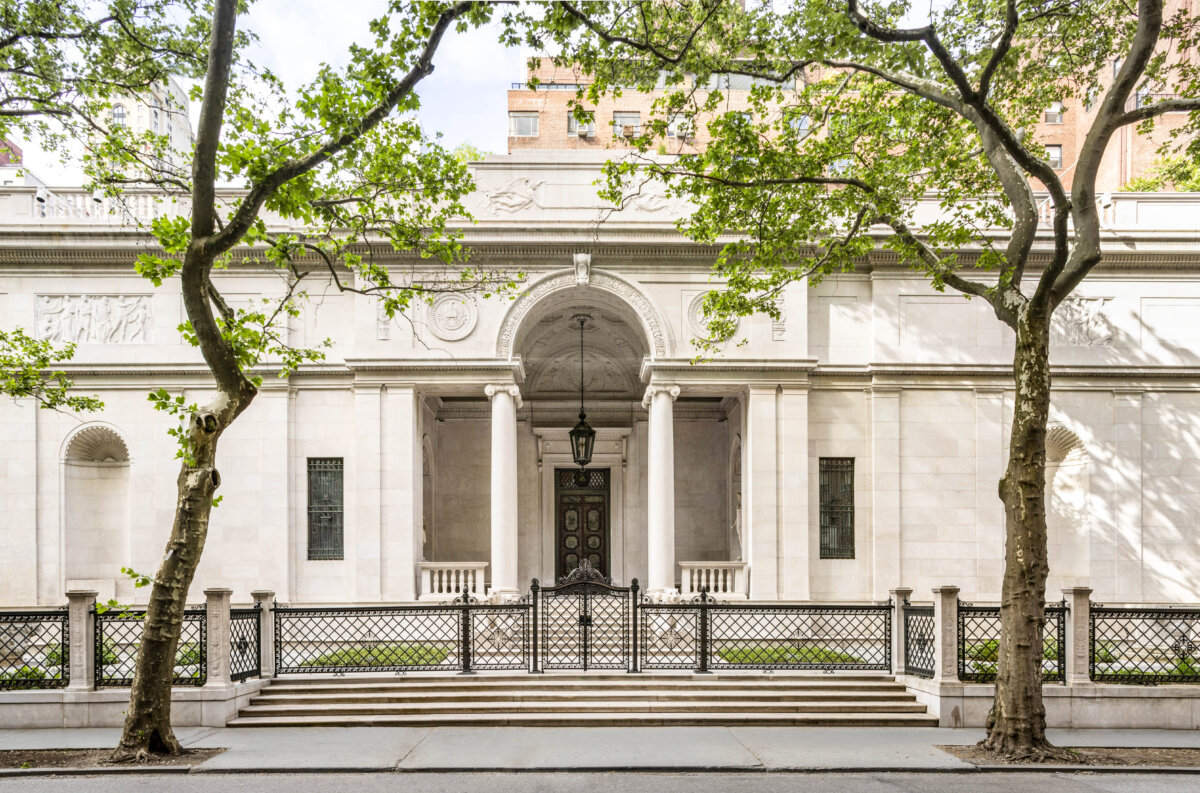
One of the wealthiest Gilded Age Americans, J.P. Morgan, sought the era’s most respected architectural firm to design his private showcase library in Manhattan. That firm, McKim, Mead, and White, had already designed such stately structures as New York City’s Pennsylvania Station and the Brooklyn Museum.

In 1902, the firm’s co-founder, architect Charles McKim, answered Morgan’s request by designing a “gem” of a structure” where the affluent banker could house his vast collection of rare books, art, manuscripts, and stained glass. Before his library was built, Morgan stored much of his vast collection in his basement. During construction from early 1903 to December 1905, Morgan acquired 200 more cases of books.

The building was constructed of pinkish-gray Tennessee-quarried marble using a classical Greek masonry technique (anathyrosis), in which blocks were joined with dry-stone construction, with little to no mortar. The library is situated on property Morgan purchased on the east side of where his private residence once stood. The cost of the building in the early 1900s was just over $1 million dollars—more than $40 million today.

The library was initially a smaller palazzo-style building that incorporated Italianate symmetry and classic Roman design elements such as arches, columns, and domed ceilings.

Eleven years after Morgan’s death in 1913, the library became a public institution. The original 14,700-square-foot building was expanded, with an annex constructed where Morgan’s house, demolished in 1928, once stood. In 1988, the brownstone owned by Morgan’s son, J.P. Morgan, Jr., was also integrated into the overall Morgan Library, followed by a garden created in 1991 to connect the buildings.

Over the years, the library has obtained and exhibited hundreds of illuminated manuscripts, early printed Bibles, signed copies of famous books, musical manuscripts, and rare documents, such as an original print of the Declaration of Independence. Individuals not only visit the library to view its awesome architecture, art, and antiques, but also to conduct research and attend lectures.

An interesting historical tidbit is that, Belle da Costa Greene, the personal librarian Morgan hired to oversee and maintain his collection, remained at the library for four decades.
The Morgan Library & Museum
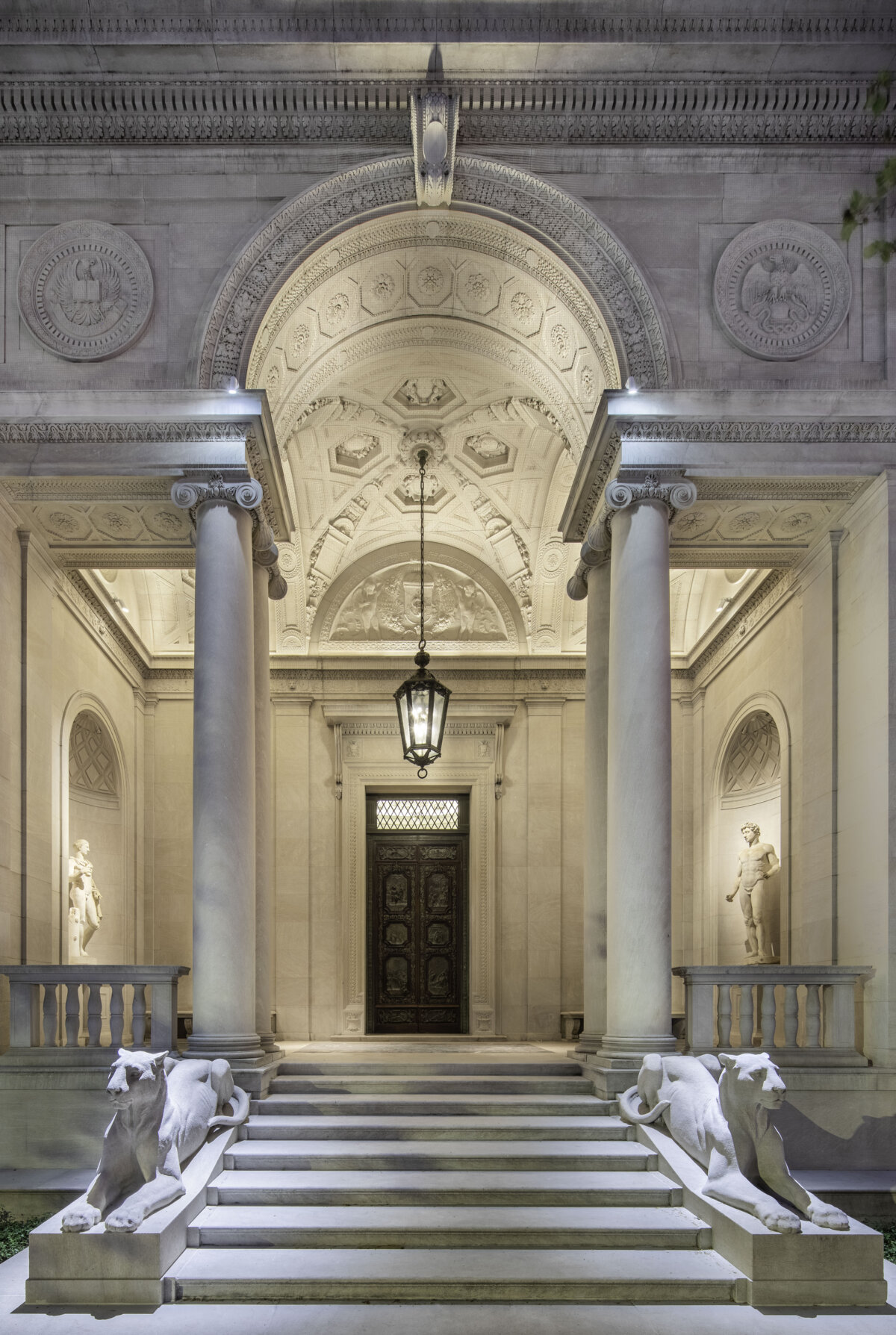
The Morgan Library’s Palladian-arched entryway leads to a portico. The decorative bronze door depicts scenes from the life of Christ, along with fruits, flowers, birds, and animals. Several artists crafted the designs within the dome ceiling and the half-circle lunette over the doorway. Sculptor Edward Clark Potter (1857–1923) sculpted two lionesses that guard either side of the wide staircase. Recessed domed niches showcase classical figures. (The Morgan Library & Museum)
The Morgan Library & Museum
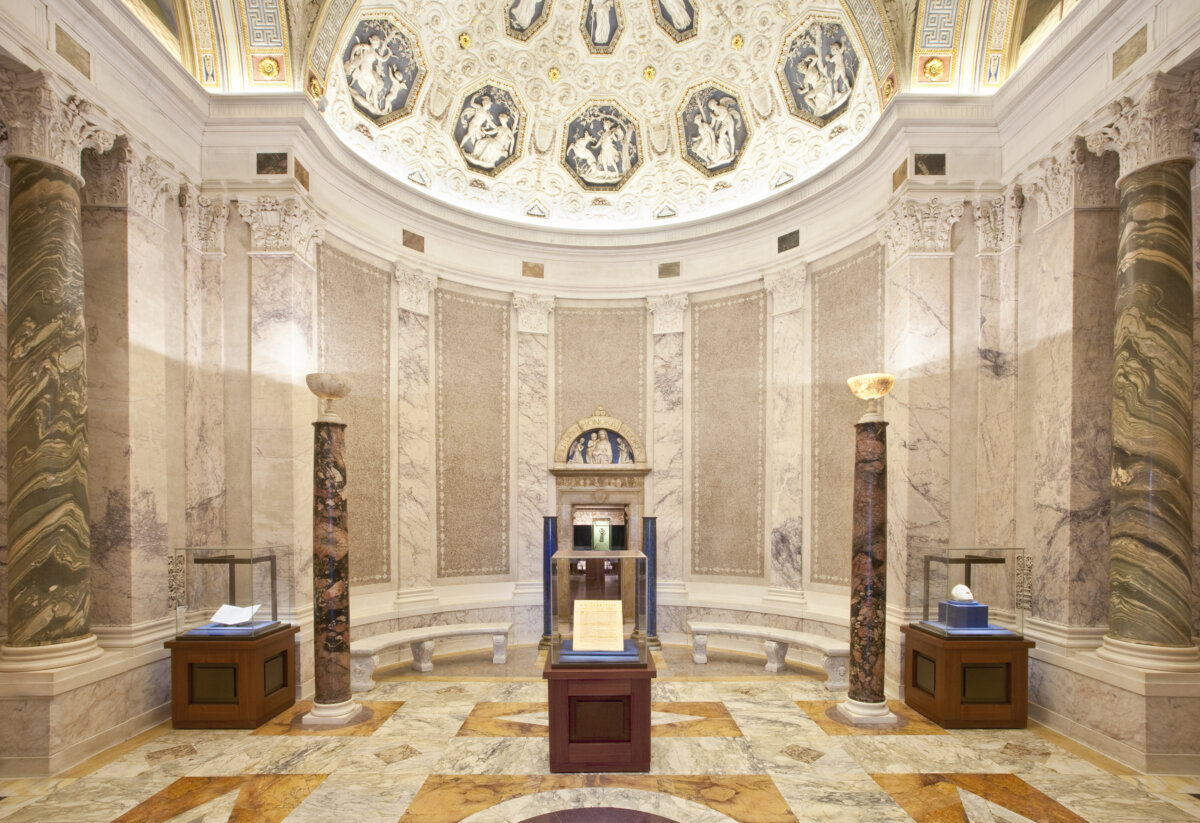
Morgan Library’s central hall rotunda’s floor is covered in a multicolored marble pattern inspired by the floor in the Villa Pia in Italy’s Vatican City. Complementing the floor are marble columns and pilasters with Corinthian capitals. Marble reliefs conveying classical scenes are inset into part of the dome and surrounded by rosettes and urn motifs. (The Morgan Library & Museum)
The Morgan Library & Museum
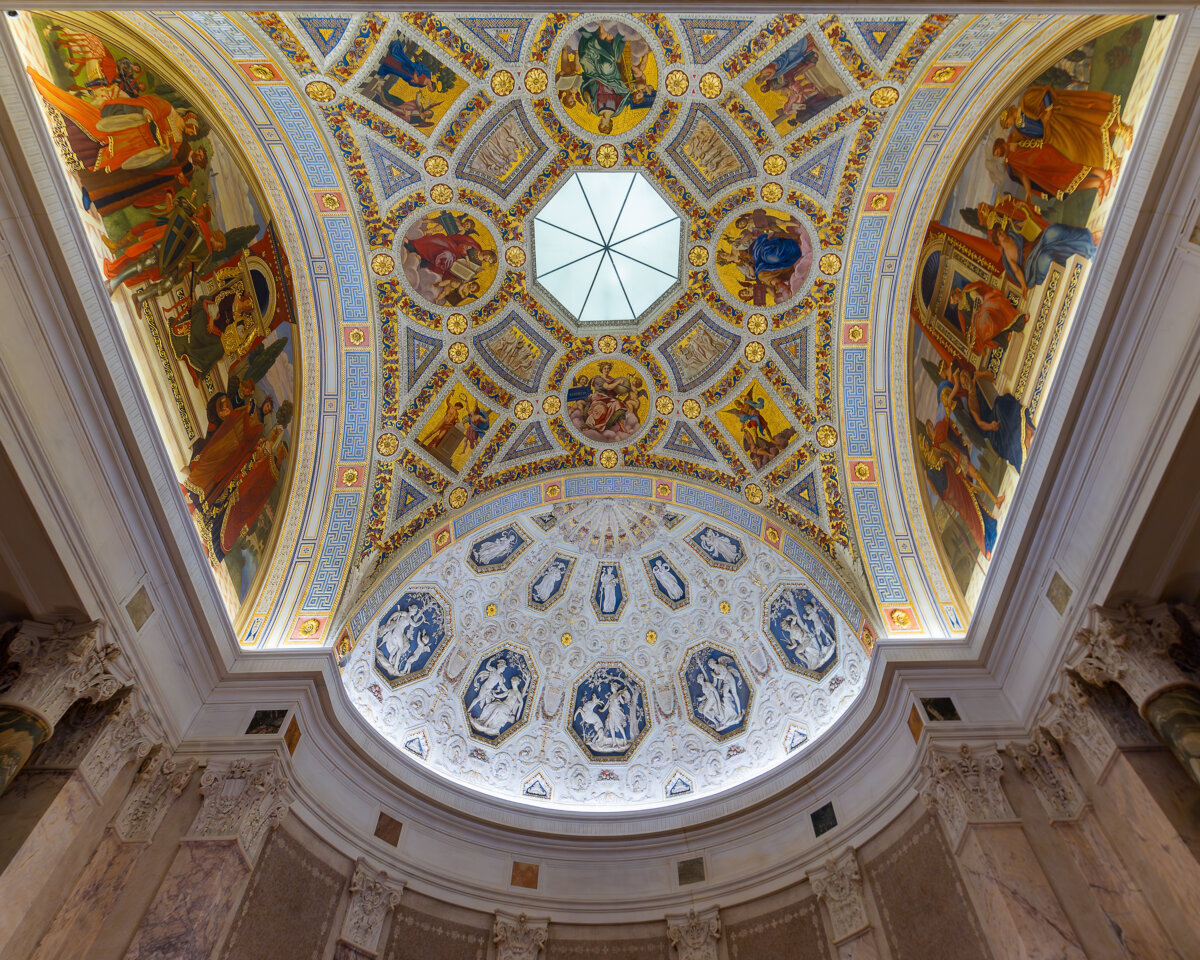
As part of the rotunda’s Raphael-inspired ceiling design, colorful and artistic half-dome lunette panels adorn all four sides. Rising 30 feet high, gilded paintings depicting female personifications of Religion, Art, Science, and Philosophy surround the skylight in this elaborate dome ceiling. The four rectangular panels above the spandrels depict “The Annunciation,” “The Crowning of Art,” “The Triumph of Light over Darkness,” and “Knowledge Transmitted.” (Kurka Geza Corey/Shutterstock)
The Morgan Library & Museum
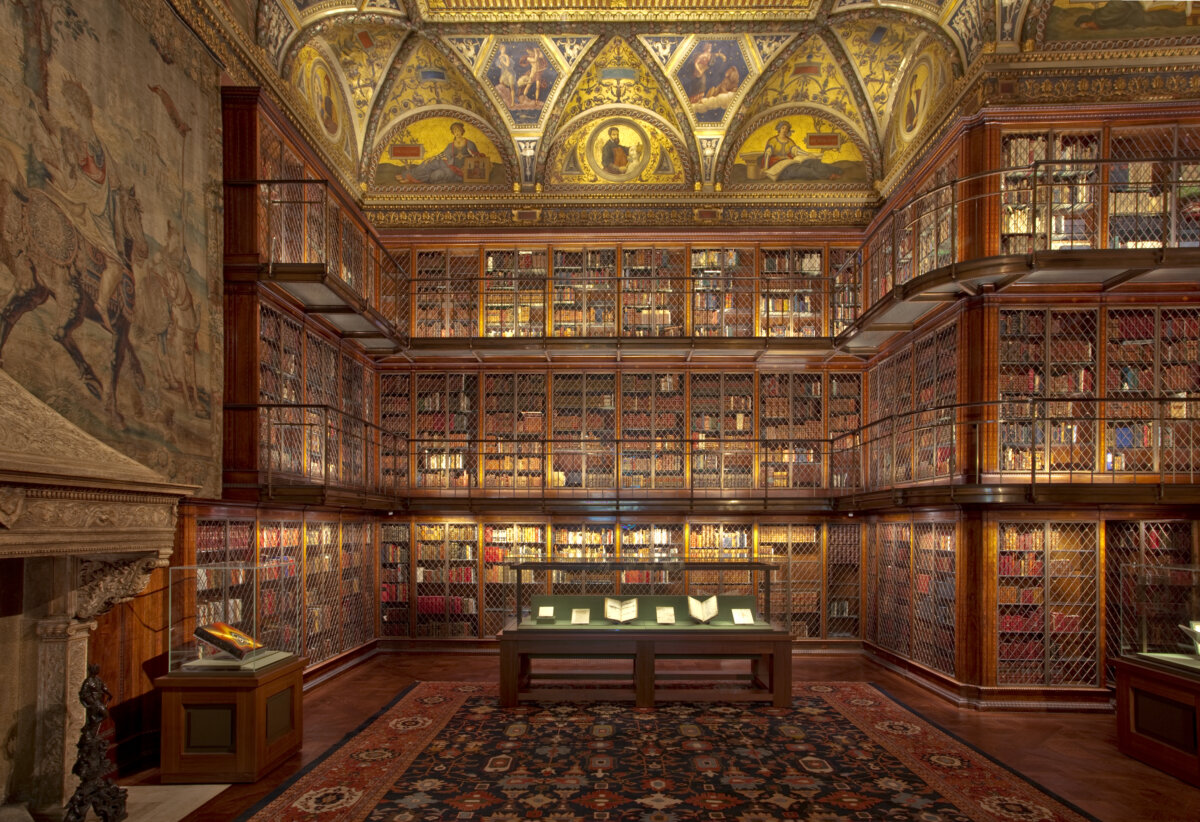
The Morgan Library: Originally glass, the triple-tiered walnut bookcases with steel grills and balcony railings have had acrylic facings since 2010. The inventive bookcase system includes pivoting shelves, as well as hidden staircases and compartments. Tapestries adorn the walls, while the semi-dome niches in the ceiling feature paintings. (The Morgan Library & Museum)
The Morgan Library & Museum
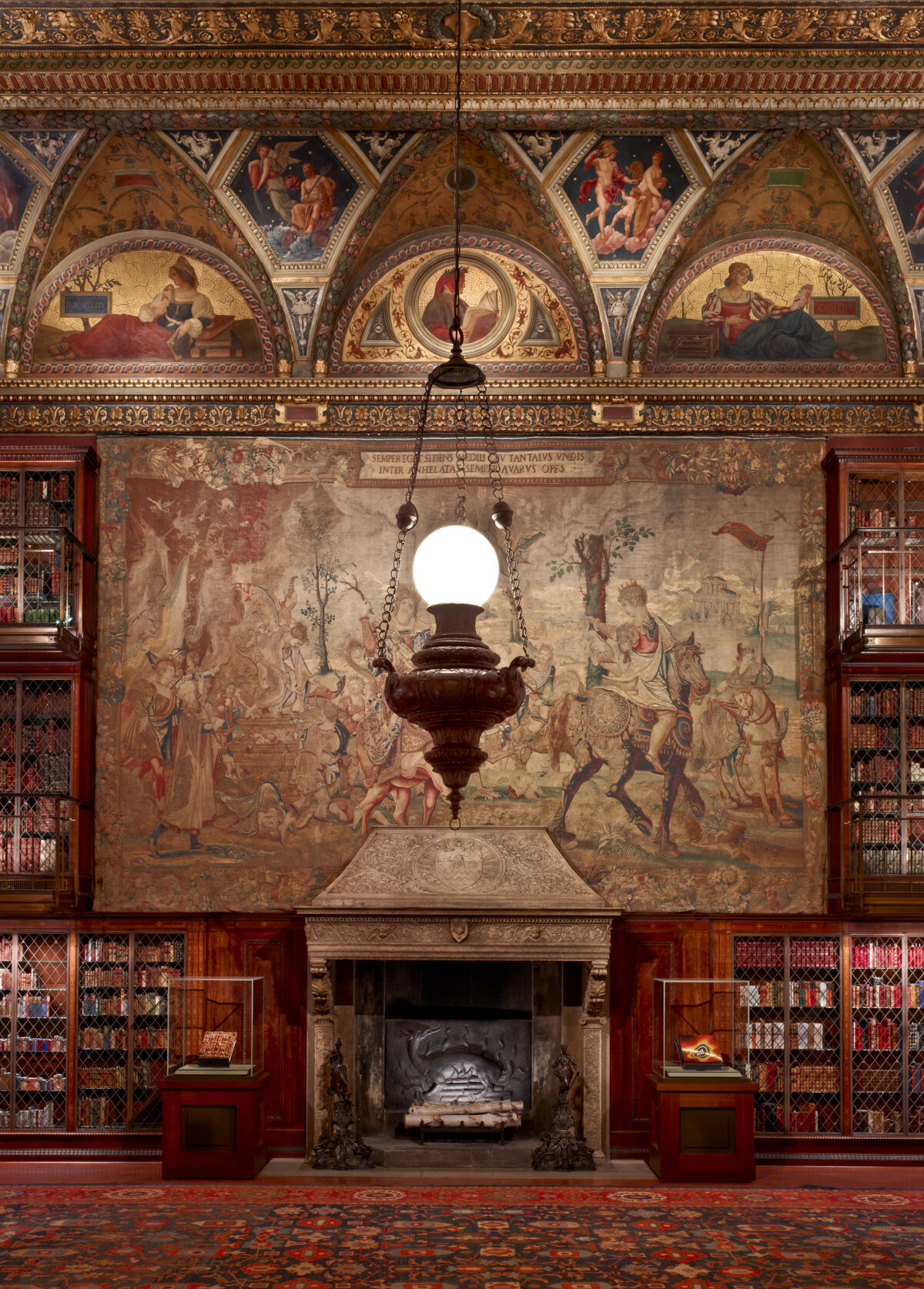
The massive 16th-century tapestry on the east wall of the library is titled “Triumph of Avarice.” The fireplace, imported from Italy, was crafted in the 15th century. Paintings in the lunettes, tucked into semi-dome, niches, are of allegorical female muses as well as famous artists, explorers, or teachers. A giant Moorish-style lantern with a globe top hangs from the ceiling. (The Morgan Library & Museum)
The Morgan Library & Museum
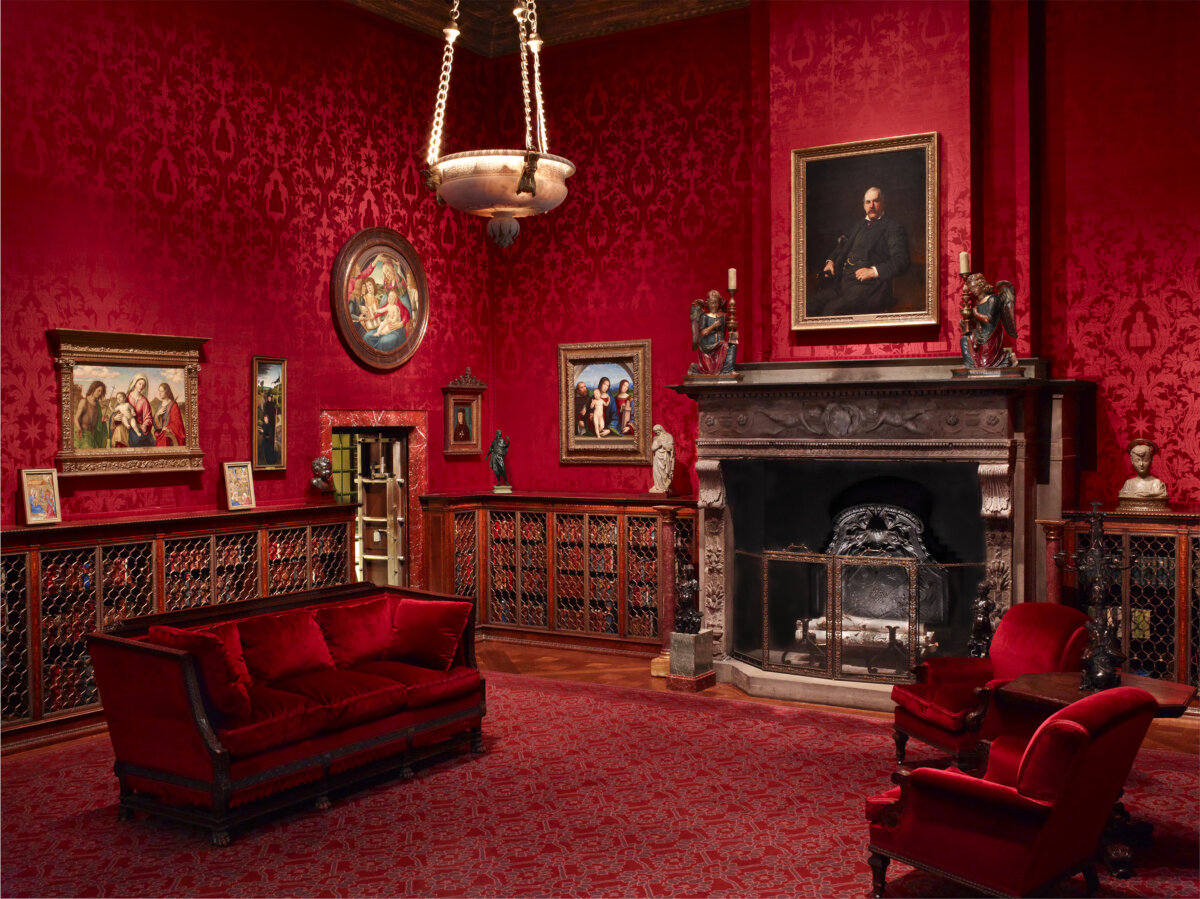
J.P. Morgan’s study is situated in what is referred to as the West Room. A marble mantel fireplace and low bookshelves lining the walls are focal points in the room, where regal red—walls, flooring, and upholstered furnishings—is the theme. (The Morgan Library & Museum)

What arts and culture topics would you like us to cover? Please email ideas or feedback to features@epochtimes.nyc. 

A 30-plus-year writer-journalist, Deena C. Bouknight works from her Western North Carolina mountain cottage and has contributed articles on food culture, travel, people, and more to local, regional, national, and international publications. She has written three novels, including the only historical fiction about the East Coast’s worst earthquake. Her website is DeenaBouknightWriting.com
You May Also Like