SEARCH


Modern commercial fiction authors and publishers often rely on specific tropes to (supposedly) appeal to mass audiences. One of their favorites is the rich antagonist.
Wealthy characters are frequently cast as villains simply because they’re wealthy. The characters are lazily reduced to caricatures of avarice, self-absorption, and corruption who are willing to cross almost any line to keep their ill-gotten privilege.
Yet wealth is relative. The median American earns 8.6 times more than half of the world’s population and 24 times more than the world’s poorest. By global standards, then, most readers occupy the very position of privilege such a viewpoint critiques.
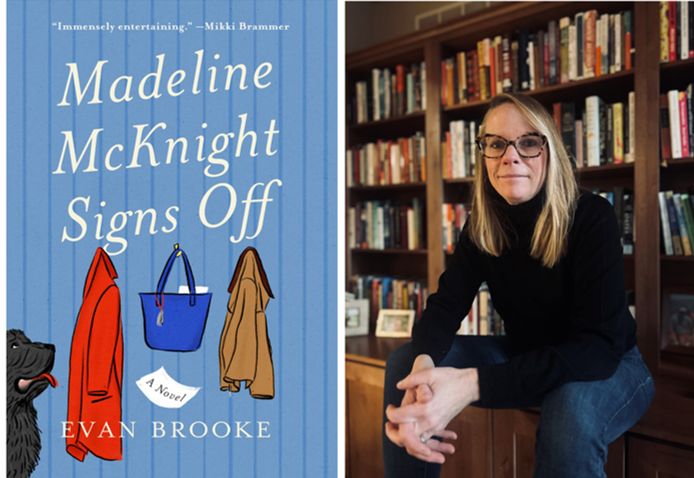
Evan Brooke’s debut novel, “Madeline McKnight Signs Off,” features the standard modern tropes: men as villains, passive heroines at the mercy of forces beyond their control, obligatory LGBTQ representation, and blog-like prose. Normally, this litany of tired cliches would make a lot of discerning readers roll their eyes and move on.
However, Brooke’s novel has one notable twist: The fictional co-heroine is a self-made multi-millionaire, and the story delves into a similar real-life woman from over a century ago.
Given publishing houses’ apparent preference for progressive agendas and the rise of socialist movements in America, Brooke’s decision to write it and Atria Books’ decision to publish it seems almost blasphemous.
The real question is: Do the novel’s tiresome tropes overwhelm this unusual opportunity for a different perspective?

Wall Street Witch
Madeline McKnight is a terminally ill Wall Street analyst who became a multi-millionaire despite a moment of professional humiliation on national TV. She initially comes across as blunt, brash, and tough-as-nails; she also has a keen interest in fly-fishing and fly tying in the Pocono Mountains. As the story and her illness progress, the hidden layers beneath that toughness begin to emerge.
The book switches back and forth between Madeline’s perspective and that of her palliative care nurse, Brigid “Bri” Davis. At the start of the story, Madeline’s oncologist gives her no more than a few months to live.
“Over my dead body meant something different before I was 100% dying,” Madeline quips when the doctor suggests she start writing a journal. All of Madeline’s chapters are excerpts from her journal, which include sardonic “annual reports” detailing the decline in her quality of life.
Madeline has some unfinished personal projects that she very much hopes to complete before she kicks the proverbial bucket. She decides to reach out to Bri. Bri happens to be the daughter of Cara Davis, an ex-best friend who cut Madeline out of her life years ago.
Bri is a young nursing student at UPenn, who’s struggling with debt, a recent breakup, and meager future prospects. When Madeline unexpectedly offers her a job, Bri is suspicious, considering the bad blood between Madeline and her mother.
Bri acknowledges that she’s probably being used as a means to either alleviate Madeline’s guilt or to exact revenge on her former bestie. Nevertheless, Bri herself holds a lot of animosity toward Cara, who drained the Davis family savings due to her opioid addiction. Also, the pay Madeline offers is very, very good.
Bri’s chapters are written in a blogging style—a running dialogue with her inner self. Madeline’s sections have a similar tone, even though she’s a CEO in her 60s. This gives cohesion to the overall style but also makes Madeline sound like she’s from Gen Z, thereby diminishing her realism.
As Bri slowly begins to trust that Madeline isn’t trying to manipulate her, the dying woman makes her a second offer.
For years, Madeline has been trying to establish a museum dedicated to Hetty Green, the richest woman in America during the Gilded Age (1870–1900); Green, who was known as the “Witch of Wall Street,” is a great inspiration to Madeline. If Bri can keep Madeline alive until the museum’s opening, she’ll get a $2M bonus.
Sympathy for the Successful?
Brooke has aimed “Madeline McKnight Signs Off” squarely at female readers no older than 25. The format has a varying visual structure that includes frequent font changes, a texting conversation, bar graphs, and pie charts. The device isn’t as assaulting as some modern offerings (Amie Kaufman’s “Illuminae” series is an extreme example), and Brooke prioritizes character and plot over visual gimmicks.
As for the prose, more mature readers might find the online diary style a bit chaotic and impulse-driven. Bri often flits from subject-at-hand observations to remembrances to general stray thoughts. Again, the voice is tailored to the target audience, and, for the most part, Brooke largely succeeds in using it.
By the end of the novel, Bri begins to understand that corporate finance, capitalism, and people who strive in those areas are more complex than she realized. Overused tropes are there and will likely be welcomed by many readers who enjoy them.
But, to her credit, Brooke does explore the idea that, ethically speaking, the choices any of us make are rarely black and white. While discerning readers won’t likely enjoy “Madeline McKnight,” some younger individuals may find its exploration of wealth and moral complexity thought-provoking.
‘Madeline McKnight Signs Off: A Novel’
By Evan Brooke
Atria Books: Nov. 3, 2026
Hardcover, 352 pages
What arts and culture topics would you like us to cover? Please email ideas or feedback to features@epochtimes.nyc.