SEARCH


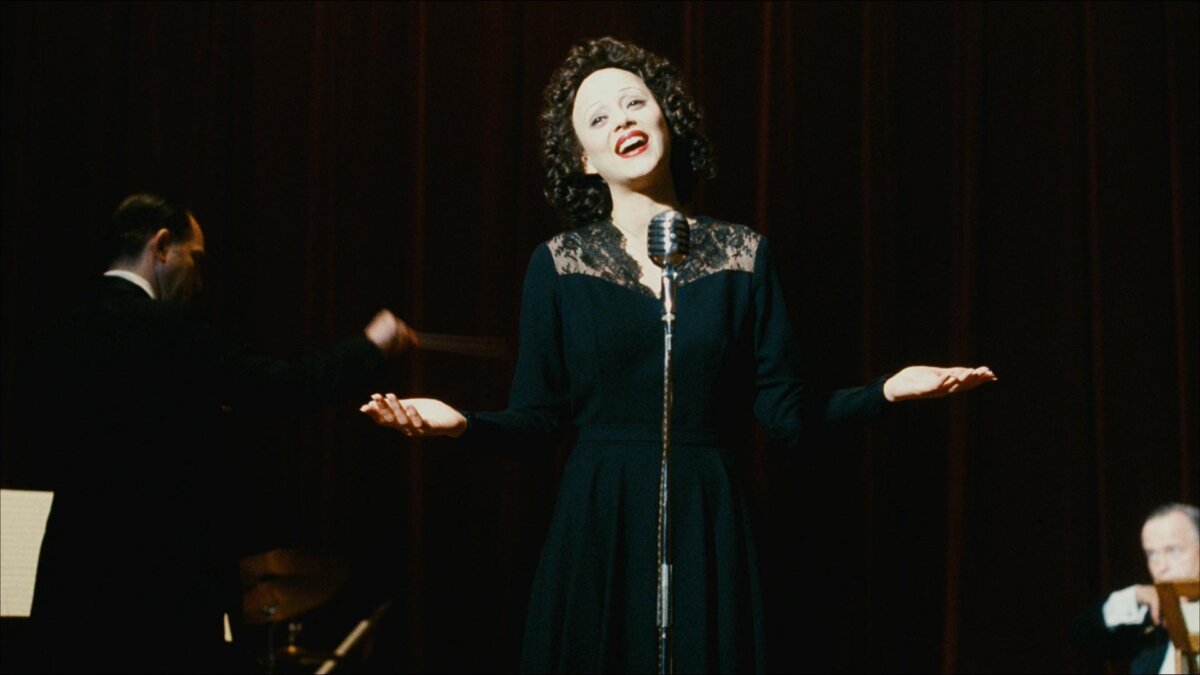
PG-13 | 2h 20min | Drama, Biopic | 2007
Screenwriter-director Olivier Dahan’s biopic about one of the world’s most influential singers shows how the pathos that pervaded Edith Piaf’s life powered her art and lent a tragic but touching heroism to her every performance.
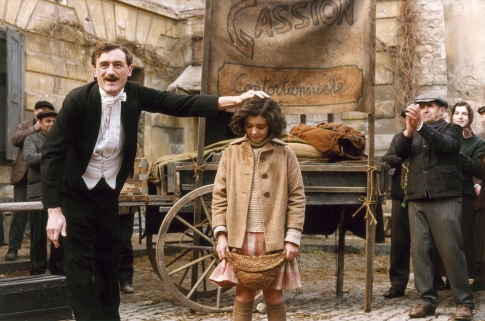
In early 20th-century France, 5-year-old Edith Gassion (Manon Chevallier), abandoned by her parents, is cared for by kind women in her grandmother’s brothel. A childhood affliction briefly renders Edith blind. Years later, her father (Jean-Paul Rouve), a circus acrobat and streetside contortionist, takes his now-preteen daughter (Pauline Burlet) into his troupe. When his street act sags, he demands that she quickly do something. Spontaneously, she sings “La Marseillaise” and retains a dispersing crowd.
As she finds independence as an adult, the emotive power of Edith’s (Marion Cotillard) voice finds a patron in nightclub owner Louis Leplée (Gérard Depardieu). He gives her the stage name “Piaf,” French slang for “Waif Sparrow”; this is a fond reference to her tiny physique on large concert stages. After Leplée’s death, her confidence sinks; she’s once booed off stage. Then, mentored by musician Raymond Asso (Marc Barbé), Edith bounces back, learns to connect with audiences, and comes alive on stage much like an actress.
Soon, Edith is touring worldwide, performing in packed halls, and recording best-selling studio albums. But private tragedies still shadow her public triumphs. She copes with the loss of her lover, Marcel Cerdan (Jean-Pierre Martins), a boxer who’s killed in a plane crash. She battles crippling pain from arthritis, injuries from a car crash, and a morphine addiction from prolonged use of painkilling injections. None of these hold her back, and Edith goes on to become one of the most beloved voices in France.
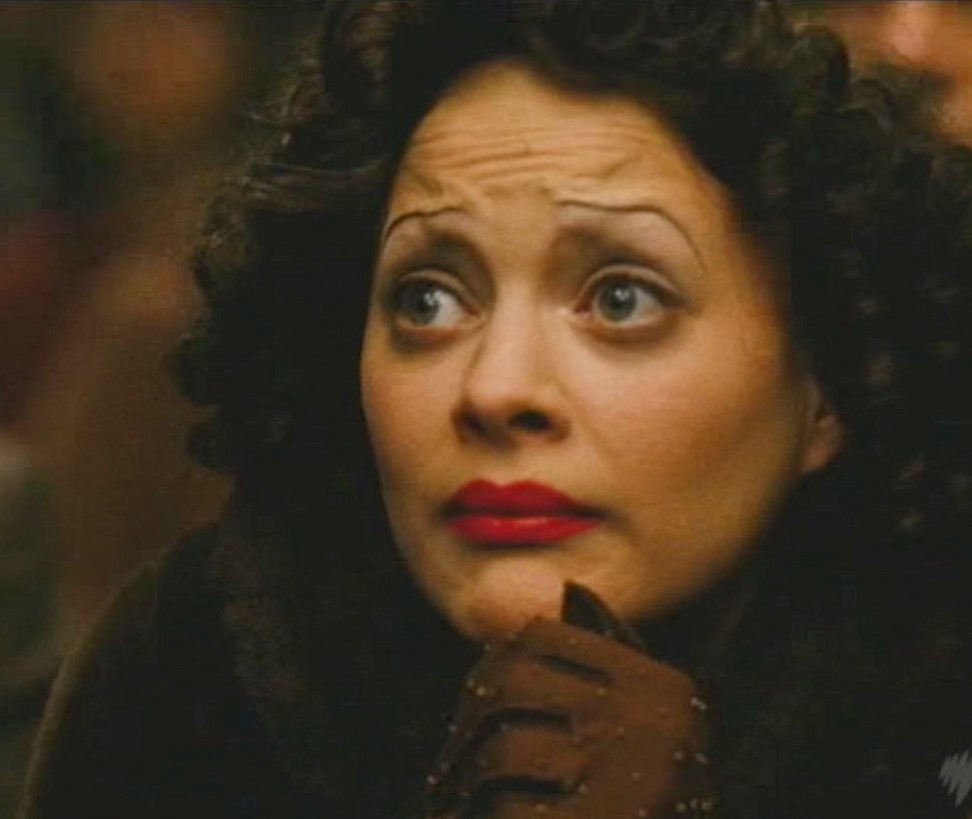
The film won the Best Makeup Oscar for transforming tall, 32-year-old Ms. Cotillard into the pint-sized Piaf, who lived to 47. Ms. Cotillard won the Best Actress Oscar for playing Piaf, who, in her later years, was wracked by pain and disease, could barely walk, and looked like she was in her 80s. Ms. Cotillard perfects Piaf’s receding hairline, floss-thin eyebrows, halting gait, and head bowed as if weighed down by some imaginary load; she hunches her shoulders and juts her chin forward about a foot ahead of her crooked spine. At points, Ms. Cotillard’s Piaf looks no more than a stick figure with limbs so gnarled by arthritis that she must be carried, and hand tremors so agonizing that she can’t grip a glass of wine. Ms. Cotillard mimics Piaf’s raspy speaking voice, a shocking contrast to the singer’s throaty singing voice.
No Rose Without a Thorn
Mr. Dahan’s film is named after Piaf’s signature song. Its literal meaning is “Life in Pink,” but here, it symbolizes Piaf’s habit of seeing life through rose-tinted glasses, a naive way of enjoying love and enduring loss; after all, Piaf’s genre of choice was the chanson, or French ballad. Dozens of singers recorded their versions of this song, but even decades after Paif’s death, hers remains the definitive version.
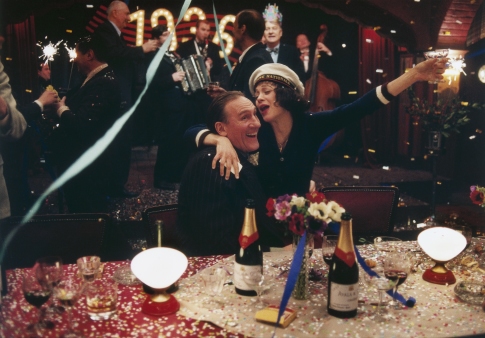
Given how diminutive she was, it’s unclear where Piaf got her formidable vocal power. Her offstage life exuded a pulsing effervescence, a joie de vivre, like champagne bubbling over from its bottle. Watch her starstruck during a chance meeting with then-star singer Marlene Dietrich (Caroline Silhol). Watch her impish delight as others read music critic Virgil Thomson’s rave review of a Piaf concert.
Piaf senses that sorrow will temper her every joy, as a thorn accompanies every rose. Reflexively, she seems to steel herself for it. Notice how loudly her “No!” echoes in her darkened room when someone throws open a window blind. Why, she wonders, must her room be flooded with light, when there’s so little of it in her life?
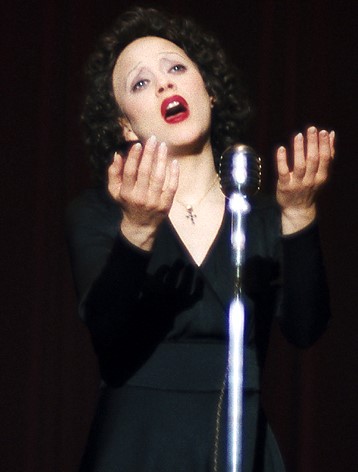
In one concert scene, Mr. Dahan blocks out Piaf’s voice to accentuate his striking visuals as if, by not hearing her, audiences might see her better. Her phrasing is animated, even playful. She shrugs her shoulders. Her hands, first on her hips, rise, entreating, and are then folded, as if in prayer. Mr. Dahan offers close-ups of her rose-red lips and her glowing eyes. His camera floats above a stunned audience, moved to silent tears as they feel her pain and her joy through every syllable.
At that moment, they’re alone with Piaf. Her ecstasy is theirs. Her sorrow is, too, as she touches them with an intimacy too deep for words. As she sings her final line, she closes her eyes, seemingly shutting out the sight of possible rejection or ridicule. But then, hearing claps, she opens them to look in awe at the audience’s unashamed adulation.
You can watch “La Vie en Rose” on DVD and Blu-ray.
‘La Vie en Rose’
Director: Olivier Dahan
Starring: Marion Cotillard, Jean-Pierre Martins
MPAA Rating: PG-13
Running Time: 2 hours, 20 minutes
Release Date: Feb. 8, 2007
Rated: 3 stars out of 5
Would you like to see other kinds of arts and culture articles? Please email us your story ideas or feedback at features@epochtimes.nyc