SEARCH


PG-13 | 2h | Biopic, Drama | 2026
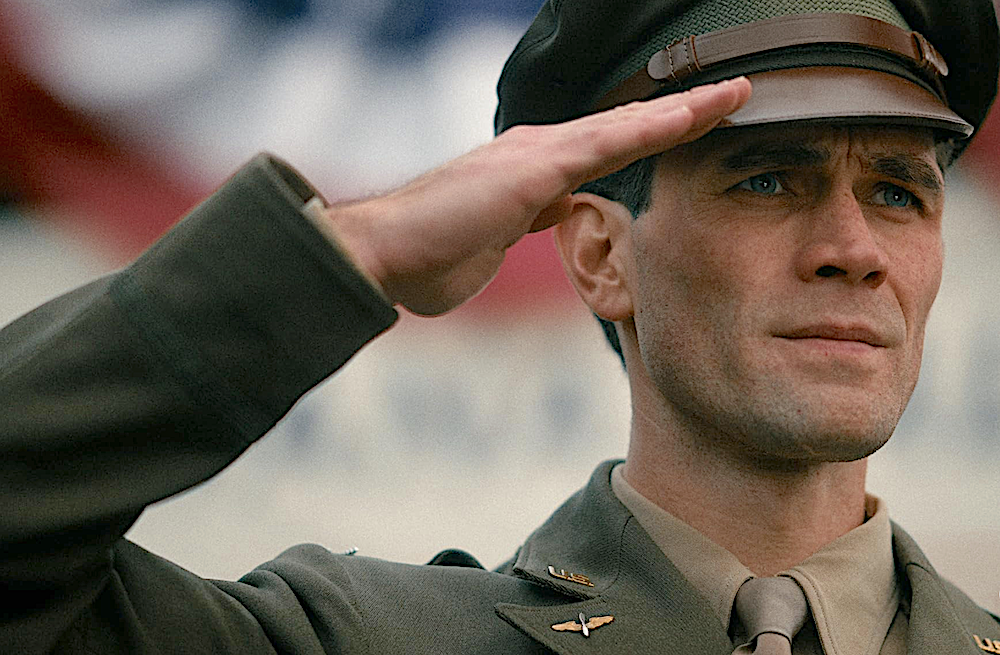
Rather than focusing on the tinseltown aspects of actor Jimmy Stewart’s now-legendary and storied Hollywood career, “Jimmy,” a glowing but not necessarily hagiographic biopic, aims to depict what kind of a man the movie star was at heart.
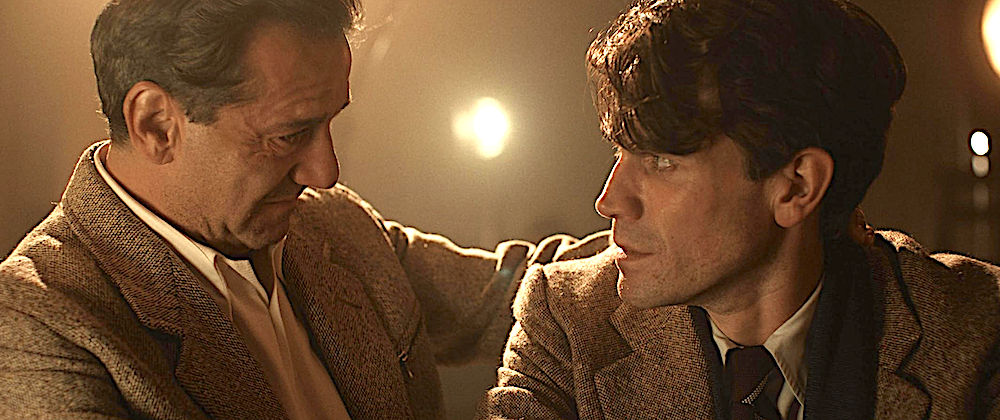
It tells the story of Capt. James Stewart, the patriotic, duty-bound World War II bomber pilot, and his heroic eschewing of a cushy Hollywood life. It shows how he stood up to his father’s belittling and dismissive (but well-intentioned) insistence that Jimmy wasn’t up to soldiering.
It depicts Stewart’s outstanding leadership qualities, his post-traumatic stress, and his rocky reentry into civilian life. It relates how the inner anguish of his war experiences actually deepened the emotional truth of his acting craft, which led to his national-treasure performance in “It’s a Wonderful Life.”
From Pilot’s License to Movie Pilot to B-24 Pilot
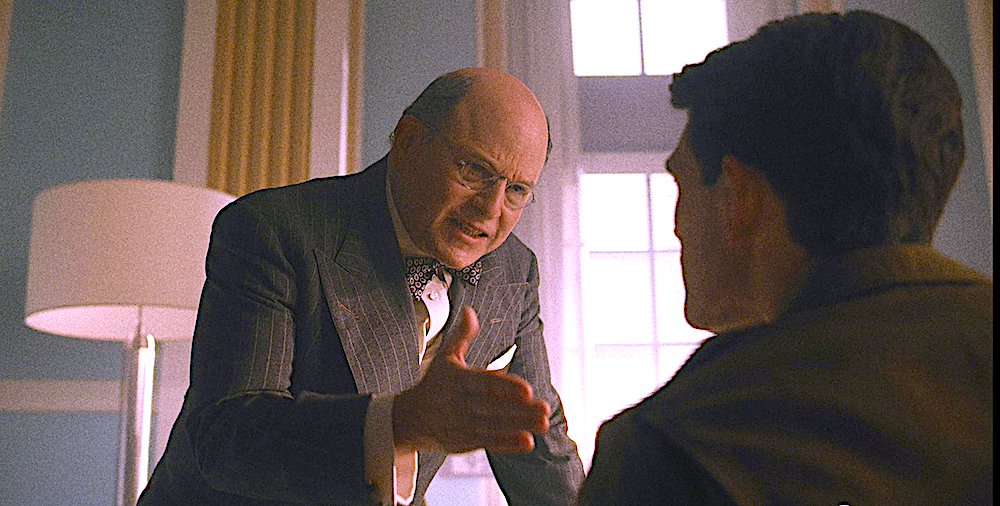
It’s 1941. Stewart’s fresh off his Academy Award win for “The Philadelphia Story.” Hollywood mogul Louis B. Mayer (“Seinfeld” actor Jason Alexander, looking and acting like a genteel version of Tom Cruise’s Les Grossman from “Tropic Thunder”) wants to capitalize on Stewart’s newfound and potent showbiz currency. Stewart’s opportunistic sweetheart—Ginger Rogers (Jemma Donovan)—would also like to see such a development.
But now the war is on, and Stewart gets drafted. At first unsure of how to proceed, he allows the studio’s political heft to finagle him a deferment. Stewart’s name is soon dragged through the mud by infernal showbiz gossip columnist Hedda Hopper (Sarah Drew). Hopper functions as a bit of a one-person Greek chorus, providing status updates at pivotal points in Stewart’s Hero’s Journey.
Immensely unhappy with the way his life is now unfolding, Stewart heads home to Indiana, Pennsylvania, to shelter in place and get some parental guidance. Mom (Jen Lilley) and especially Dad (Neal McDonough) are outwardly unimpressed by their son’s celebrity.
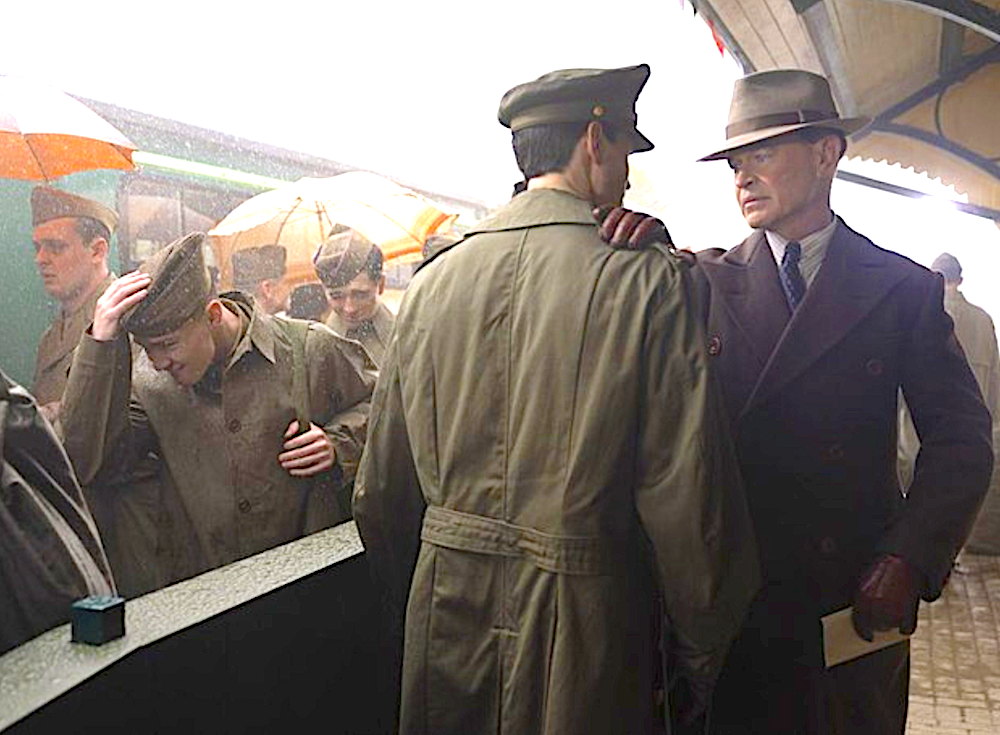
Outwardly, Dad puts his son’s Oscar “haphazardly” in his hardware store window, among hammers, toilet plungers, sandpaper, and such. But you just know he’s gonna brag about it to the local townsfolk the minute Jimmy leaves town.
As mentioned, Dad tells his son that he doesn’t have what it takes to do the manly things of war. Mom urges Jimmy to follow his heart. Stewart extricates himself from his father’s shadow and enlists.
Reluctant Leader
Deployed to England, Army Air Force Capt. Stewart is considered by fellow airmen to be a mere propaganda aviator, doing fake flying to boost morale back home. After all, Stewart’s collaborator Frank Capra famously oversaw the U.S. War Department’s “Why We Fight” propaganda documentary series.
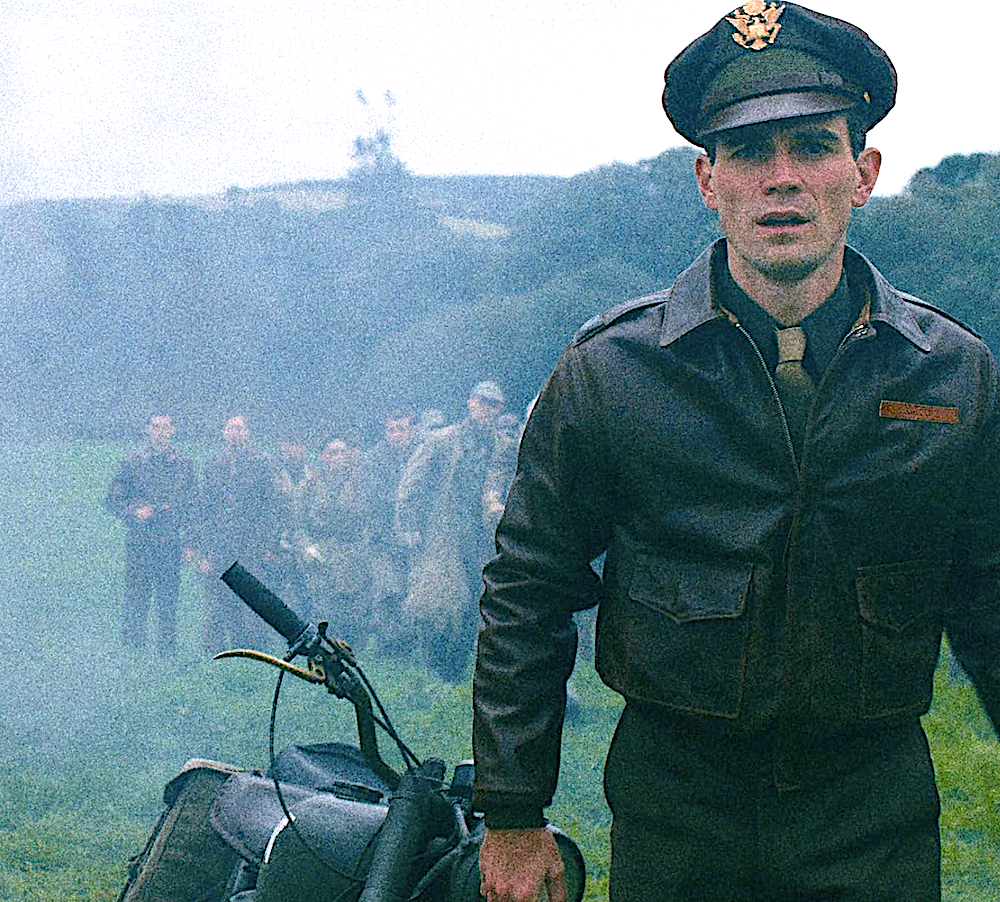
However, Stewart explicitly rejected stateside promotional assignments. He soon proves he has the right stuff, in a B-24 Liberator cockpit when the bomber sustains heavy flak-damage on their first mission. Jimmy quickly bonds with his crewmen, especially copilot Martinez (Julian Works).
We’re shown why Stewart the movie star made a perfect military leader. When squadron commander Col. Terrill (Rob Riggle) tells Stewart to bring his acting skills to bear in giving a speech to the demoralized airmen who are feeling underappreciated by the American people, he fires them up and then some. It’s the best scene in the whole movie.
However, war is hell, and many of those who Stewart fired up emotionally, died fiery, crashing deaths, which makes him feel like a criminal and causes him to sink ever deeper into depression.
His Ally
Stewart meets Lady Julia Tyndall (Kara Killmer), a widowed British aristocrat involved in war charity work. She helps Stewart to heal his spiritual and emotional war wounds. While the movie features many real-life prominent figures from that era, Lady Julia’a not an actual historical figure, but a fictional character invented to serve the movie’s narrative.
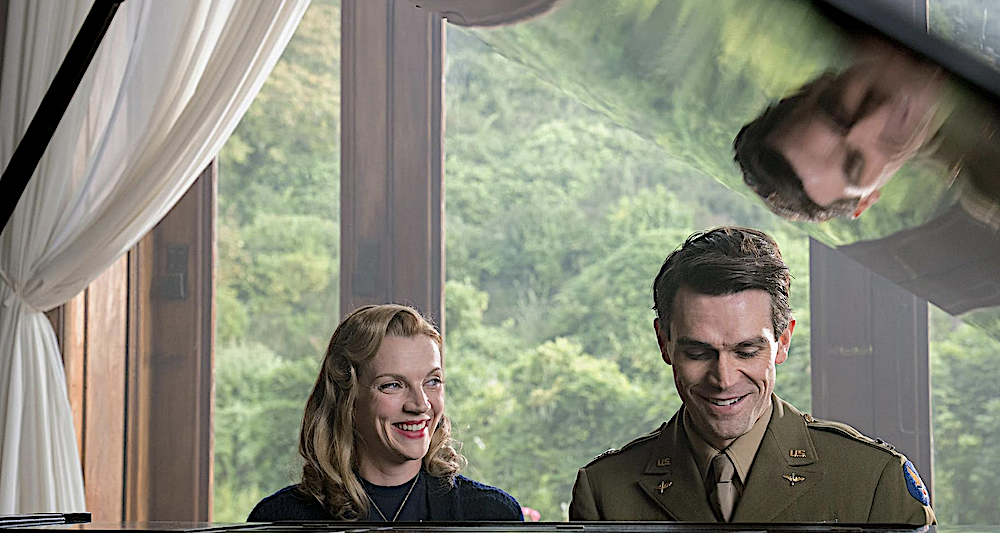
Stewart eventually achieved the rank of colonel, but he found his reentry into Hollywood extremely challenging. Mayer wants him to star in an exploitative movie chronicling his own experiences—“An actual war hero playing a war hero!”—Stewart refuses, saying that the people would like to forget about the war.
Feeling that he was a fraud as both a pilot and a leader, when Stewart arrives home to cheers and hoopla celebrating him as a war hero, it all rings hollow to him. He discovers his heart isn’t really into acting anymore. He feels that he’s even a fraud at his old job of being a professional faker.
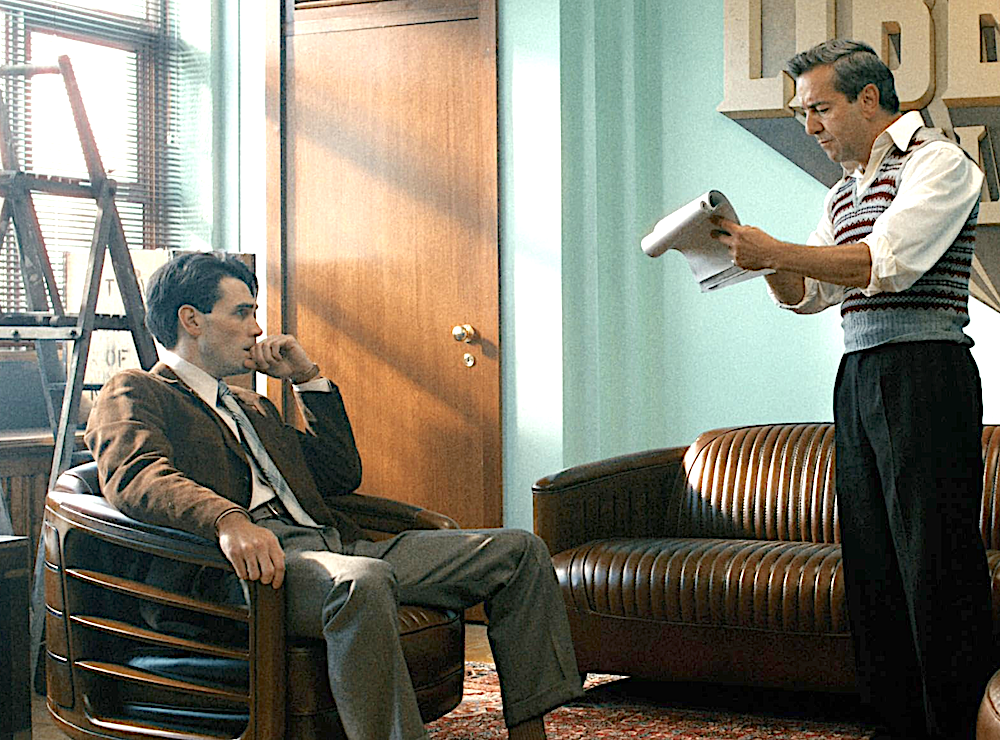
Eventually Stewart’s old friend Capra (Max Casella) pitches him the lead role in a quaint little Christmas movie, “It’s a Wonderful Life.” Stewart’s not interested, signs on anyway, and then struggles with the role, bringing war-generated emotional responses so intense that he ends up frightening his costars. A long-forgotten fact is that “It’s a Wonderful Life” bombed when it debuted. It bankrupted Capra’s production company and damaged his career.
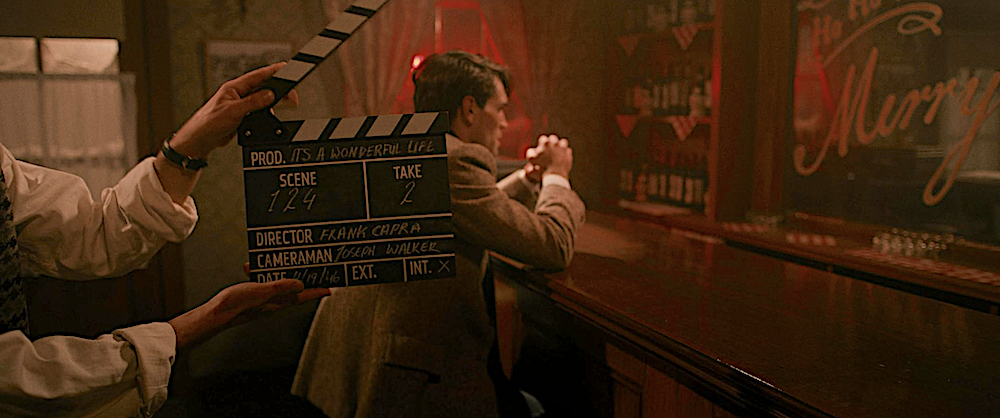
Stewart always called it his favorite movie, though. Instead of a war hero playing a war hero, PTSD-suffering Stewart played a despairing man who finds God instead of taking his own life. Perhaps this was a case of art imitating life. He gave us “It’s a Wonderful Life,” and years later, when he accepted his Lifetime Achievement Award from the Academy of Motion Picture Arts and Sciences, he thanked the audience for giving him “a wonderful life.”
In keeping with the tight-lipped, stoic men of the Greatest Generation, James Stewart rarely spoke of his wartime trials, even to daughter Kelly Stewart (a producer on “Jimmy”).
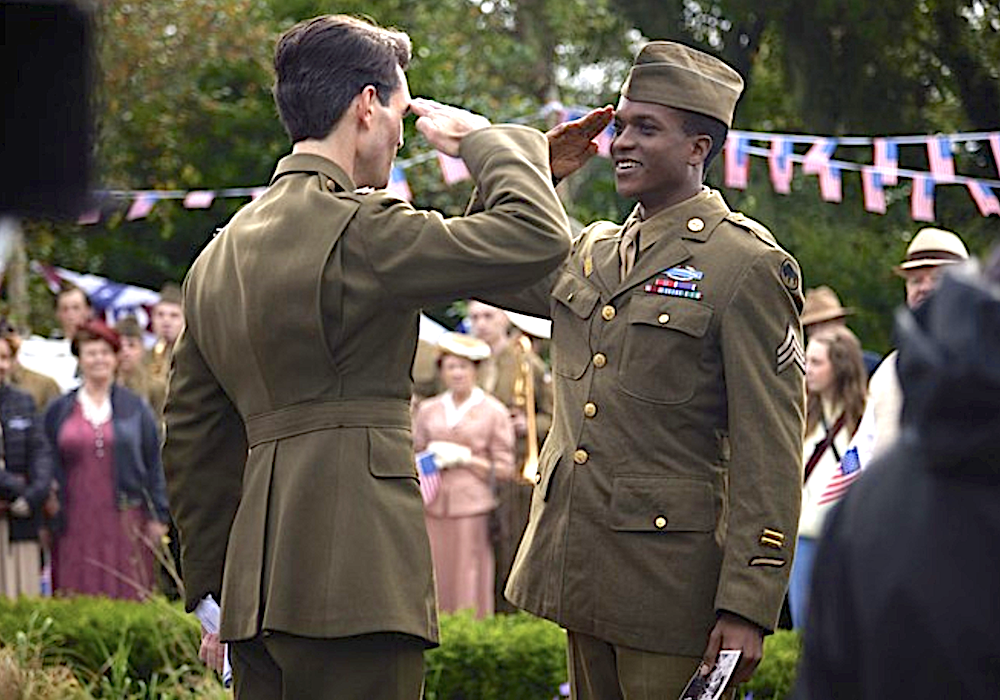
KJ Apa
The premiere reason to see “Jimmy” is KJ Apa (Archie from TV’s “Riverdale” series) playing Stewart. The native New Zealander nails Steward’s inimitable voice, along with the stylized inflections of the 1940s. Apa’s far more male-model-pretty than Stewart, but manages to embody Stewart’s awkward, slightly too-in-your-personal-space, eager-beaver quality.
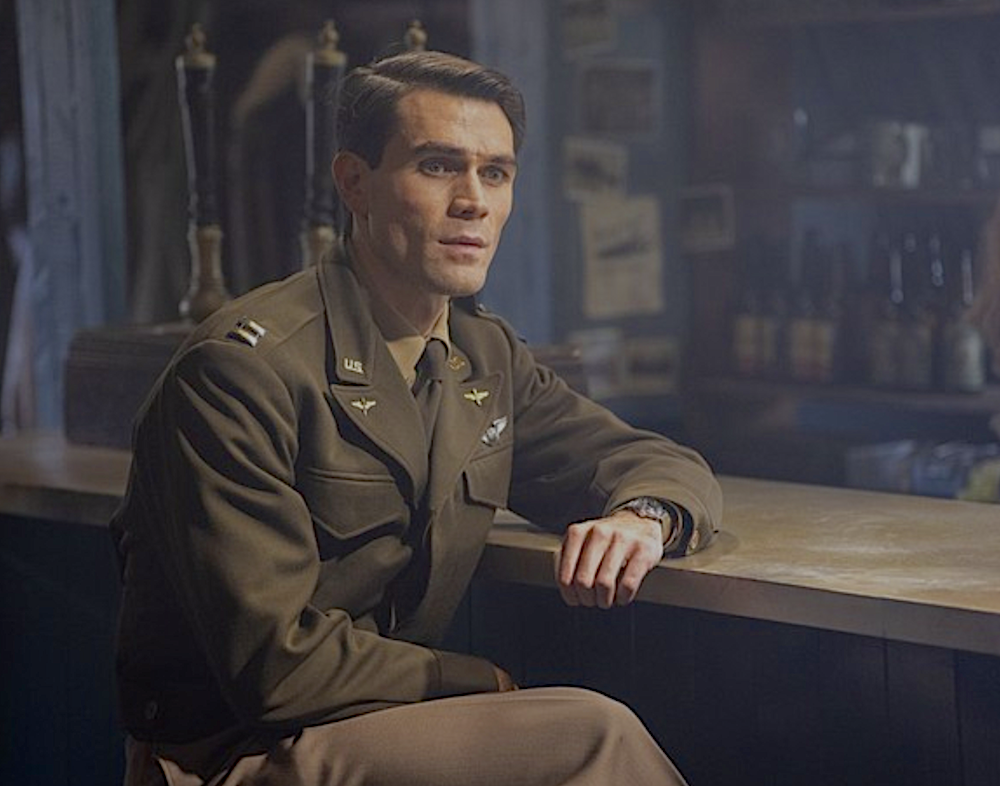
The film struck me at first as too squeaky-clean and, well, Capra-esque—but I quickly realized I’m sadly acclimated to the grit and grime of modern cinematic imagery. “Jimmy” has a great period look and feel, which includes costuming, production design, and score.
“Jimmy” is a wonderful portrait of a courageous cultural icon. It looks behind the stage curtains to see the man with the stage fright, the crushing doubts and fears, who answered the call of duty to fight the Nazis, nonetheless. And then attempted to fight his way back to a semblance of civilian normalcy.
It’s the story of a man everyone thought they knew, who often was a mystery, even to himself, but who ultimately gave us a template of integrity to emulate.
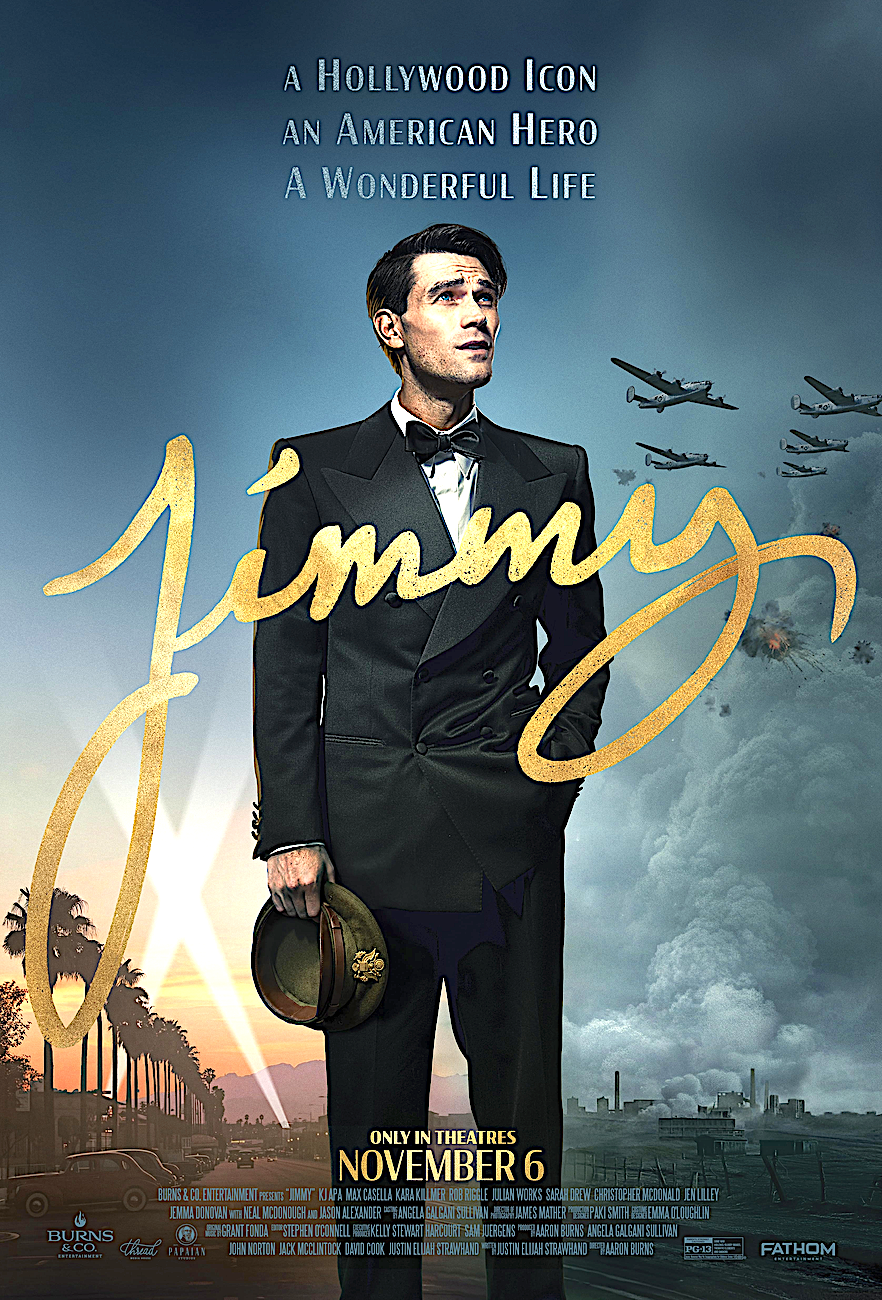
‘Jimmy’
Director: Aaron Burns
Starring: KJ Apa, Neal McDonough, Jason Alexander, Christopher McDonald, Max Casella
MPAA Rating: PG-13
Running Time: 2 hours
Release Date: Nov. 6, 2026
Rating: 4 stars out of 5
Would you like to see other kinds of arts and culture articles? Please email us your story ideas or feedback at features@epochtimes.nyc.