SEARCH


Daniel Defoe’s adventure story “Robinson Crusoe” burst onto the scene in 1719 as one of the first English novels. It was an instant literary success. The story of the ingenious shipwrecked sailor quickly gained popularity and became a cornerstone of English adventure literature. But the fictitious Robinson Crusoe had a lesser-known real-life counterpart: Alexander Selkirk, a Scottish privateer who spent four years as a castaway in the early 1700s and provided inspiration for Defoe’s tale.
Selkirk isn’t the only notable real-life castaway, of course. The following list outlines the exciting true stories of four famous survivors who lived a reality that has fascinated novelists and filmmakers for generations: survival on a desert island.
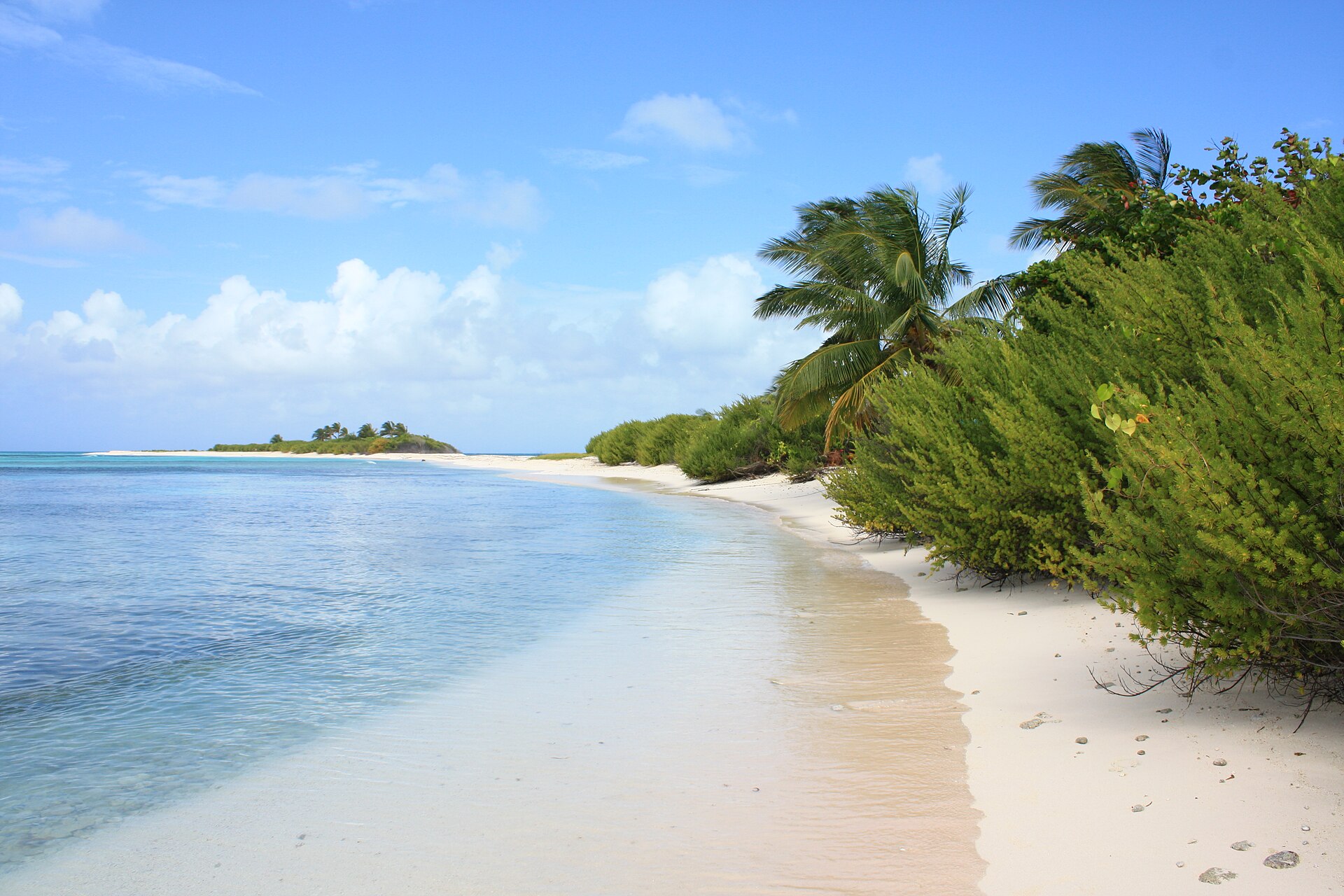 An uninhabited island off the coast of Colombia. (…some guy/CC BY-SA 2.0)
Alexander Selkirk
Selkirk was born in Scotland in 1676 and ran away to sea in 1695. He became a buccaneer in the Pacific, targeting Spanish vessels off the coast of South America. In 1703, he rose to the rank of sailing master. But his good fortune began to run out: The captain proved to be tyrannical and unskilled and the expedition ill-fated. Tensions grew between Selkirk and Capt. Thomas Stradling, who had allowed the ship to fall into bad repair. Selkirk argued with Stradling that the latter’s attempted repairs were insufficient, and the ship would sink.
Selkirk refused to sail. He chose instead to be marooned with a few supplies on Más a Tierra, an island 416 miles off the coast of Chile.
Alone on the island, Selkirk lived the way his fictional counterpart, Crusoe, lives in the novel: He sewed clothes from goat skins, built fires and shelters, tamed the island’s wild cats, and read his Bible. He ate the plums and herbs he found on the island, along with meat from goats, seals, sea lions, and lobsters.
He spent four lonely years there, keeping his silent watch for a passing ship. Finally, he was picked up by a British ship commanded by Woodes Rogers. He learned that his prediction about his prior ship had been correct: It did sink. Many men drowned, and the remainder were captured and cast into prison by the Spanish.
Rogers commented that Selkirk’s experiences proved how “solitude and retirement from the world is not such an unsufferable state of life as most men imagine.” He went on to say Selkirk’s adventures “may likewise instruct us how much a plain and temperate way of living conduces to the health of the body and the vigor of the mind, both which we are apt to destroy by excess and plenty.”
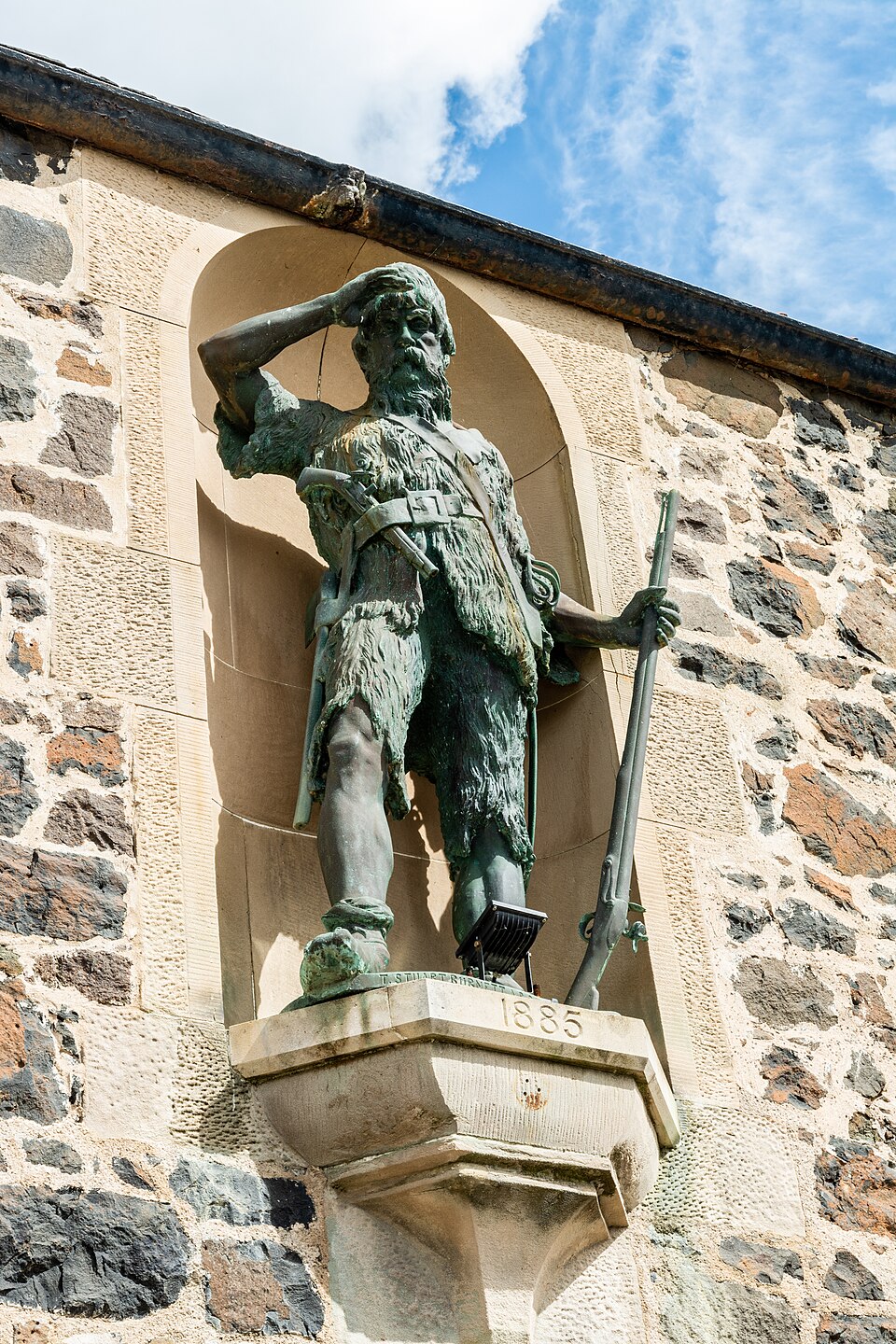 A statue of Alexander Selkirk stands in Lower Largo, Scotland. (Arcaist/CC BY-SA 4.0)
Marguerite de la Rocque
In 1542, French noblewoman Marguerite de la Rocque joined her uncle Jean-François de la Rocque de Roberval on his journey from France to the New World. Along the way, she took a young man as a lover. That so angered Roberval that he abandoned the two of them along with De la Rocque’s servant and a few supplies on the Isle of Demons, near Newfoundland. Sailors heard strange noises near this island, and as legend had it, the benighted isle was inhabited by evil spirits.
De la Rocque gave birth while on the island, but the child didn’t survive—and neither did her lover or her servant. With her only companions now lost to her, de la Rocque had to live in total solitude, surviving by hunting wild animals. A 1558 account of de la Rocque’s adventure reports that she “passed the time in reading, contemplation, prayers and orisons, having a cheerful and contented spirit in a body emaciated and half dead.”
She was eventually rescued by fishermen and returned to France, where she became a schoolteacher.
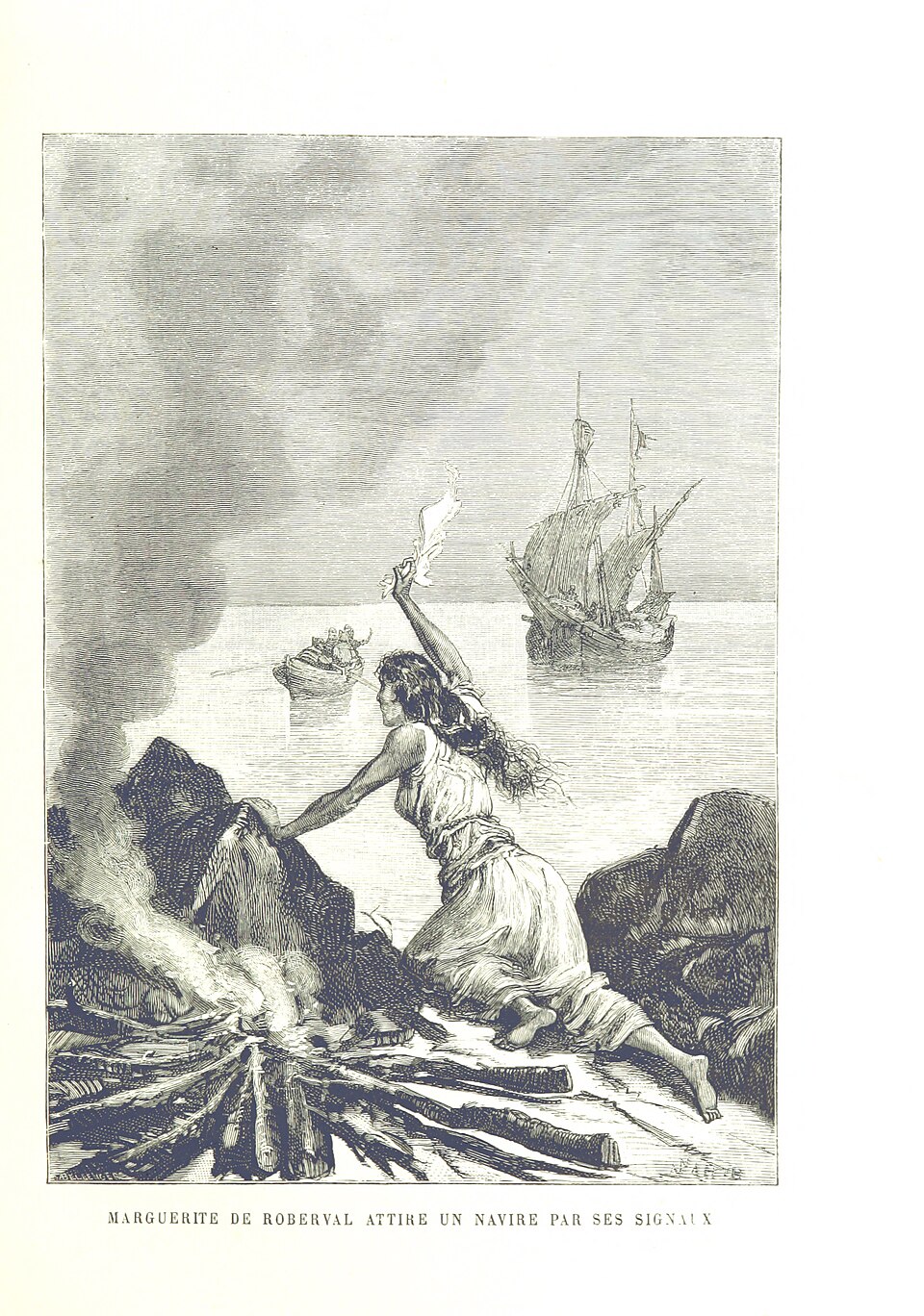 A reimagining of Marguerite de la Rocque’s rescue, taken from an 1883 French history book. (Public Domain)
Philip Ashton
Like Marguerite de la Rocque’s story, Philip Ashton’s adventure contains dramatic elements worthy of a Hollywood screenplay.
Ashton was a fisherman from Marblehead, Massachusetts, who fell into the clutches of pirates off the coast of Novia Scotia in 1722. Ashton’s moral resolve held firm, and he was determined to bear the situation patiently and not become a pirate just to save his skin. As he himself recorded it,
“You may easily imagine how I looked and felt when, too late to prevent it, I found myself fallen into the hands of such a mad, roaring, mischievous crew, yet I hoped that they would not force me away with them, and I purposed to endure any hardship among them patiently, rather than turn pirate with them.”
Despite his refusal to join the crew—even in the face of death threats—Ashton was signed on by the captain, a notorious pirate named Edward Low. When Ashton made an attempt to board a boat that was going ashore, the ship’s quartermaster tried to kill him. He held his pistol to Ashton’s head and fired—but the gun inexplicably did not fire, no matter how many times the quartermaster pulled the trigger.
Ashton had to wait some time for his next chance at escape. It arrived in the spring of 1723, when the fleet sailed to the island of Roatan in the Bay of Honduras. Ashton asked to join a six-man detachment that was going to row ashore and was granted permission. His feet felt solid ground underneath them again for the first time in nine months. Once ashore, he nonchalantly wandered along the beach, picking up seashells, attempting to distance himself from his crewmates without them noticing. Once he was far enough away, he escaped into the woods.
Alone on the island, Ashton learned to contend with the wild hogs, giant lizards, poisonous snakes, and shovel-nosed sharks—one of which attacked him when he was swimming one day in shallow water.
In November of 1723, an Englishman arrived on the island by canoe, gave Ashton some supplies, and left to go hunt, but never reappeared. The supplies helped Ashton survive more comfortably by hunting and cooking—though he did have a narrow escape from a pirate attack. He was finally picked up by a British man-o-war in March of 1725 and made his way home, having been absent for almost three years.
Ada Blackjack
While Philip Ashton had to endure tropical heat, Ada Blackjack faced the opposite: the bone-freezing cold of a Siberian island.
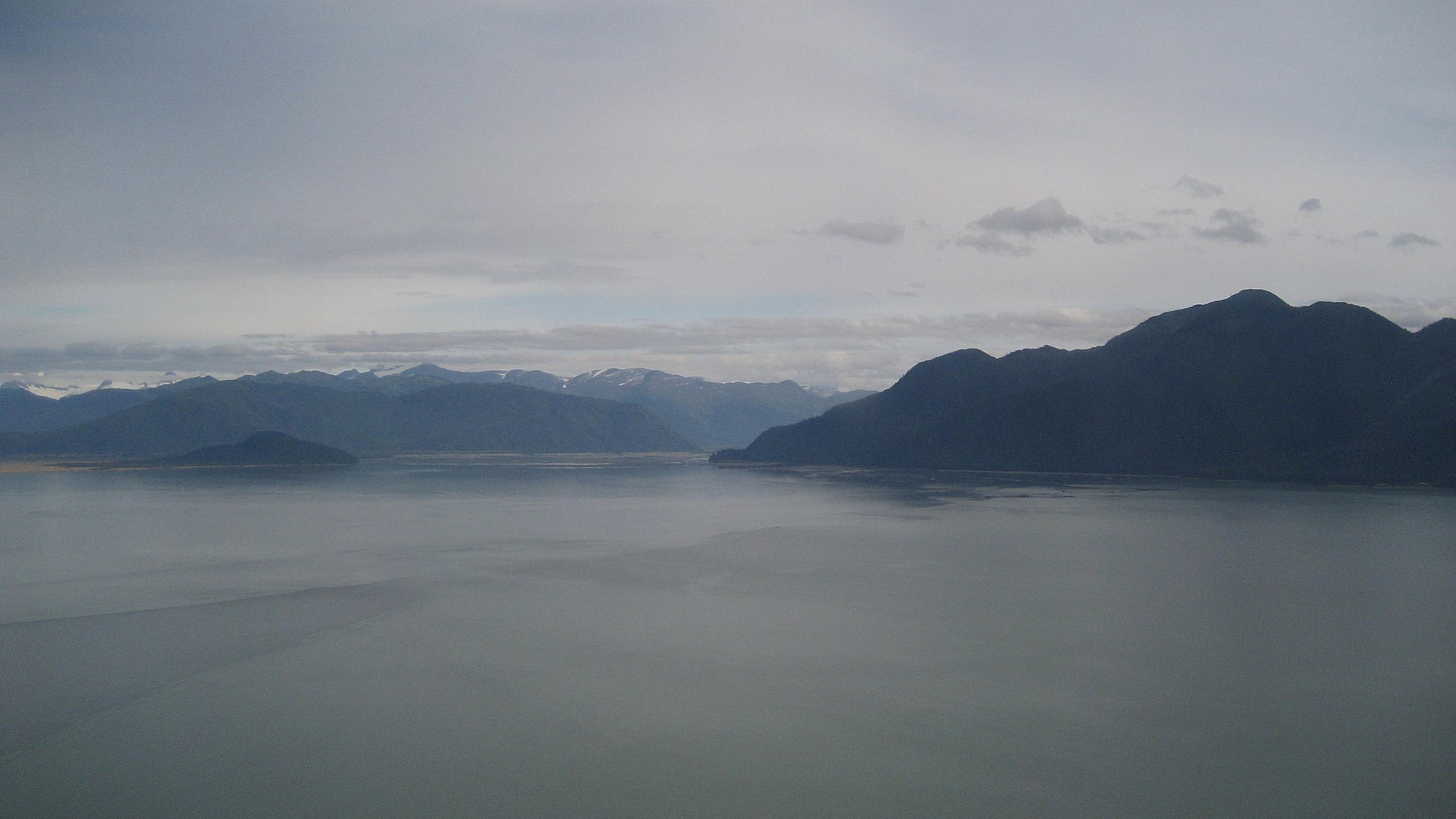 Ada Blackjack Johnson survived for over a year on Wrangel Island, pictured here. (Garycgibson/CC BY-SA 4.0)
Ada Blackjack, an Inupiaq woman, was born in 1898 in Spruce Creek, near Nome, Alaska. She married Jack Blackjack at the age of 16, and her life seemed marked out for tragedy from then on—but through all her ordeals she demonstrated incredible resilience. First, only one of her three children survived infancy, and he wasn’t healthy, suffering from chronic tuberculosis. Her husband turned out to be abusive and left her after five years.
Ada was penniless, so when she learned that explorer Vilhjalmur Stefansson was putting together an expedition and needed a cook and seamstress, she jumped at the opportunity, hoping to earn enough money to get her son out of the orphanage she’d been forced to place him in. Stefansson’s aim was to lay claim to Wrangel Island, a large, remote island north of Siberia—although he ended up handing the expedition over to some colleagues. Ada, 23 years old, set off with four men she did not know into the northern void, trying to stifle her fear of polar bears and strange men for the sake of her child.
The small expedition arrived at the island successfully, waiting for summer and the breaking of the sea ice to permit a relief ship to arrive. But in the summer of 1922, no ship came. Supplies ran out as winter loomed again. One of the men, Lorne Knight, grew ill with scurvy, and the remaining three decided to head out in search of help. They were never seen again.
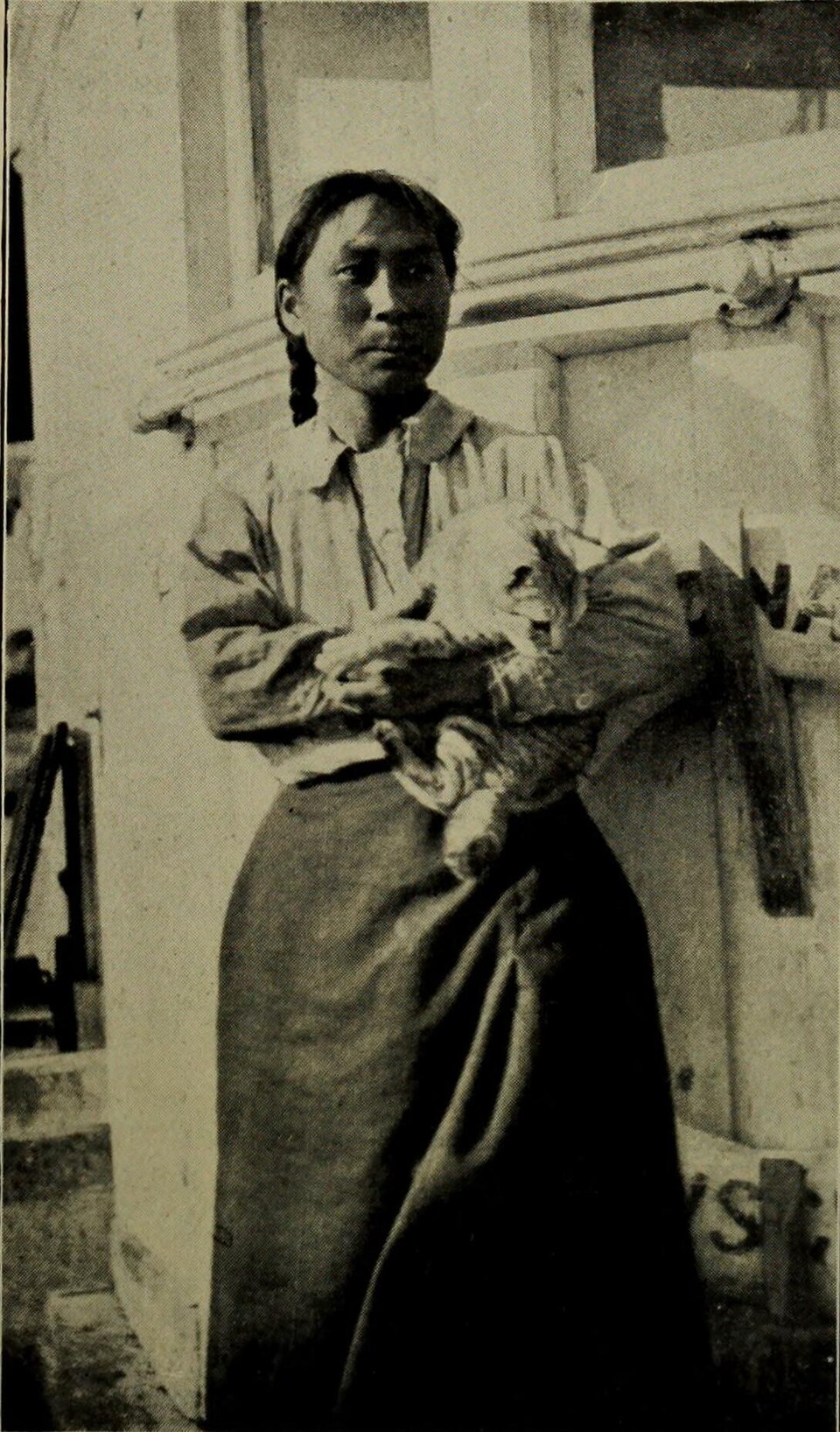 Ada Blackjack with her cat, “Vic,” in 1925. (Public Domain)
Knight became bedridden, and Ada shouldered the burden of running the camp—including teaching herself to shoot so she could hunt and fend off polar bears. She cared for Knight, fed him, and read to him, offering him most of the food that she hunted or trapped.
Despite her efforts, Knight died on June 23, 1923, leaving Ada alone. She went on to survive by herself for months on the island, having taught herself the necessary skills. She hunted birds, collected eggs, and trapped foxes. She sewed clothes (even making moccasins for her son) and built a boat to allow her to hunt seals. Finally, on Aug. 20, 1923, she saw a ghostly shape through the fog: A ship had come. She made it home and was reunited with her son.
Each of these stories reveals the resilience that can rise to the surface of the human soul in times of crisis. Selkirk, de la Rocque, Ashton, and Blackjack all held firm to hope in the most dire of circumstances, when hope seemed just a fanciful dream. But through their grit and patience, they endured. The power of this genre of survival story—whether fictional or real—lies in its ability to showcase how the human spirit can triumph even over the most desperate and painful situations.
Correction: A previous version of this article misstated the date of Lorne Knight’s death. The Epoch Times regrets the error.
What arts and culture topics would you like us to cover? Please email ideas or feedback to features@epochtimes.nyc