SEARCH


In New York, the Frick Collection’s “Siena: The Art of Bronze, 1450-1500” exhibition presents nearly 40 bronze works—some of which have never before left Tuscany, Italy.
About 40 miles south of Florence, Siena was once an important site on the Via Francigena pilgrimage that linked Canterbury Cathedral in England, via France, to St. Peter’s Basilica in Rome. Besides pilgrims, merchants and armies followed the route.
Since Florence conquered Siena in the 1550s, Florentine arts and culture somewhat overshadowed Siena’s.
Renaissance Siena
The Tuscan city’s paintings have long been held in high regard, but The Frick’s exhibition explores early Renaissance Siena as a center for bronze works. “Between 1450 and 1500 almost nowhere in Italy did local artistic traditions rely so heavily on a single medium as Siena’s did on bronze,” said Giulio Dalvit, in a press release. As The Frick’s associate curator, Dalvit curated the exhibition highlighting “the revelatory achievements of Sienese artists, which constitute nothing short of a golden age of bronze sculpture.”
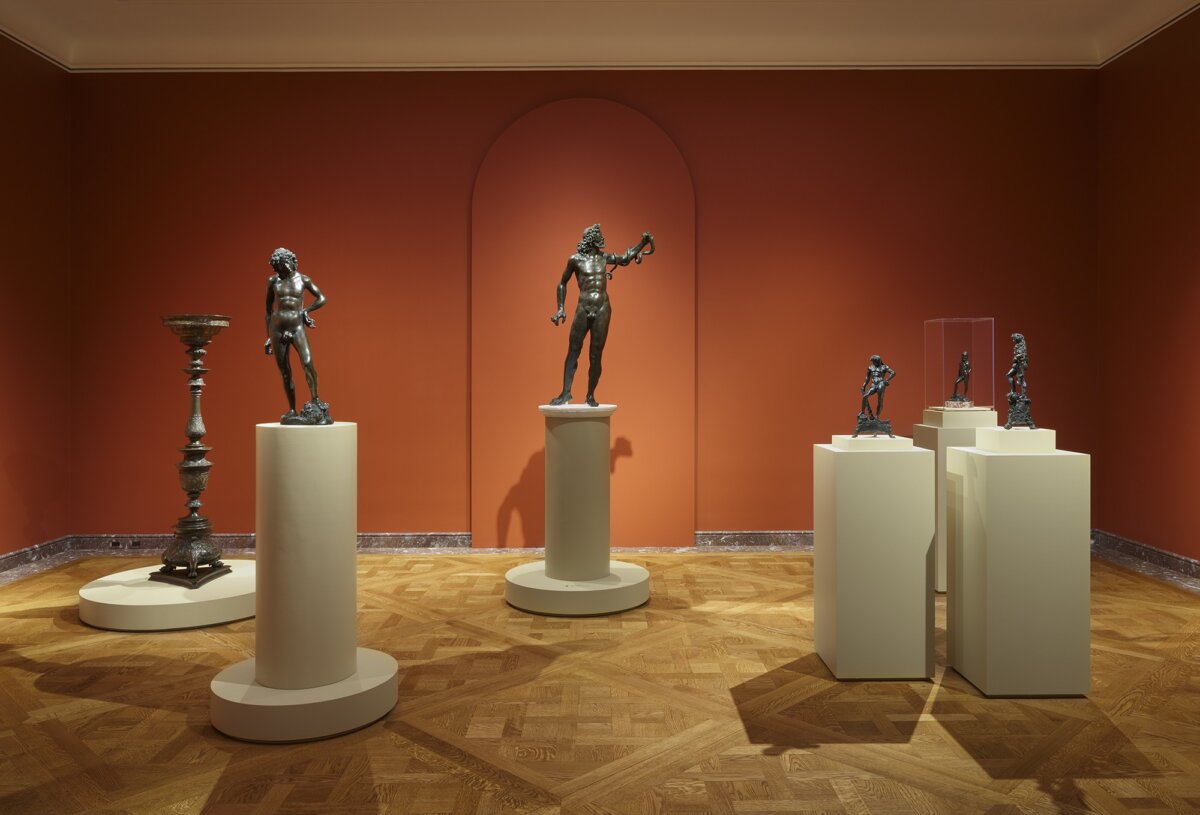
The exhibits include statuettes, portrait medals, portable reliefs, funerary works, and life-size statues by accomplished sculptors such as Donatello (circa 1386–1466), Vecchietta (1410–1480), and Francesco di Giorgio (1439–1502).
That these centuries-old bronze treasures survive seems all the more remarkable when in war and other turbulent times bronze was melted and recast for utilitarian purposes.
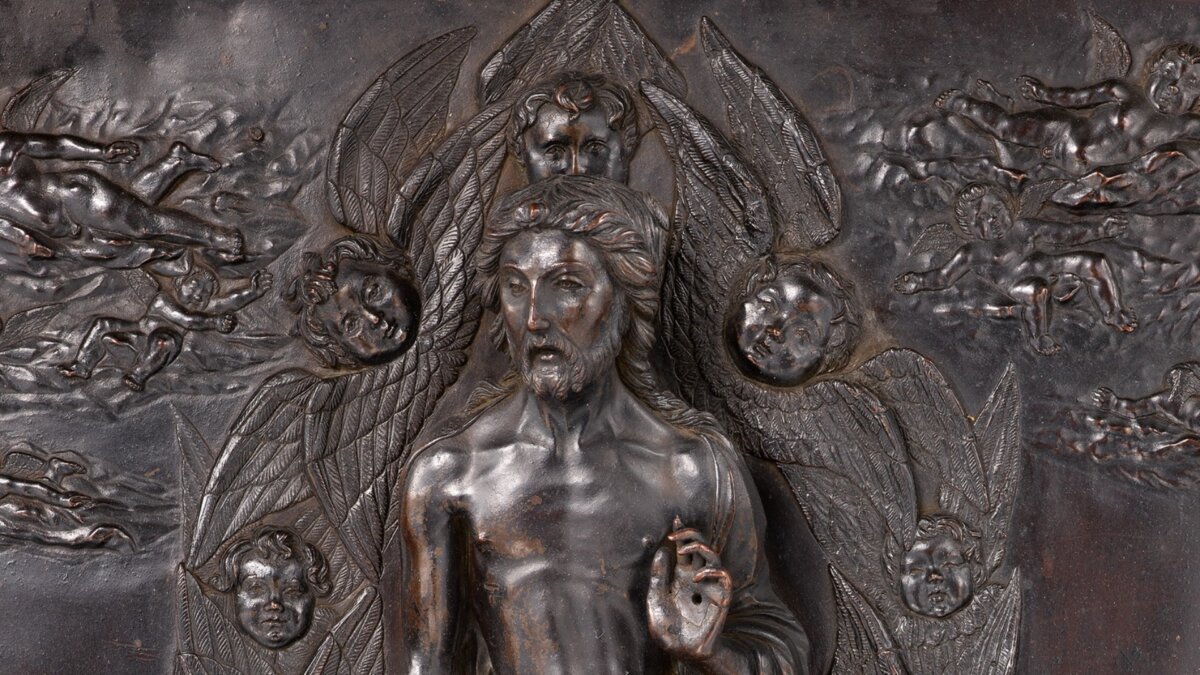
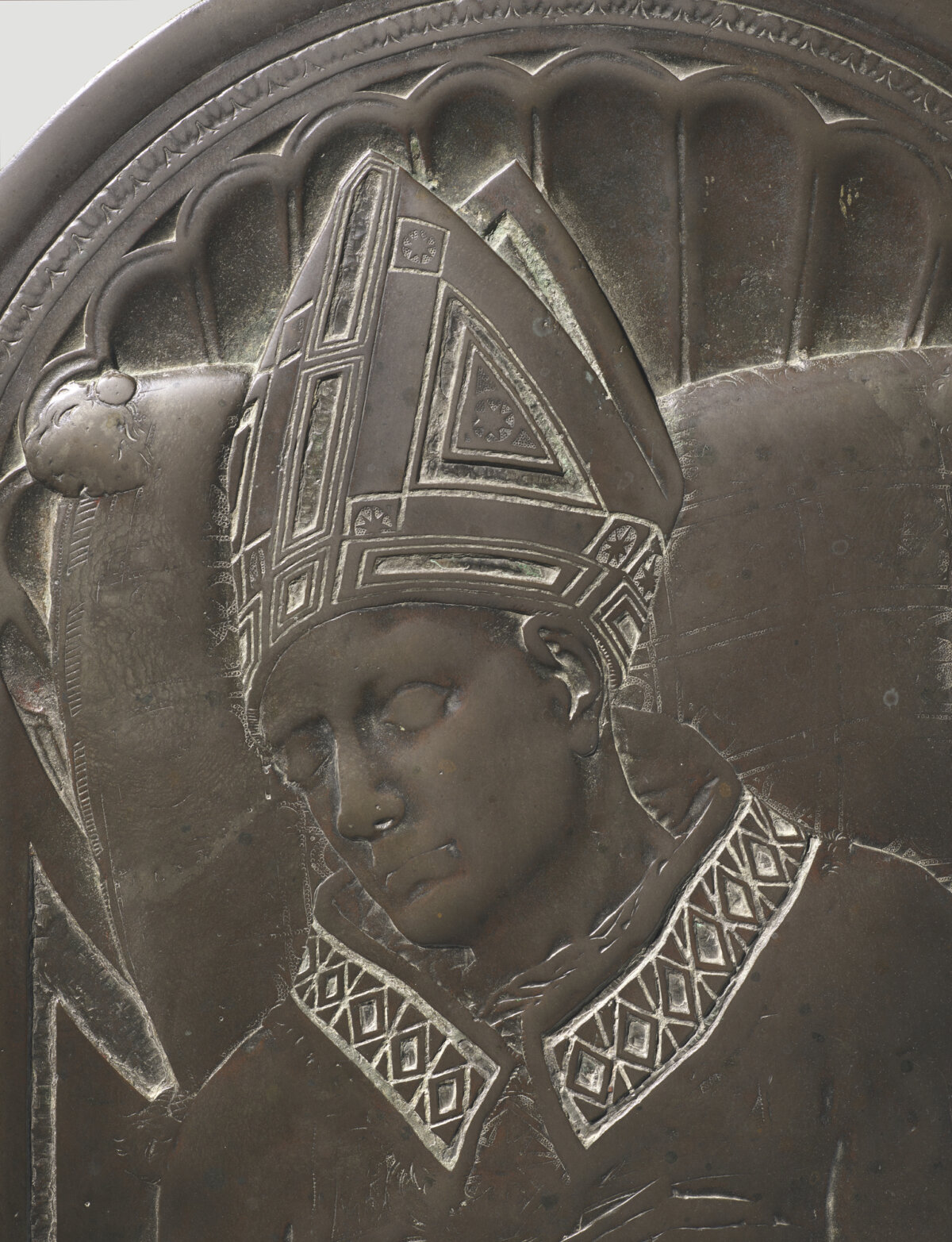
Exhibition highlights include Vecchietta’s portable relief the “Resurrection of Christ”; Francesco di Giorgio’s newly attributed statue “Hercules Triumphing Over the Nemean Lion”; and Donatello’s tomb slab of Giovanni di Bartolomeo Pecci, bishop of Grosseto and Istia d’Ombrone. The tomb slab is one of only seven surviving signed works by the father of early Renaissance sculpture. It leaves Tuscany for the first time.
Donatello
Florentine sculptor Donatello’s St. John the Baptist in Siena Cathedral is one of the city’s treasures today. Even though Italy’s foremost sculptor spent four years in Siena, from 1457 to 1461, anti-Florentine sentiment meant that he was forbidden to sculpt any new work in the city.
When he lived in Padua, Donatello had the over-life-size tomb slab of the bishop of Grosseto and Istia d’Ombrone cast in three sections. In 1452, it was installed in front of the high altar of Siena’s Cathedral of Santa Maria Assunta, where it remained for more than 550 years. In 2005, the tomb slab was removed from the floor and displayed vertically, in a wooden frame.
Despite centuries of wear and tear while on the cathedral floor, viewers can still appreciate the complex illusion that Donatello rendered in just an inch or so of bronze. Wearing episcopal vestments, the bishop lies in peace holding a miter and crozier. Through hard bronze, Donatello expressed soft elements: the plump pillow, fleshy cheeks, and fabric folds that skim the legs. The body lies on a curved stretcher, called a bier, that’s traditionally used before burial.
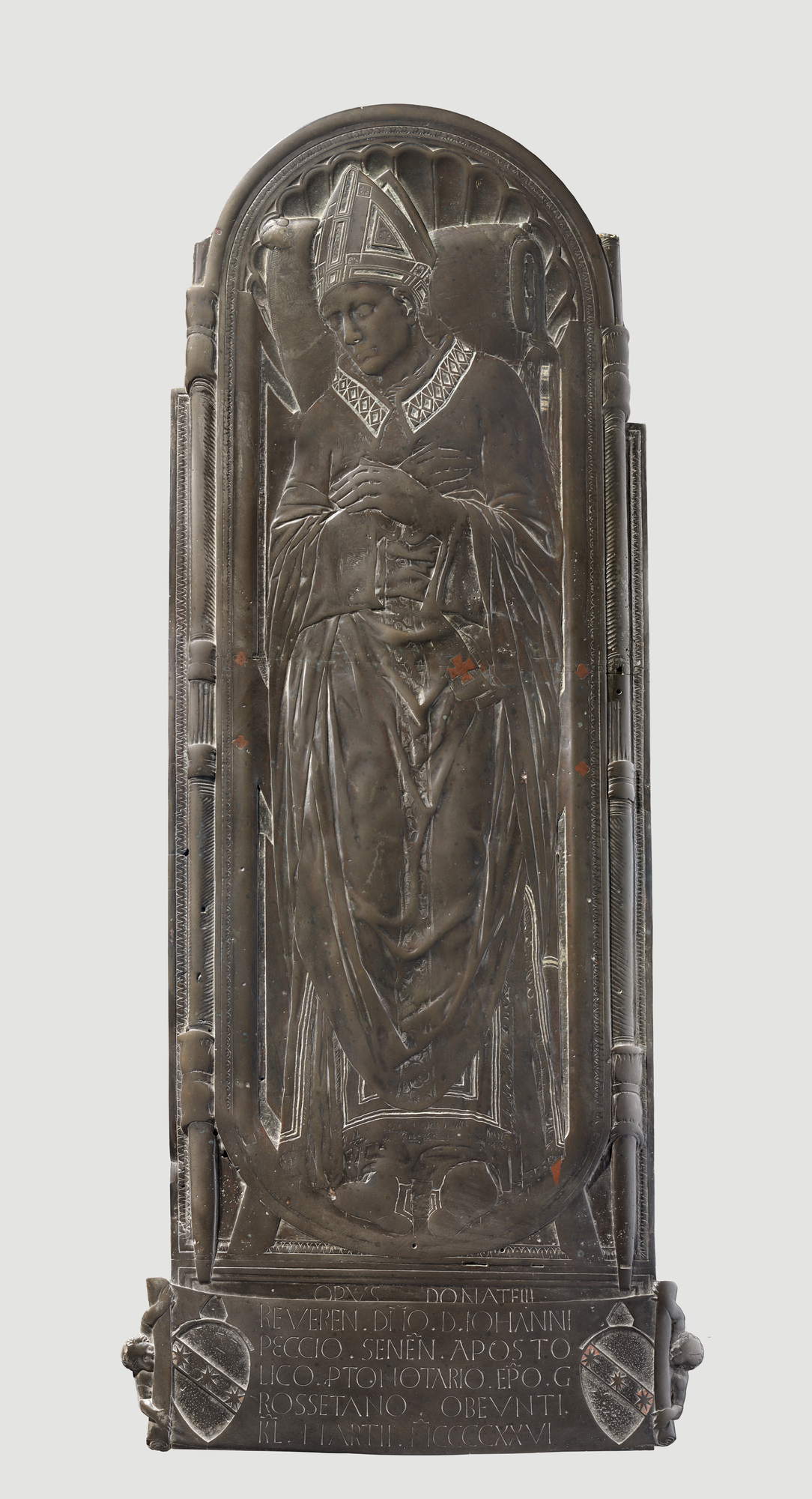
At the bottom of the tomb slab, Donatello inscribed his name, beneath which two angels unroll a scroll detailing the bishop’s name, date of death, and family.
Experts believe the tomb slab was embellished in situ with pure copper and inlaid with colored resin or enamel. But now only traces of red and green remain.
Vecchietta
The Frick holds the only signed work by Vecchietta outside Italy. The extraordinary portable relief of Christ’s resurrection epitomizes Vecchietta’s bronze-working skills in high and low reliefs. Surprisingly, the relief makes its first exhibition appearance, despite being part of the collection for more than a century.
In “Resurrection of Christ,” Vecchietta presents traditional Christian iconography of the resurrection, with soldiers slumbering around Christ’s empty tomb and a choir of angels, arranged in an almond-shaped mandorla, surrounding the risen Christ in heaven.
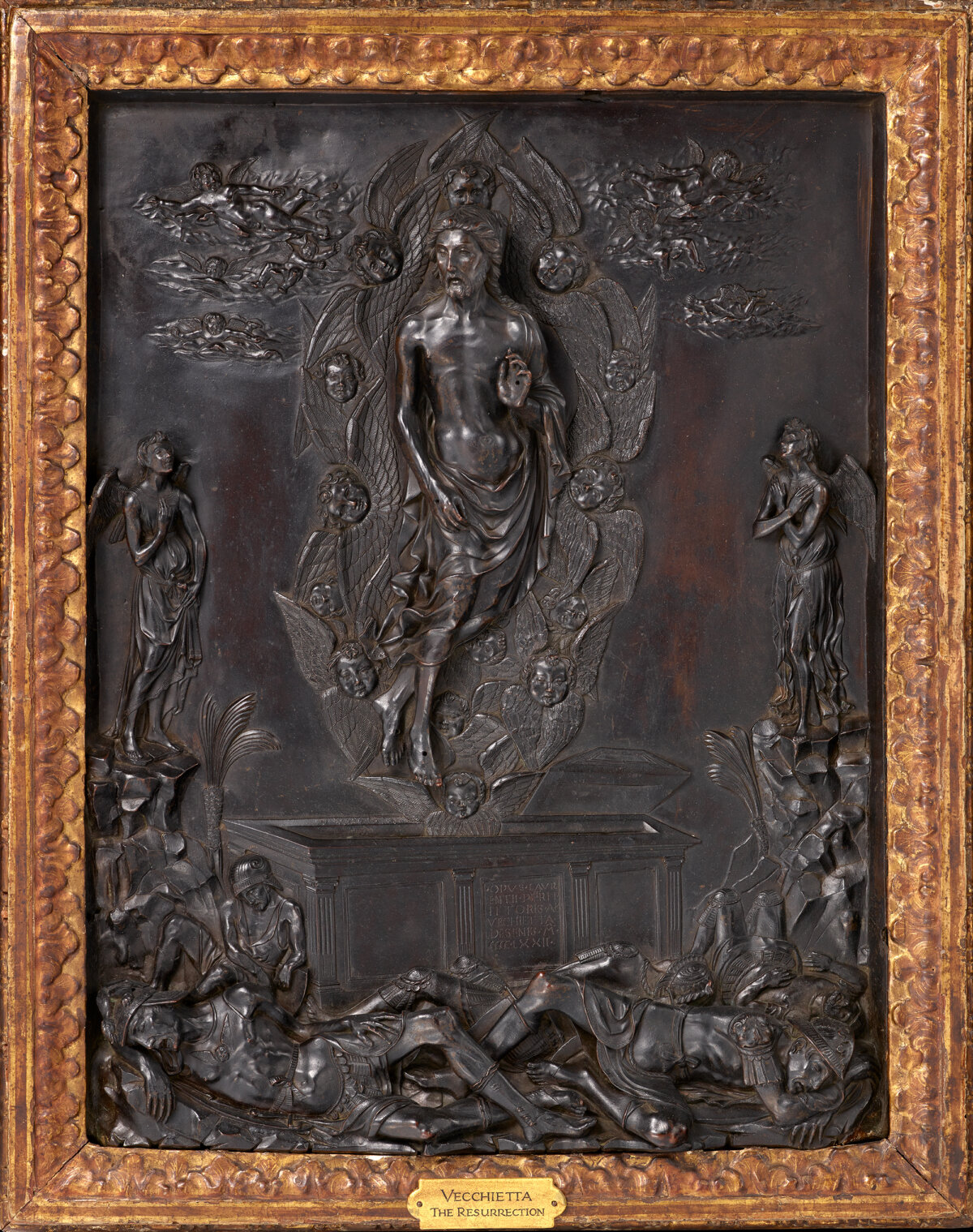
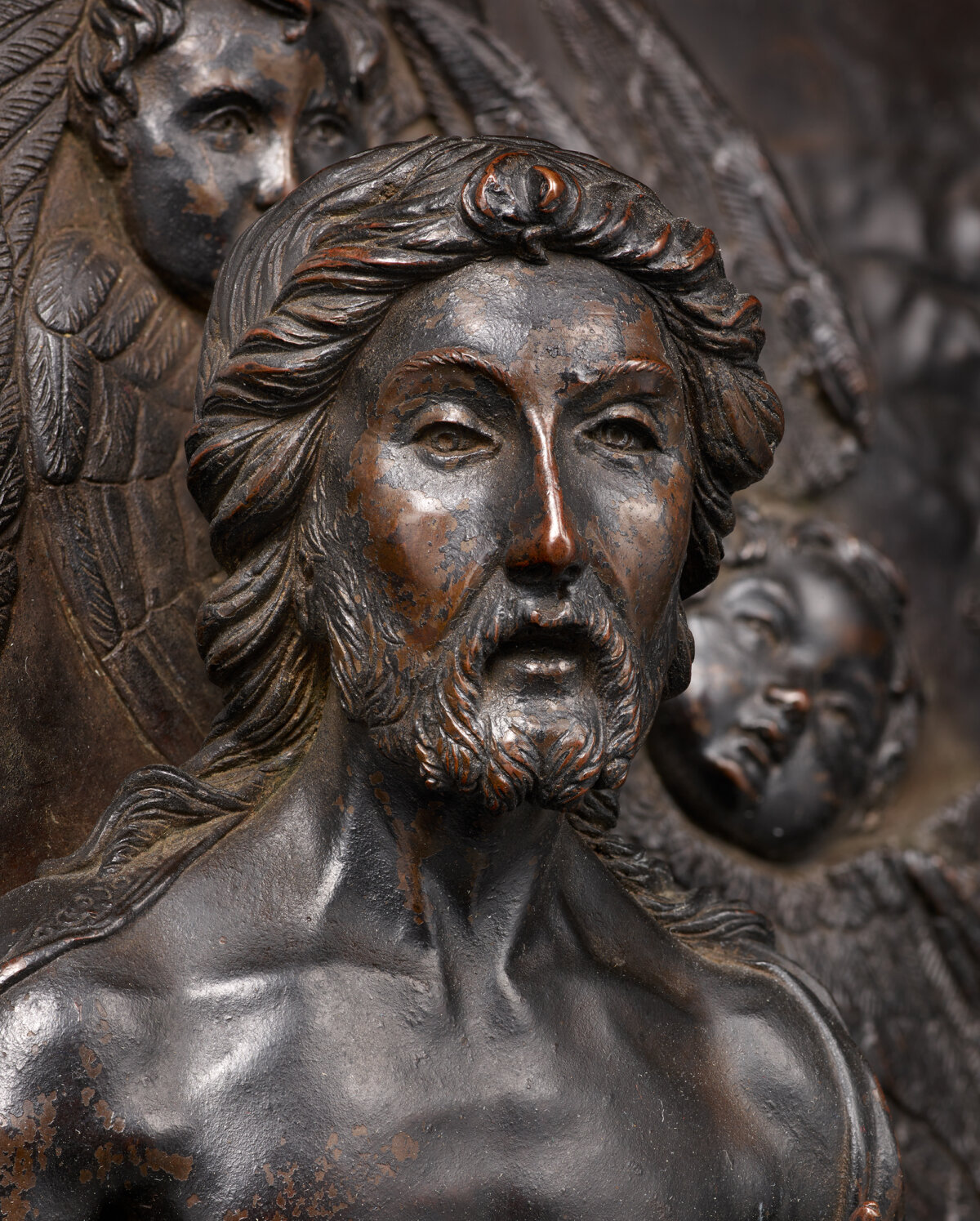
Vecchietta rendered Christ in high relief, physically emerging from the picture plane, perhaps reinforcing that he was once flesh and earthbound. Christ appears at once naturalistic and divine. Vecchietta effectively captured delicate musculoskeletal details such as in Christ’s torso and arms, while his face expresses a commanding otherworldly grace. His robe appears as light as silk as it flutters on his ascension.
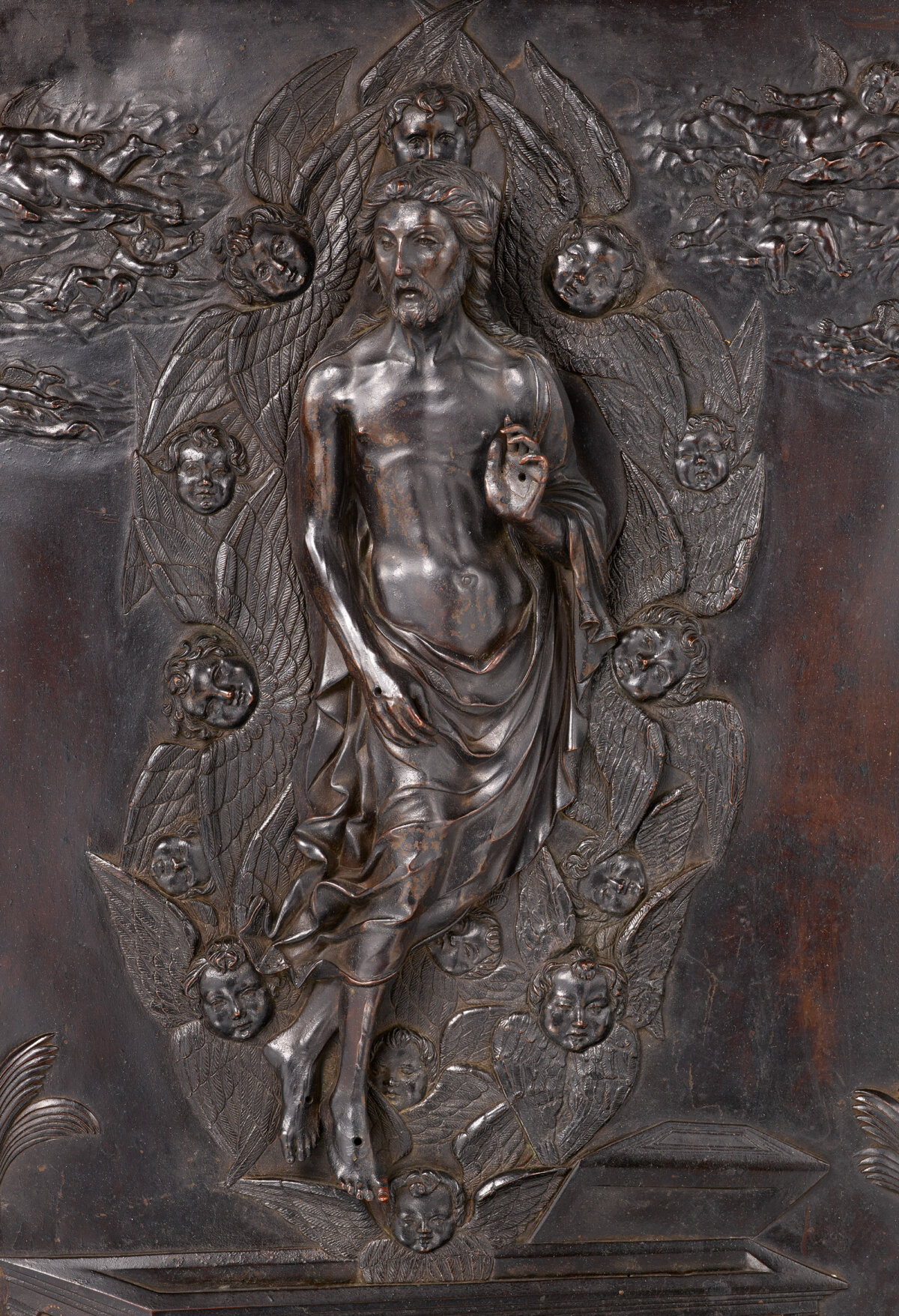
The Frick notes: “Although carefully constructed, the composition resists rational space and proportion.” Perhaps Vecchietta emphasized the sacred narrative over the correct visual perspective. The risen Christ appears as the largest figure, the sleeping soldiers appear in different sizes, and the two angels flanking Christ seem too small. However, the narrative is clear.
Francesco di Giorgio
Several works by Vecchietta’s pupil Francesco di Giorgio feature in the exhibit, including portrait medals, portable reliefs, and statuettes.
Experts suggest similarities in two of Giorgio’s statuettes: “Hercules Triumphing Over Achelous” and “Hercules Triumphing Over the Nemean Lion.” The two muscular figures each raise a leg in the same manner, and the ancient architectural style bases also appear similar.
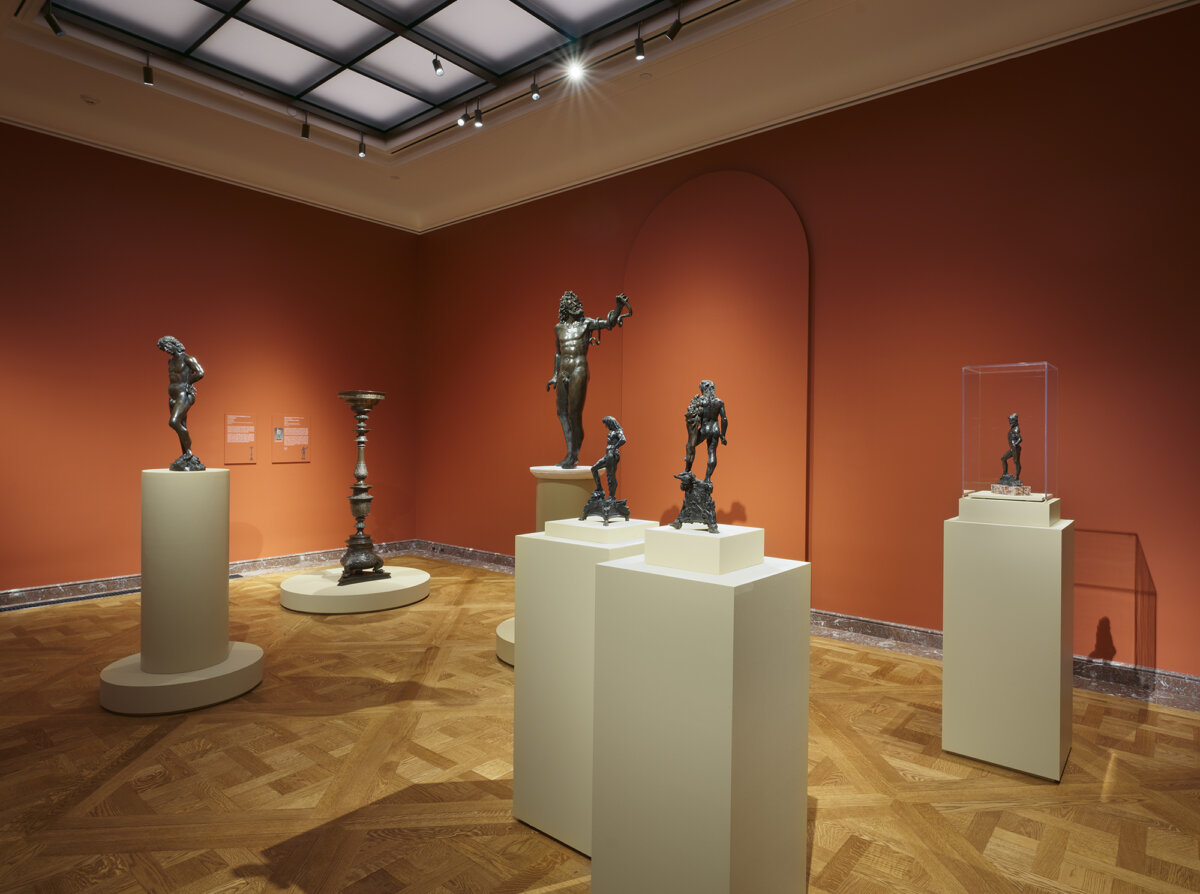
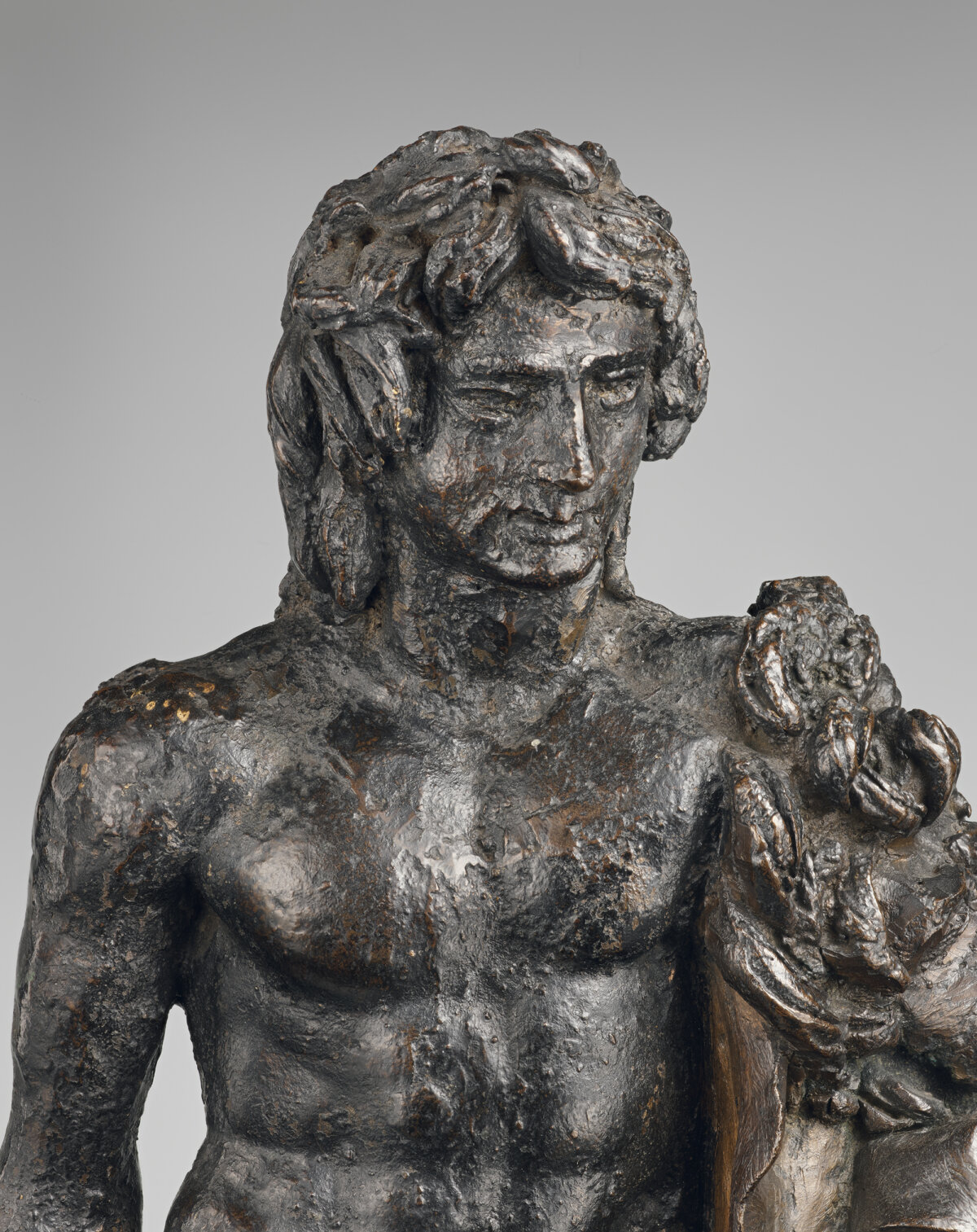
In the former, Hercules’s foot crushes a bull’s head, symbolizing the bovine form of the river-god Achelous. The statuette’s pitted, unrefined surface resulted from plaster residue on a wax mold, rather than a deliberate style choice. The Frick restored the work for the exhibition. It notes: “A lot is missing from the figure: not only the club, or other narrower weapon, in his right hand, but also the majority of the lion’s pelt on his left side.”
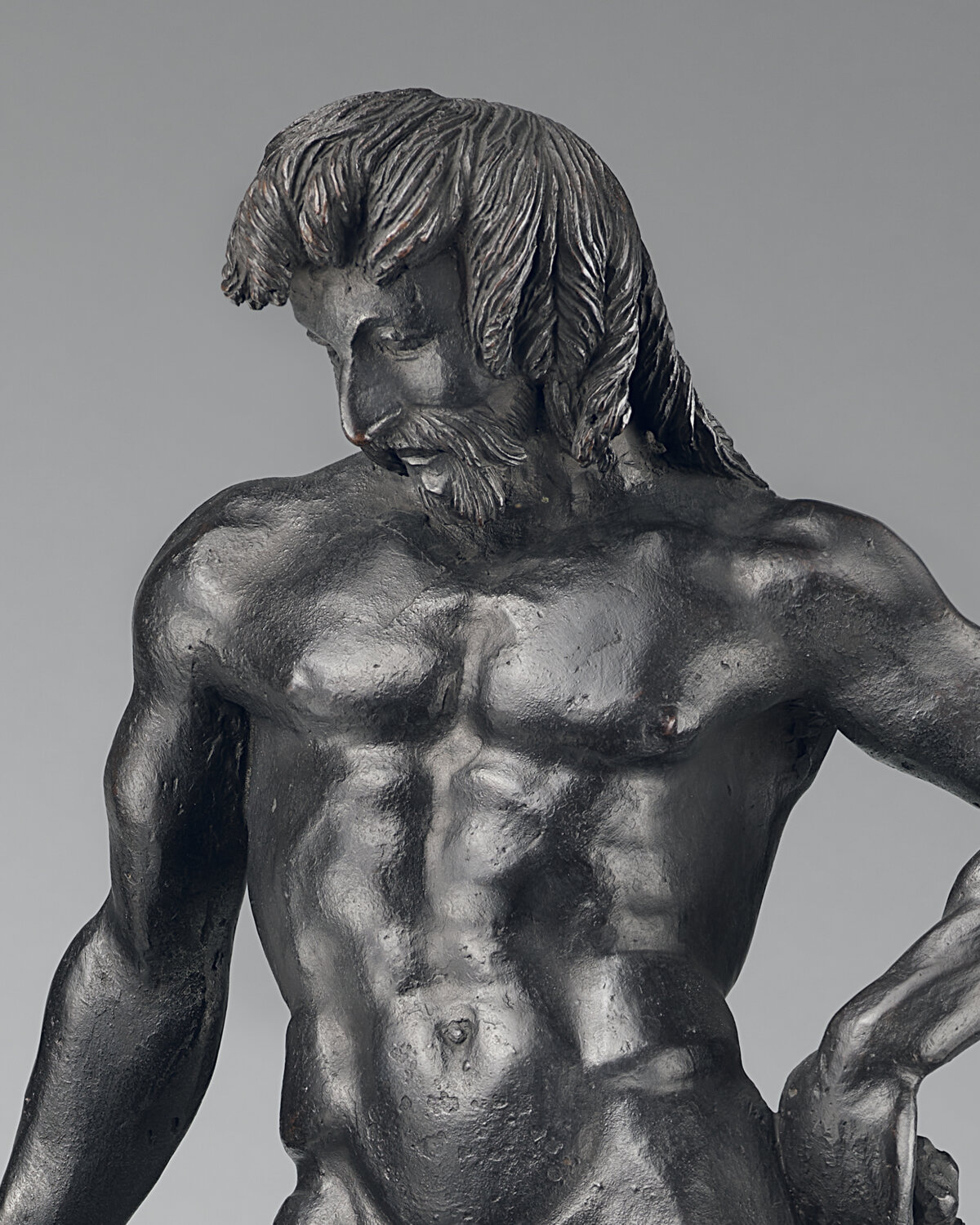
Giorgio’s refined “Hercules Triumphing Over the Nemean Lion” suffered fire damage in May 1945 while stored in Berlin’s Friedrichshain flak tower (anti-aircraft bunker). In the statuette, Hercules holds a club and the apples of the Hesperides, as he looms over the Nemean lion’s severed head. According to the myth, the hero strangled the creature, so Giorgio’s severed lion’s head is a deviated interpretation.
The “Siena: The Art of Bronze, 1450–1500” exhibition at The Frick Collection, in New York City, runs through Jan. 18, 2027. To find out more, visit Frick.org.
What arts and culture topics would you like us to cover? Please email ideas or feedback to features@epochtimes.nyc.