SEARCH


A broad-shouldered city in the shadow of the towering Alps, Munich proudly delivers in its role as Bavaria’s capital. All the common tropes come true: Oktoberfest steins and oom-pah brass bands, big bratwursts and salty pretzels, people walking through the streets wearing lederhosen—although, truth be told, not usually in regular social situations.
München can be cool, too, in ways you’d never expect. Surfers, in the heart of Germany’s third-largest city? Stylish rooftop bars with craft cocktails and views out to those white Alpine peaks? You’ll find all that here, too.
Those visiting Munich and seeking an amazing time—as I’ve done perhaps half a dozen times or more—should do a few things. First, embrace the kitsch, because it’s real, and it’s all around you. Next, seek out the unexpected, which is truly extraordinary. And finally, go deep into the history, culture, nature, and everything else that sets this city apart. Here’s my guide for doing all of these things in Munich, and more.
Arrival
Munich Airport (MUC), which is named for Franz Josef Strauss, a Bavarian politician who was also a private pilot, is one of two major international hubs in Germany. Like all big airports in the country, it has a long, strange history wrapped up in the Cold War.
While Berlin has long been Deutschland’s most important city, its post-World War II position deep behind the Iron Curtain made it difficult to develop as an air destination. Add to that the fact that it was divided into several international zones. So instead, West Germany’s leadership developed Frankfurt and Munich, far from the Wall, as their entry points.
Today, you can land here from a lot of places. MUC is a major hub for German flag carrier Lufthansa, and that, combined with a number of other national airlines, means you can fly to Munich from pretty much any big city around the world. That includes Seoul, Johannesburg, Bangkok, Delhi, and plenty of North American departures, from Chicago to Atlanta, Vancouver, San Francisco, and New York.
Once arrivals are on the ground, German efficiency takes over. Two different S-Bahn suburban rail lines run from the terminals into the city center, the trip taking about 40 minutes. Lufthansa also operates an express bus that takes about the same amount of time. They drop you in the heart of it all, in an uber-walkable urban core where exploring on foot should be encouraged.
The English Garden Deserves a Full Day
Munich is definitely one of those European cities where first-time visitors land with a checklist. While certainly not as famous as Paris or Rome, Bavaria seems to enchant people. And this city, specifically, has quite a few signature attractions.
Resist the urge to rush. In fact, I’d advise taking an entire day, especially if you get a warm, sunny one, for the Englischer Garten. Grab a picnic or plan to visit the food market (and beer garden) around the base of the Chinese Tower for lunch. Otherwise, just get lost in this urban paradise.
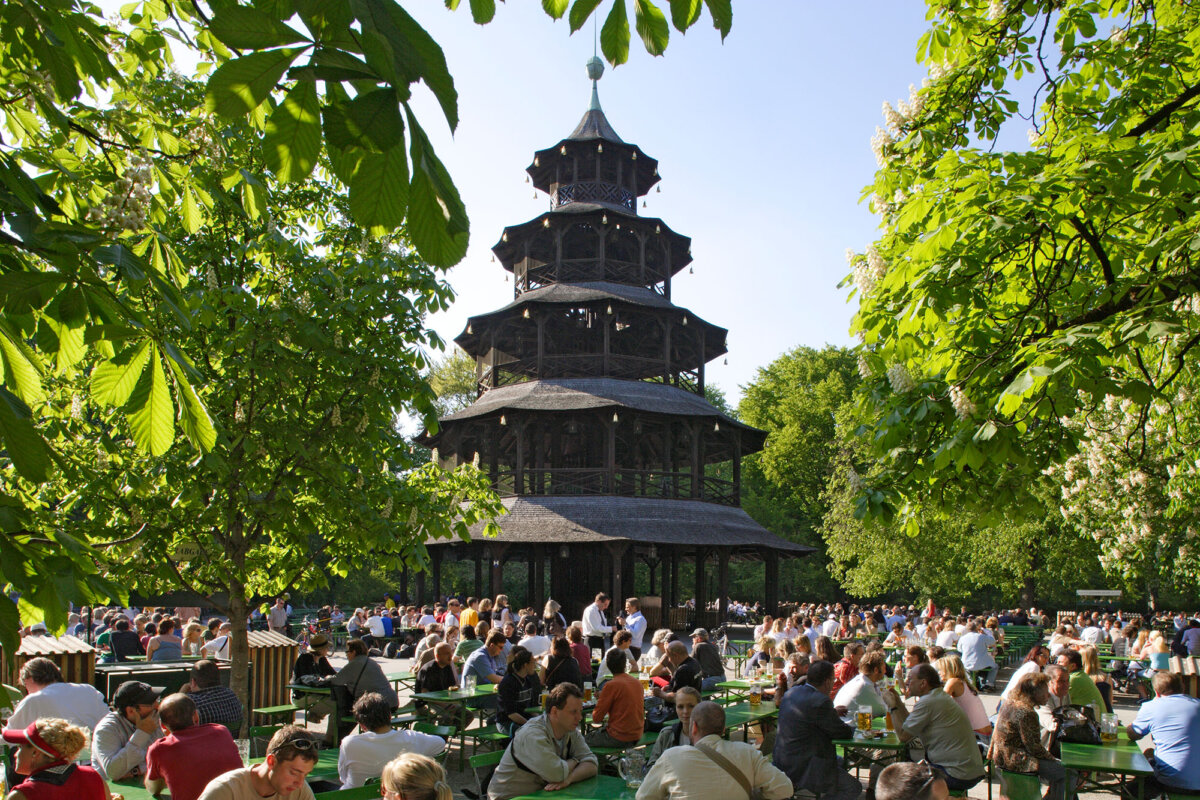
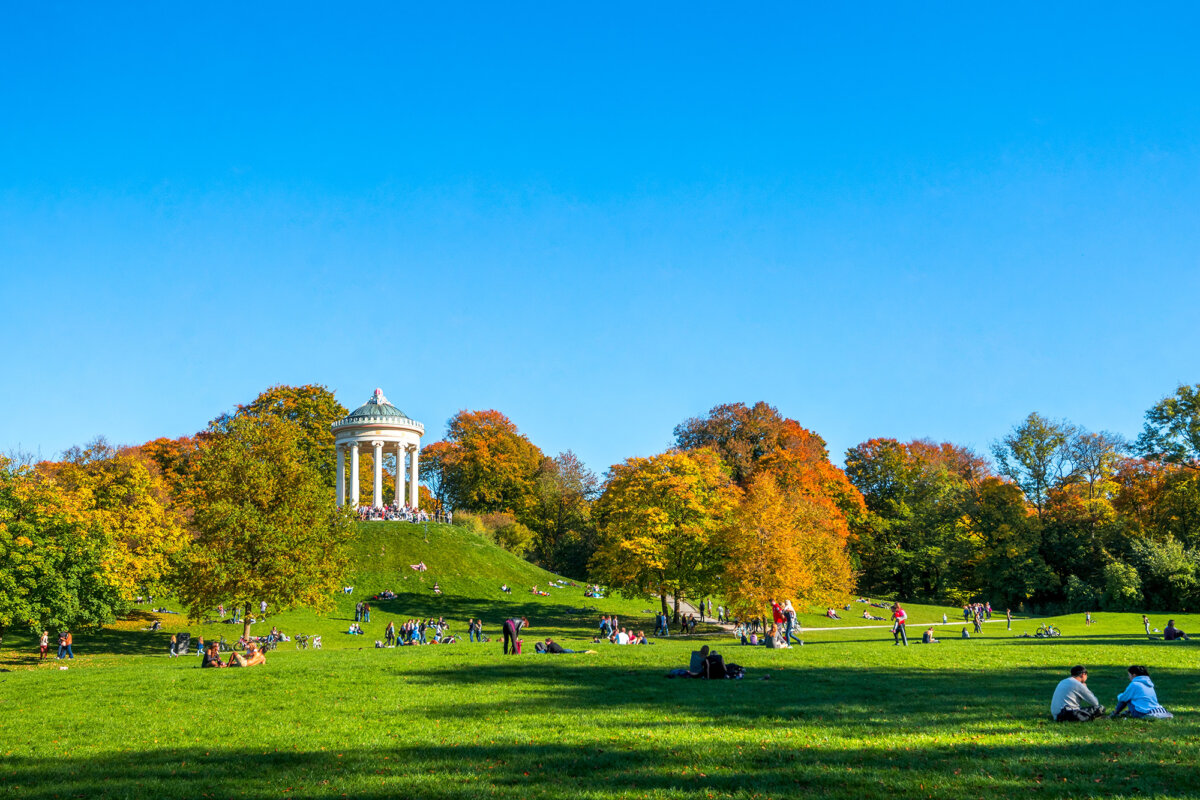
Looked at from the sky, or even on a map, the English Garden is remarkable. It’s a long slice of green cutting through the middle of the metropolis toward the northeast. Larger than even New York’s Central Park, it includes almost 50 miles of biking trails, plus streams and even an artificial lake. It also features tea houses, towers, and Greek-style temples.
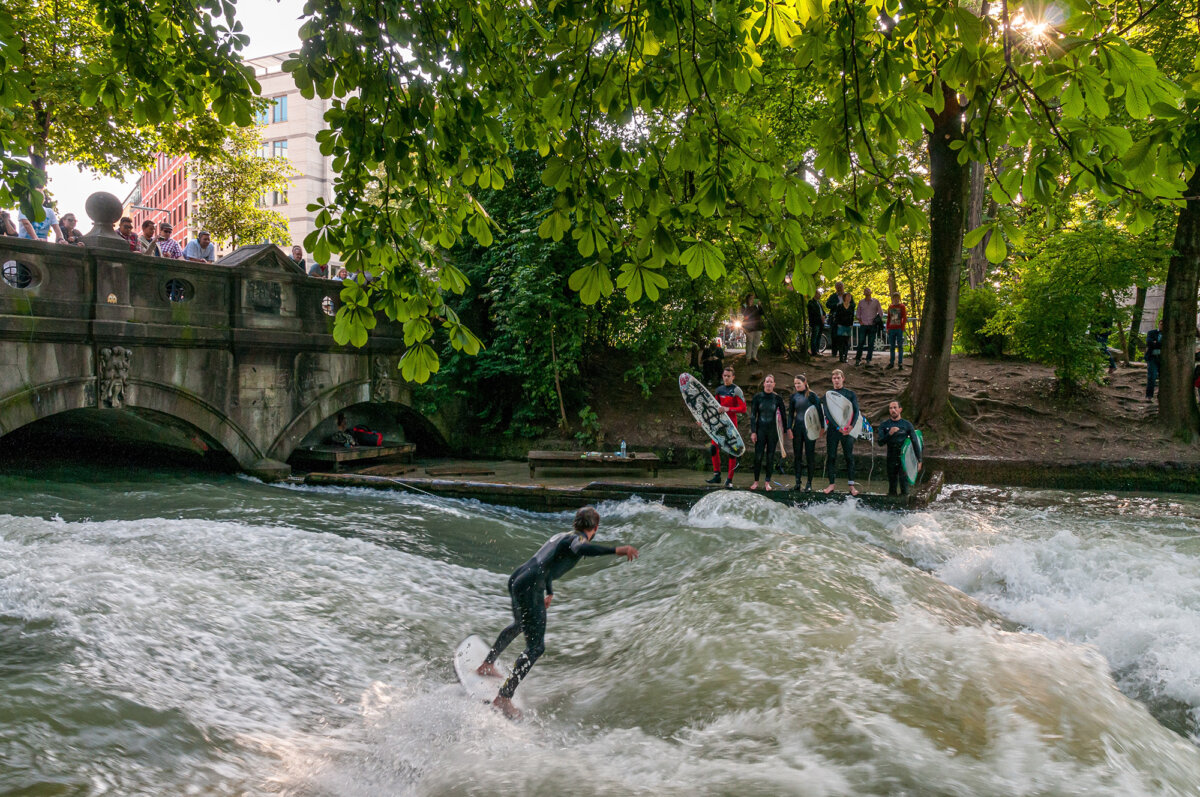
It’s popular with surfers, too. Start the visit at the Eisbachwelle. Here, a rushing tongue of Eisbach (a small arm of the Isar River) creates a wave that flows 12 months a year. Hardy men and women in wetsuits climb down through the trees and wait their turn. They swiftly swoosh out onto the icy water, with just a split second to get up on their board. I pop by to see the spectacle every time I’m in Munich, usually with the intention of spending just five minutes before moving on; invariably, I’m entranced and end up cheering those who ride the wave and sympathizing with those who tumble into the froth.
For a similar type of spectacle, it’s also fun to watch local Münchners in their bathing suits climbing down ladders and being swept, at slow speed, down the nearby Isar.
Getting Around
Munich is one of the easiest places in the world to navigate by public transit. In addition to trams and buses, the U-Bahn subway has nearly 100 stations. Meanwhile, the S-Bahn surface train fans out into eight separate lines. My advice is to buy a single-day ticket and ride them all as you tour around.
Stop by to Visit the Royals
München doesn’t have the royal pedigree of Vienna or London, but regal figures have made this their home for centuries. German politics is complicated. In fact, “Germany” didn’t even exist as a unified nation until 1871. Before that, a series of German-speaking kingdoms, duchies, and principalities (many of which were long lumped into the Holy Roman Empire) exerted their own autonomous power.
In Bavaria and other lands across Europe, the House of Wittelsbach held sway for centuries. They built a few places worthy of kings and queens, including, most prominently, the Munich Residence (or the Residenz, in German).
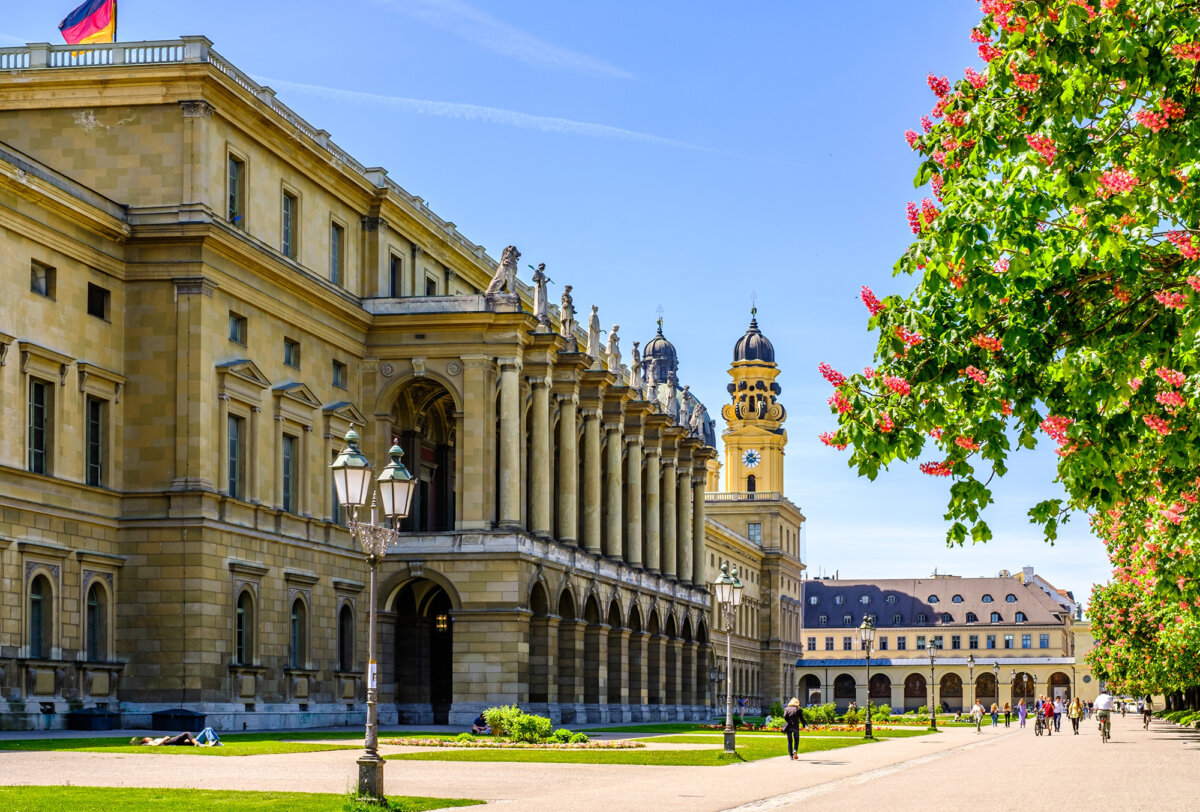
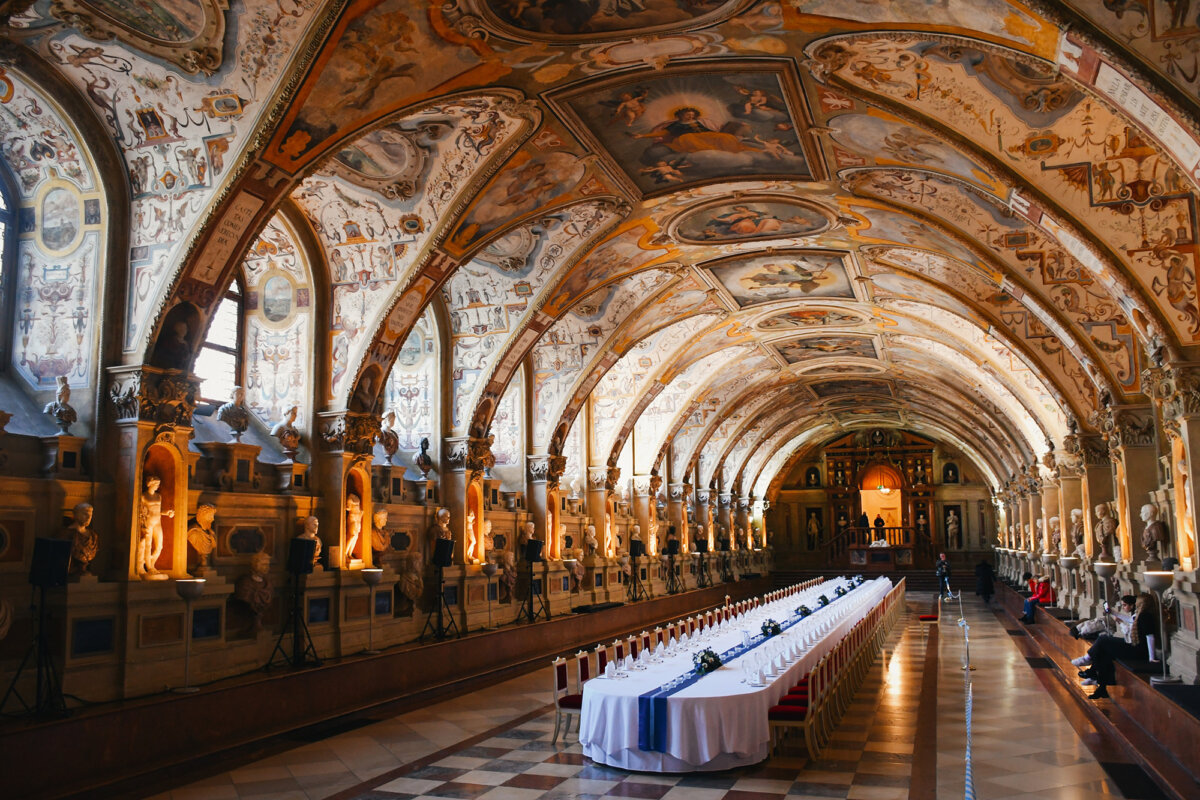
Be careful. This place is huge. The Wittelsbachs built this massive urban palace in stages, starting in 1385. Today, it sprawls across 10 courtyards surrounded by 130 rooms, which include whole museums (the Treasury and the Antiquarium), chapels, and even an opera house. It’s an easy place to get lost or swept up in the enthusiasm of visiting the whole thing, but I recommend against it. Pick a few of your favorites, and stick to them. To start, the main Renaissance, Rococo, and Baroque apartments and halls that were used by the Wittelsbachs are definitely worth seeing. Then, you can emerge into the sunlight to stroll the pathways of the ornate 17th-century Hofgarten—the beautiful, green gardens just in front of the palace.
Less than 10 minutes away on foot, Maximilianstrasse is a royal avenue built by King Maximilian II. Its royal purpose was to see and be seen. Today, it’s leafy, pleasant, and lined by neo-gothic structures. The avenue is also home to prominent places like the National Theatre and the Hotel Vier Jahreszeiten Kempinski, which the same king built so that visiting heads of state would have a cushy place to lay their heads. Grab a coffee under the dome in the lobby (which is known as “Munich’s finest living room”) and then stroll the Strasse. If you’ve got some money in your pocket, good: This is where high-end shoppers find their luxury brands, from Gucci to Bulgari, Chanel, and Louis Vuitton.
Get a Beer
Who hasn’t heard of Oktoberfest? Now imitated in festivals big and small around the world, the whole thing started here on the occasion of a royal wedding in 1810. Today in Munich, the Oktoberfest spirit lives all year long.
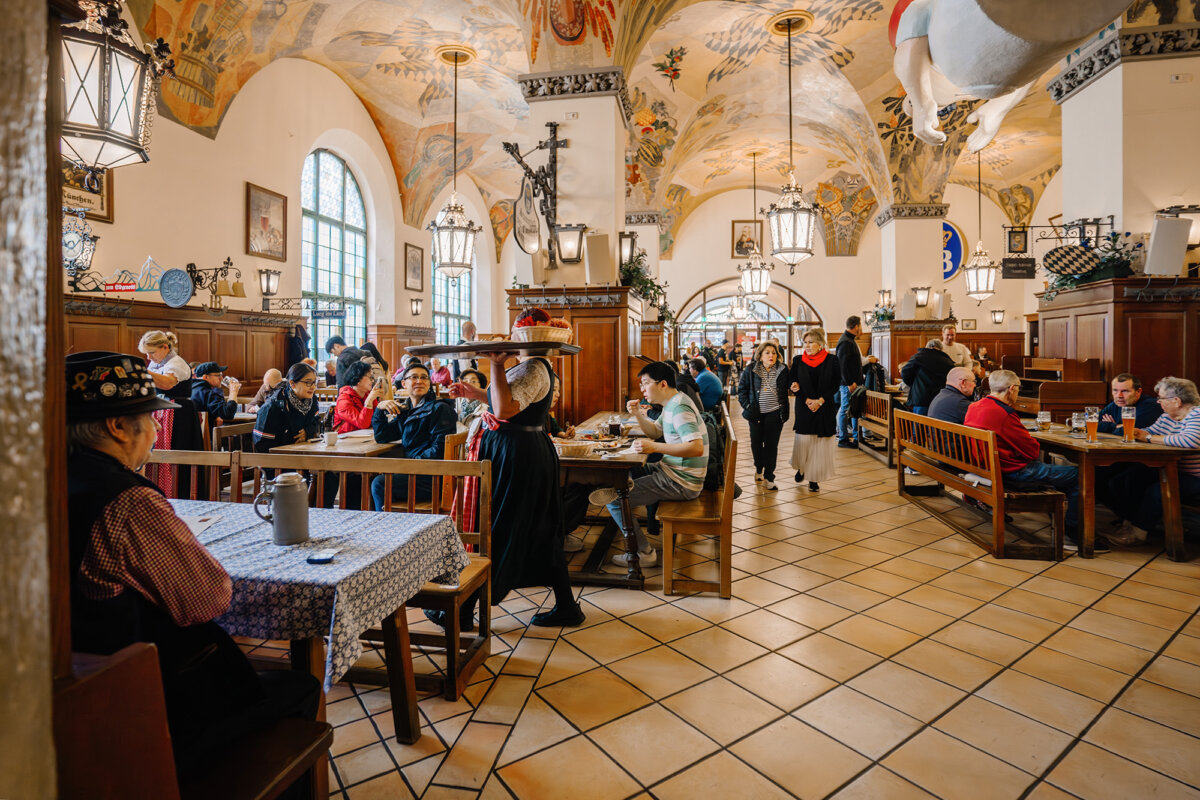
That means ordering the standard Oktoberfest portion, a “mass” of beer. Beer halls across the city fill huge steins with a full liter of the good stuff, a glass so big and heavy that it’s hard to lift at first. Turn almost any corner, and you’ll find a place serving them up.
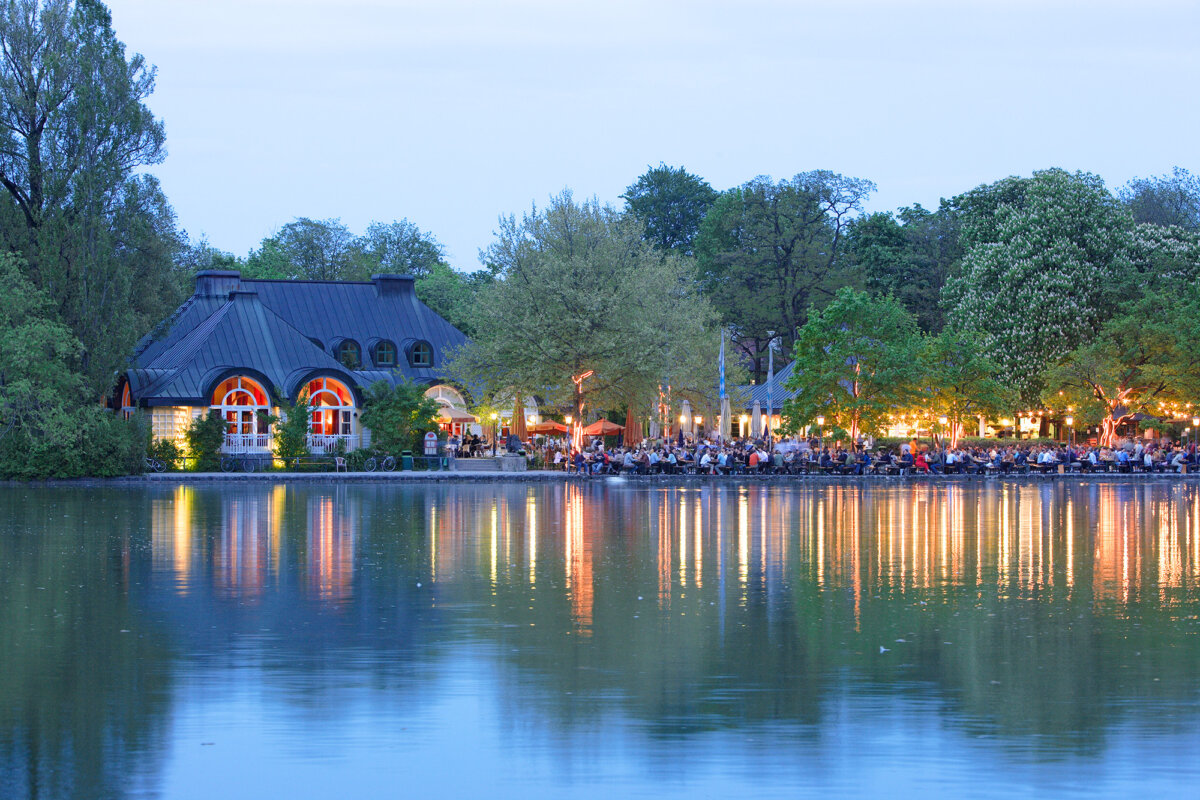
I have two recommendations. On a warm afternoon, there’s no better place to be than the Paulaner Biergarten. Just on the edge of the English Garden, its open-air tables look out on the loveliness of a little lake called the Kleinhesseloher See.
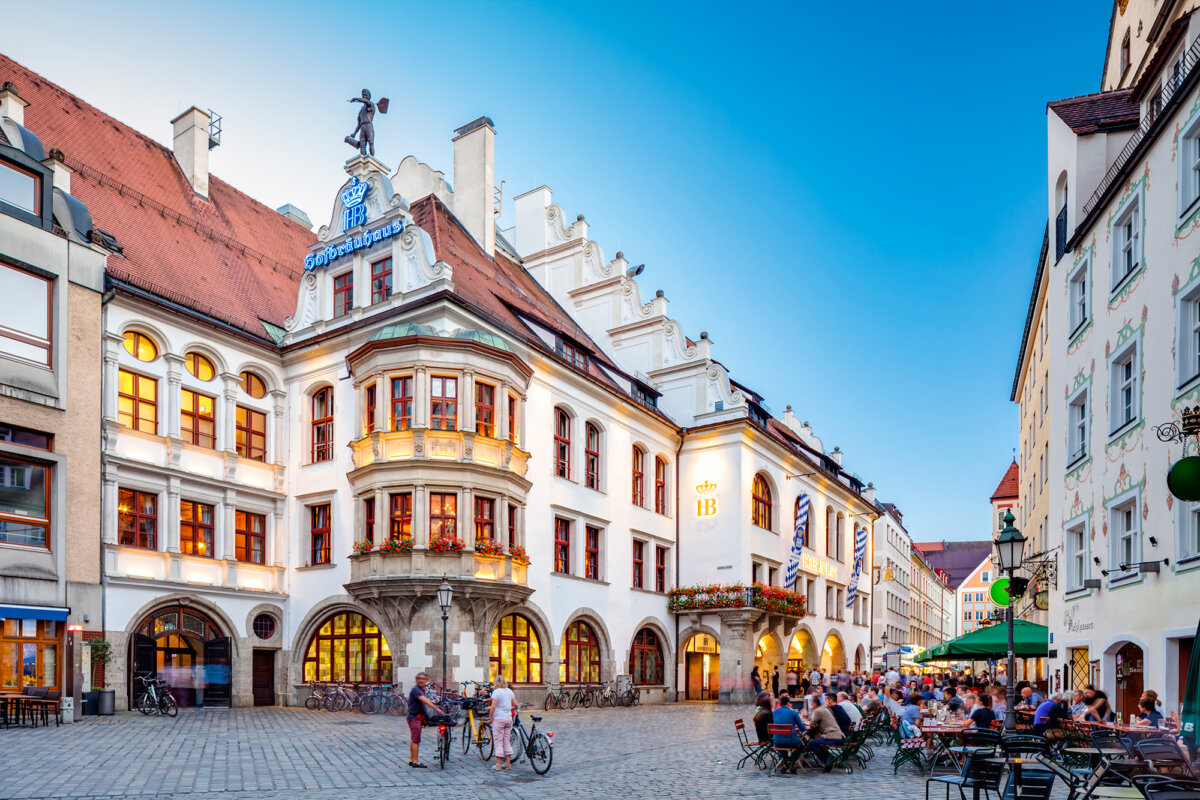
The Hofbräuhaus is also a can’t-miss destination. Whether it’s truly the world’s most famous tavern, as its website claims, is debatable. Founded in 1589 as a brewery for the Bavarian court, the Hofbräuhaus opened to the public as a tavern in 1828, and it looks exactly like a Bavarian beer hall should.
And it’s an excellent place to pair your brew with something hearty, like a bowl of steaming beef goulash or suckling pig.
Find a Rooftop
While embracing the kitsch is absolutely a good strategy in Munich, visitors can definitely find plenty of lederhosen-free zones. One of my favorite options involves the city’s series of stylish rooftop bars. These are places where you can pair your wine or cocktail with sweeping views.
On one occasion, when I rode the elevator to the M’Uniqo Rooftop Bar at the Andaz hotel for a sundowner drink, I found mostly locals—and nicely coiffed ones at that. It prompted me to return to my room to change into slightly better attire, trading my hardworking cargo shorts for a nice pair of lovingly distressed jeans (the best I could muster at the time).
It’s really the perfect place to look down at the city, which surrounds it on all sides. You’ll hear the German chatter, all around, and gaze out at those distant Alps. Perhaps it’s time to plan your next adventure.