SEARCH



You get a raise, and for a few weeks it feels great. Then the new paycheck becomes ordinary, and your budget starts to feel tight again.
The pattern you’re experiencing is called the “hedonic treadmill,” or “hedonic adaptation,” and it describes how we tend to return to a steady level of happiness after good or bad changes.
When the thrill wanes, recapturing the feeling is often easy with another upgrade or purchase—say, a nicer car or a bigger place. Those costs will likely stress your budget, and a credit card can feel like a simple way to cover the difference.
You may be caught in this debt-building cycle and not even realize it. But there are habits that can slow it down.
Quick Answer: Why Does a Raise Often Stop Feeling Rewarding?
A raise often feels less rewarding over time because you adapt to it. Your mind treats the higher income as the new normal, so the boost in satisfaction fades. Spending can rise to match, leaving you with the same stress and limited breathing room as before.
What the ‘Hedonic Treadmill’ Actually Means
Psychologists Philip Brickman and Donald Campbell coined the term hedonic treadmill in a 1971 essay. Their point was that people adjust to new circumstances, good or bad, until the new feels familiar and their sense of well-being drifts back toward its usual baseline.
Later research adds some nuance to their original definition. Adaptation isn’t always complete, and it varies by event and by person. For everyday upgrades such as a bigger paycheck or a newer car, though, the excitement wears off faster than the bill does.
How Lifestyle Creep Turns Adaptation Into Debt
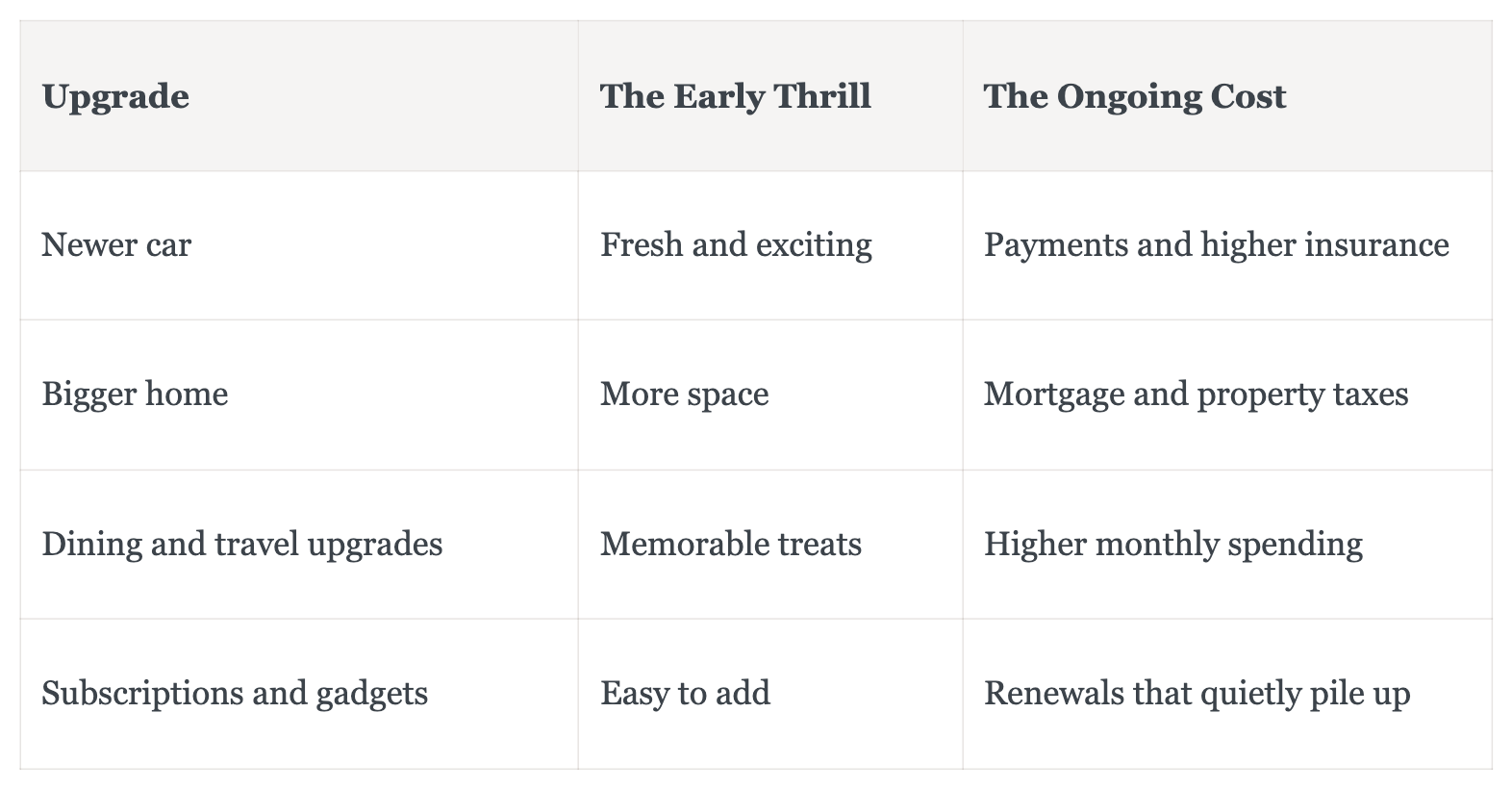
If hedonic adaptation is the reason why that elation fades, then “lifestyle creep” is the spending response that follows. Each small upgrade purchase you make seems reasonable on its own, and you feel like you’re succeeding at something, and you may even feel happier.
But you can also see it as another step on the hedonic treadmill. Each step can raise your monthly costs faster than your income.
The pattern looks like this.
Signs You Might Be on the Treadmill
-
Your income has grown, but your savings balance still hasn’t moved much.
-
Purchases, big or small, that used to feel like a treat now feel like a baseline expectation.
-
You rely on credit cards for expenses you used to pay from your paycheck.
-
You start thinking about the next raise or bonus soon after the last one arrives.
Practical Ways to Step Off the Treadmill
Use a Cooling-Off Rule
Pausing before you buy gives you time to think it over. Some people wait 24 hours for small purchases and 30 days for larger ones. Save the item to a wish list or a note on your phone, and if you still want it when the wait is up, you can buy it with a clearer head.
Try Reverse Budgeting
With a traditional budget, you track spending and hope something is left over. Reverse budgeting flips the order. Automate savings and debt payments first, then spend what remains. It’s called “paying yourself first.”
The same approach works with raises, too. When income goes up, consider dedicating a set percentage of your increase to savings or debt payments before adjusting your spending habits. If a raise adds $400 a month after taxes, sending half to a savings account or a card balance still leaves you $200 to enjoy.
Spend on What You Value
Conscious spending starts by asking whether a purchase connects to something that matters to you. Some research suggests money spent on experiences, such as trips or concerts, tends to bring more satisfaction than money spent on things, though results can vary.
Cutting back on things you barely notice can free up money for what you enjoy.
Tackle High-Interest Debt First
Paying down the card with the highest interest rate, known as the avalanche method, can reduce total interest. If you need quick wins to stay motivated, paying off the smallest balance first, known as the snowball method, is another path.
If balances feel unmanageable, a reputable nonprofit credit counseling agency can review your options.
Stepping Off Without Giving Up Enjoyment
All this doesn’t mean you can’t enjoy your money. You earned it; you should be able to use it to make your life better!
But before you upgrade, ask yourself whether you’ll still want it once the excitement fades—because it will likely fade, and fast.
Deciding ahead of time where your next raise will go can help. Automatic habits work better than willpower alone, since there are fewer choices to make at the moment. Every person is different and each financial situation is unique, so consider talking with a qualified financial professional about your specific plan.
FAQs: Hedonic Treadmill
Is the Hedonic Treadmill Real?
Largely, yes. Researchers have documented hedonic adaptation for decades, and many people recognize it in daily life. It isn’t universal, though. How much you adapt depends on the person and the event.
Is the Hedonic Treadmill the Same as Lifestyle Creep?
They’re related but not identical. The hedonic treadmill describes how your satisfaction fades after a positive change. Lifestyle creep describes how your spending rises when your income does. The first is a psychological pattern, and the second is the financial behavior it can encourage.
Does More Money Make You Happier?
For many people, yes, though the link isn’t simple. A 2023 study co-authored by researchers who had earlier reached conflicting conclusions found that happiness tends to keep rising with income for most people. The exception was a smaller group of people who were already unhappy, and their happiness leveled off near $100,000. How you spend matters, too. Money that reduces stress or builds security may help more than upgrades you stop noticing.
What Is Reverse Budgeting?
Reverse budgeting means setting aside money for savings and debt payments first, then spending what’s left. You typically automate the transfers right after payday so the decision is already made. It’s a simple way to protect part of a raise before your spending expands to fill it.
The Epoch Times copyright © 2026. The views and opinions expressed are those of the authors. They are meant for general informational purposes only and should not be construed or interpreted as a recommendation or solicitation. The Epoch Times does not provide investment, tax, legal, financial planning, estate planning, or any other personal finance advice. The Epoch Times holds no liability for the accuracy or timeliness of the information provided.