SEARCH


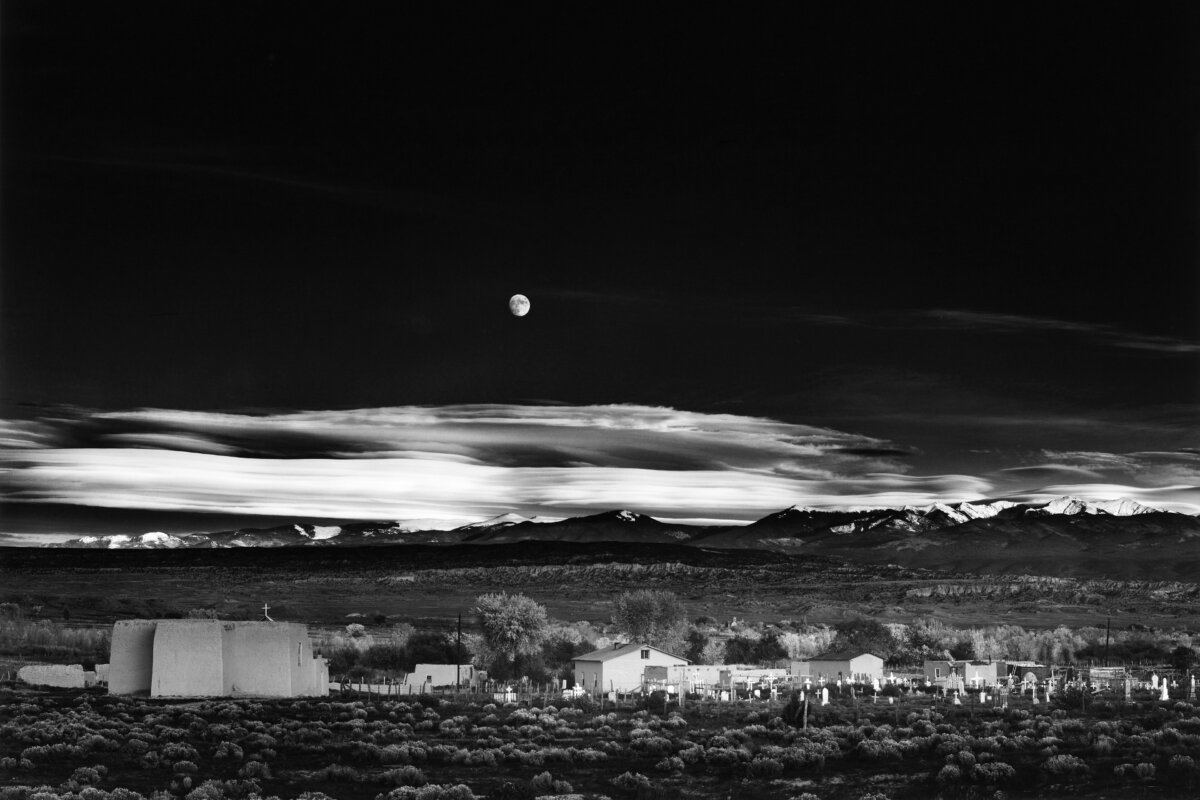
Harold Ickes was drawn to politics. He had worked his way through college at the University of Chicago, took a job as a reporter for the Chicago Record, returned to school to become a lawyer, and then entered the legal profession. Before graduating with his law degree in 1907, Ickes became politically involved due, in large part, to his support for Theodore Roosevelt. When Roosevelt formed his own party—the Bull Moose Party—in 1912, Ickes was a campaign manager for Chicago’s Cook County. Four years later, he gathered prominent Chicago businessmen for a luncheon to convince Roosevelt to run again, but to no avail.
The third Roosevelt run for the presidency, however, gained much better traction. Of course, this was for a different Roosevelt. Ickes, as a progressive Republican, had played such a significant role in helping Franklin D. Roosevelt get elected in 1932 that the new president rewarded him with the cabinet post of Secretary of the Interior, a position he would hold for 13 years.
Along with his political and legal interests, Ickes was a conservationist. He proved ideal for the Interior post as the National Park Service (NPS) was rapidly expanded under the Roosevelt Administration. Ickes was a no non-sense administrator known for his pristine integrity and would rightfully garner the nickname “Honest Harold.” He had a different nickname for himself: “Curmudgeon.”
A believer in Roosevelt’s New Deal, Ickes helped form and lead the administration’s Public Works Administration (PWA), ultimately overseeing approximately 34,000 public construction projects aimed at providing jobs during the Great Depression. As the NPS and the PWA expanded across the nation, Ickes proposed a project to beautify the Department of the Interior Building in Washington—an idea that would not be realized in his lifetime.
The Photographer From California
Ansel Adams had arrived in Washington carrying his portfolio of photographs. The nature photographer and conservationist from California had been sent to lobby Congress at the Sierra Club’s request, where he served on the board of directors. It was 1936, and he was there to advocate for legislation to establish Kings Canyon, located in California’s Sierra Nevada, as a national park. He met with more than 40 members of Congress, showed them his photos of Sierra Nevada, and discussed the life-changing impact of California’s natural beauty. At a conference, he had an opportunity to speak with Secretary Ickes, show him the photographs, and repeat his message. Though the photos and his enthusiasm left a positive impression, the bill nonetheless failed.

Whether or not the objective was to further impress upon Congress the importance of preserving Kings Canyon, Adams collected his best 50 photos of the Sierra Nevada and published the book “Sierra Nevada: The John Muir Trail” in 1938.
“So vast is the detail of the Sierra, so many aspects of the region demand adequate interpretation, that no one work of science or of art may compass it,” Adams wrote in the book’s foreword. “It is one of the wonders of the natural world—a fresh and complete exposition of the forces of glaciation, of erosions by wind and waters, and of the deep travail of the earth.”
There were 500 copies printed. Adams signed each one. He sent one to Ickes. The secretary shared the book with the president. When Arno Cammerer, the director of the NPS, perused the book, he called it “a silent but most effective voice in the campaign” for Kings Canyon. Two years after its publication, Kings Canyon National Park was established.
An Incidental Photograph
Around the time Adams came to Washington in 1936, Ickes was considering how to beautify the Interior Department’s building. He chose painted murals of American landscapes. After viewing Adams’s captivating images, Ickes expanded the mural to include photography.
In 1941, the NPS commissioned Adams to journey throughout the western portion of the country to capture the beauty of America’s national parks. For his services, he was paid the maximum amount possible without congressional approval: “twenty-two dollars and twenty-two cents a day for no more than 180 days’ work a year, plus five dollars per diem expense.” Adjusted for inflation, that is more than $600 today.
Altogether, Adams ventured to and through places like Canyon de Chelly and Grand Canyon in Arizona; Death Valley, Kings Canyon, and Yosemite in California; Mesa Verde in Colorado; Glacier and Yellowstone in Montana; Carlsbad Caverns in New Mexico; and Zion in Utah. He also stopped in places like Walpi, Arizona, Owens Valley, California, and San Ildefonso, New Mexico.
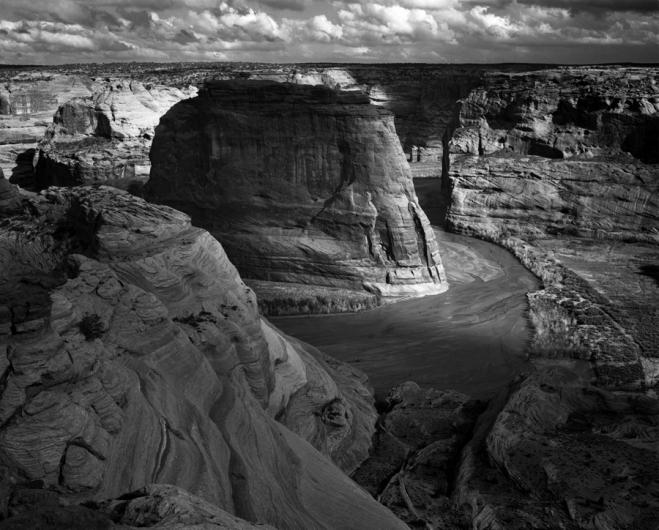
It was during his time in New Mexico, just north of San Ildefonso along Highway 285, that Adams took one of his greatest and, arguably, his most famous photographs.
‘I’ve Got a Picture’
As the autumn day began to turn dusk, Adams drove down the highway after what he considered a disappointing day of shooting in the Chama Valley. The disappointment soon turned to excitement. He looked left and noticed “an extraordinary situation.” He brought the car to an immediate halt and begged his assistants to get the equipment out quickly.
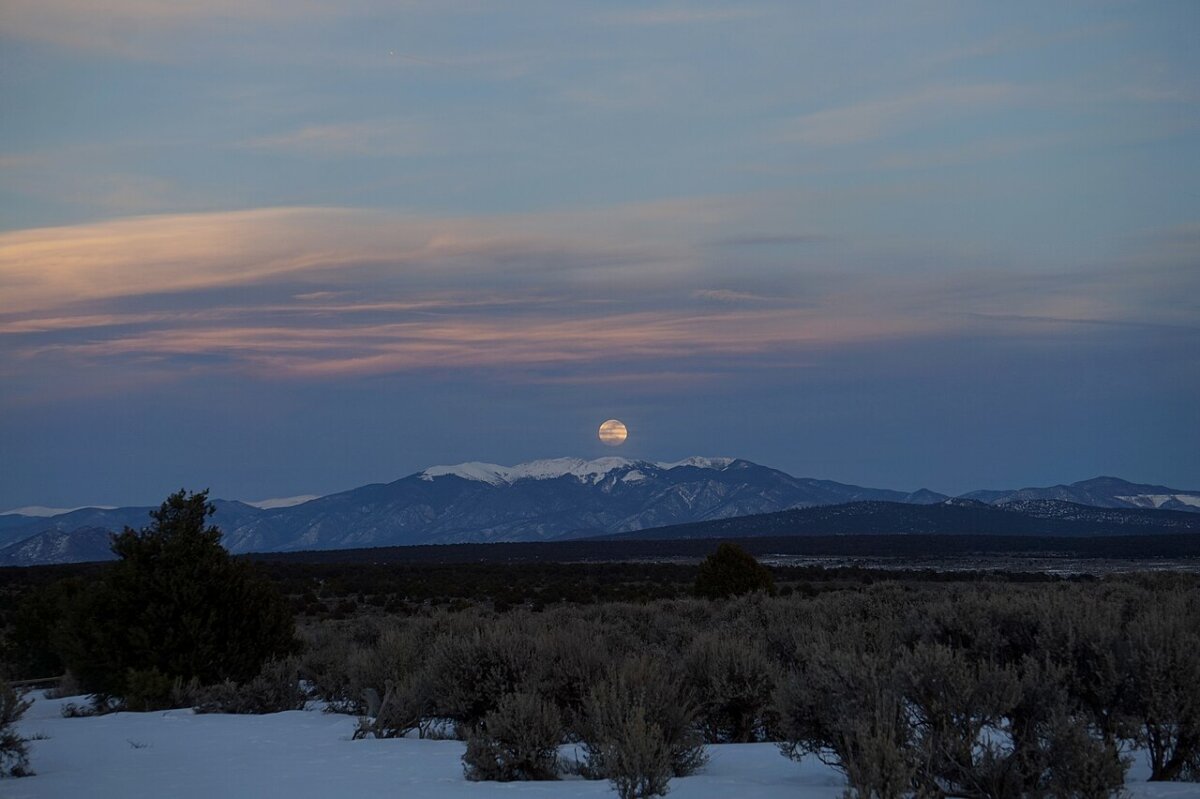
Hanging over the Sangre de Cristo Mountains and a long stream of clouds was the moon in its gibbous phase. Along the roadside was an adobe church and a small cemetery with numerous white crosses. Adams, who specialized in black-and-white photography, knew the crosses would gleam white for only a few fleeting moments. As he hurriedly assembled his camera and tripod, he could not find his exposure meter. There was no time to look further.

He relied on his knowledge of the situation. With the moon at 250 candles per square foot, he set the f-stop and the shutter speed, input his filter, placed his 8-inch-by-10-inch slide negative into the camera, and snapped. “I’ve got a picture,” he yelled out. Hoping to make a duplicate, he grabbed another slide, placed it in the camera, and snapped. When he looked at the second image, the light was off the crosses.
“The whole image just went dead,” he recalled. “So I made it just by a few seconds.”
The Mystery Date
Adams continued taking photographs and submitted them for the Interior Department’s mural project. But by this time, America had been fighting for a year in World War II, and the project was suspended indefinitely.
When Adams went through his photos for print, he knew the one he had narrowly captured was special. He titled it “Moonrise, Hernandez, New Mexico.” It first appeared in U.S. Camera’s “Camera Annual 1943” publication and ran as a two-page spread. Through 1948, there were only about 10 8-inch-by-10-inch prints made in its original tonality.
Beginning in December 1948, Adams made new prints to bring out stronger contrasts in the image. Adams lived more than 40 years after he took the photo, and his work would be considered the gold standard for what is called “straight photography.” His “Moonrise” photo only grew in popularity. Interestingly, though, when asked when exactly he took the photo, he could not recall. Through the years, the photo was dated 1940, 1941, 1942, and 1944. It looked to remain a mystery.
Correcting the Date
Adams’s friend and art historian, Beaumont Newhall, hoped to get to the bottom of the famous photo’s date. He contacted David Elmore, a solar physicist in Colorado, and asked if he could use the moon’s location to decipher exactly when the photo was taken. Elmore accepted the challenge and concluded that image was taken on Oct. 31, 1941, at 4:03 p.m. His findings were published in the January 1981 issue of “American Photographer.” Adams was happy the mystery had finally been solved. Elmore’s findings, however, were incorrect.
After reading the photography magazine article, Dennis Di Cicco, an amateur astronomer and longtime editor at “Sky & Telescope,” decided to confirm the results. When he first put Elmore’s calculations into his computer, the results did not fit the claimed date. For Di Cicco, the effort to find the right date took 10 years.
In 1991, Di Cicco was on assignment in New Mexico. While there, he visited Hernandez and took a photo in the same location Adams had taken his. When he returned home, he ran the numbers, adjusted for where the moon in the famous photo would be, and landed on the correct date and time. It was actually during this week in history, on Nov. 1, 1941, at 4:49 p.m. that Adams captured the fleeting beauty that became one of the 20th century’s most iconic photos. The 50-year mystery was now finally solved, though Adams never knew of it.
Regarding Secretary Ickes’ suspended project, the Department of the Interior conducted an exhibition held in 2010 that finally displayed the 26 large prints Ansel Adams took for the 1941 Mural Project.
What arts and culture topics would you like us to cover? Please email ideas or feedback to features@epochtimes.nyc