SEARCH



James Marriott, the author of “The New Dark Ages: The Death of Reading and the Dawn of the Post-Literate Society,” drew a clear and necessary line between literacy and literate in an interview with writer Mary Harrington. He defines literacy as being able to read, which is in no danger of disappearing. He defined “literate,” however, as the ability to read and comprehend in-depth arguments and stories, as are found in works of philosophy, science, history, and classic literature.
In January 1776, Thomas Paine published a 47-page pamphlet “Common Sense,” which had an enormous influence on America’s break from Great Britain. The second paragraph of that pamphlet’s body illustrates points regarding a literate culture and its demise:
“Society in every state is a blessing, but Government, even in its best state, is but a necessary evil; in its worst state an intolerable one: for when we suffer, or are exposed to the same miseries by a Government, which we might expect in a country without Government, our calamity is heightened by reflecting that we furnish the means by which we suffer. Government, like dress, is the badge of lost innocence; the palaces of kings are built upon the ruins of the bowers of paradise. For were the impulses of conscience clear, uniform and irresistibly obeyed, man would need no other law-giver; but that not being the case, he finds it necessary to surrender up a part of his property to furnish means for the protection of the rest; and this he is induced to do by the same prudence which in every other case advises him, out of two evils to choose the least. Wherefore, security being the true design and end of government, it unanswerably follows that whatever form thereof appears most likely to ensure it to us, with the least expence and greatest benefit, is preferable to all others.”
Printing, Books, and Education
“Common Sense” found a massive audience. One in five Americans eventually owned a copy of the pamphlet. In the first three months of publication, 120,000 copies were printed and distributed, and by the end of the American Revolution that figure had climbed to 500,000.
These figures indicated a burgeoning print culture. The printing press had ignited this revolution in the West, and an emphasis on education, both in Europe and in the English-speaking colonies in America prior to the Revolution, fed that fire by increasing the number of readers hungry for books and newspapers. By 1776, the pre-literate age of the Middle Ages, when only a minority could read and books were scarce, was long dead.
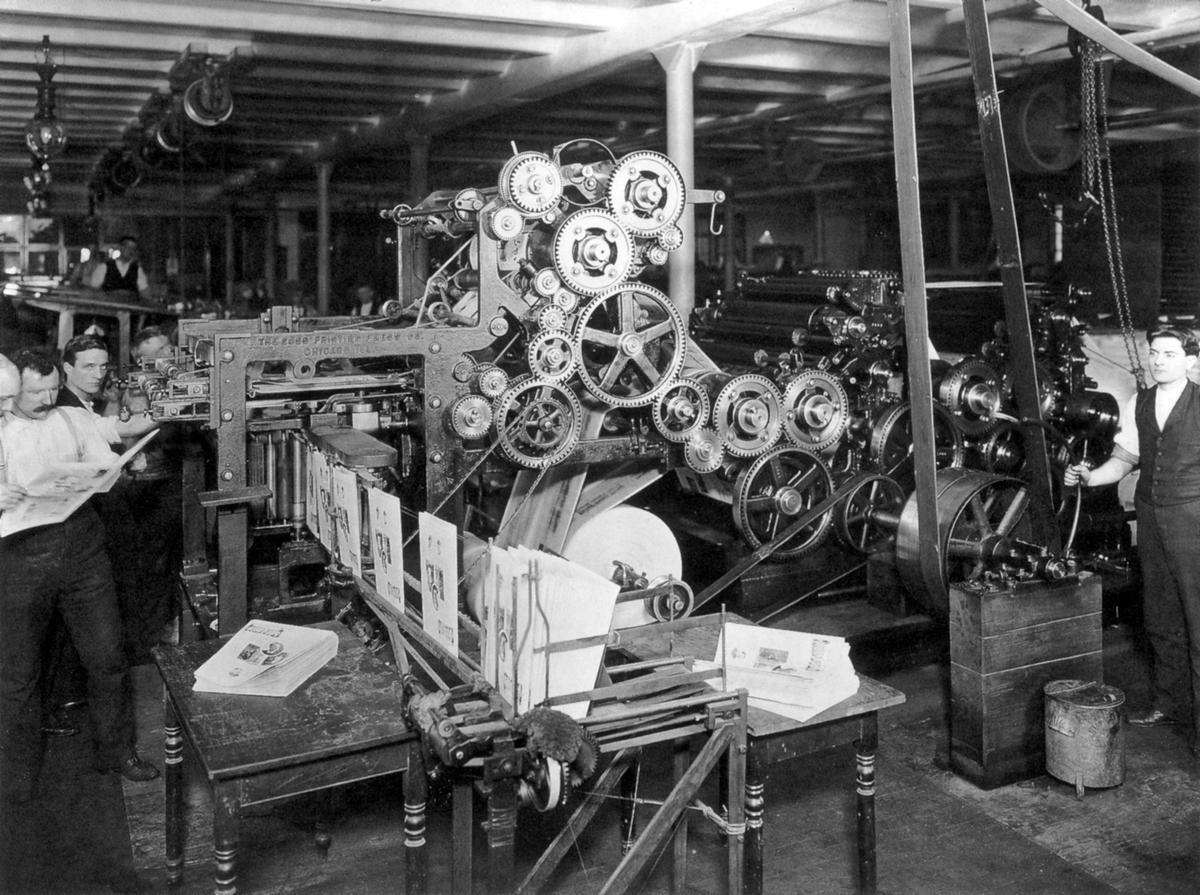 The press room at the Christian Herald, 1898. (Public Domain)
The Rise of Western Democracies
A literate, book-based society made ideas new and old available to many people. According to Marriott and others, “Common Sense” was just one of countless books—political, cultural, and scientific—driving cultural advances.
In the 1985 “Amusing Ourselves to Death,” a book Marriott and others consider prophetic in its analysis of print culture and its decline, author Neil Postman linked printed materials and high rates of literacy to the rise of democracy. Reading a book or a long article like “Common Sense,” Postman argued, encouraged thinking and engagement as opposed to the entertainments of an image-driven culture.
In addition, “Common Sense” is just one example of how the printed word and education provided a voice to people like Paine, who came from a modest background. This democratization due to the world of books gave rise to liberty in the West.
Today, however, a strictly print culture has given way to what Postman called the age of show business. Entertainment trumps enlightenment. His argument centered on television, while today’s critics like Marriott focus more on the influence of phones, social media, and the internet. But both Postman and Marriott argued that we’re undergoing a massive and largely negative shift in how we communicate and digest information.
Distraction and the 400-Word Wall
During his conversation with Harrington, Marriott addressed the 400-word wall, a term describing attention span while reading. The average reader takes approximately 90 seconds to read 400 words. The passage above from “Common Sense” is 194 words long. Double that, and you have reached the wall.
This is the wall which so many people, accustomed as they are to texts, clips, and short posts from their digital reading life, can’t get past. It’s the point where the need for distraction, embedded in them by a screen culture, tugs at their attention. It’s one reason that, according to The College Fix, students even at Ivy League universities now find it difficult to read books. They are simply too easily distracted to focus for the length of time needed to sink into a text and comprehend it.
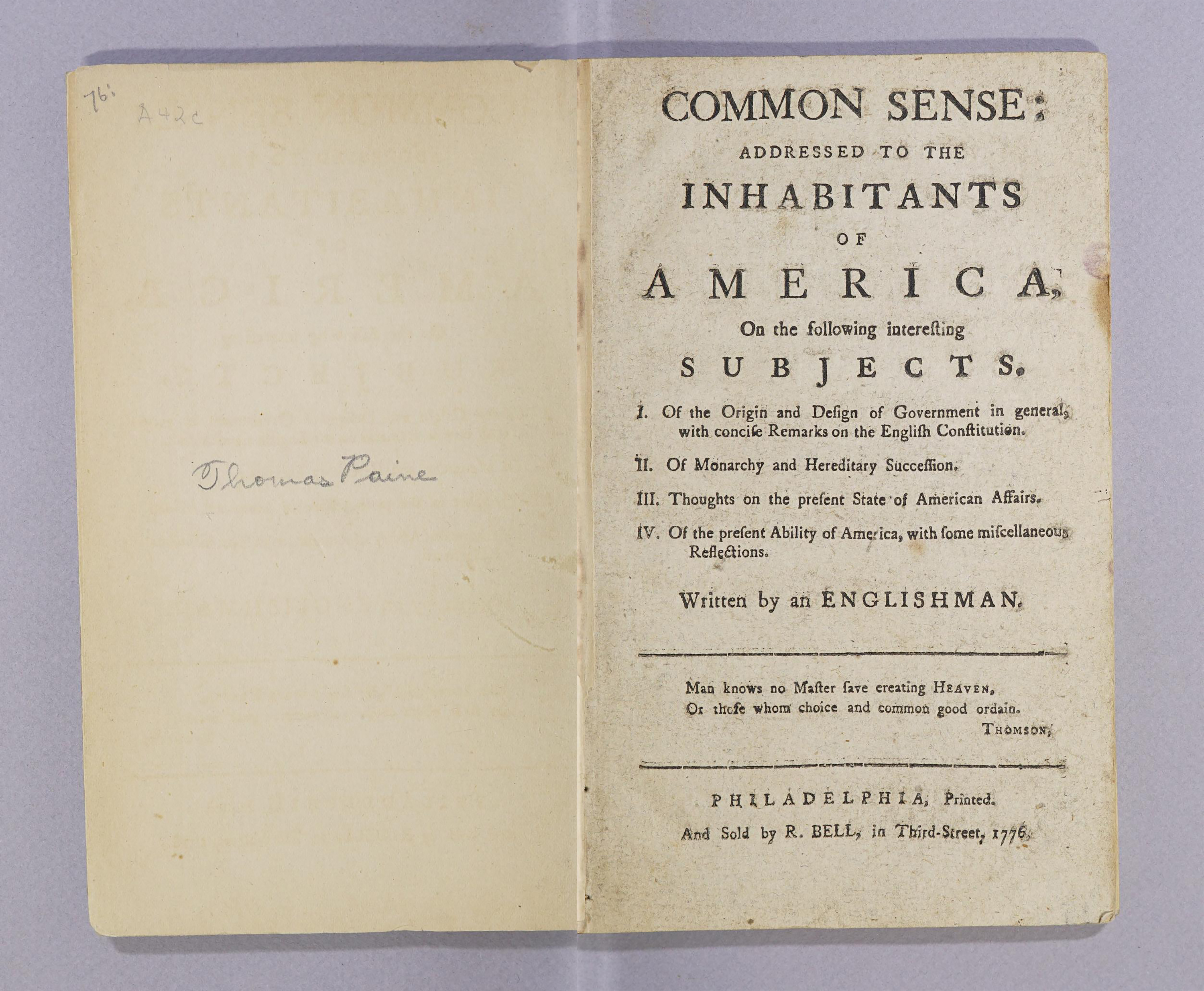 Frontispiece of “Common Sense: Addressed to the Inhabitants of America,” 1776, by Thomas Paine. Internet Archive. (Public Domain)
In addition, many students and adults today would likely have difficulty understanding the passage’s meaning. The vocabulary, the rhythm and length of the sentences, and the subject matter might slow or stymie them completely.
The Future
While Postman and Marriott offered suggestions for preserving a print culture, both were pessimistic about the possibility. The worldwide communications revolution now underway will continue.
Ironically, Marriott holds opinions and prejudices garnered from the screen culture. During his interview, for instance, he faults Donald Trump and conservatives for this political turn away from books and toward screens. When Harrington calls him out on his exclusive examples from the right, Marriott backs up a bit, saying, “One of the things I mildly regret looking back on the book, having finished it, was that a lot of people I’m bashing in the book are 20th and 21st century right-wing populists.”
Near the interview’s conclusion, he also stated without proof that conservatives are less well-educated than liberals. Here, he shows little real knowledge of such trends as the diminished value of a college degree or the rise of classical schools and homeschooling in the United States. A deeper dive into books and articles might have disabused him of these notions.
These unfortunate biases taint Marriott’s thesis, yet they don’t destroy it. That we are moving into a different age, one based less on books and reading and more on images, is undeniable. That this metamorphosis will affect our politics, our culture, and ourselves as individuals is also undeniable. That our devices can be highly addictive is also a fact, as is clear by the vast amounts of time so many people spend scrolling on Facebook, Instagram, and TikTok.

In the foreword to “Amusing Ourselves to Death,” Postman compared George Orwell’s “1984” and its boot-in-the-face Big Brother to Aldous Huxley’s “Brave New World” with its softer vision of tyranny-by-pleasure. Postman writes:
“Orwell warns that we will be overcome by an externally imposed oppression. But in Huxley’s vision, no Big Brother is required to deprive people of their autonomy, maturity, and history. As he saw it, people will come to love their oppression, to adore the technologies that undo their capacities to think.”
Addicts are made in that way. So are slaves.
What arts and culture topics would you like us to cover? Please email ideas or feedback to features@epochtimes.nyc.