SEARCH


Many people believe that America’s classical music tradition began in the 20th century with composers like Charles Ives, Aaron Copland, and George Gershwin. These musicians experimented with progressive harmonies and incorporated folk music as well as more popular forms of music to create what’s considered a truly American sound.
However, the American classical music world flourished in the years between the end of the Civil War and World War I. In that time, a group of composers known as the Boston Six showed what America was capable of producing through their compositions, teaching, and conducting.
After their death, these composers were dismissed and forgotten as old-fashioned imitations of European traditions. However, as their music has been gradually rediscovered in the last few decades, its originality and beauty has been revealed.
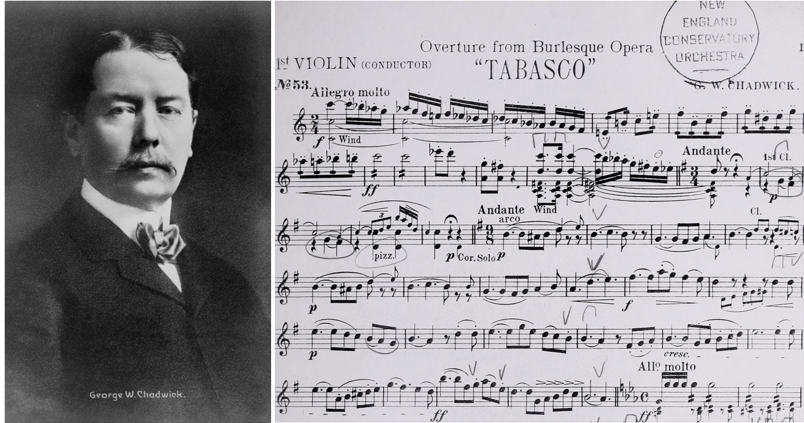
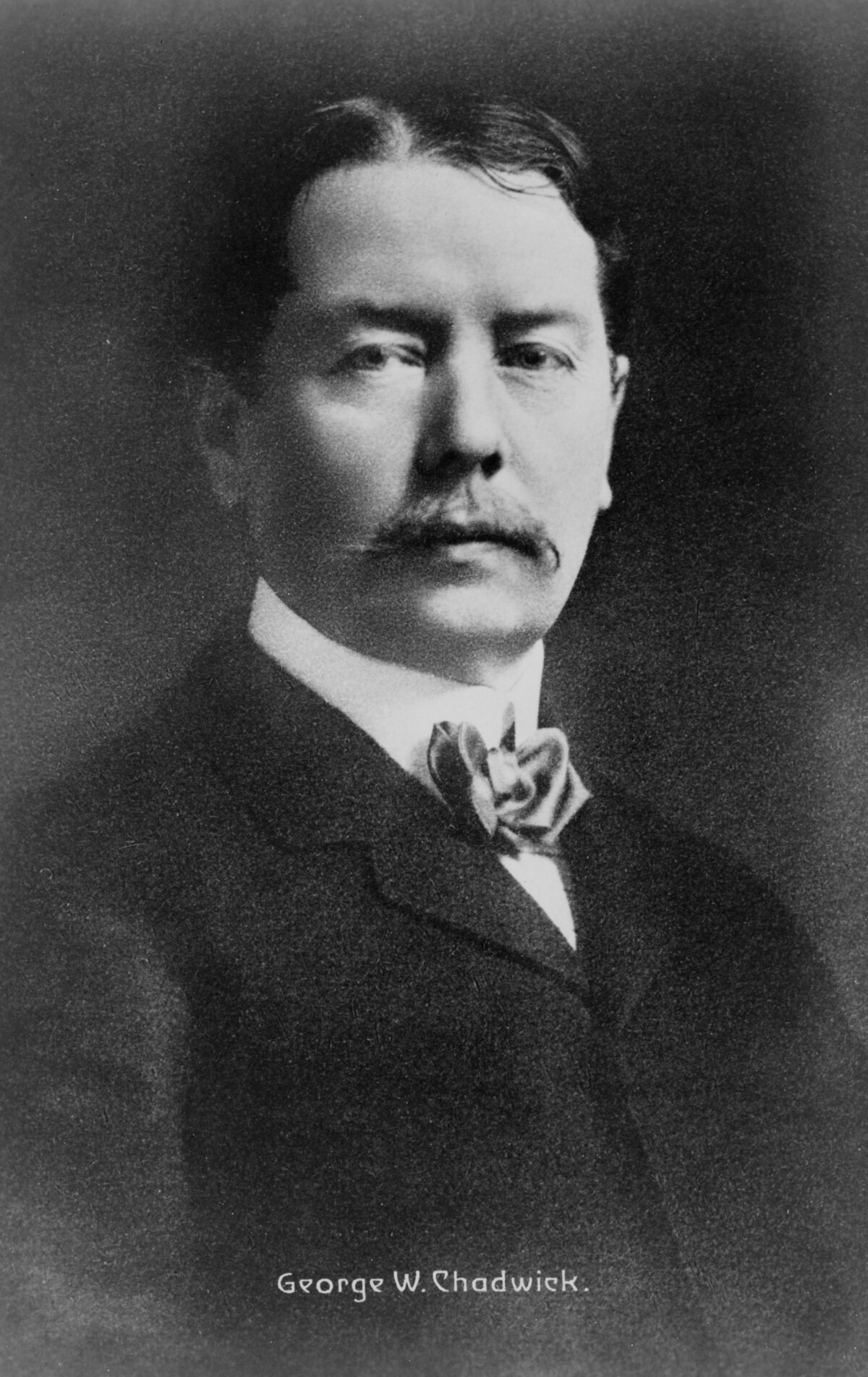
One member of the group, George Whitefield Chadwick (1854–1931), explored distinctly American themes in his music and its subject matter, while never losing a truly Romantic sound.
New England Background
Chadwick was born in Lowell, Massachusetts, on November 13, 1854, but he grew up in nearby Lawrence. He came from New England stock, and named after 18th-century Evangelical preacher George Whitefield. Chadwick’s father owned an insurance company, and George was expected to join the business. He clerked in his father’s firm as a teenager, but that didn’t last long.
George had long been interested in music, having taken organ lessons from his older brother, Fitz Henry, for years. By age 15, he was an active organist.
In 1872, he enrolled at the recently founded New England Conservatory. There he studied organ with George E. Whiting, piano with Carlo Petersilea, and music theory with Stephen A. Emery.
In the next few years, he began composing. His Canon in E Flat was performed in November 1876. But Chadwick was also interested in music education. At the Music Teachers National Association’s founding meeting, he presented a paper.
In 1876, at just 22, Chadwick joined the faculty of Olivet College in Michigan. There, he served as an instructor and administrator for one year before deciding that he needed to expand his musical horizons. Like most serious young musicians of the day, he headed to Europe.

Sojourn Abroad
In 1877, Chadwick traveled to Leipzig, Germany, where he studied with Salomon Jadassohn and Carl Reinecke at the Leipzig Royal Conservatory. In addition to learning the art of orchestral and choral conducting, Chadwick became a serious composer during this time abroad.
His graduation piece was the Rip Van Winkle concert overture, the performance of which in 1879 gained him acclaim in Germany and America.
After Leipzig, Chadwick traveled around Europe with a group of young artists who called themselves the Duveneck Boys after its leader, portraitist Frank Duneveck. With this group, he spent time in Paris and Munich. He resumed his formal education at the Hochschule für Musik in Munich where he studied with Josef Rheinberger.
In 1880, he returned to the United States and settled in Boston; he began teaching music privately and worked as a church organist.
His reputation as a composer grew. His works were frequently performed throughout New England, by groups including the Boston Symphony Orchestra, the Harvard Musical Association, and the Handel and Haydn Society.
Chadwick composed for choral groups and for important events, like the Columbian Exposition in 1892. Throughout the 1880s–1890s, he conducted music festivals in Springfield and Worcester, Massachusetts.
American Educator
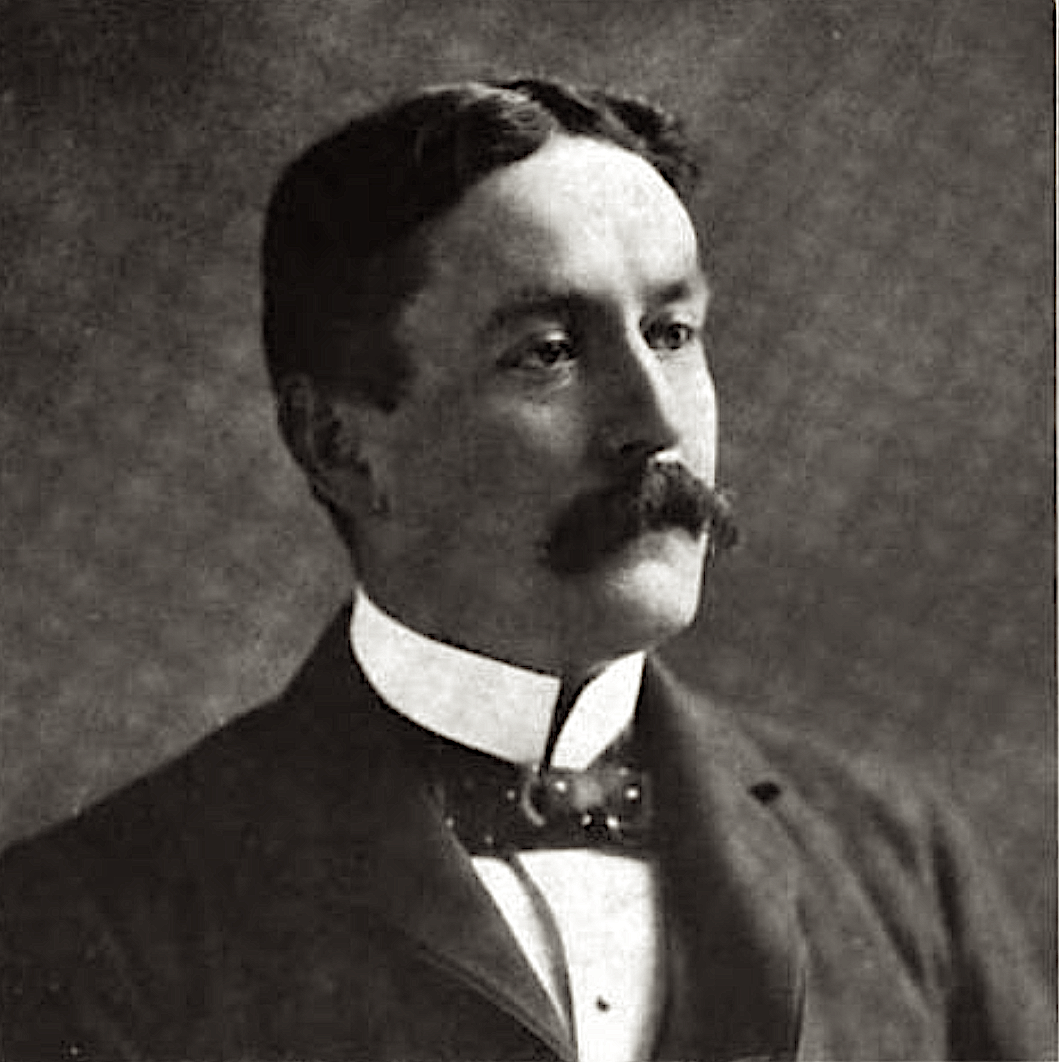
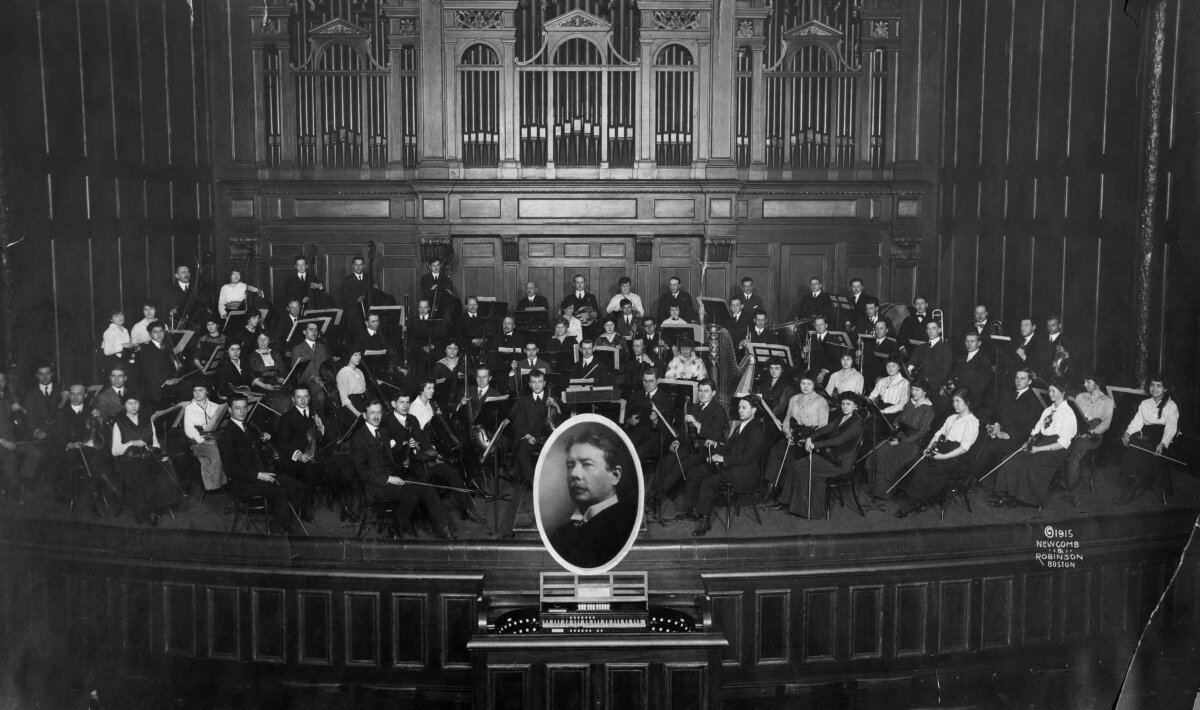
In 1882, he returned to his alma mater, the New England Conservatory, as a teacher. He became the school’s director in 1897, a position he held until 1930, a year before his death.
In this position, he taught some of the greatest composers of the next generation, including a younger member of the Second New England School, Horatio Parker. He changed the technique of teaching orchestration and harmony from studying abstract principles to analyzing actual pieces of music.
Chadwick shaped the New England Conservatory’s curriculum to resemble the musical education he’d received in Germany. He established an opera workshop and a student repertory orchestra. He also spearheaded the change in location to the school’s current facility.
His endeavors at the New England Conservatory shaped not only that school but music education throughout the United States.
He also wrote books on music pedagogy. His 1897 textbook, ”Harmony: A Course of Study,” went through 50 editions and became a standard tool in teaching music theory.
An American Composer
Chadwick’s position as an educator gave him ample time and resources to compose. He experimented with and flourished in many different musical forms.
He wrote dozens of choruses, anthems, and odes for mixed choir and orchestra. He composed three symphonies, which helped establish the budding symphonic tradition in the United States. He wrote four symphonic poems in the 20th century, ”Cleopatra,” ”Aphrodite,” ”Tam O’Shanter,” and ”Angel of Death.”
His orchestral overtures were some of his most popular and best received works, beginning, of course, with ”Rip Van Winkle.” He would write six more overtures in the same genre, which reflect his changing and ever innovative musical style.
He also wrote a mixed variety of other orchestral pieces, including a serenade, a few suites, and symphonic sketches. In addition, he wrote numerous string quartets, as well as a plethora of solos for piano and organ.
Chadwick loved composing for the human voice. He wrote several pieces for a vocal soloist and orchestra. He also wrote hundreds of art songs for voice and piano, which remain in the American art song repertoire today.
Music for the Stage
In addition, he wrote many successful works for the stage, including operas. His burlesque operetta “Tabasco” (1894) was well-received and compared favorably to British comic operettas by Gilbert and Sullivan.
His lyric drama “Judith” (1901) represented a completely different style; apochryphal tales inspired the story and included exotic harmonies reminiscent of Camille Saint-Saens’s ”Samson and Delilah.”
His piece de resistance was a tragic opera after a scenario he wrote himself, “The Padrone.” A story of Italian immigrants in Boston, this English opera was called American verismo because of its dramatic music and favorable comparison to works by Giacomo Puccini. Though he wrote it in 1915, its first stage performance was in 1995.
Music critics and lovers alike who have taken the time to study his work have observed how innovative Chadwick was. While never straying from a distinctly classical tonality, he was unafraid to explore his own style.
He found his own composition voice, which was distinctly American, and frequently used rich Americana stories as his subject matter. He also dedicated himself to helping other young American composers find their voices.
A quote from “A Book of Choruses for High Schools and Choral Societies,” published in 1923, sums up his career:
“Mr. Chadwick is intensely interested in making his country a better place in which to live through the refining influence of good music.”
What arts and culture topics would you like us to cover? Please email ideas or feedback to features@epochtimes.nyc