SEARCH


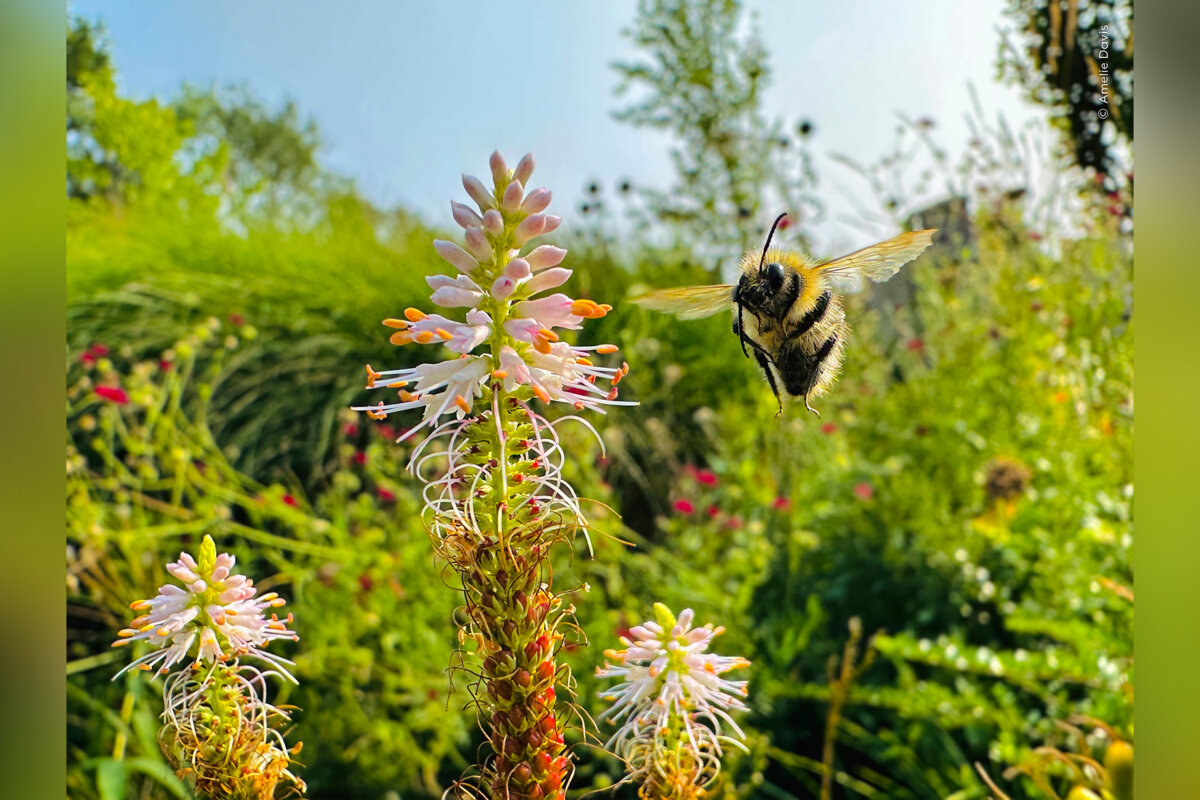
The garden was buzzing with activity when Amelie Davis borrowed her dad’s smartphone to photograph bees one warm August afternoon. Without her usual camera handy, the budding young photographer, then 9 years old, used the device to snap a common carder bee suspended in mid-air—a single wingbeat frozen in time.
Calling it “Flight of the Bumblebee,” Davis submitted her shot to the 2026 Wildlife Photographer of the Year competition, held annually by the Natural History Museum in London. Her entry stood alongside contestants from 121 countries and territories. On Oct. 13, the winners were announced, and Davis, from Surrey, UK, won in the “10 Years and Under” category.
A blown-up transparency of Davis’s photo now hangs in the museum alongside the other winning entries through July 11, 2027. The photos are also displayed at Toronto’s Royal Ontario Museum until Feb. 28, 2027.
While Davis proved a keen eye and a borrowed smartphone could triumph in a backyard garden, other winners went to extraordinary lengths—wading into murky ponds, trekking across dunes at night, and diving beneath coastal kelp—to document hidden stories within the animal kingdom.
Other categories included “Animals in their Environment,” “Behaviour: Birds,” “15-17 Years,” and the two overall grand titles: “Young Wildlife Photographer of the Year 2026” and “Wildlife Photographer of the Year 2026,” among several others.
Now in its 62nd year, the competition drew a record-breaking 65,403 entries. In another first for the contest, both the adult and young overall winners were recognized for black-and-white photography, underscoring the timeless art of monochrome.
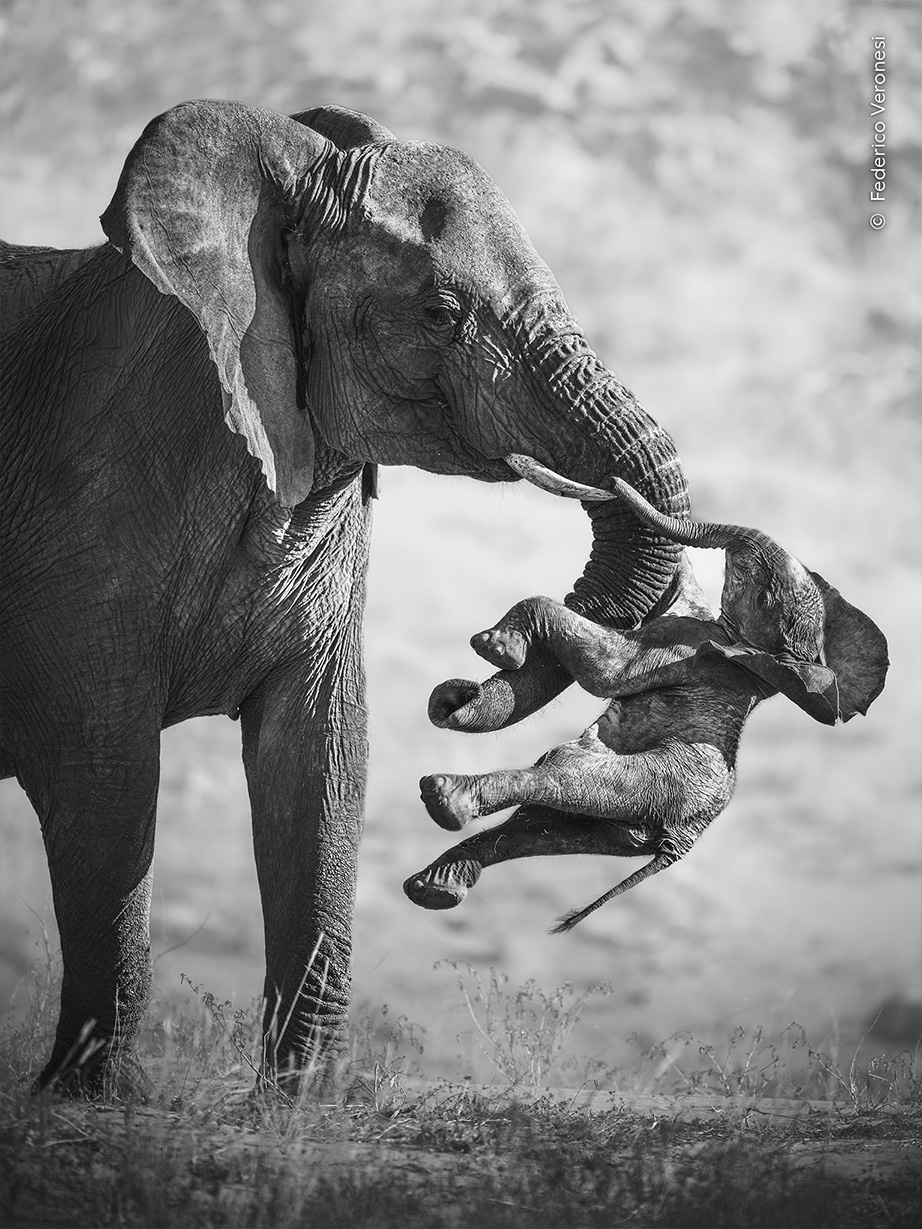 “The Aftermath” by Federico Veronesi, “Behaviour: Mammals” category winner. (© Federico Veronesi/Wildlife Photographer of the Year)
“These photographs capture moments that are at once intimate, surprising and profoundly revealing,” Doug Gurr, director of the Natural History Museum, said in a statement.
Federico Veronesi, who won Wildlife Photographer of the Year 2026, captured the complex behavior of elephants in his black-and-white image, “The Aftermath.” A female elephant holds a dead calf with her tusk and trunk. The picture invokes an awareness of mortality in a species long understood to inspect bones and carry carcasses of deceased elephants.
“This photograph works on so many levels,” said Kathy Moran, chair of the competition jury.
“Emotionally, it’s a gut punch, heartbreakingly poignant. Intellectually, it’s proof that animals have cognition.”
Veronesi had been tracking elephants in Namibia when he came across unusual drag marks in a dry riverbed. Tracing them to the source, he caught up with a herd and found the female carrying the dead calf.
“What I really love about this image is how it’s like an open window into the soul of the elephants,” Veronesi said in a Wildlife Photographer of the Year Facebook post.
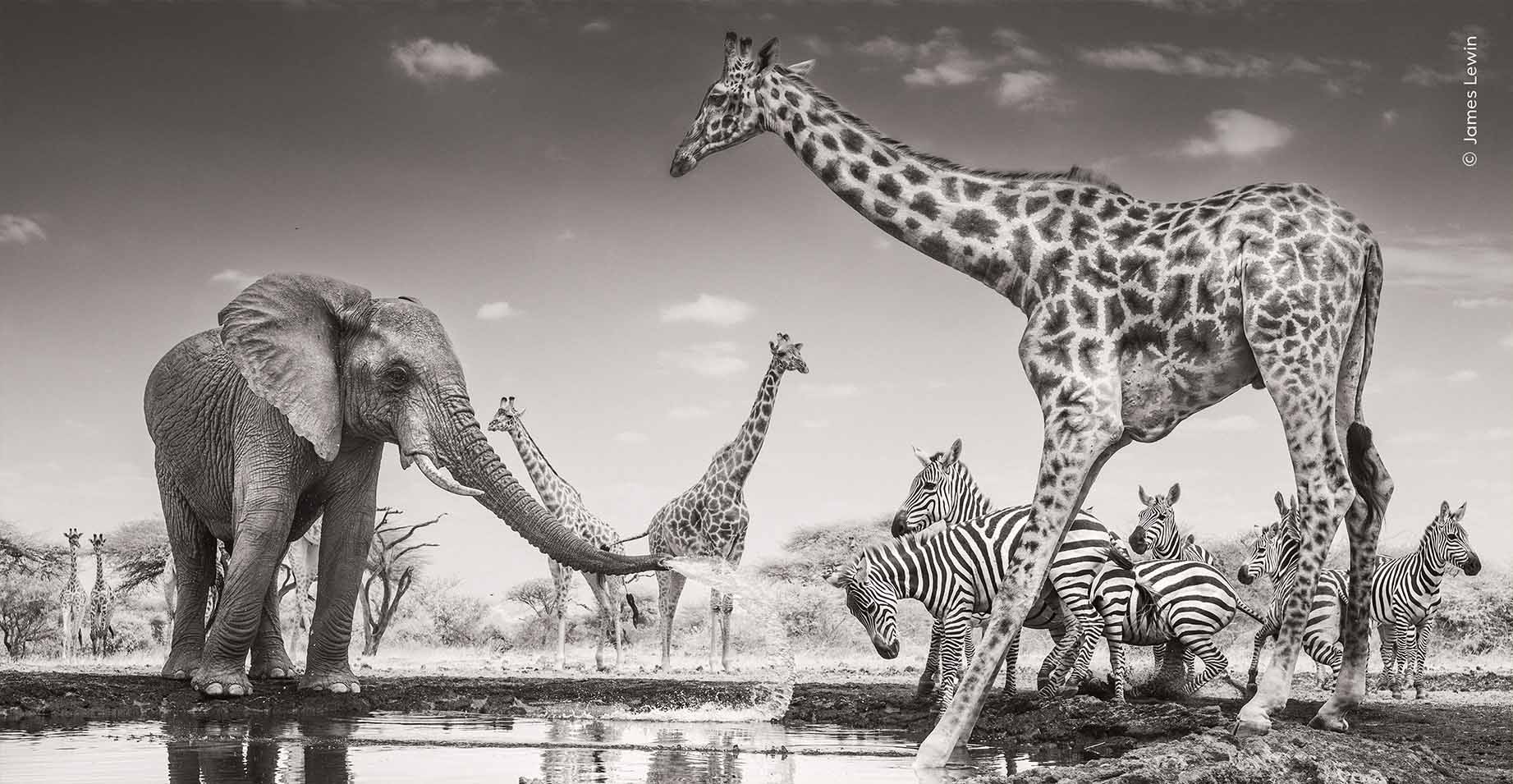 “The Meeting Place” by James Lewin, “Animals in their Environment” category winner. (© James Lewin/Wildlife Photographer of the Year)
Africa was also the stage for UK photographer James Lewin to capture a bustling wildlife social hub. He travelled to a watering hole during the dry season in the Chyulu Hills of Kenya for his shot, “The Meeting Place”—a who’s who picture of the animal kingdom.
Because of its massive size, the African elephant holds the top position near the water’s edge. Zebras and giraffes loiter for the incidental protection the pachyderms provide from lion ambushes. A spritz emits from a raised trunk. Lewin’s playful monochrome group photo won in the “Animals in their Environment” category.
Lewin achieved this surreal, silvery-white scene using a Nikon Z 7II converted to capture infrared light, softening the harsh equatorial midday glare.
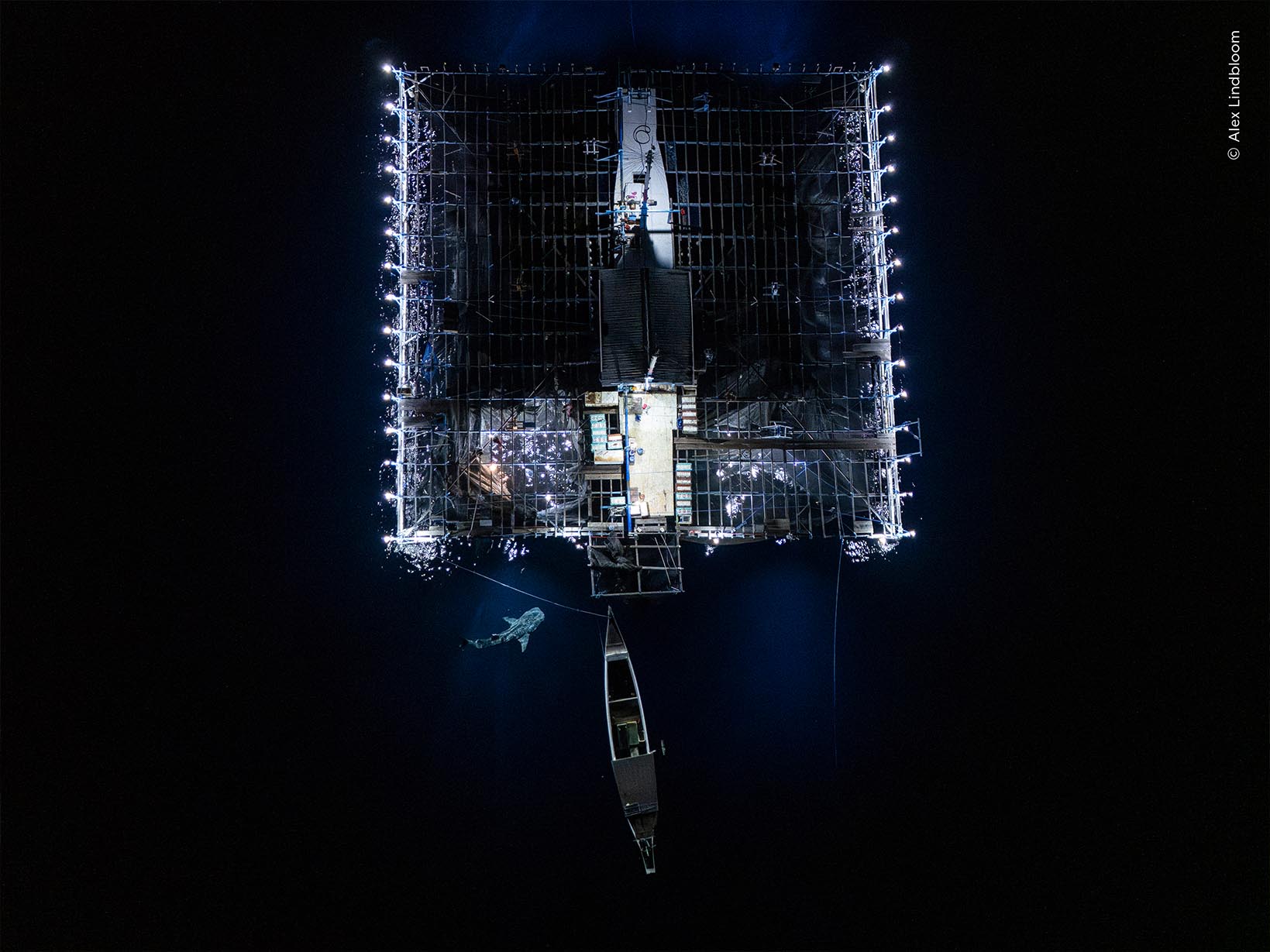 “Night-Time Catch” by Alex Lindbloom, “Oceans – The Bigger Picture” category winner. (© Alex Lindbloom/Wildlife Photographer of the Year)
An aerial shot of a dark Indonesian bay hangs on a lightbox in the museum’s “Oceans – The Bigger Picture” section. Alex Lindbloom, from the United States, found a whale shark inspecting the catch of a traditional “bagan”—a floating wooden fishing platform for netting. The deck lamps illuminate the sea giant, the world’s largest shark, which reaches lengths of 40 feet or more. They congregate near bagan nets to inhale any stray silverside fish.
A different form of illumination is found far above sea level. Greek photographer Agorastos Papatsanis explored the forested slopes of Mt. Olympus to capture the neon-yellow glow of tiny bonnet mushrooms. His photograph, “Shedding Light,” hangs in the museum’s “Plants and Fungi” section.
Papatsanis used UV light to coax the vivid glow from the fungi growing on a decaying log.
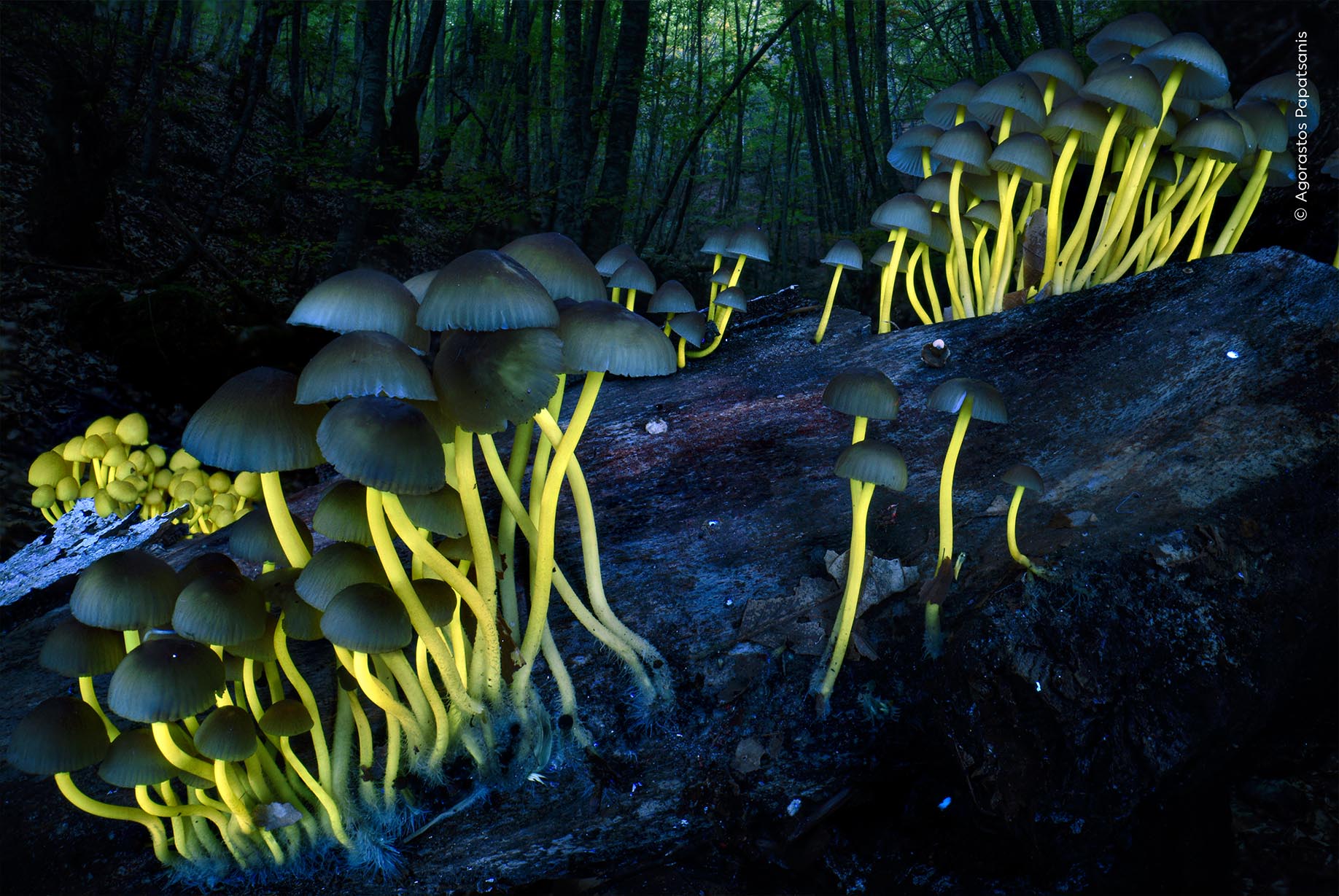 “Shedding Light” by Agorastos Papatsanis, “Plants and Fungi” category winner. (© Agorastos Papatsanis/Wildlife Photographer of the Year)
Aaron Sanders, a UK photographer, dove below sea level off the coast of Cornwall to capture the faint impressions of suction cups against the back of translucent kelp. His photograph, “A Watchful Eye,” focused on an octopus eye spying him from in between seaweed leaves. The image took the award for “Animal Portraits.”
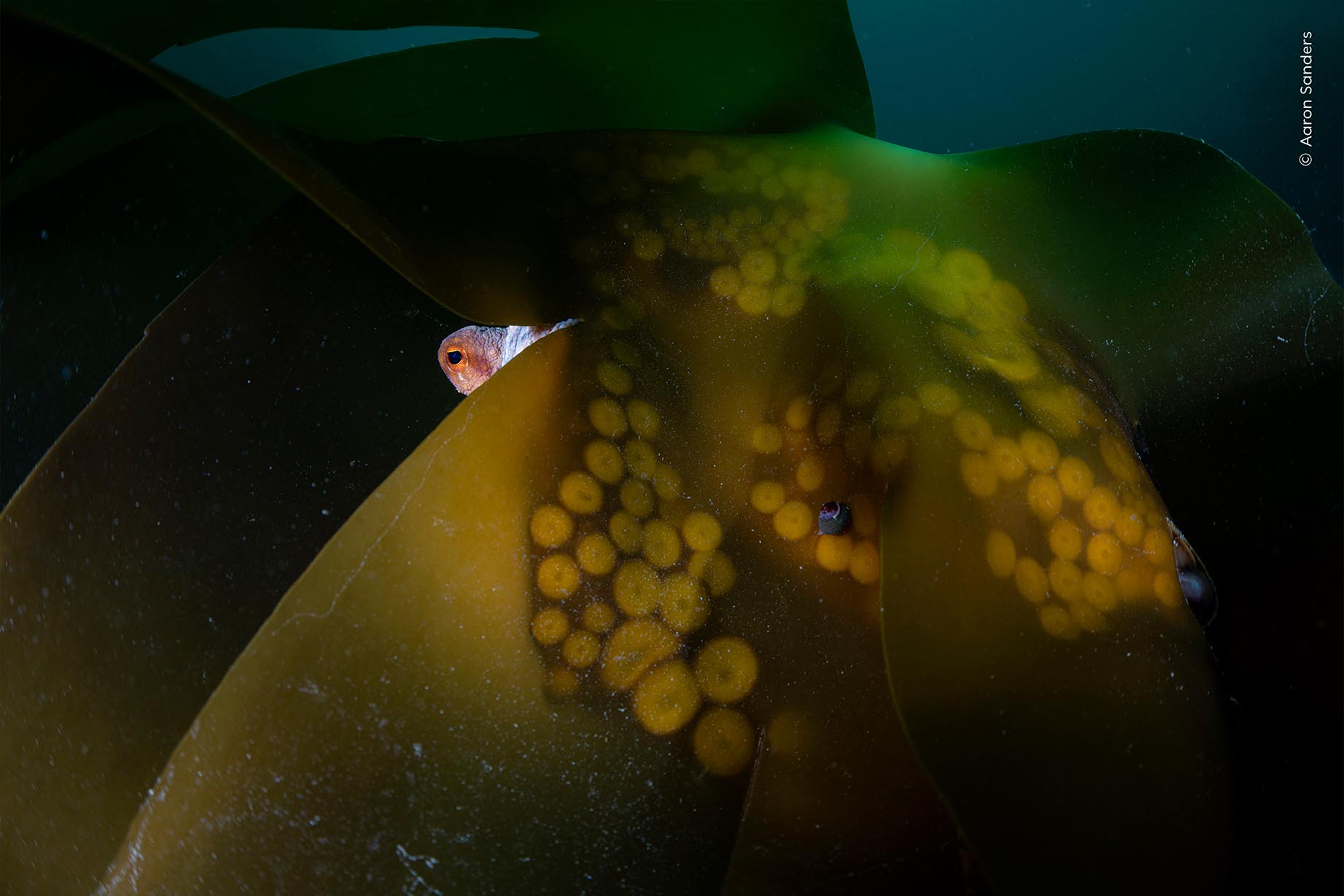 “A Watchful Eye” by Aaron Sanders, “Animal Portraits” category winner. (© Aaron Sanders/Wildlife Photographer of the Year)
“We remained perfectly still, watching one another with a seemingly shared curiosity,” Sanders said in a Wildlife Photographer of the Year Facebook post.
Teenager Konrad Gräter didn’t need to travel far from his town in Baden-Württemberg, Germany, for his photograph, “Birdsong Painted in Light.” Crouching low on a steep slope early one April morning, he framed a singing male blackbird through a gap in the foliage, clinching top prize in the “15-17 Years” category.
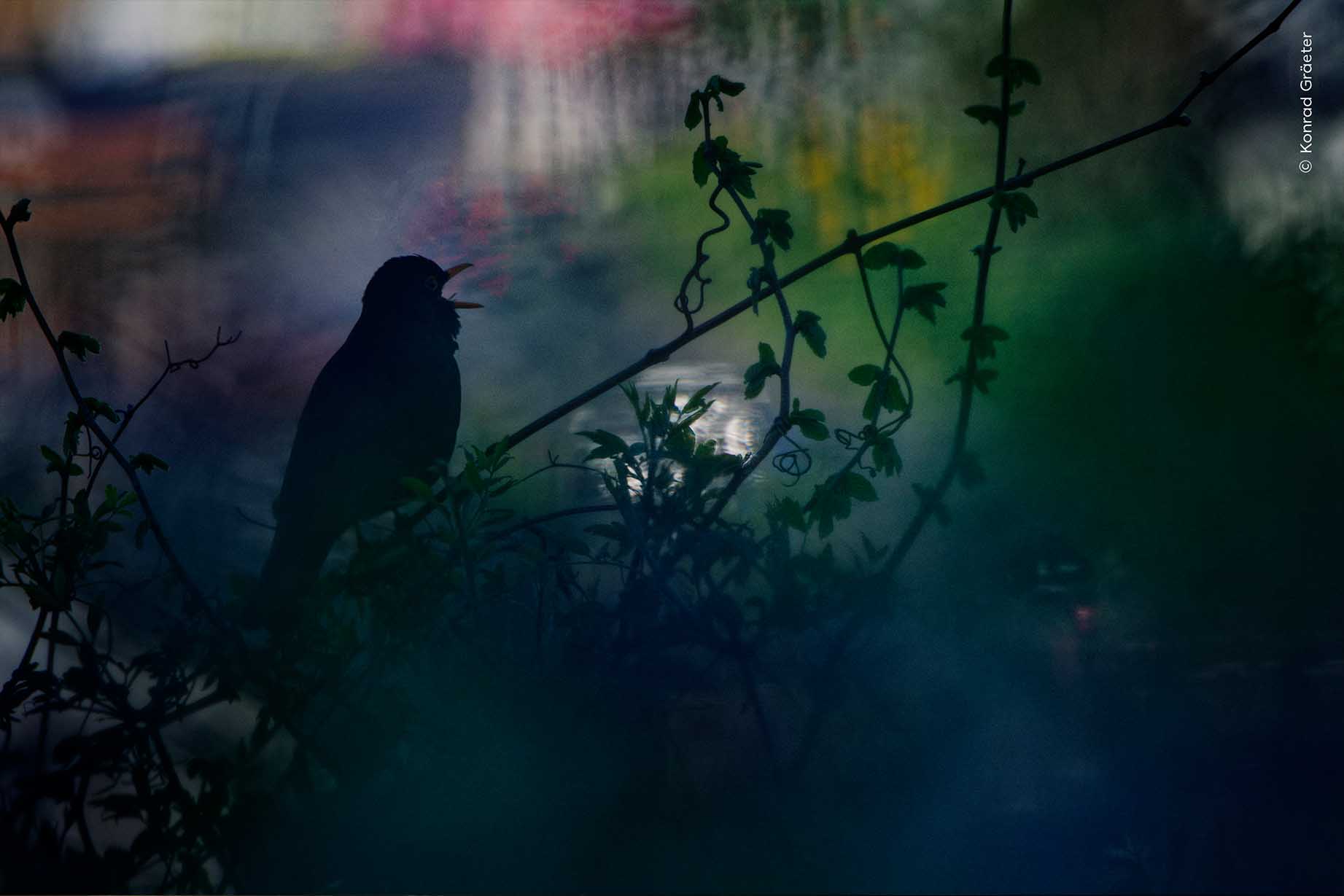 “Birdsong Painted in Light” by Konrad Gräter, “15–17 Years” category winner. (© Konrad Gräter/Wildlife Photographer of the Year)
“With this image I try to show that the beauty of nature is all around us, if we only look,” he said on Instagram, adding that the blackbird’s song is painted in the light of a reflection. Males vocalize to proclaim territory and attract mates—who answer with a softer courtship tune known as a subsong.
From water monitors in Bangkok to urban coyotes patrolling San Francisco’s hilltops, the winners span every corner of the natural world. Beyond London and Toronto, all 100 winning and commended images can be explored online via the Natural History Museum.
More Winning Frames from the Wild
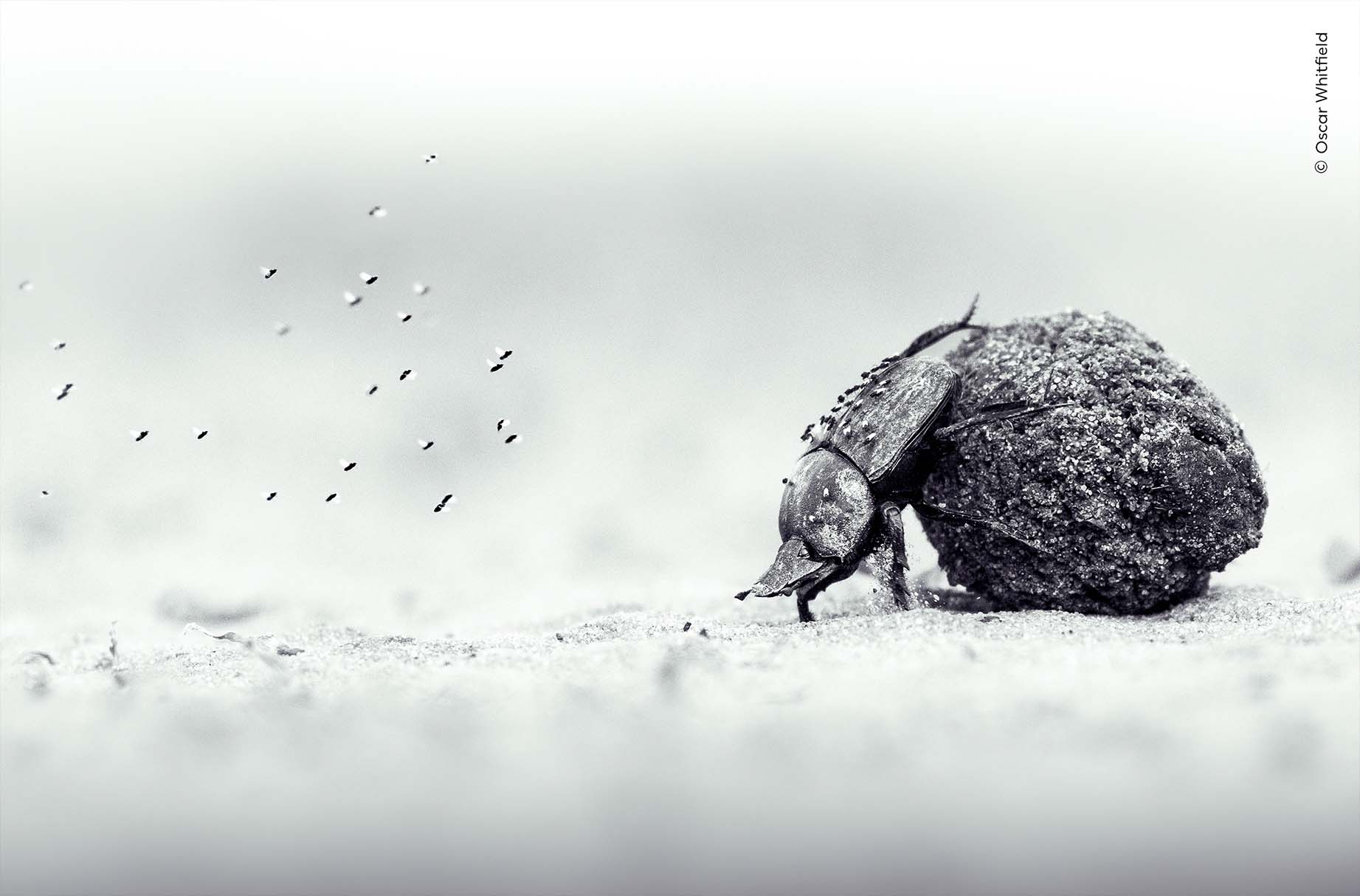 “Labour of Love” by Oscar Whitfield, “Young Wildlife Photographer of the Year 2026; 11–14 Years” category winner. A dung beetle strains to roll a sphere of dung across the dry dust of Zimbabwe’s Zambezi National Park at eye level. (© Oscar Whitfield/Wildlife Photographer of the Year)
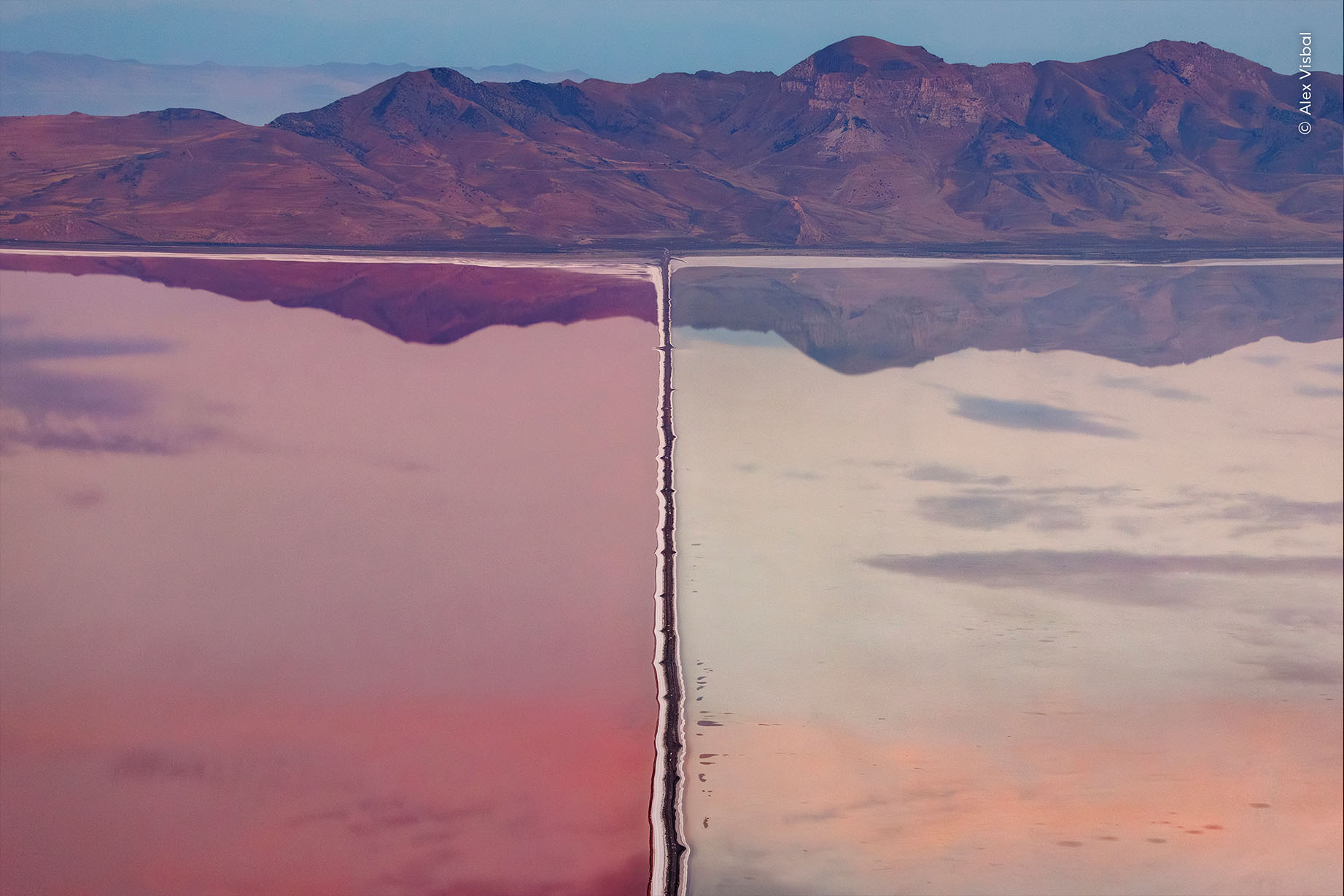 ”The Great Divide” by Alex Visbal, “Wetlands: The Bigger Picture” category winner. An engineered barrier bisects Utah’s Great Salt Lake, separating standard waters from a hypersaline basin colored bright pink by microbes. (© Alex Visbal/Wildlife Photographer of the Year)
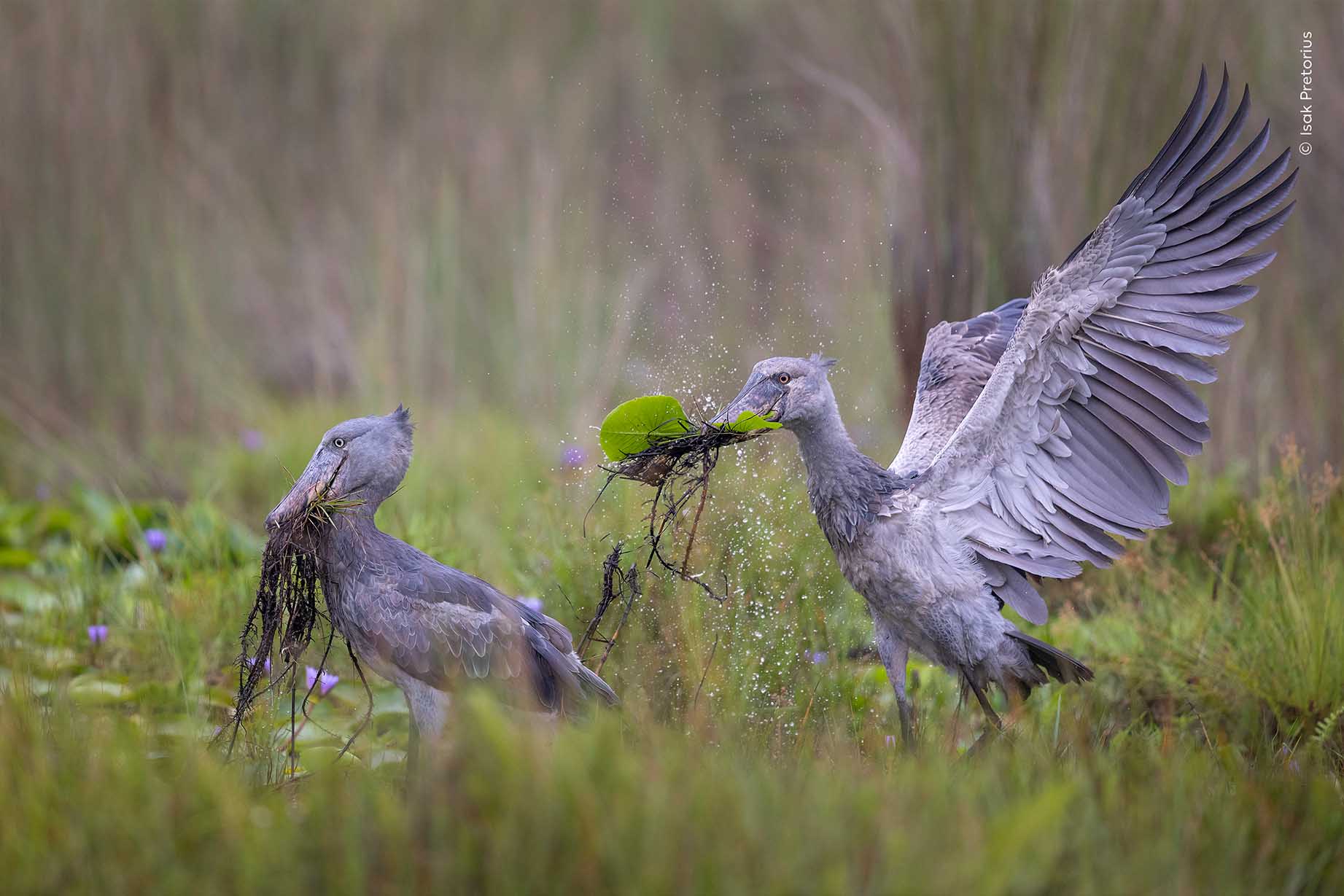 “Scenes from the Swamp” by Isak Pretorius, “Behaviour: Birds” category winner. Two shoebills lift and drop clumps of wetland vegetation in Uganda’s Mabamba Swamp, likely preparing material for a nest. (© Isak Pretorius/Wildlife Photographer of the Year)
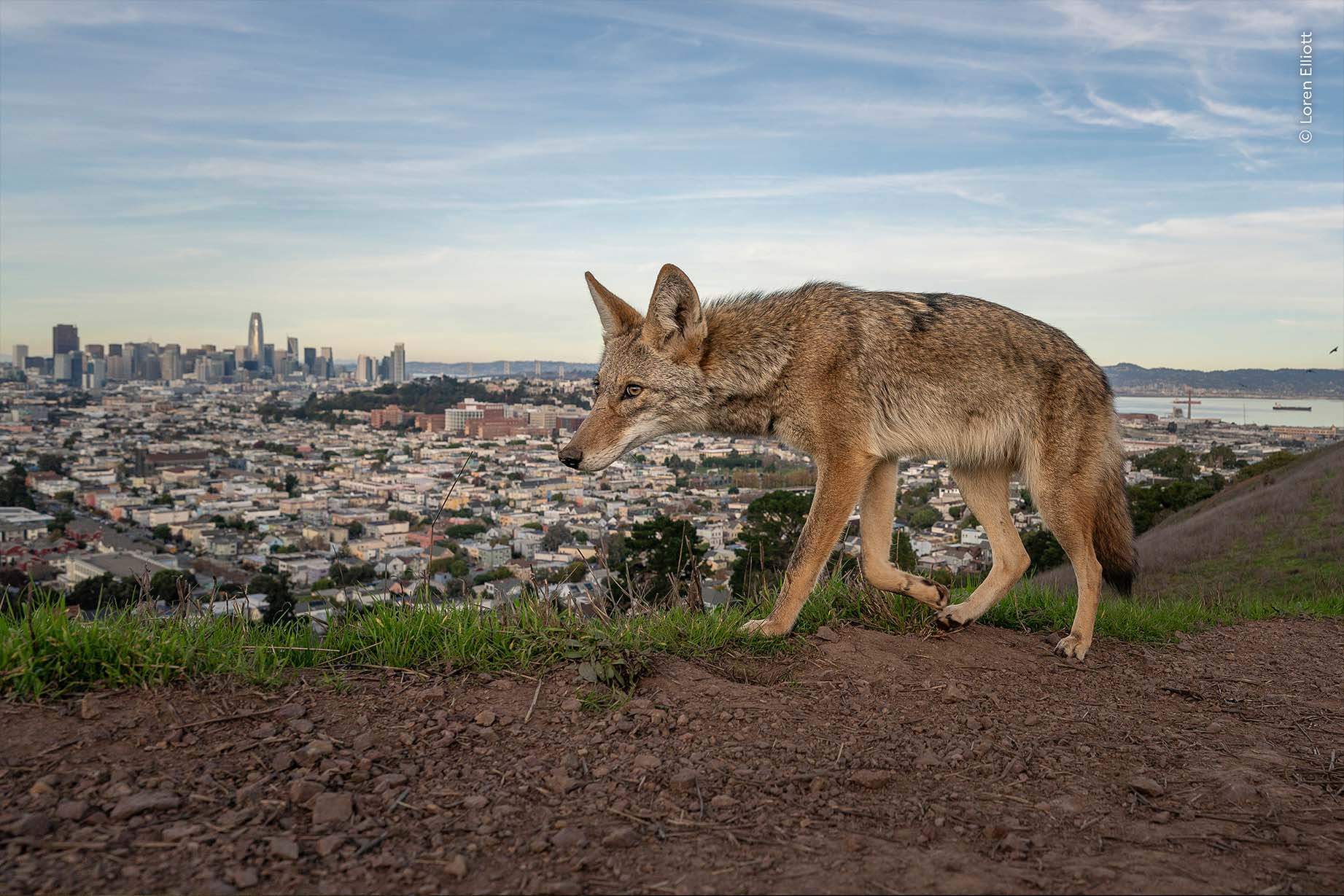 “On the Outskirts” by Loren Elliott, “Photojournalist Story Award, Wily Coyotes of San Francisco” category winner. A coyote pads along a grassy trail in Bernal Heights Park overlooking San Francisco Bay. (© Loren Elliott/Wildlife Photographer of the Year)
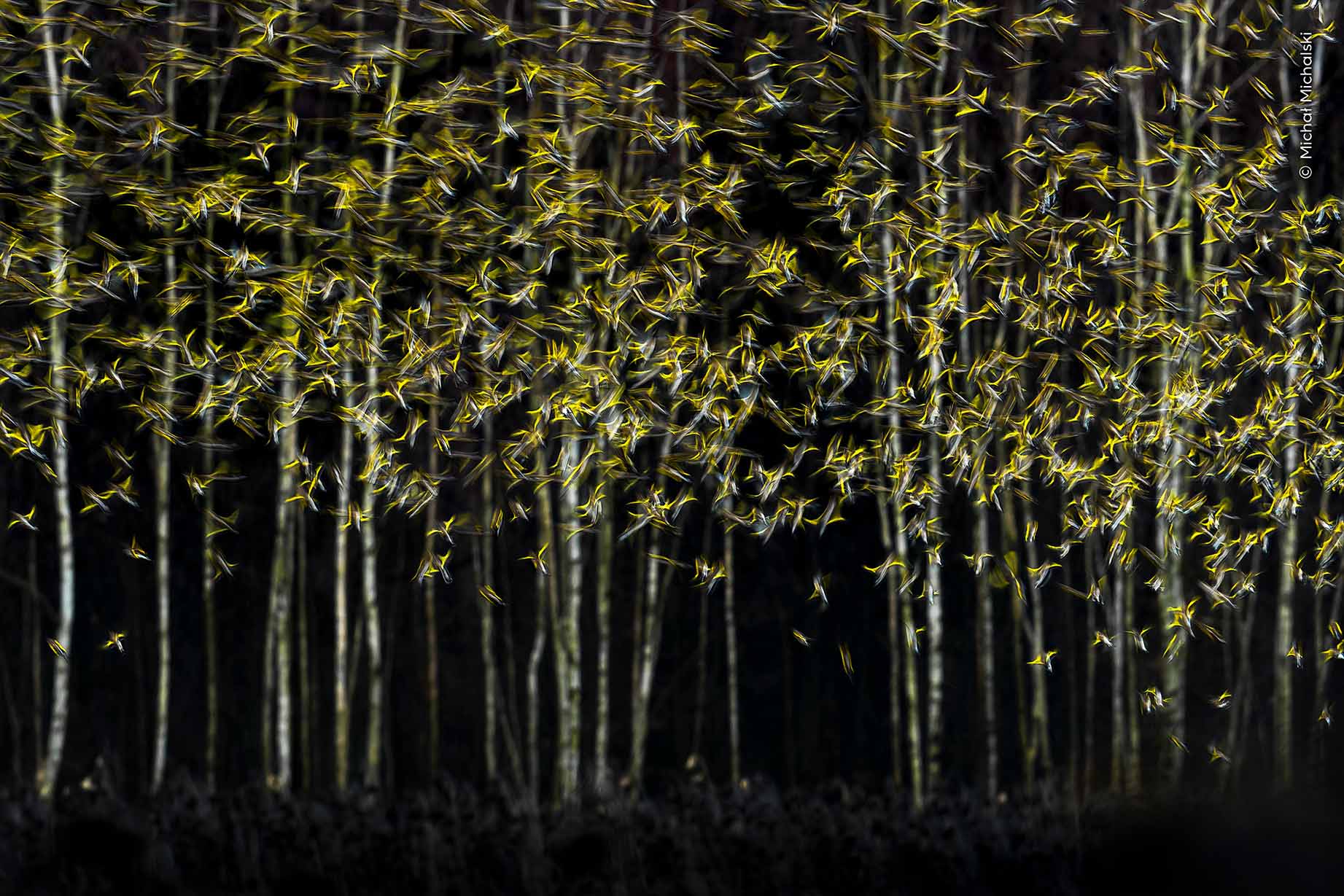 “Escape Artistry” by Michał Michalski, “Natural Artistry” category winner. Startled by a sparrowhawk over a Polish sunflower field, a mixed flock of goldfinches and bramblings blurs into golden streaks against leafless birch trees. (© Michał Michalski/Wildlife Photographer of the Year)
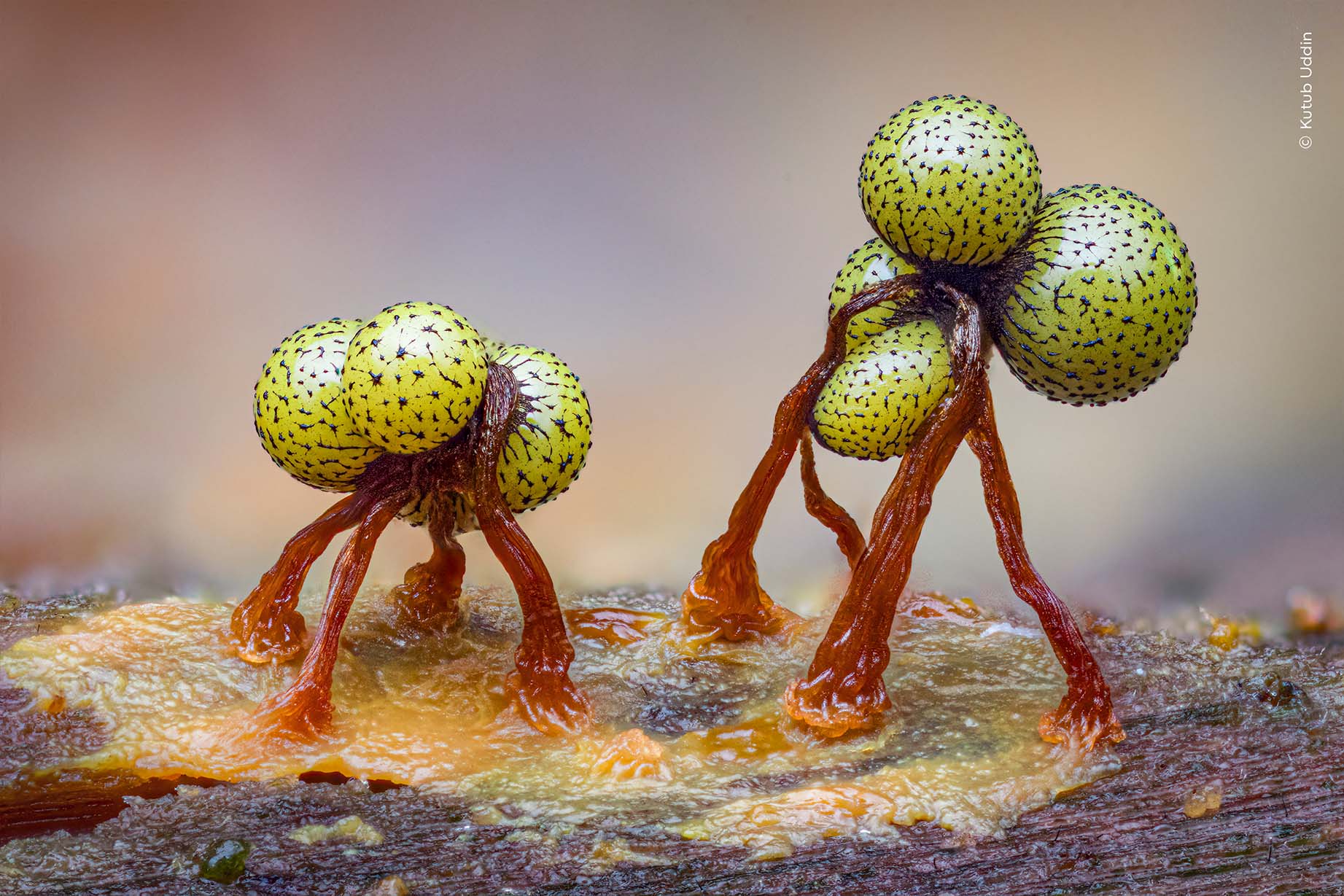 ”Tiny Dancers” by Kutub Uddin, “Portfolio Award, Secret Worlds” category winner. Standing under one-twelfth of an inch tall on a fallen woodland log in West Sussex, England, two miniature slime moulds sprout fine threads to release spores. (© Kutub Uddin/ Wildlife Photographer of the Year)
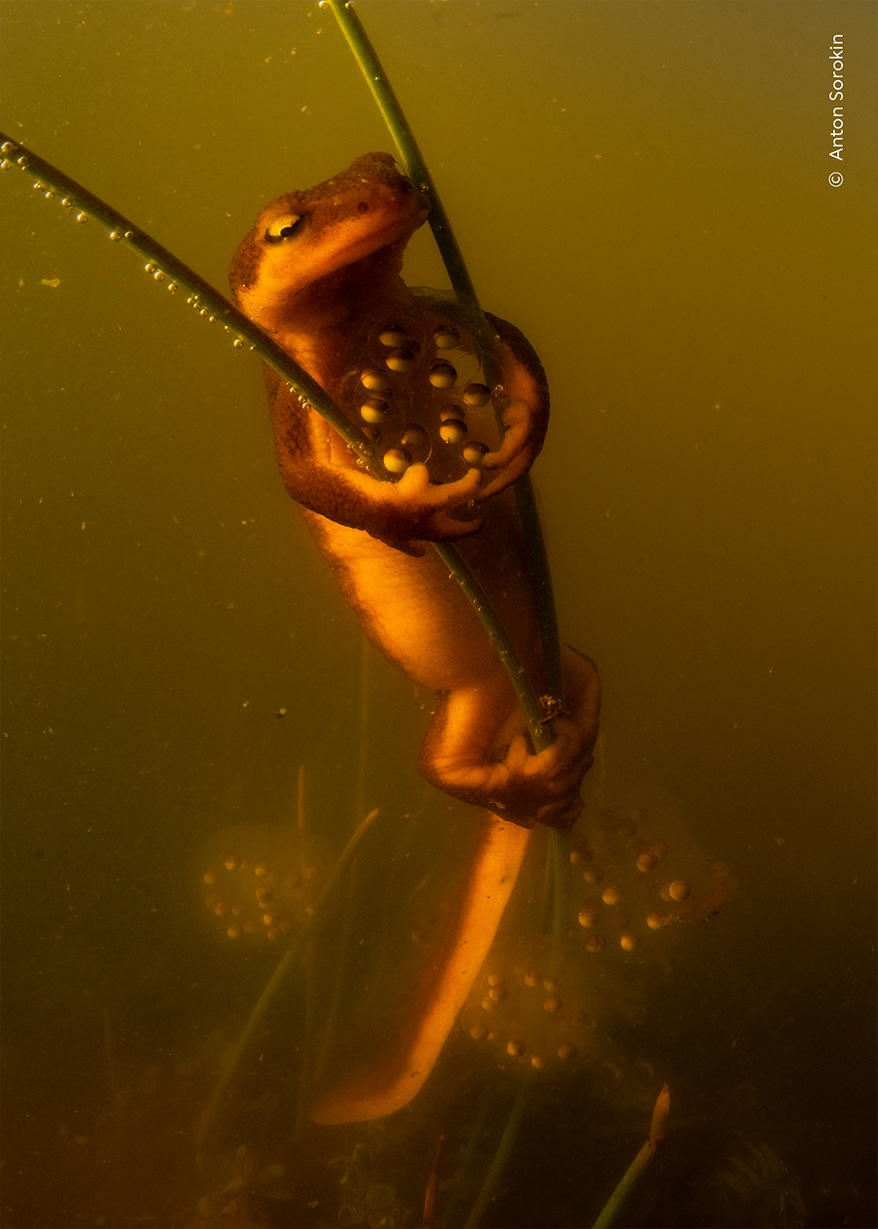 “Protective Pose” by Anton Sorokin, “Behaviour: Amphibians and Reptiles” category winner. Submerged in a California pond, a female California newt interlocks her back feet around plant stems to safeguard an egg clutch. (© Anton Sorokin/Wildlife Photographer of the Year)
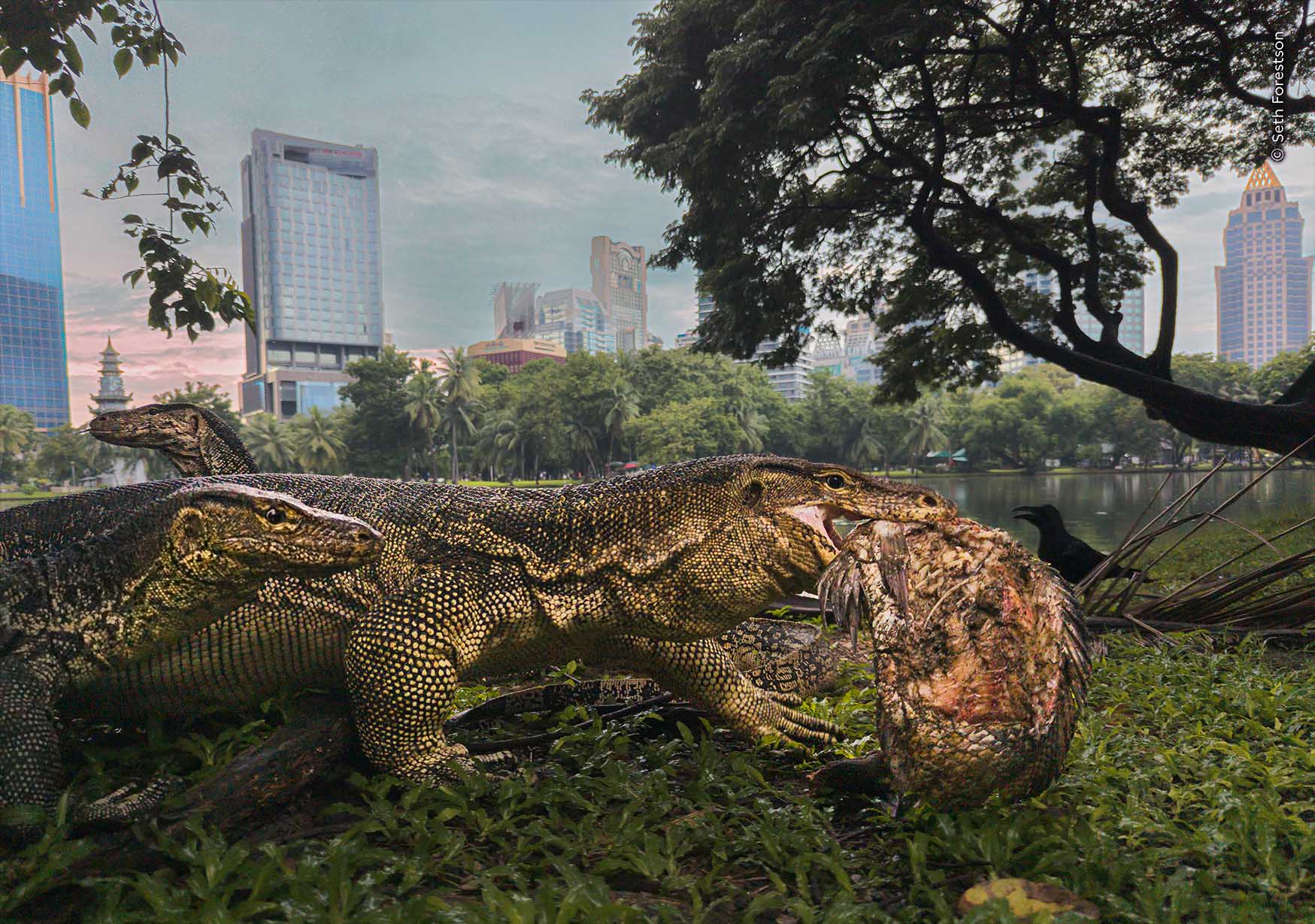 ”Urban Jungle” by Seth Forestson, “Urban Wildlife” category winner. Forestson captured a shot of a lizard carrying its fish supper in park in Bangkok. (© Seth Forestson/Wildlife Photographer of the Year)
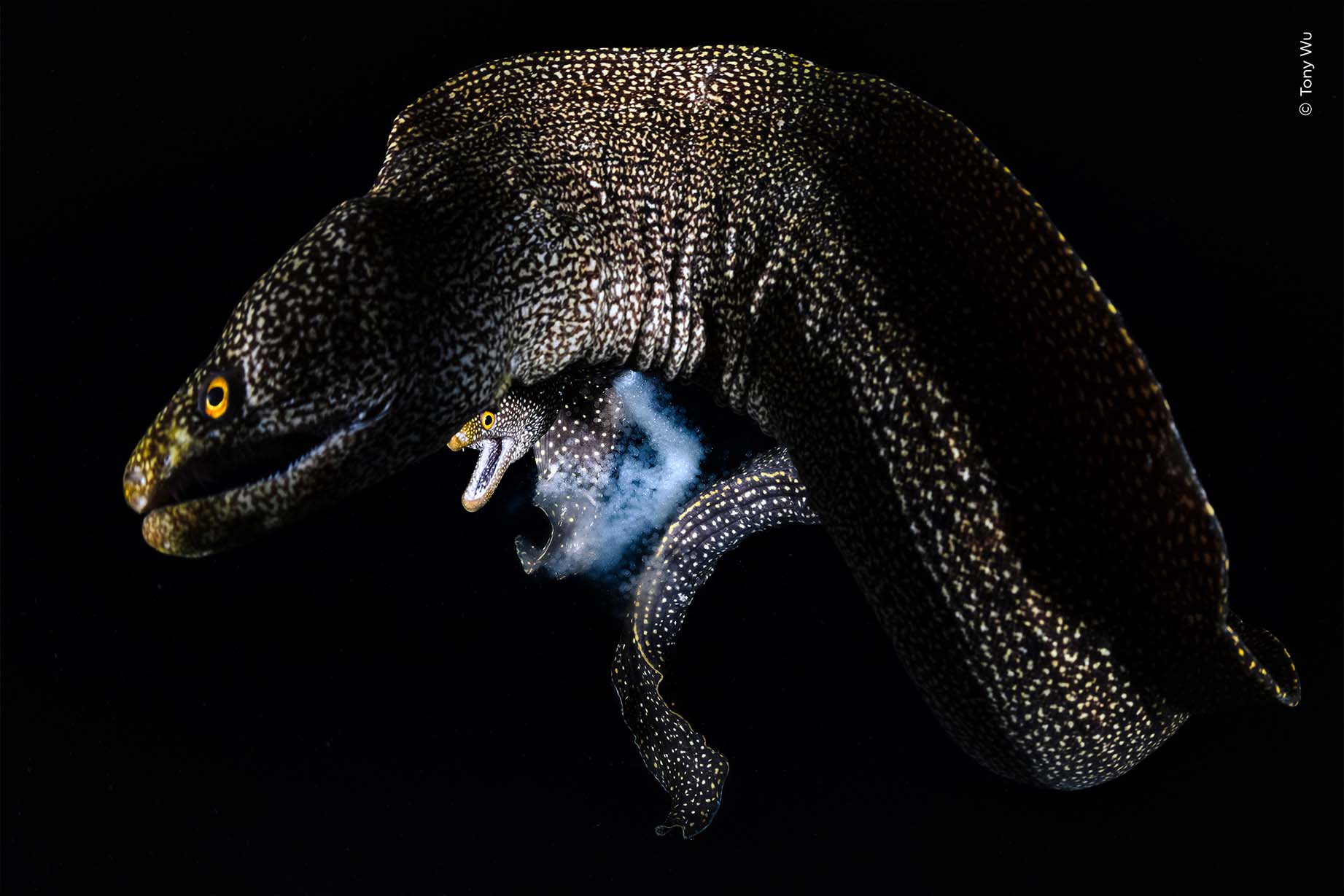 “Making Morays” by Tony Wu, “Under Water” category winner. A male Abbott’s moray eel courts a crevice-dwelling female in Japan, likely the first-ever documented moray mating ritual. (© Tony Wu/Wildlife Photographer of the Year)