SEARCH


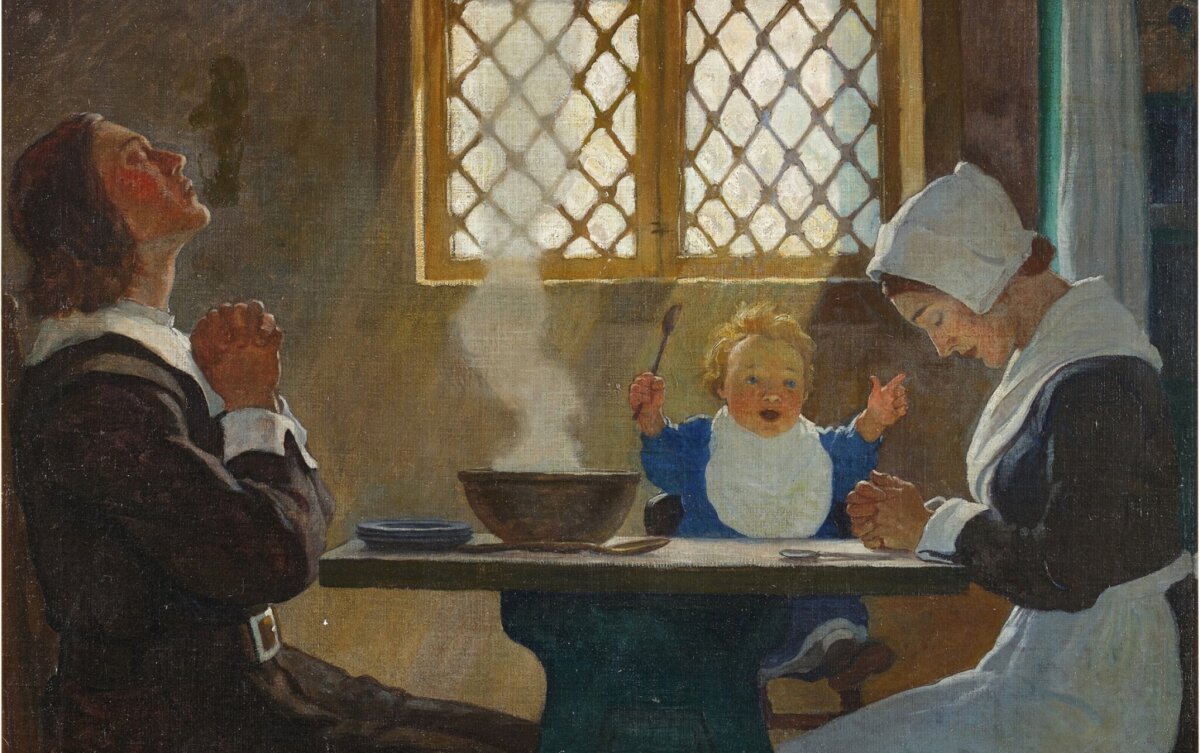
In late 1620, a small ship dropped anchor off the coast of what is now Massachusetts, carrying about 100 passengers into a New England winter for which nothing had prepared them. William Bradford, who later became the first governor of Plymouth Colony, described how the relief of crossing a “fast and furious ocean” soon gave way to anxiety. There were no friends to welcome them, he said. No inns to find refreshment or houses to “seek for succor.” Instead, there was only “a hideous and desolate wilderness, full of wild beasts and wild men.” With no supplies and few survival strategies, what carried this band of families through the loss of everything they had?
Analogies with the Israelites wandering in the desert after the Exodus from Egypt were not lost upon a people steeped in biblical lore. In the face of such danger and uncertainty, Bradford asked, “What could now sustain them but the Spirit of God and His grace?”

A Congregation, Then a Colony
It is easy to forget that the Plymouth settlers were, first and foremost, a church. They never called themselves “Pilgrims.” Instead, they referred to themselves as “Saints.” The now-legendary passengers of the Mayflower began as members of an obscure separatist congregation in Scrooby, England, who had illegally broken from the Church of England. After fleeing England to avoid imprisonment, these radical Puritans eventually settled in Leiden, Holland, where they lived for more than a decade.
When the Virginia Company of London granted them a land patent to settle near the Hudson River, 102 brave souls set out for that territory, along with two dogs. Only about 40 were Puritans. The rest were non-Puritans, whom the Pilgrims called “Strangers.” It was a desperate endeavor. Aside from Jamestown, no effort to establish a permanent English settlement in North America had ever succeeded, and even that colony was seriously struggling when the Mayflower set sail.

Living in the dark, damp, cramped space between the decks of that ship for two months, the miseries of seasickness were compounded by “the terrifying lack of information they possessed concerning their ultimate destination.” They only knew one thing: God wanted them to go.
Unlike Jamestown, this was no mere trading expedition undertaken for economic gain. They made their religious motives plain in the opening of the Mayflower Compact, written after storms blew their ship off course to Cape Cod: It was a voyage undertaken for “the Glory of God and advancement of the Christian faith.”
The statistics of that first winter were grim. After anchoring, the settlers spent months living aboard the Mayflower while a handful of men rowed ashore each day to build. Confined together, malnourished from a diet heavy in salt, and exposed to bitter cold, Bradford wrote that they began dying at a rate of “sometimes two or three a day.” By spring, only half of the original passengers were still alive.
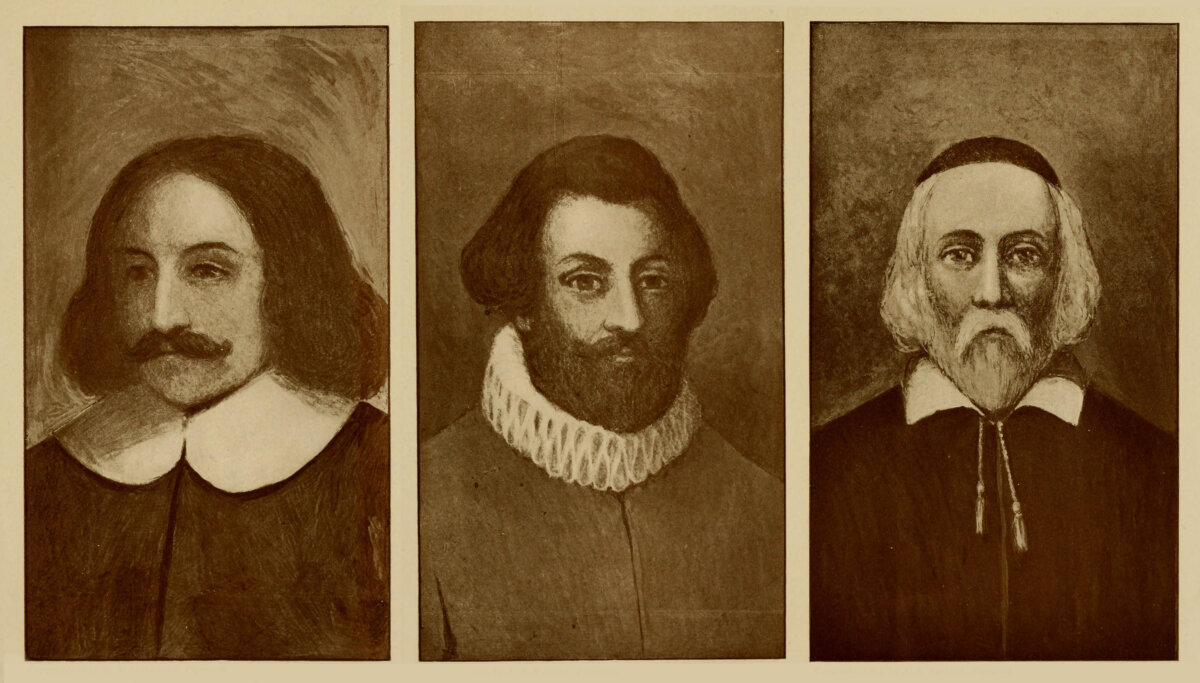
Among the handful who never fell ill were William Brewster, the congregation’s spiritual leader, and Myles Standish, the military captain. These few “spared no pains, night or day,” to tend the sick: fetching wood, making fires and beds, washing clothes, and doing menial tasks “willingly and cheerfully … showing their true love unto their friends and brethren.” For the Pilgrims, this kind of sacrifice was the direct fruit of belief, a sign of grace working itself out in ordinary hands.
Meaning From Hardship
It is difficult to grasp just how frightening and disorienting the journey was that led to the triumphant moment of the First Thanksgiving. The Pilgrims were more than just resilient adventurers who used their faith as a source of mental comfort to endure physical hardship. Their belief structured their interpretation of events. Suffering was not senseless. Every trial was a test, survival a proof of God’s love. This worldview is what separated the Plymouth pilgrims from almost all the failed colonies that had come before, from the Spanish at San Miguel (1526) and the French at Charlesfort (1562) to the English at Roanoke (1585).
This habit of reading events showed up in the smallest decisions. When the colony’s early socialist farming system produced poor harvests, Bradford assigned each family its own plot to work independently. The result, he wrote, was that families worked far harder than before, a change he read as evidence about living under God’s ordained order.
Contentment Amidst Scarcity
From the handful of Mayflower artifacts that still exist in the Pilgrim Hall Museum in Plymouth, we may surmise the extent of these voyagers’ possessions: plates, clothes, cooking items, a halberd (two-handed pole weapon), and other useful tools. In short, they arrived on these shores with nothing.
Among these practical objects, though, one stands out: a beautiful walnut drinking cup carved with Tudor roses and animals. The heirloom has been well-preserved for centuries, passed down from mother to daughter beginning with Mayflower passenger Mary Allerton. Above its ornate carvings, there is a poem inscribed around the rim that perfectly captures the values that helped the Pilgrims endure:
Lord help thy people that are in Distresse:
teach all true Christians for to help each other:
turne the hard hart’s that doth the Poore opresse:
teach them to know their needy Christian Brother.
What arts and culture topics would you like us to cover? Please email ideas or feedback to features@epochtimes.nyc.