SEARCH



NR | 1h 14m | Documentary | 2026
When socialists appeal to voters, they often cite the success of Sweden. However, the Scandinavian country shifted course, largely adopting free-market capitalism (albeit with a generous social safety net) in the mid-1990s.
In contrast, the progressive media ignores Venezuela, the truest, most conspicuous example of modern socialism; this is despite the millions of migrants and asylum seekers who have fled the crumbling nation.
The disconnect between Venezuela’s grim results under socialism and the ideology’s new hipster trendiness spurred filmmaker Jim Epstein to chronicle Venezuela’s alarming decline in the Reason Foundation-supported documentary “Escaping Venezuela.”
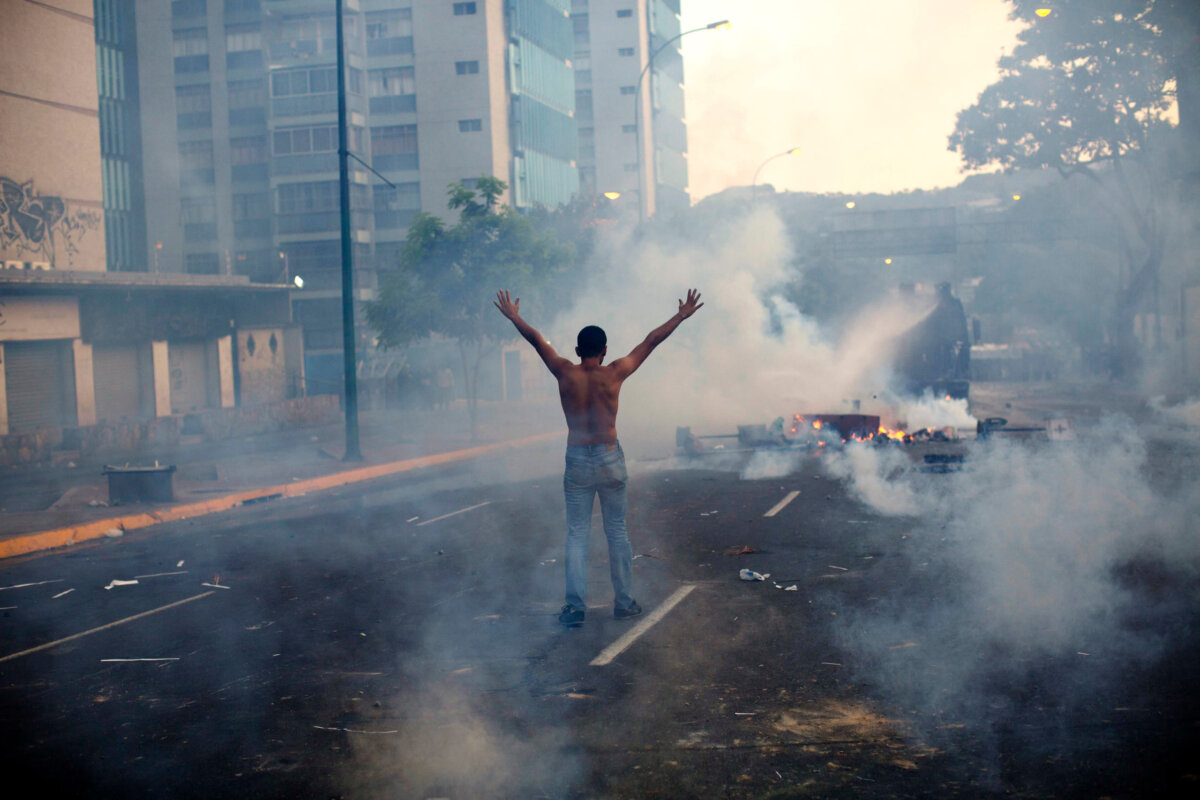
Epstein did not need to convince Carlos Mora’s family how socialism inevitably produces inefficiency, corruption, poverty, and eventually oppression through the centralization of power. They lived through it.
Deterioration
Venezuela deteriorated precipitously under Hugo Chávez and his so-called Chavist successor, Nicolás Maduro. Before Chávez’s rise to power, Mora ran a small but bustling manufacturing company. However, his costs became untenable when the Chavist regime banned imports of his necessary supplies. This forced Mora’s company to buy through a government-connected middleman at exorbitant prices.
Mora also lost most of his employees, ironically due to Chávez’s state-owned grocery stores. The government stores sold at artificially low prices, while strict price controls prohibited private competitors from selling equivalent products above the state-mandated rate.
Venezuelans constantly stripped shelves bare; they then resold at the proper market prices across the Colombian border. This arbitrage was more lucrative than the wages Mora could afford to pay, so many of his employees quit. In the long term, this resulted in widespread shortages and eventually hunger and malnutrition after the collectivization of agriculture.
Given New York City Mayor Zohran Mamdani’s plans to create city-run grocery stores, Epstein’s time spent on Chávez’s state groceries is no coincidence.

Epstein only briefly notes the regime’s nationalization of the steel and cement industries also ended in utter ruin. Everything Chávez and his “Chavist” successor Maduro expropriated cratered under their mismanagement, even including the state’s vaunted petroleum industry.
Tellingly, Venezuela was once known for its energy stability. But since Chávez nationalized the power grid in 2007, the country has experienced daily blackouts.
Evidence
The preponderance of evidence that Epstein and company amassed against socialism, through their case study of Venezuela, is overwhelming. Epstein also personalizes the resulting stagnation and suffering by incorporating Mora’s experience.
As his business died, starved of supplies and employees, Mora took on a second line of work. He shepherded fugitives across the border. This inevitably led to his arrest and torture by the increasingly punitive regime.
Chávez’s thuggery had its Western cheerleaders, especially in Hollywood. Epstein shines an embarrassing light on several big-name celebrities. They perversely defended Chávez’s censorship, particularly his decree silencing the nation’s largest independent television station, RCTV.
In addition to news reporting, RCTV had a long history of comedy programming satirizing successive governments in power, neither of which Chávez appreciated. The support for Chávez’s attacks on the independent press had serious repercussions for journalists. Nitu Pérez Osuna literally had to flee for her life with her husband, former congressman Vladimir Petit, both of whom survived to discuss their ordeal.

Epstein and film editor Danielle Thompson nicely balance the macro picture of Venezuela’s recent tragic history with a micro focus on Mora’s family. Probably two-thirds of the film explains the Chavist regime’s serial economic malpractice and its slide into authoritarianism.
The documentary consistently picks the right moment to return to the Mora family, who illustrate the real-life consequences of the Chavist excesses.
“Escaping Venezuela” is sharply critical of the socialist regime and its disastrous policies. However, it merits serious attention across the political spectrum, because of the filmmakers’ background and their nonpartisan alignment, at least in an American context.
Nonpartisan
The Reason Foundation, which supported the production, promotes libertarian scholarship and has evenhandedly criticized both major parties. Consequently, there is no boosterism for President Trump, even though all the participants were happy to see Maduro apprehended to face justice for his crimes.
The cast and crew share a deep knowledge of the region. Epstein studied in Chile before winning five New York regional Emmy Awards. Many contributors have a personal connection to the beleaguered nation.
Narrator Germania Rodríguez Poleo still regularly covers Venezuela from abroad; she and her journalist parents were forced into exile during Chávez’s crackdown on independent press outlets. Likewise, producer César Báez, a former student activist, escaped persecution and found safe harbor in the United States.
Perhaps what stands out most throughout “Escaping Venezuela” is the clear and consistent pattern of economic destruction. Each time the regime nationalized another industry, it inevitably ended in closures and unemployment. In defiance of all previous results, the Chavist regime continued doubling down.
“Escaping Venezuela” delivers such a calmly rational, step-by-step analysis of how socialist policies directly led to Venezuela’s dire woes that it ought to become the go-to documentary for understanding the Chavist chaos.
A handful of previous independent releases, like the Sundance-selected “Once Upon a Time in Venezuela,” documented the resulting desperation and privation, but “Escaping Venezuela” fully illuminates the causes and effects.
Mora and the filmmakers make a conclusive and damning case against socialism and authoritarianism. Highly recommended for its insight and its urgent timeliness, “Escaping Venezuela” will soon be available for streaming.
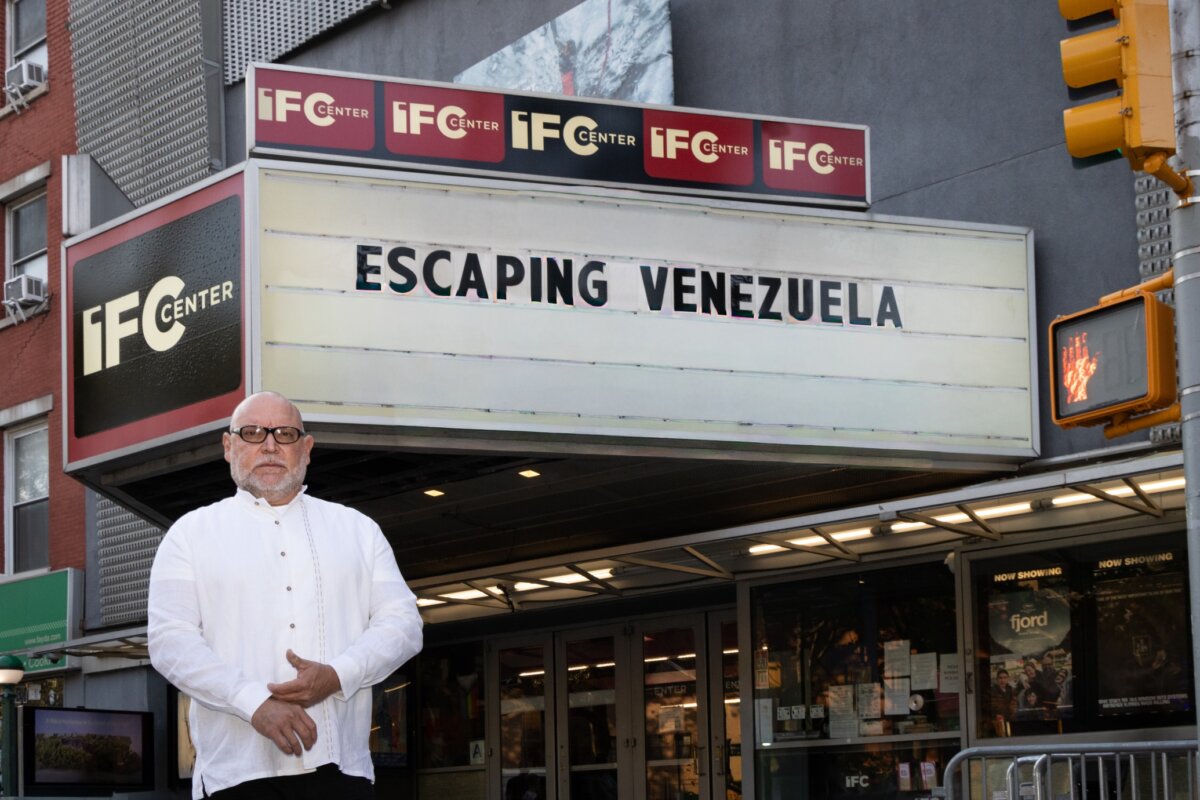
“Escaping Venezuela” had its New York premiere on Oct. 14.
‘Escaping Venezuela’
Director: Jim Epstein
Documentary
Not Rated
Running Time: 1 hour, 14 minutes
Release Date: Oct. 14, 2026
Rated: 4 stars out of 5
What arts and culture topics would you like us to cover? Please email ideas or feedback to features@epochtimes.nyc