SEARCH


NR | 1h 26m | Biography, Drama, Western | 1955
In the Black Hills of western South Dakota and northeastern Wyoming, pine-covered ridges roll away toward the horizon. Untold quantities of gold lie beneath the rugged landscape, and by the 1870s, word of it was traveling fast.
However, to the Lakota people, that particular stretch of land was very sacred. Although the United States had signed a treaty protecting Lakota territory, a promising gold strike has a strange way of making men suddenly forget what they agreed to.
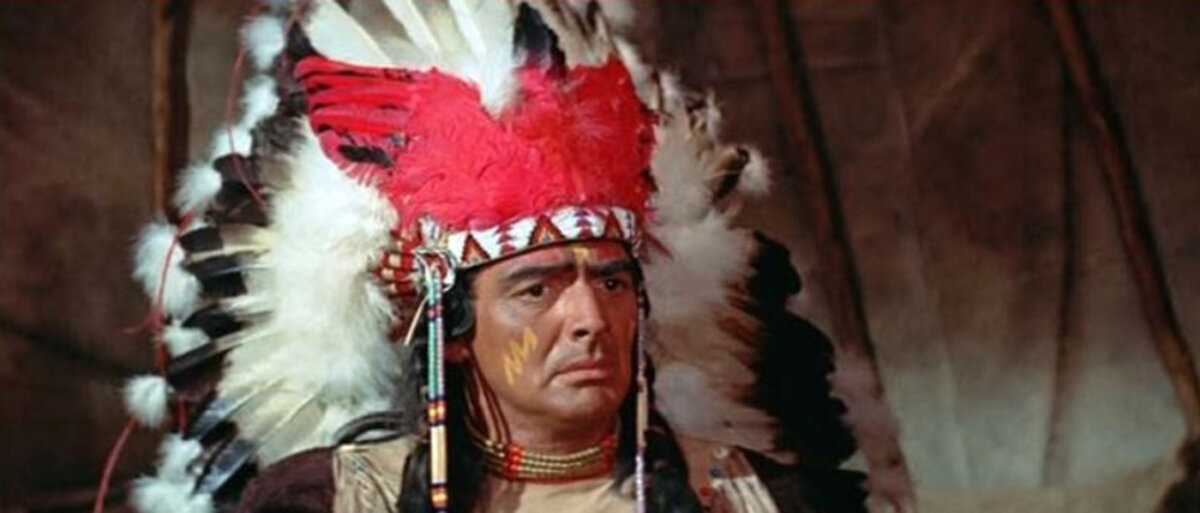
“Chief Crazy Horse,” a 1955 film helmed by director George Sherman, ventures into this turbulent region, with Victor Mature playing the celebrated Lakota warrior. For a Hollywood Western of this time, giving such prominence to a Native American leader was an interesting choice, especially when audiences were accustomed to seeing U.S. forces as the ones who arrive to save the day.
The story leads up to the Battle of the Little Bighorn in Montana in June of 1876. Movie cameras have returned to Custer’s historical defeat many times, but Sherman takes viewers back to the preceding years of argument, resentment, and miscalculation.
Courtships and Troubles
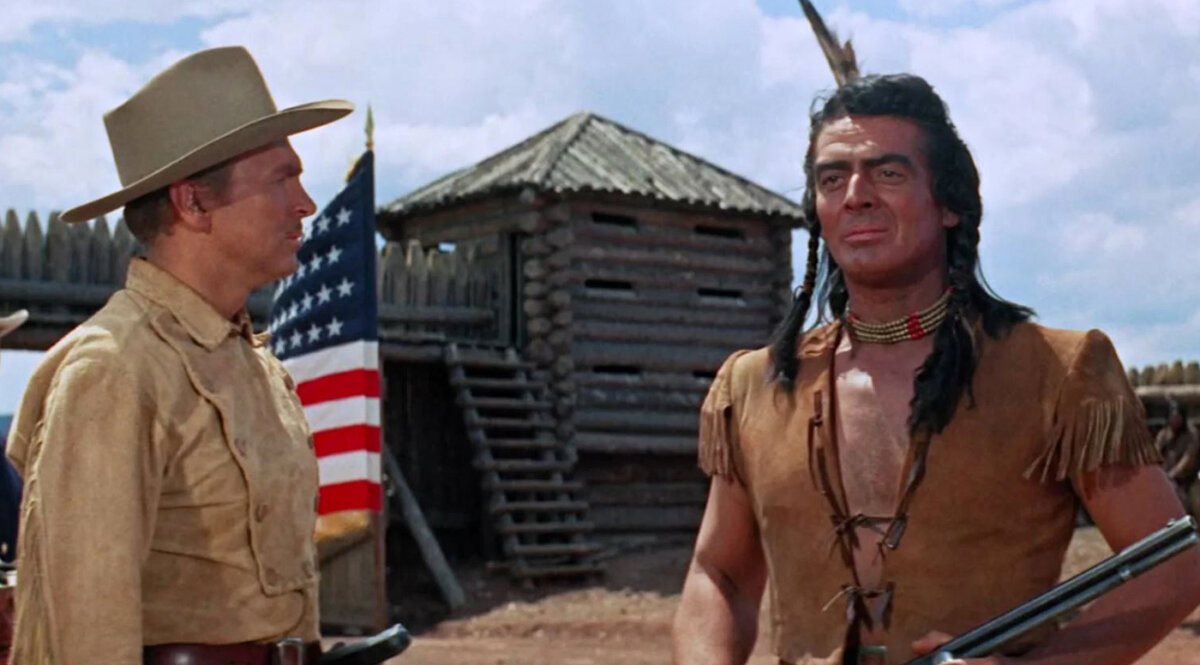
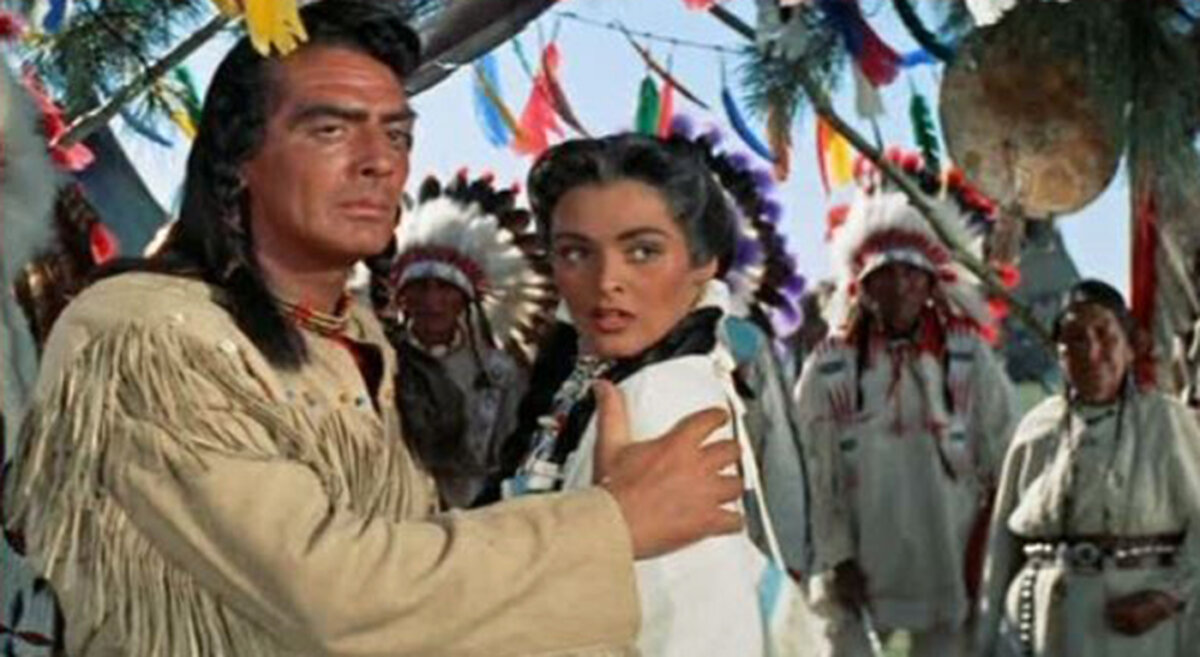
Little Big Man (Ray Danton), Crazy Horse’s cousin and fellow Lakota warrior, hopes to marry Little Fawn, aka Black Shawl (Suzan Ball), whose affections already belong to Crazy Horse. Her father, Chief Spotted Tail (Robert Warwick), expects respectable marriage offerings, and one suspects that Little Big Man would go to great lengths to win her over. His chances worsen when Maj. Twist (John Lund), a U.S. Cavalry officer rescued by Little Fawn after a Shoshone attack, lends Crazy Horse a helping hand.
There’s also the business of an old prophecy. Years earlier, the dying Lakota leader predicted that a powerful warrior would unite the tribes and win a great victory, although his prediction included a grim ending. Crazy Horse subsequently experienced a vision involving red feathers, lightning, and a golden horse, even as Little Big Man grows more and more jealous.
After losing Little Fawn’s hand, Little Big Man reaches Fort Laramie (in present-day Wyoming), where he encounters white traders with a keen appetite for gold and little concern for who owns the land. He directs them toward the Black Hills. With prospectors entering Lakota territory and relations with the Army deteriorating, Crazy Horse begins preparing his braves for war.
History Through a Hollywood Lens
One of the picture’s better narrative decisions was making room for the arguments that preceded all of the fighting. Lakota leaders disagree over how to respond, a government commissioner refuses to authorize a survey of the Black Hills, and the cavalry has its own orders to follow. Then, some greedy traders come along, sniffing after gold with the manners of men who’d steal the church collection on Sunday if they could get away with it.
The impressive cinematography looks splendid across the wide CinemaScope frames. Riders move through craggy hills and open prairies, and Indian encampments and military outposts give the proceedings the appearance of traditional Hollywood Westerns.
Some of the battle footage is considerably rougher, with recycled shots alongside newer material. The film also hurries through Custer’s defeat at the Little Bighorn, allowing the sky and a few sounds of battle to do much of the work. Anyone hoping to see the entire dramatic encounter played out may feel shortchanged.
Mature has the bearing to play the celebrated warrior, even if his casting calls for a generous suspension of disbelief. He plays Crazy Horse with a stern sense of purpose, while Danton gives Little Big Man the temperament of a fellow who can nurse a grievance indefinitely.
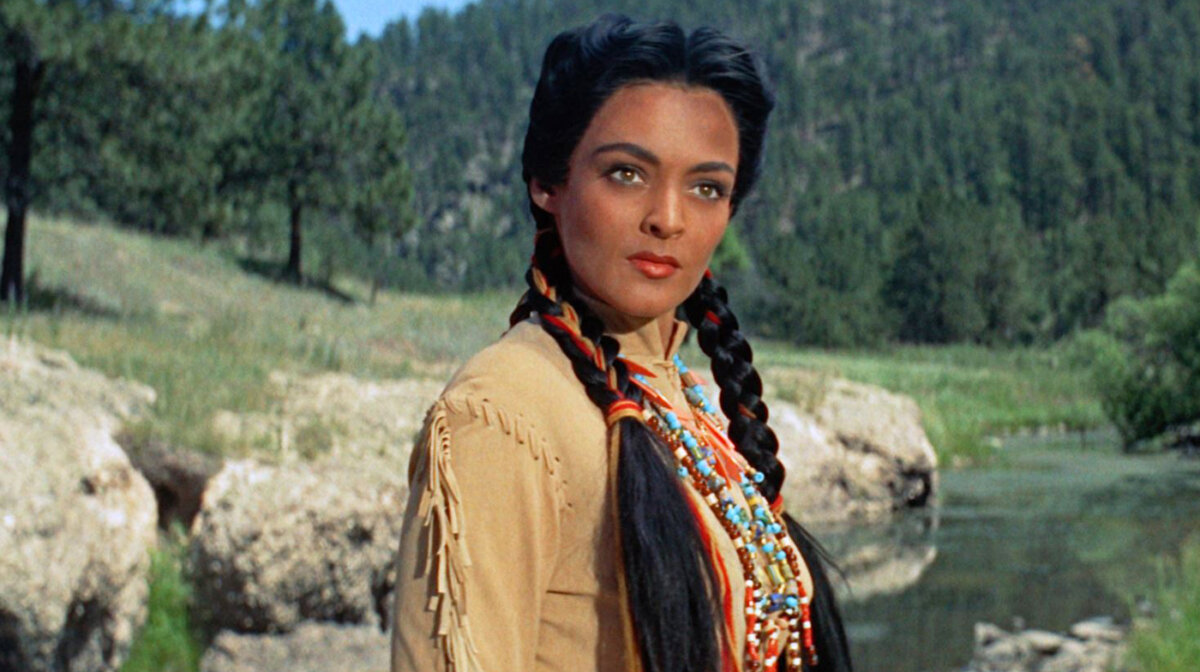
Ball brings warmth to the domestic scenes, and knowing what she endured during production makes her appearance particularly poignant. Her right leg had been amputated before filming because of an aggressive form of cancer. She wore a prosthesis and a double was used for certain scenes. Tragically, she died in August 1955 at only 21 years of age, just months after the picture opened.
The movie’s claim to historical truth may raise eyebrows, especially where prophecy and personal betrayal supply convenient explanations for complicated events. Still, Sherman’s interest in the years preceding Little Bighorn provides an intriguing glimpse into a period often overlooked by Western filmmakers.
The screenplay does take liberties here and there—sometimes considerable ones. Nevertheless, “Chief Crazy Horse” is still an enjoyable excursion into American frontier history, complete with lots of horseback action, personal grudges and rivalries, and a Hollywood interpretation of one of the Lakota people’s most famous warriors.
“Chief Crazy Horse” is available on Amazon, YouTube, and Apple TV.
‘Chief Crazy Horse’
Director: George Sherman
Starring: Victor Mature, Suzan Ball, John Lund
Not Rated
Running time: 1 hour, 26 minutes
Release Date: April 27, 1955
Rated: 3 1/2 stars out of 5
What arts and culture topics would you like us to cover? Please email ideas or feedback to features@epochtimes.nyc.