SEARCH


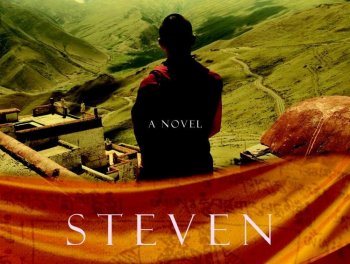

Every Lost Country opens with the shooting of Tibetan refugees as they try to cross the border into Nepal at the Nangpa La pass—an actual incident that was captured on video by climbers in 2006.
Author Steven Heighton then turns the occurrence into a many-layered novel as he weaves a credible story around the opening tragedy.
Twenty years ago Heighton spent five weeks in Tibet, during which time he developed a love for both the kind-hearted people and their country. He said he “intended to return physically or imaginatively by writing a book.”
“As a writer I was drawn first of all to the drama of that attack on the glacier but also I was drawn by the ethical dilemma and debate that broke out among the climbers who watched it,” he said of the shootings and arrests of the Tibetans trying to flee their homeland.
In the book, Dr. Lewis Book, a physician for mountain climber Wade Lawson’s expedition, and Amaris McRae, the Chinese-Canadian filmmaker recording the climb, are the first to respond to the shootings by rushing to help the dying and wounded Tibetans. For this they are apprehended by Chinese soldiers and taken away along with the surviving Tibetans.
At first, Amaris is not afraid. She is more worried about the Tibetans than she is about her own safety, However, when Chinese Lieutenant Zhao accuses her of being a “splittist sympathizer” she realizes that imprisonment of both herself and Dr. Book is a looming threat.
Back on the mountain, when expedition leader Lawson decides to continue the climb despite the danger faced by the doctor and filmmaker, his nephew refuses to go along. He wants to help the Tibetan refugees who managed to cross the border in to their base camp. He says, “I sort of feel like, you know … their mountain is realer?”—a realization that escapes Lawson who just wants to prove to the world that he can conquer a mountain no one else has climbed.
Heighton said the book has just been optioned for a film, which is not surprising as reading it was a bit like watching a movie. The images of places and people are so clearly presented that they stay in one’s mind as if they had been viewed on a movie screen.
Consider this description of Dr. Book’s daughter who left the base camp in the middle of the night to find her father: “Her spine is ice, as if the night has found a way inside.”
Some of the imagery is so concise it is like poetry. “On the surface of the lake, at the toe of the glacier, the mirrored moon floats.” “It’s a night full of photons in dancing animation.”
Indeed, Heighton is an accomplished poet who published a book of his poems a month before the novel.
Heighton uses the settings as allegory for the realities in today’s Tibet. A description of Tibetan prayer flags as “rags of coloured fabric meant to spread the hymns of peace inscribed on them. … The wind, she sees, eventually tears them to shreds” brings to mind how the Tibetan culture and way of life have been shredded since the invasion of the Chinese army 60 years ago.
As if there were a fault line dividing humanity into archetypes of good and bad, Heighton’s two main characters are Lawson as he continues to try to reach the summit, and Book imprisoned in China who endeavours to heal the wounded without prejudice, tending to Tibetans and the soldiers holding him captive alike.
Described as a “doctor without borders,” Book is the epitome of altruism and compassion while Lawson is all about ambition and selfishness.
The book explains that Lieutenantl Zhao was banished to Tibet because he wouldn’t shoot Tiananmen protestors when he was ordered to.
"For that, he was sent to Tibet, and for years has seen little of his family—hoping that by doing the government's bidding he can get back to his loved ones in Beijing,” said Heighton. “Partly, I think, the scene suggests that even fairly decent people can be turned into harmful pawns by an amoral government… He’s desperate to get home so he’ll do what the government tells him to do to these Tibetans. Powerful elites and institutions end up victimizing everyone, either directly or by transforming them into murderous servants."
Every Lost Country has been nominated for the Banff Mountain Book Festival Award, and is available in hardcover. A softcover edition will be released in May 2011.
The movie, Tibet: Blood in the Snow, tells the story and has actual footage of the 2006 Nangpa La incident.