SEARCH


During my time in Italy, a member of my host family said he previously worked in a factory where his job consisted of cutting limes in half, hour after hour. After a short while, the work would become mindless and mechanical because it was so unvarying. With no prospect of exhausting the supply of limes, such work seems like a Sisyphean task.
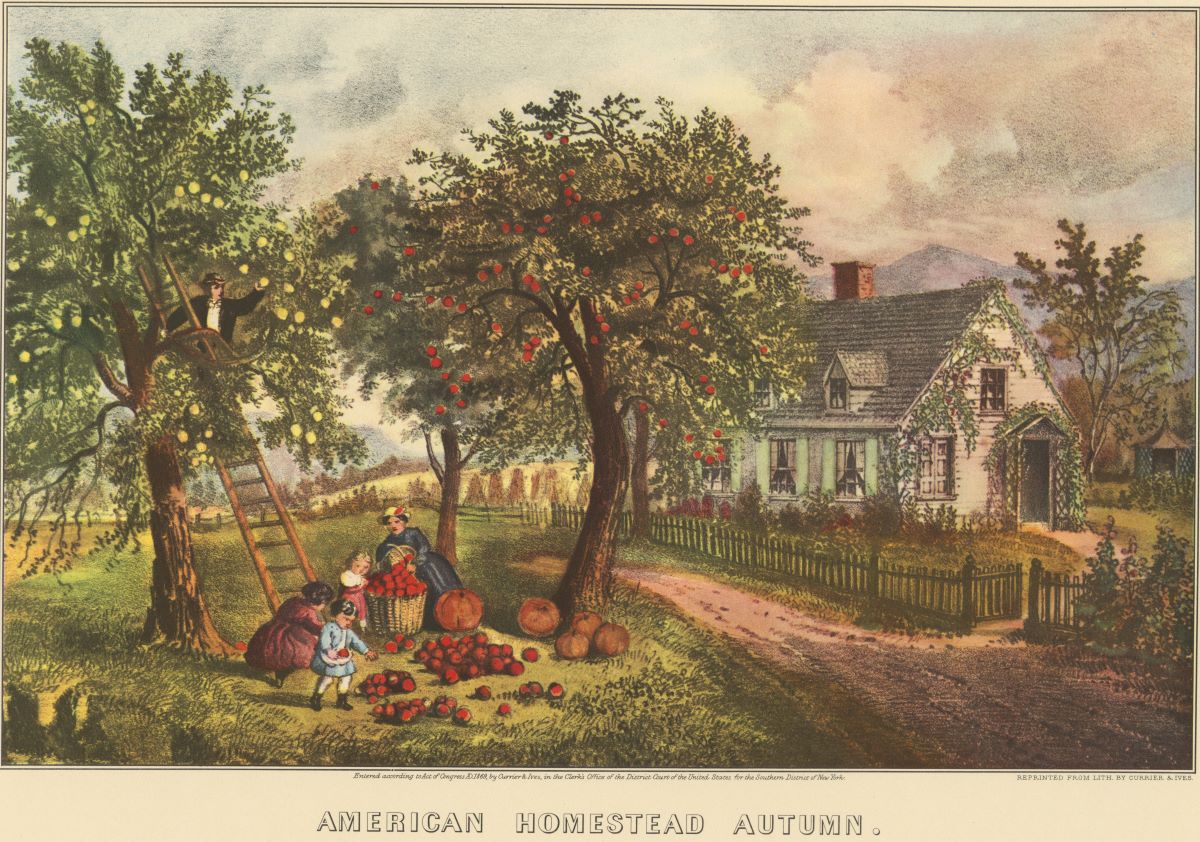
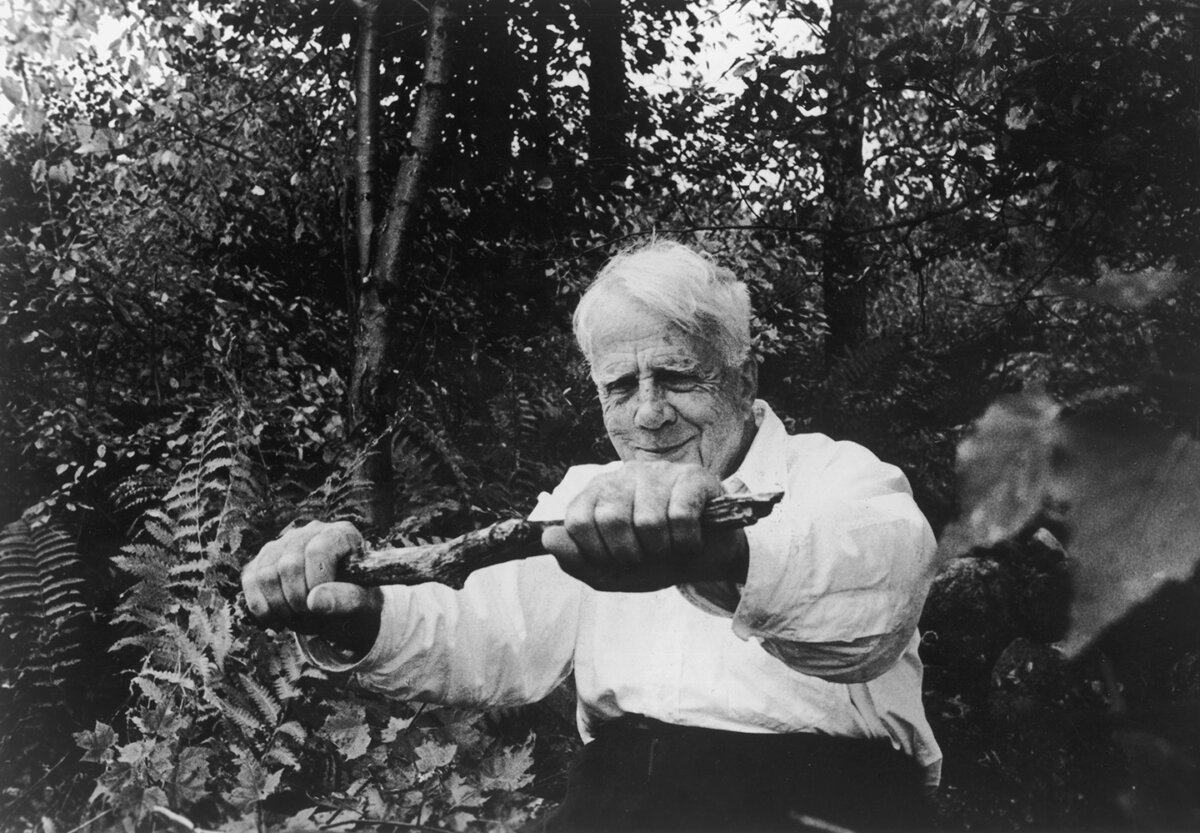
Robert Frost knew that such work was not to be underestimated or undervalued. His poem “After Apple-Picking” (published in 1914) delves into the prosaic reality of the work of harvest time, which stands in contrast with the general perception of apple-picking as idyllic and enjoyable.
The poem fades in and out of a traditional form just as the speaker wavers between consciousness and sleep, weary from his work of apple-picking. It creates an oneiric sensation, with shorter lines breaking the expected pattern and with the rhyme scheme becoming gradually more varied as the speaker drifts toward restless sleep.
The work gradually becomes all-consuming. The speaker recalls standing aching and weary upon the ladder, sinking below the interminable rhythm of picking apples and setting them in the barrel. Even after having left his work, he feels the ladder rungs beneath his arches and hears the sound of tumbling apples. He knows that his work will carry over into his rest, and his dreams will be filled with apples.
As the speaker teeters on the edge of sleep, the poem mirrors a hazy, dreamlike state. Through enjambment, the image of a windowpane unexpectedly morphs into a sheet of ice from a trough: “I cannot rub the strangeness from my sight/ I got from looking through a pane of glass/ I skimmed this morning from the drinking trough.” One line tumbles into another, just as no sooner has the speaker raised the sheet of ice than he lets it fall to the ground. The reader, like the speaker, sees indistinctly: While image melts into image for the reader, “magnified apples appear and disappear” for the speaker.
The image of the ladder calls to mind Jacob’s dream of a ladder in the Book of Genesis. The ladder extends past the tree, thus implying, like the title of the poem, that there is a destination beyond the apple-picking itself. It remains there “still,” even after the speaker has stopped working; he is looking toward heaven, toward the sleep that comes after his work (which may be just some “human sleep” or eternal rest). The word “sleep” is repeated four times in the last several lines, signaling that it will soon overtake him.
The speaker’s description of his work is reminiscent of scriptural language that uses the harvest as an image for winning souls for the kingdom of heaven: “The harvest is abundant but the laborers are few; so ask the master of the harvest to send out laborers for his harvest” (Matthew 9:37–38).
Despite the sheer multitude of apples, “Ten thousand thousand fruit,” the speaker treats them almost tenderly, saying that it was for him “To touch,/ Cherish in hand, lift down, and not let fall.” The word “cherish” denotes his careful treatment of each apple, which contrasts with the forceful language by which he says some of the apples not only fell but “struck the earth,” almost as though they rebelled against their source of life.
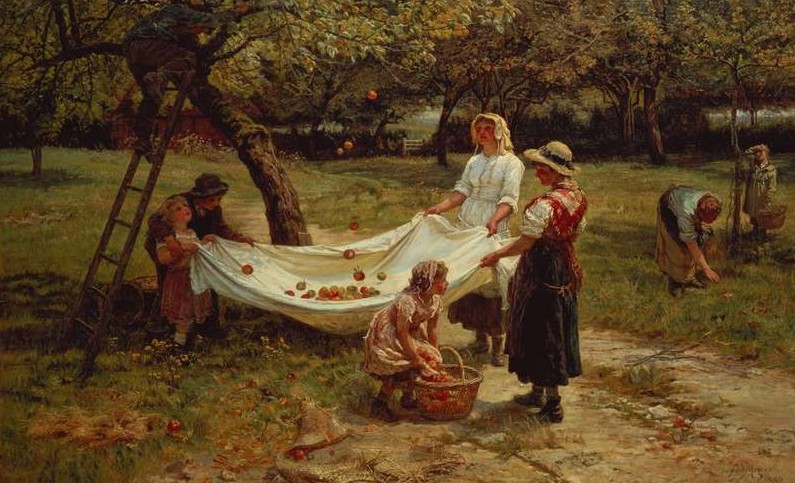
Curiously, even those “not bruised or spiked with stubble” go to the cider-apple heap if they fall, and the word “fall” itself calls to mind the Fall in the Garden of Eden. The speaker, therefore, becomes a Christlike figure in tending to the harvest, and the apples that strike the earth in spite of the speaker’s attempt to save them all go alike to the heap, even if not visibly blemished.
Both the literal work of picking apples and the figurative work of the harvest for the kingdom of heaven are never fully completed because of the scope of the tasks. There is always more to be done; the work is not concluded by its completion but by the arrival of the time for rest.
This knowledge will trouble the speaker’s rest, and yet it is natural for the speaker to leave some work unfinished. The woodchuck has already gone to his rest, and “winter sleep” has come regardless of the fact that there are still apples on the boughs. However, this work is now for other hands to take up, and, perhaps, it was the speaker’s unwillingness to give it up that led him to be “overtired” and that will cause his sleep to be troubled.
Though the speaker knows that his work will fill his dreams, he is no longer fixed in place on the ladder. Rather, his gaze has followed the ladder to heaven, to what comes after apple-picking.
The ending of the poem is ambiguous: The speaker does not know what type of sleep is coming on, just as we do not know what our experience of death will be. However, he does know that what comes before has some bearing on the answer, thus the woodchuck could tell him the nature of his sleep if he described the moments leading up to it.
How we live affects the manner of our rest, and, in cherishing what falls to our care and accepting our human limitations, we can better ensure that we not only fall into inevitable sleep, but also experience genuine rest.
The quotations from the Bible are from the New American Bible.
What arts and culture topics would you like us to cover? Please email ideas or feedback to features@epochtimes.nyc.