SEARCH


On average, knowledge workers in the United States put in close to 10 hours on the job every day, and two out of five workers report that an excess of busywork is one of the most stressful parts of their job. Emails, chats, deadlines. Video calls, reports, and reviews. The frenetic pace of the modern workforce turns knowledge workers into perpetual motion machines, while the communications technologies that allow the boss to hover from a distance make it impossible to escape the office—even when you’re at home.
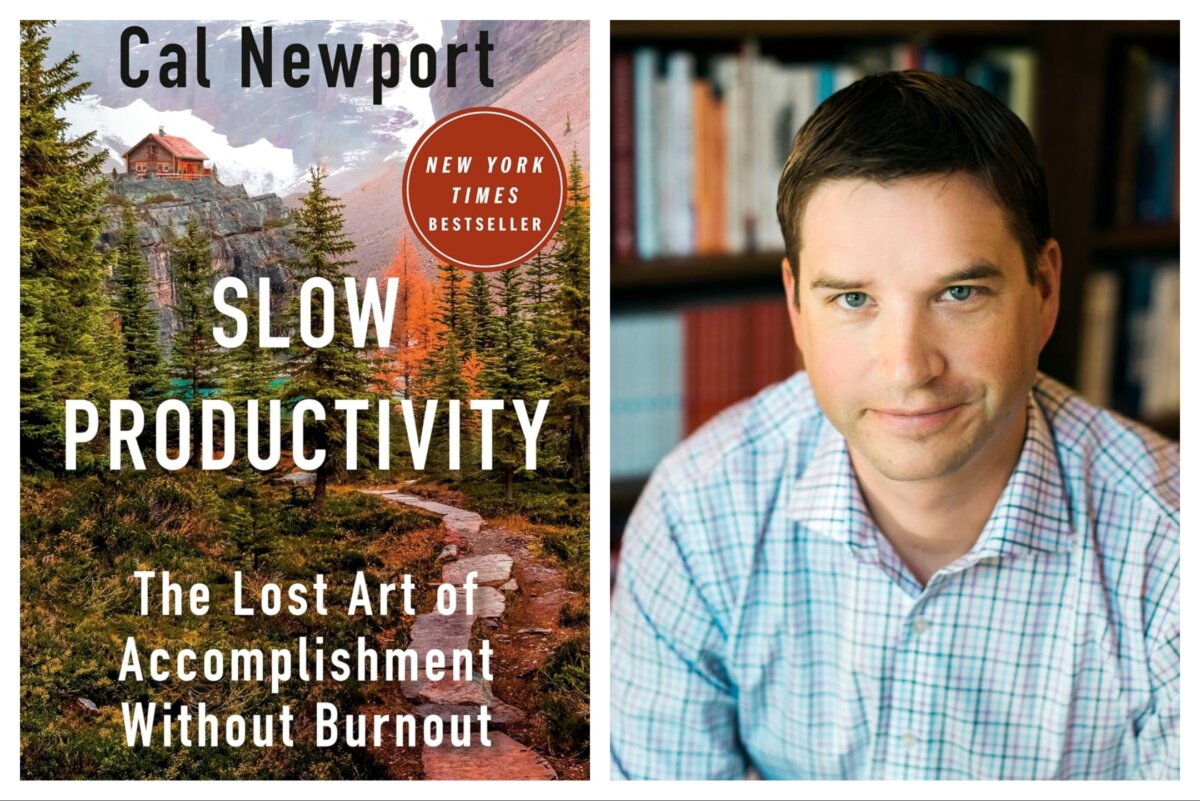
In his book “Slow Productivity: The Lost Art of Accomplishment Without Burnout,” author, computer scientist, and productivity expert Cal Newport seeks to counter this trend and alleviate the mental overload and work exhaustion so many suffer from in the information economy. While the book addresses primarily knowledge workers—in particular those with some degree of control over how they structure their time—it has wide applications and can be read with profit by anyone seeking to live, work, and create more intentionally, effectively, and peacefully.
Though the book was published in 2024, its relevance has only grown with time. Now that AI tools offer us the tantalizing opportunity to try to accomplish even more, even faster, Newport’s work helps remind us to—quite literally—slow down and ask ourselves if more is always better and if hectic busyness is really the best measure of success and meaningful productivity.
So what is “slow productivity”? In articulating this concept, Newport draws inspiration from the slow food, slow TV, and slow living movements that have arisen in recent years, all of which try to reclaim a more calm, authentic, and human-centric way of existing in an age in which the machine and the values of the machine—speed, efficiency, uniformity—are ascendant.
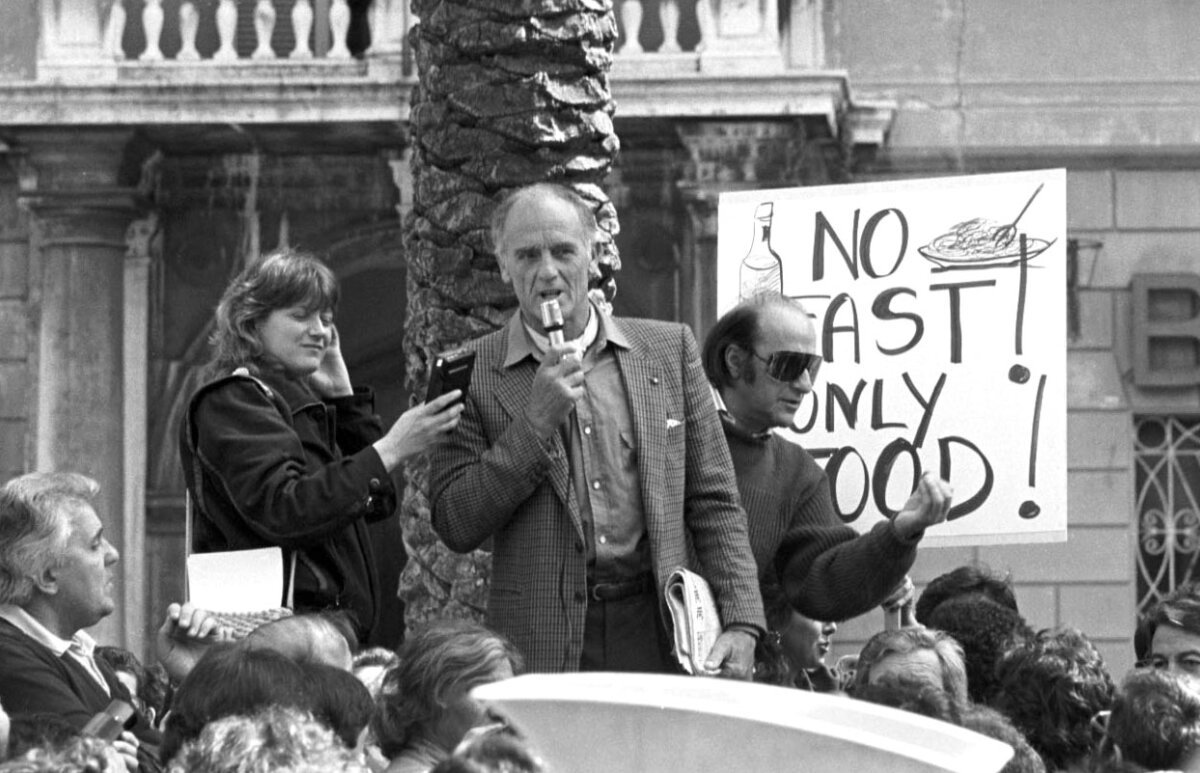
The slow food movement grew out of resistance to fast food’s infringement on Italian cuisine, when a McDonald’s restaurant opened near the Spanish Steps in Rome. Its advocates push for local ingredients, traditional recipes, and well-savored meals.
Similar concepts can be applied to one’s work life. “Slow productivity supports legacy-building accomplishments but allows them to unfold at a more human speed,” Newport writes. He defines it as “a philosophy for organizing knowledge work efforts in a sustainable and meaningful manner, based on the following three principles: 1. Do fewer things; 2. Work at a natural pace; 3. Obsess over quality.”
Newport contrasts slow productivity with what he terms “pseudo-productivity,” “the use of visible activity as the primary means of approximating actual productive effort.” Pseudo-productivity came to dominate the modern office workplace, Newport argues, because managers tried to apply the standards of productivity from the factory floor to the cubicle.
During and after the Industrial Revolution, it made sense to measure productivity in terms of how much tangible output a given factory was providing. But that model shouldn’t have been applied to knowledge work, according to Newport, because it is of an entirely different mold. The productivity of a knowledge worker is much harder to measure because it is much less tangible and predictable than the productivity of an assembly line. So managers just settled for external signals of general “busyness” instead: more presentations, more projects, more messages back and forth, more meetings, more boxes checked off and new tasks assigned, regardless of whether any of it actually led to meaningful and far-reaching intellectual work.
But after pointing out this mismatch, Newport gets to work offering an alternative. To find that substitute, he delves into tradition, examining the lives and work routines of some of the most productive, prolific, and powerful knowledge workers of history: great novelists, scientists, mathematicians, and the like. Their careers were productive in a genuine sense: not because they jumped on tons of Zoom calls but because they left legacies that fundamentally changed their fields.
In examining historical precedent, Newport reveals to the reader that the best minds of the past have worked very differently from the way most office-dwellers work today. They gave their intellectual projects breathing room; they contemplated, reflected, and explored. They were patient, oftentimes allowing decades for their ideas to fully mature; they worried more about quality than quantity, and they worked rhythmically and seasonally—not perpetually.
Drawing on these examples and his expertise in the study of productivity, Newport arrives at his three core principles of doing fewer things, working at a more natural pace, and focusing on quality.
“Strive to reduce your obligations to the point where you can easily imagine accomplishing them with time to spare,” he advises “leveraging this reduced workload, embrace and advance the small number of projects that matter most.”
As Newport examines the three core principles of slow productivity, he intermingles stories, examples, and practical tips for implementation, making for an engaging reading experience.
While I agree with most of his conclusions, I would have liked to see more evidence marshaled in support of certain points, beyond just the collection of individual case studies. For instance, I’d be interested to see larger studies or statistics on how focusing on fewer projects and working more thoughtfully and carefully can actually produce better results in the end.
Still, the book is elegant and incisive overall. While the practical advice is helpful, probably the book’s most important contribution is to recenter our discussion of work and productivity by demanding that we reconsider the core question: What actually counts as “productive”? Newport makes an excellent case that working more simply, slowly, and intentionally, while jettisoning busywork and time-wasters, will yield far better results in the long-run.
It might be time to hit pause on the conveyer belt of the modern workplace, especially now that AI is reaching for the controls.
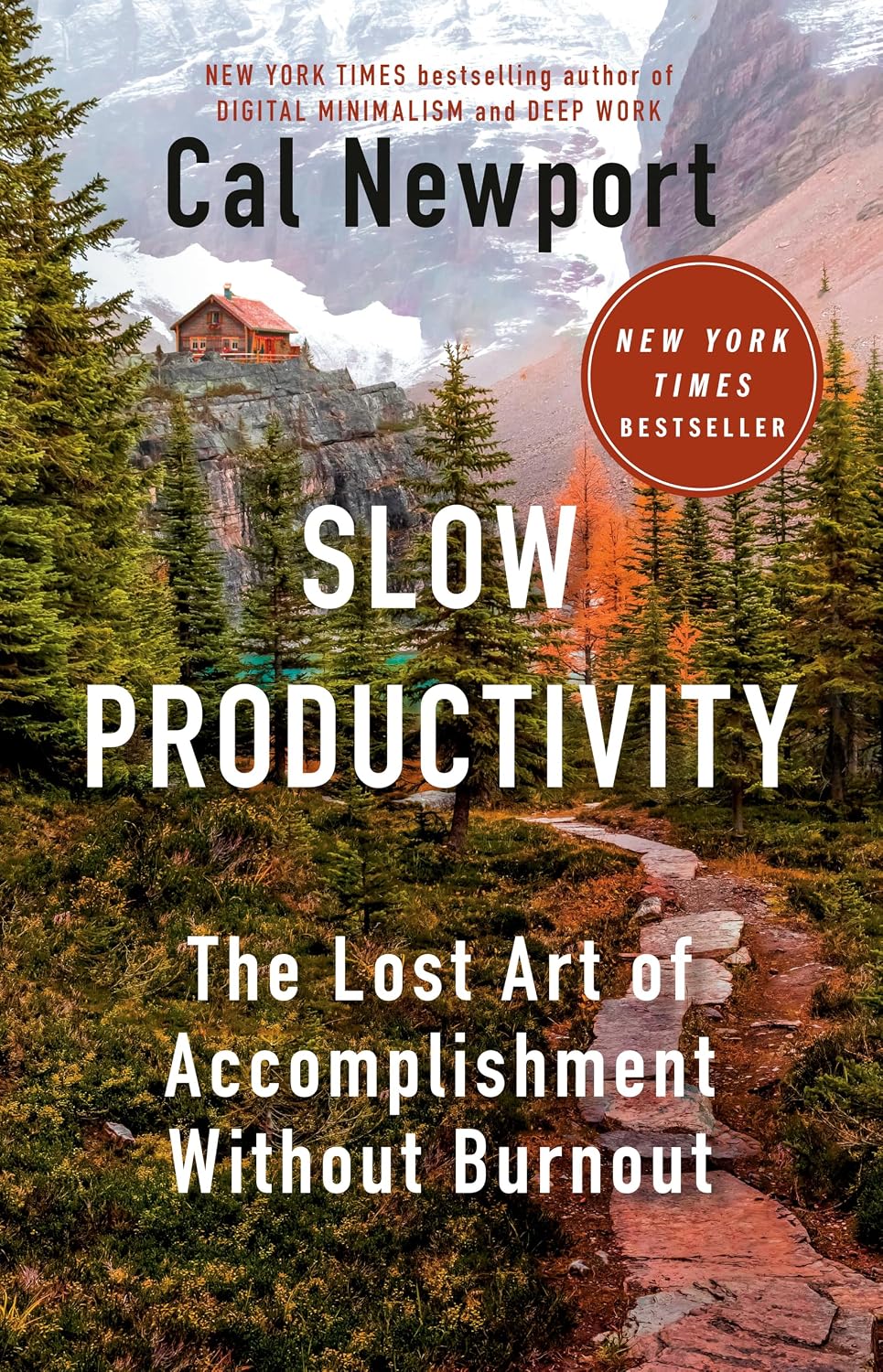
‘Slow Productivity: The Lost Art of Accomplishment Without Burnout’
By Cal Newport
Portfolio: March 5, 2024
Hardcover, 256 pages
What arts and culture topics would you like us to cover? Please email ideas or feedback to features@epochtimes.nyc.