SEARCH


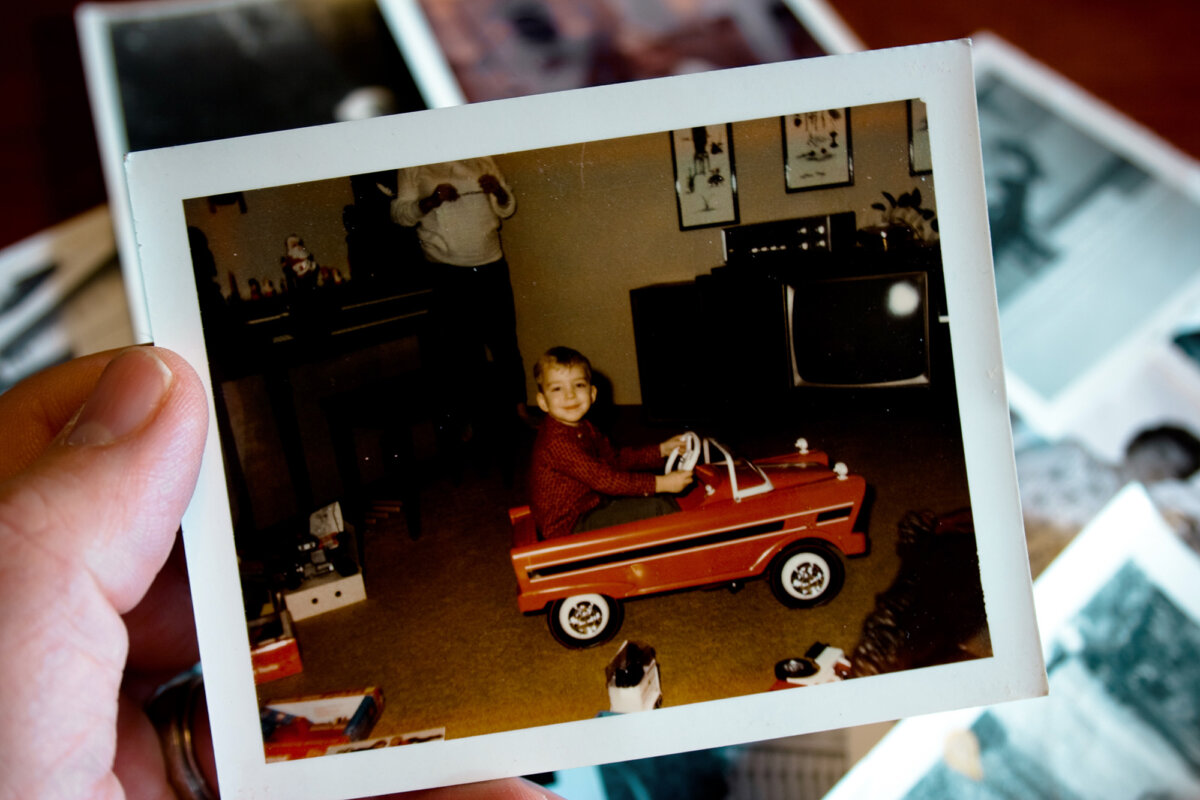
When was the last time you operated a rotary phone? A typewriter? Rabbit ears crowning a television? When did you last pluck a daily newspaper from the front porch, receive a handwritten letter in the mail, or listen to music delivered by a needle and a turntable?
Time and tech have rendered obsolete these once-commonplace items and occurrences. Rescuers call these objects vintage, but most of us, whatever our age, rarely think of them at all. That grandmother tapping away on her phone in the coffee shop, dressed in sportswear and sipping a latte, has long forgotten the feel of the keys on a Remington manual typewriter or the finger wheel on a rotary phone.
However, if we wish to visit the attic of antiquities from mid-20th-century America, we have only to look into the screen of the time machine we carry in our purse or pocket. We hit a few keys, and we’ve returned to that seemingly ancient world in which teenage girls wore poodle skirts and put their hair in a bouffant or beehive style, and where boys dressed like preps or greasers, pomading their hair with Brylcreem—“a little dab’ll do ya!”—or using it to slick up their flattops.
Get Your Motors Running
Slide into a car from the ’50s, and the differences between then and now are glaring. The law didn’t mandate seat belts in cars until 1968, so “click it or ticket” didn’t apply. That little drawer in the front panel near the driver pulls out into an ashtray and a cigarette lighter. People smoked wherever they liked in those days, even on airplanes. Those vents by the front windows push out to catch the wind and increase air flow in the car. Sorry kiddos, no motorized air conditioning for most drivers in those days.
You’ll notice, too, that the interiors of cars built 75 years ago were far more spacious than those today. Here’s an extreme example of the available space inside that car. When I was 6, with three younger siblings, including an infant sister, Dad drove us from Florida back home to North Carolina with two other “kids” in the back compartment of the station wagon—young goats in crates gifted by my maternal grandfather. I have no idea what my dad was thinking—we soon got rid of the goats—but their bleating left an indelible impression on me, as might be expected of a boy just about to begin first grade.
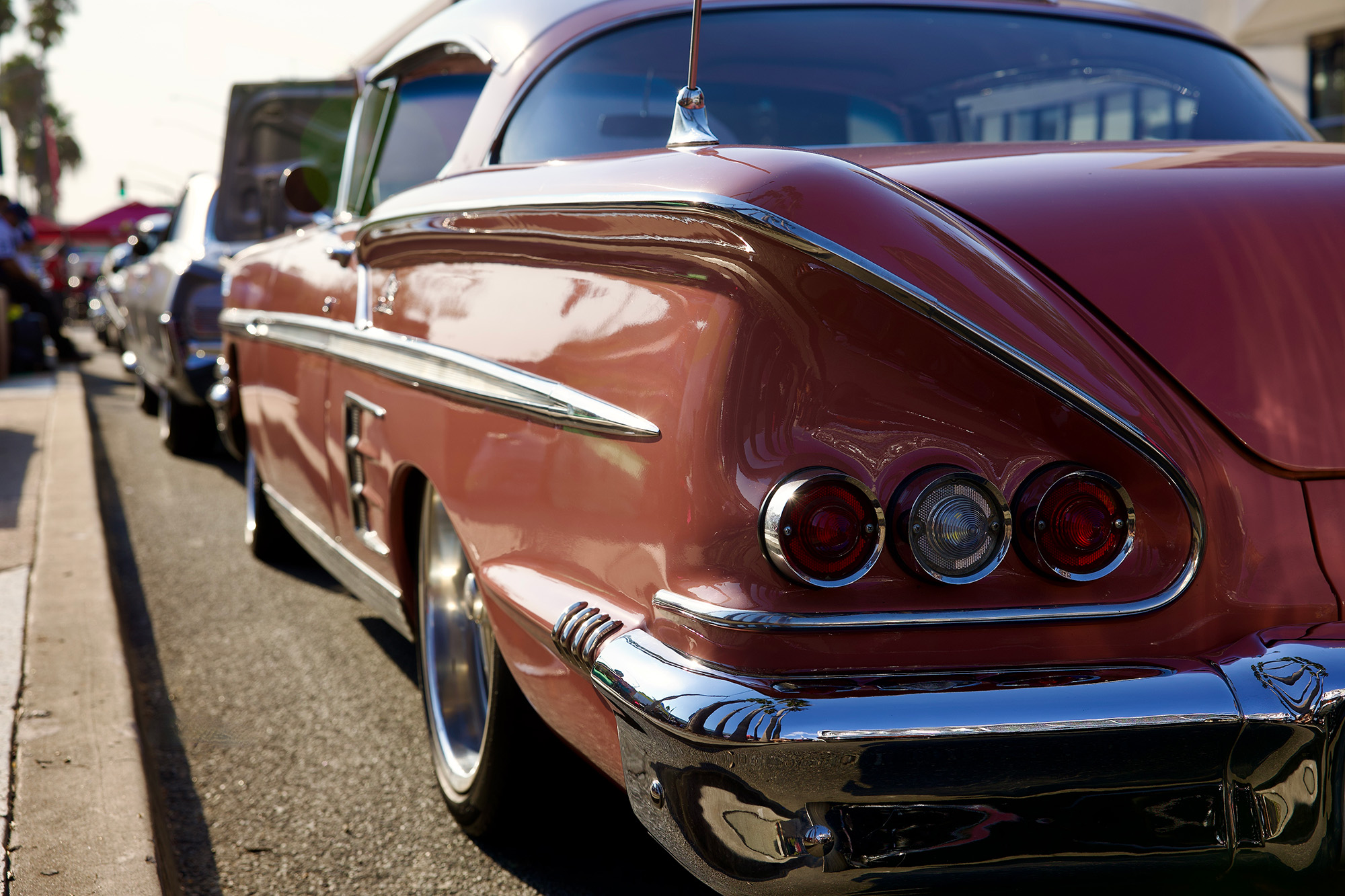 Automobile design has changed a lot since the 1950s. (Heidi Patricola/Getty Images)
Home Stuff
Step inside a typical home in about 1958, and you’d likely find a box-like apparatus with a screen, crowned with what everybody called rabbit ears, those primitive antenna viewers used to catch the over-the-air network broadcasts. The shows were in black and white, and many of them, such as quiz shows and the news, were performed live, mistakes and all.
Hard as it is to believe today, one of the most popular religious shows of the 1950s was “Life Is Worth Living,” featuring a Catholic bishop in full regalia, Fulton Sheen. Millions of Americans tuned in weekly for his message. As for me, “The Howdy Doody Show” and “The Lone Ranger” were top of my viewing list.
Rotary phones plugged into a special wall outlet were standard, and Ma Bell gave you a phone book listing local numbers. In those long-gone days, people also communicated by means of letters and stamped envelopes, those primitive objects of paper and ink now foreign to many young people. In the first decade of the 21st century, for instance, when I had my students write notes of gratitude to a loved one as a Christmas gift, this assignment required showing a good number of them how to address the envelope and where to put the stamp.
A major household event in those days was the arrival of the Sears, Roebuck catalog. My siblings and I spent pleasant hours with the “Big Book” in our laps, turning the more than 1,000 pages and drooling over the toys we wanted from Santa for Christmas.
 Children having good, old-fashioned fun during Christmas. (Oana Szekely/Getty Images)
School Days and Ways
Classes at Boonville Elementary, as best I can estimate from a school annual, averaged about 30 students, about 30 percent higher than today. Yet discipline was rarely a problem in an age when corporal punishment was standard. Students risked being punished twice if their parents discovered their misdeed—the law of double jeopardy didn’t apply to miscreant children—and most of the time the other kids looked at the class criminals as if they deserved their punishment. So, missing now from those bygone days are the yardsticks, rulers, and paddles that brought law and order to otherwise lawless 9-year-olds.
Missing as well are the slide rules, which older students carried, which I myself would use in high school and college, and which, believe it or not, helped bring home the Apollo 13 astronauts when their 1970 lunar mission was aborted.
 Classrooms rarely lacked discipline, and children relied on books instead of modern technology. (The Good Brigade/Getty Images)
Libraries use card catalogs for referencing books. Here you’d flip through the cards while looking for the shelf location of that book on whales you needed for your book report. Equally primitive, compared with today’s screens and artificial intelligence, were the sets of encyclopedias in middle-class homes. Many an evening my siblings and I thumbed through our family’s World Book volumes, looking at pictures and articles on everything from the Civil War to Ancient Egyptian dress.
Entertainment
Many adults in those days spent a Saturday evening playing cards with their friends. My parents’ game was bridge, and they frequently got together with other couples. My wife’s parents did the same, and my mother-in-law once spoke to me of her amazement that so few young people had followed suit, if you’ll pardon the pun.
“It’s great entertainment and it costs almost nothing,” she said.
In America today there are approximately 330 drive-in theaters. However, in the 1950s, more than 4,000 of these parking lots with giant screens dotted the American landscape. Here was a place where, for 25 cents a head, families could watch movies such as “South Pacific,” a favorite of my mother’s, and “Spartacus,” which we boys copycatted in our backyard for days after seeing it. Here, too, was a private theater where teenagers gazed into each other’s eyes instead of at the screen.
Gone, too, are the days of free play, though some parents and educators are trying to bring back play unsupervised by adults. Set at liberty with the only commandment being to arrive home in time for meals, we’d wage war in the nearby woods, sticks and trash can lids serving as our swords and shields, and a hill as our castle. Sandlot games of baseball and football, and games such as hide-and-seek, red rover, and roll the bat were common fare for summer days and after-school evenings.
 Free play was much more common in the 20th century. (wundervisuals/Getty Images)
There is one example of play that still makes me laugh but that horrifies younger adults when I share the story. When we vacationed at the beach, and on a few occasions in our small town, barrel-shaped trucks sometimes drove the streets emitting gaseous clouds of DDT to knock down the mosquito population. When this happened, my brother and I would snatch up our toy guns, dash outside, and weave through that gray fog pretending we were John Wayne at the battle of Iwo Jima. DDT was banned in 1972 as a dangerous chemical, but oh, what great fun we had!
So, these are some of the lost objects and practices from the good old, bad old days of the 1950s. When I look at my grandchildren, who will be turning my age in the last quarter of our present century, I sometimes wonder what machines and devices might replace all those things now so commonplace in their lives—cellphones, for instance, or microwave ovens, or 24/7 entertainment via a screen carried in their pocket.
As always, only time will tell. Come what may, I wish all you young people everywhere good memories and a bright future.