BATAVIA, Ohio—As former military leaders, Stephen Balczo and Louis Gordon take pride in guiding an agency whose motto tells veterans: “You answered the call. Now it’s our turn.”
A retired sergeant major with the U.S. Marines, Balczo is executive director of the Clermont County Veterans’ Service Commission—one of many veteran-assistance agencies in Ohio and across the nation. Gordon, who reached the rank of Army captain, serves as assistant director.
That common background paves the way for better communication with veterans who are often reluctant to seek the help they need—and earned, Balczo and Gordon told The Epoch Times ahead of Veterans Day.
“We’re constantly checking our buddies to our left and our right, and our troops. … How are you doing?” Balczo said.
Under Ohio law, each commission helps vets and their relatives, including surviving spouses. The organization provides three basic types of service: assistance with securing benefits through Veterans Affairs (VA) or other agencies; emergency financial or other help; and a medical-transportation service for veterans and caregivers.
“From the veteran’s perspective, it’s like a ‘free Uber,’” Balczo said. “It’s a door-to-door service from their front door to their VA appointment and back home, at no charge.”
To use the service, veterans must have been honorably discharged and live in Clermont County; they also must schedule rides to VA-referred appointments at least five days in advance.
Stephen Foster, the Clermont agency’s transportation supervisor, told The Epoch Times that many people still seem to be pleasantly surprised when they learn about the transportation service.
Many people who use the service say, “I’m just so thankful that you people can take me down [to the Cincinnati VA Medical Center],” Foster said, because getting in and out of that busy center can be stressful.
“To be dropped off, door-to-door, and avoid a parking situation, it’s an alleviation already off the backs of the veterans,” he said.
During October, the Clermont service transported 130 veterans to the VA hospital in Cincinnati, Balczo said. Since the beginning of this year, 1,045 veterans have received transportation, even to distant VA-referred locations, Gordon said.
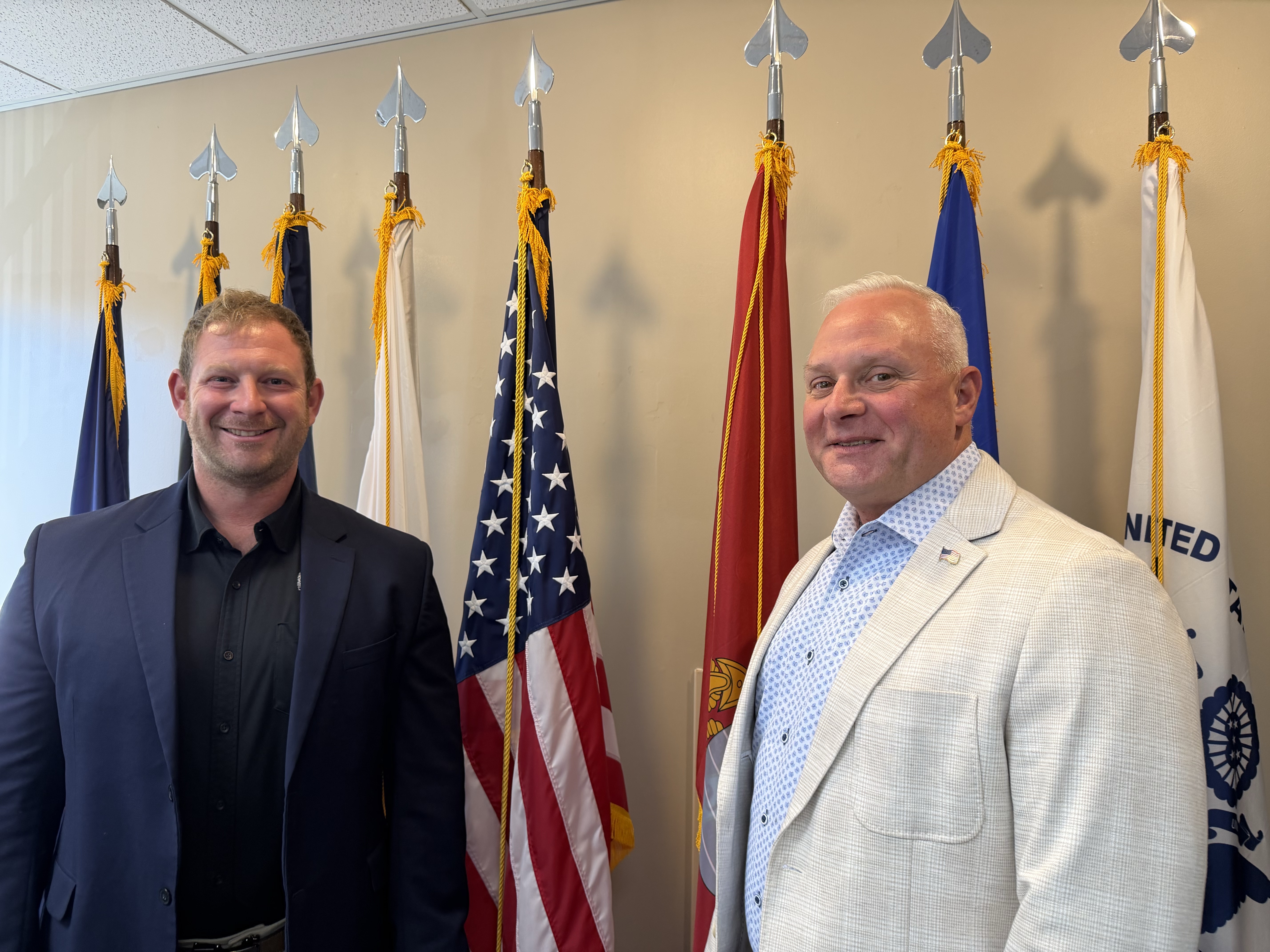 Stephen Balczo (R), executive director of the Clermont County Veterans’ Service Commission, and Assistant Executive Director Louis Gordon at the commission’s office in Batavia, Ohio, on Nov. 9, 2026. (Janice Hisle/The Epoch Times)
These agencies are funded by a portion of county property-tax revenue, Balczo said.
Operations of each commission vary somewhat, Balczo said.
“Some counties will hire a third-party company. … For Clermont, though, we would rather drive our own veterans,” he said.
All seven of his agency’s transportation drivers are veterans, “and they can have a natural conversation with veterans, and so it’s a warmer trip” for a veteran who is heading to a medical appointment, Balczo said.
In fact, among the Clermont office’s 22-member staff, all are veterans except two employees, whose fathers are veterans.
Often, Balczo, Gordon, or other leaders in the agency stay after hours to talk with fellow veterans who open up about their struggles, ranging from financial and medical issues to post-traumatic stress disorder.
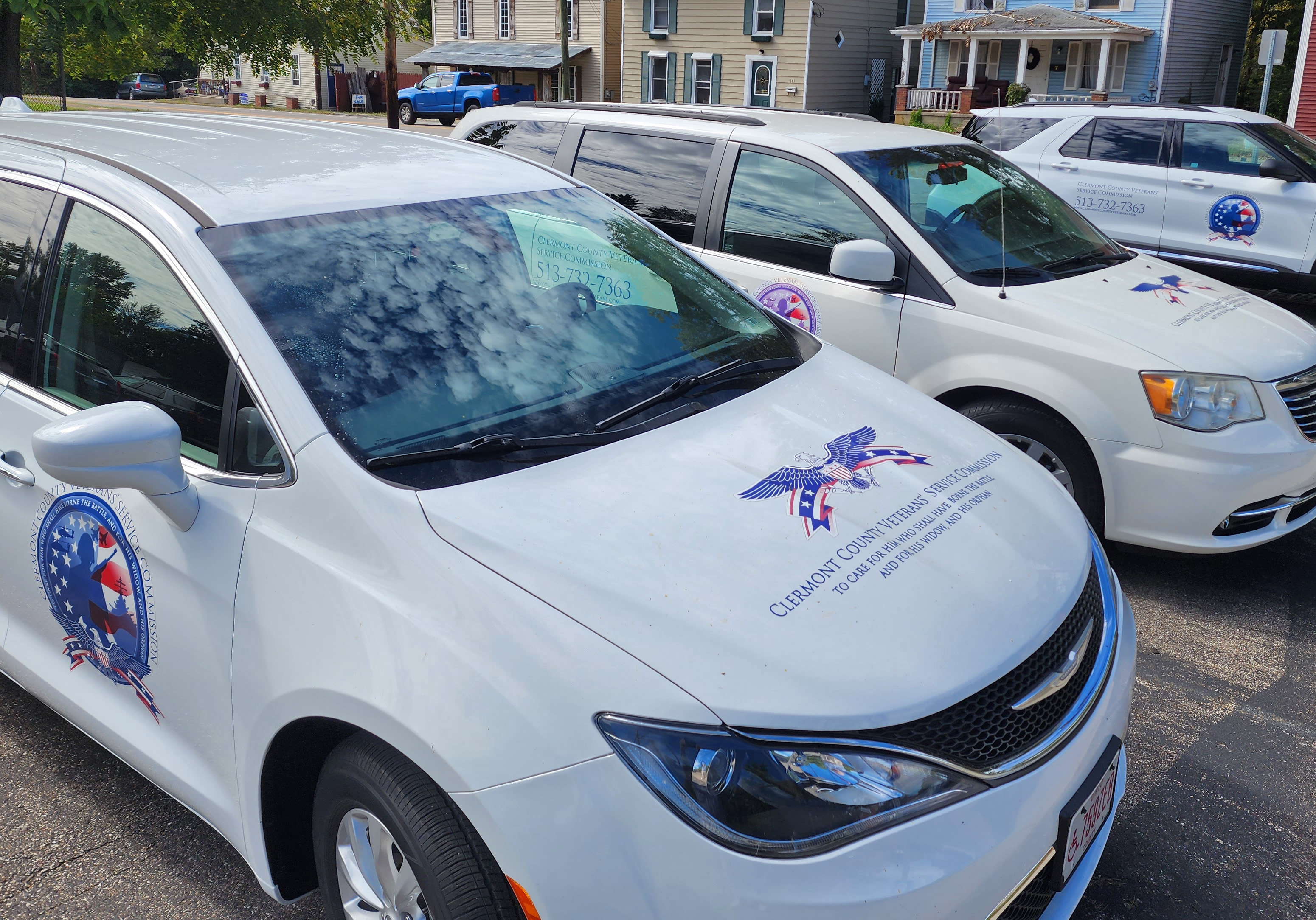 Transport vans used by the Clermont County Veterans’ Service Commission. (Courtesy of the Clermont County Veterans’ Service Commission)
Typically, fellow Marines would expect to meet with someone of Balczo’s rank “to get punished,” Balczo said, so many vets approach him with automatic respect.
Balczo said he approaches those encounters with this posture: “I’m here for your benefit. But we’re going to get down into the weeds, and we’re going to talk about what’s going on.”
Then, “it’s about building a plan for them,” Balczo said, adding that he personally follows up with people to see how they are progressing. It helps for these veterans to know that “somebody believes in them,” he said.
If a veteran comes in with despair and leaves with a smile, “that’s a 100 percent return of joy,” Balczo said.
“There’s nothing that a veteran can do to repay me but give me a smile and go challenge life—and to call me when it’s not going well,” he said.
Doing this type of work in a relatively small county, with a population of about 217,000 people, means that employees of the agency often see people they’ve assisted, Gordon said.
“You can say … this guy, this guy, this guy … I’ve helped these people, and this is how their life is better,” he said. “It’s just satisfying. I love it. It’s great.”
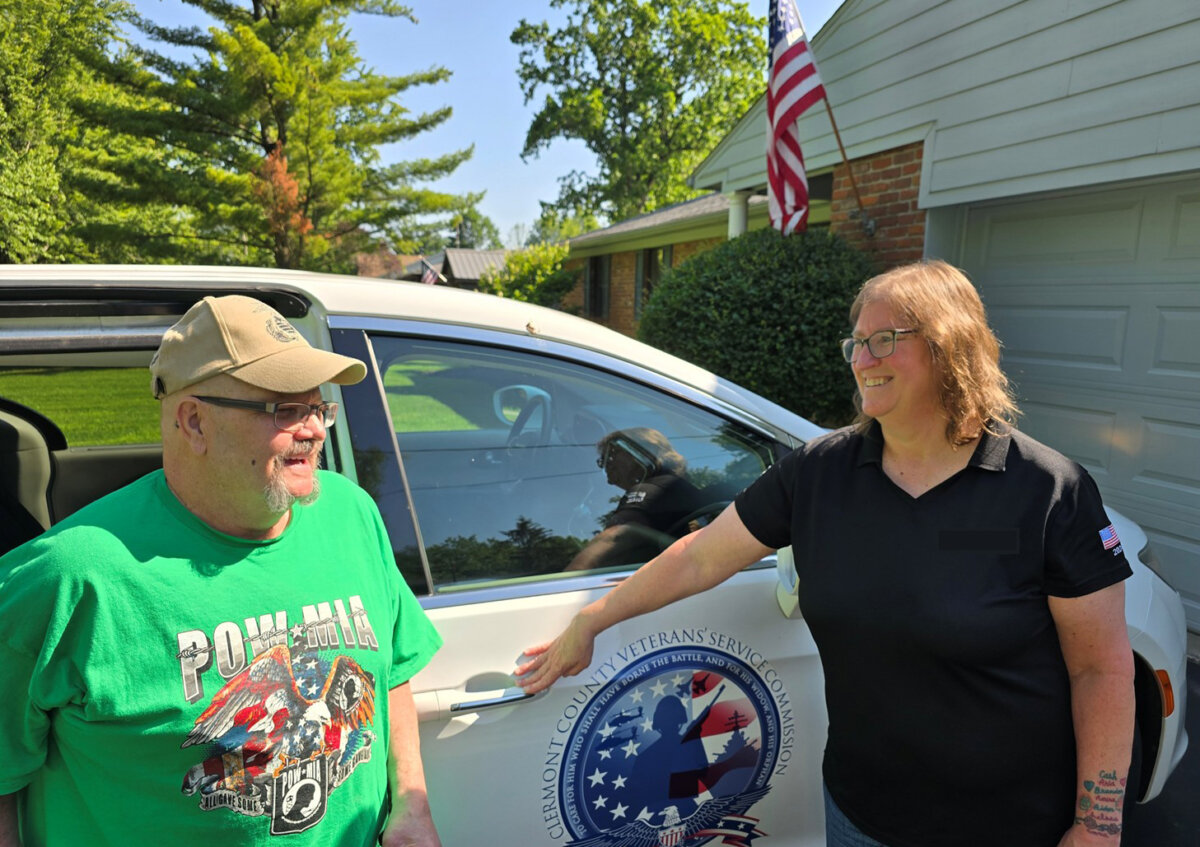
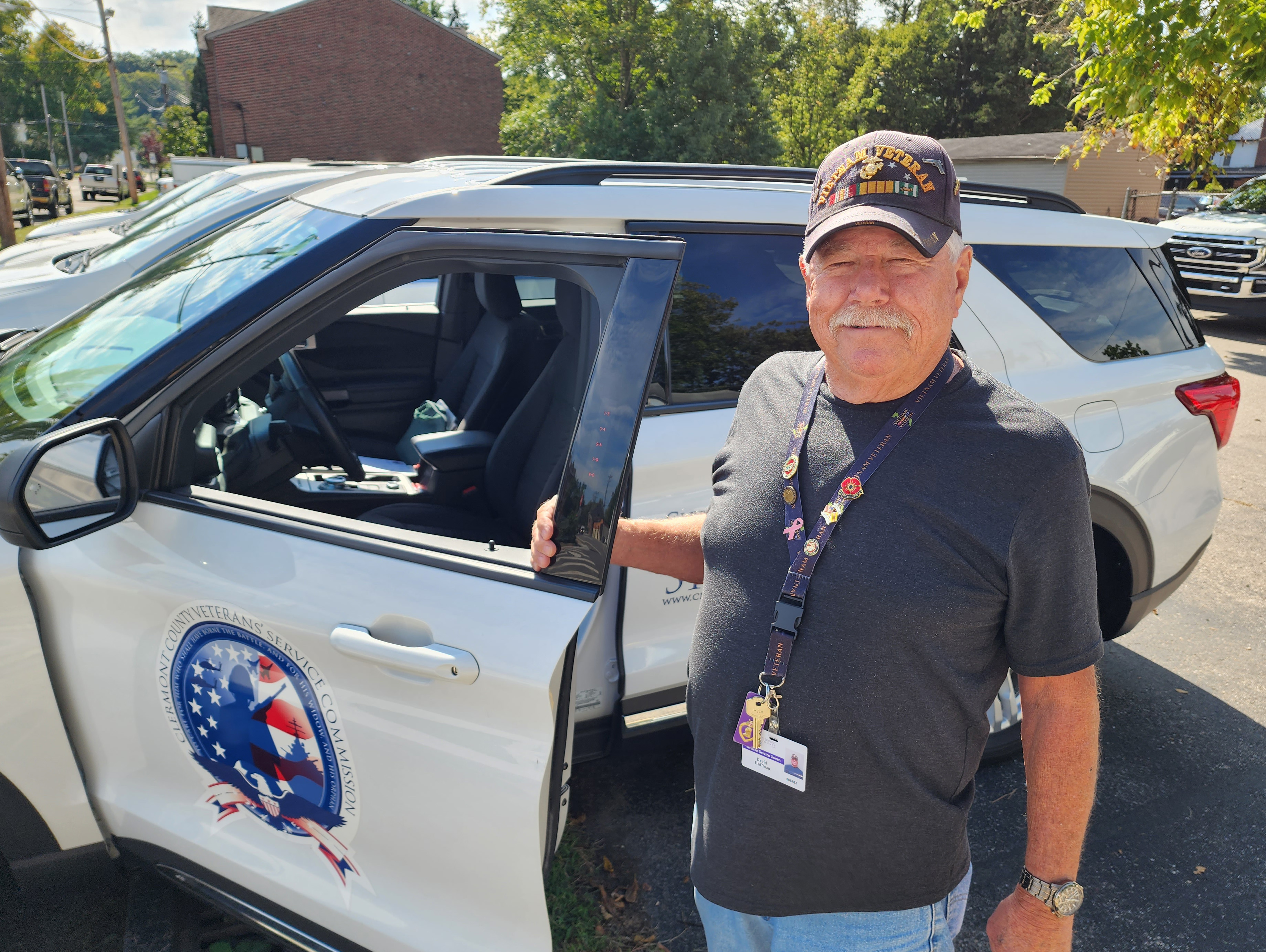 Driver Dave Hoffman in front of his vehicle. (Courtesy of the Clermont County Veterans’ Service Commission)
The agency’s 2026 budget is $2.5 million. Balczo said his office works hard to be a good steward of taxpayers’ dollars and ensure that only qualified, deserving people receive benefits.
Often, veterans have a mentality that they don’t want to accept help, thinking, “I don’t need it as much as somebody else does; I’m gonna leave it for them,” Balczo said.
However, government agencies may cut back funding that goes unused, he said, encouraging veterans to think of seeking benefits this way: “By taking those benefits, you ensure that someone else has those benefits this year or next.”
By networking with businesses that are friendly to veterans, the Clermont commission can often help eligible people receive help with essentials at no cost to the recipient—and at a reduced or zero cost to the Clermont agency.
For example, the elderly widow of a World War II veteran needed help with her heating and cooling system. She obtained three bids from contractors who said the entire system needed to be replaced. Their estimates ranged from $17,000 to $25,000.
Balczo’s office contacted a trusted vendor, who diagnosed the problem: a pinhole leak in the air-conditioning system. The contractor fixed it for free and simply added refrigerant to make the system operational, Balczo said.
Dozens of other agencies across the United States offer similar assistance for military members and their families.
The National Association of County Veterans Service Officers says it encompasses more than 2,000 employees in 35 states and territories.