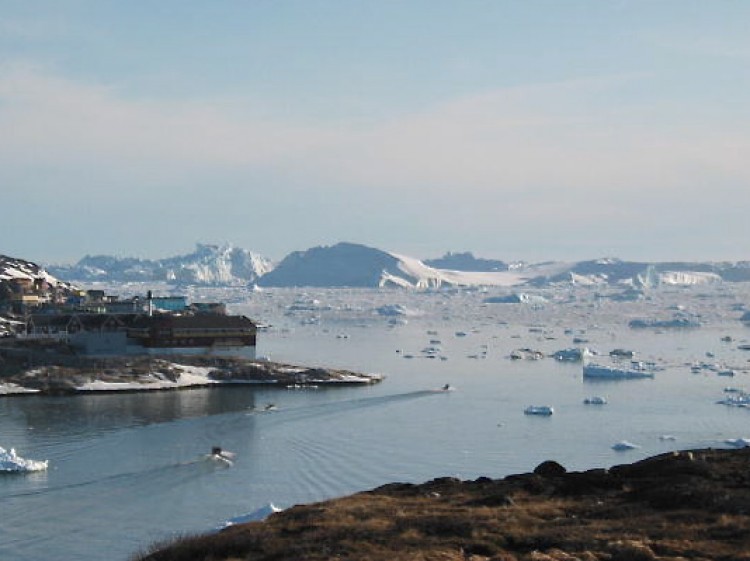
In response to public pressure and criticism from Greenpeace, the government of Greenland partially released the spill contingency plan for four deepwater drill-rigs operating off Greenland’s western coast.
In March, Scottish drilling and exploration company, Cairn Energy PLC, won the right to drill up to seven exploration wells in Greenland waters. Greenpeace has been leading a campaign to see a spill contingency plan.
The group actively opposes to drilling in the Arctic saying that a spill in the cold, remote seas would be nearly impossible to clean up.
“It took approximately 6,000 vessels over three months to control BP’s gushing Macondo well that spewed millions of barrels of oil into the Gulf of Mexico. There is no way that a similar response could be mobilized if a blowout or large spill were to occur in freezing Arctic waters,” the group said on its website.
The Arctic Monitoring and Assessment Program cites several other characteristics of the Arctic that raise the risk levels in the event of a big spill. For example, the lighter fraction of oil that normally evaporates happens much more slowly in icy waters, and oil trapped below the ice, is less susceptive to bacterial degradation. Also, species recovery can be slower since many arctic animals are relatively longer living.
Over the past year Greenpeace activists made five direct attempts to directly interfere with drilling off Greenland. In one campaign, activists scaled a rig and hung themselves from survival pods, stopping the drilling for four days, according to the group.
Cairn said earlier that it did not make the contingency plan public due to Greenland government policy. The company said it released the report due to public concern and because the Danish government had completed its safety evaluation.
The minister for Industry and Mineral Resources in Greenland, who opposes Greenpeace’s actions, said, “A partial concealment of oil spill contingency plan was needed to protect Cairn Energy’s legitimate right to conduct exploration activities.”
“We listened to the public’s desire and put the plan forward, but we felt it necessary to take certain precautions, and some parts of the oil spill contingency plan have been withheld,” Karl Ove Berthelsen said, quoted by national Greenlandic newspaper, Sermitsiaq.
Some location names and whole pages were blacked out on the 214-page report.
“It was important to ensure that activities could be carried out without barriers, illegal delays, or increased costs, and without illegal actions that put [the safety of] those involved, the drilling rig, or the marine environment, at risk,” the minister said.
Ben Ayliffe, a Greenpeace oil campaigner in the U.K. said via e-mail that he sees little in the plan to “allay the concerns of experts and analysts who believe a BP-style blowout would wreck the fragile Arctic environment and its fisheries.”
Greenpeace is conducting its own analysis and Ayliffe said he expects “to confirm what the U.K. government said in private documents, that an Arctic spill would be ‘near impossible’ to clean up.”
In June, Cairn won an injunction that bars Greenpeace activists from coming close to the rigs on penalty of 50,000 euros (US$72,000) per day in fines.
An autonomous country and the world’s largest island, Greenland is still economically dependent on Denmark. Speaking through a translator, Minister Berthelsen said in an interview with Canadian radio CBC, that in order to move toward economic independence, Greenland needs to expand its economy beyond its reliance on fisheries. The minister said Greenland’s regulatory measures are stricter than those in the Gulf of Mexico.
In November 2010, a consortium of oil companies including Shell, GDF Suez, Statoil, and Nuna Oil were awarded licenses by the Greenland government for two blocks. Other licensing rounds are scheduled to take place in 2012 and 2013, according to documents from Shell.