PARIS—France’s economic situation seems to get worse by each passing day.
Just as the Greek debt crisis seems to have settled down, at least momentarily, the markets are becoming alarmed with the fiscal situations in Italy, Spain, and now France.
The French banks that hold Greek and Italian bonds are trying to sell their holdings, but values on the bonds are collapsing by the day, with yields on Italians bonds already approaching 7 percent.
The spread on interest rates on new borrowings between France and Germany, the eurozone’s biggest economy and benchmark, have grown wider, leading some analysts to question whether France and Belgium would be pulled into the crisis.
French Debt at 86 Percent of GDP
Belgium’s debt has reached 350 billion euros ($471 billion), or 96 percent of its GDP. By comparison, Greek debt is around 158 percent of the nation’s total annual GDP.
Italy has 1.9 trillion euros in debt, or 120 percent of its GDP, which makes it the biggest bond issuer of the eurozone. France has 1.7 trillion euros in debt, which is roughly 86 percent of its GDP. So far, the burden of debt is manageable compared to its peers, but for how long?
Some political and economic analysts have wondered which European head of state would be the next to resign, with French President Nicolas Sarkozy nearing the end of his term.
Austerity Measures
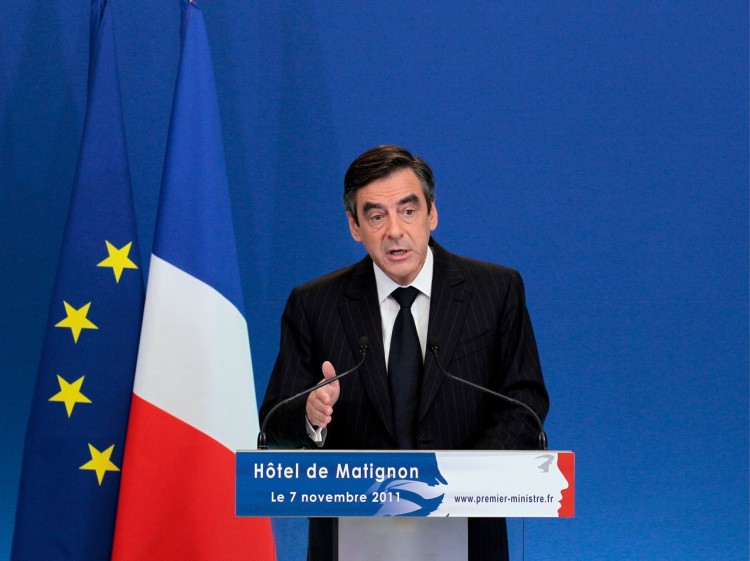
French Prime Minister Francois Fillon, facing mounting financial pressures, and conscious that the initial figures for 2011 growth will have to be revised to a lower level, announced the Fillon austerity plan.
Already in its second month, Fillon announced cuts of 65 billion euros by 2016. His main means of action, focused on retirement reforms, would save $1.7 billion by 2012. The catalogue of measures announced—an increase of 5 percent in income tax for companies with more than 250 million euros of gross income, an increase in capital gains tax on properties, an increase in the previously reduced VAT rate from 5.5 to 7 percent, and suppression of certain tax shelters—aimed at reaching those objectives.
Will this new plan be sufficient to convince the rating agencies? It is uncertain.
The markets fear a domino effect, and measures taken by the French prime minister to try and save France’s AAA rating before the French presidential elections appear to be insufficient. On Nov. 17, Olli Rehn, EU commissioner of economic affairs, criticized the Fillon plan: “These measures are important, but concerning 2013, supplementary measures will be necessary to correct the excessive public debt” of the country, he said. He subsequently urged Paris to “announce as soon as possible” how France plans to adhere to the EU debt limits.
On Thursday, Standard & Poor’s downgraded French debt to below AAA, caused protests from the French political class. The rating agency immediately withdrew the announcement—citing that it was an error. Whether it was a simple error or an announcement in the works remains to be seen.
Be that as it may, the French AAA rating remains threatened, as long as its interest rate spread compared to Germany continues to grow wider.