
Experts warn that the Chinese regime is transplanting its surveillance system to Hong Kong to extend national security enforcement into every sphere of public life.
The U.S.–China Economic and Security Review Commission, an independent, bipartisan congressional agency, said in its Nov. 18 annual report that the Hong Kong government has systematically expanded executive and security powers over the past year.
“Beijing has steadily eroded Hong Kong’s rule of law and its longstanding guarantees of free speech, assembly, press, religion, and democracy,” the report said.
The commission published its findings two days after Hong Kong’s police force activated artificial intelligence facial recognition under SmartView, a program that links cameras across the city.
Police Commissioner Joe Chow declined to disclose technical or operational details but said the deployment aimed to better protect law-abiding residents and deter criminal activity, according to the English-language news site Hong Kong Free Press.
Ted Hui Chi-fung, a former Hong Kong legislator granted asylum by Australia in 2025, said he does not find Chow’s assurance credible, given that the city’s law enforcement faces little scrutiny.
“The public has no reliable way to verify whether the system is being used indiscriminately or whether people’s privacy is being violated,” Hui told The Epoch Times.
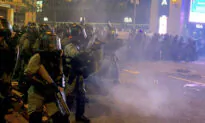
In June 2019, protest organizers estimated that nearly 2 million Hongkongers took to the streets against a proposed extradition law. Police estimated peak attendance at 338,000.
The bill was withdrawn, but Beijing responded to the protests by imposing a national security law on the city in June 2020. Many pro-democracy parties and independent news outlets have since disbanded.
Sang Pu, a lawyer and director of the Taiwan Hong Kong Association, said that despite official claims that local privacy law governs the city’s cameras, Hong Kong’s monitoring network closely mirrors the technology and social-control logic of China’s “Skynet,” which analysts view as a tool for tracking citizens.
“The Chinese Communist Party (CCP) has been replicating its total surveillance system in Hong Kong in phases, and there’s no turning back anytime soon,” Sang Pu told The Epoch Times.
“[Hong Kong’s] security and legal vetting will also tighten to control what residents think and do.”
Hui agreed, and he said that the rollout is another step toward China’s approach of using surveillance in everyday public life to enforce an ever-broadening idea of national security.
“Authorities will look for political significance in ordinary commercial activity,” he said.
“Businesses known for supporting the democracy movement could face tax scrutiny or enforcement following anonymous complaints even where their day-to-day operations are apolitical.”
The squeeze could also reach film, publishing, and the performing arts, where it would hamper creative work and breed self-censorship, Hui said.
Eroding Anonymity
Sang Pu said the system is no longer just for recording but also for tracking faces both live and in stored footage, even on cameras at private malls.
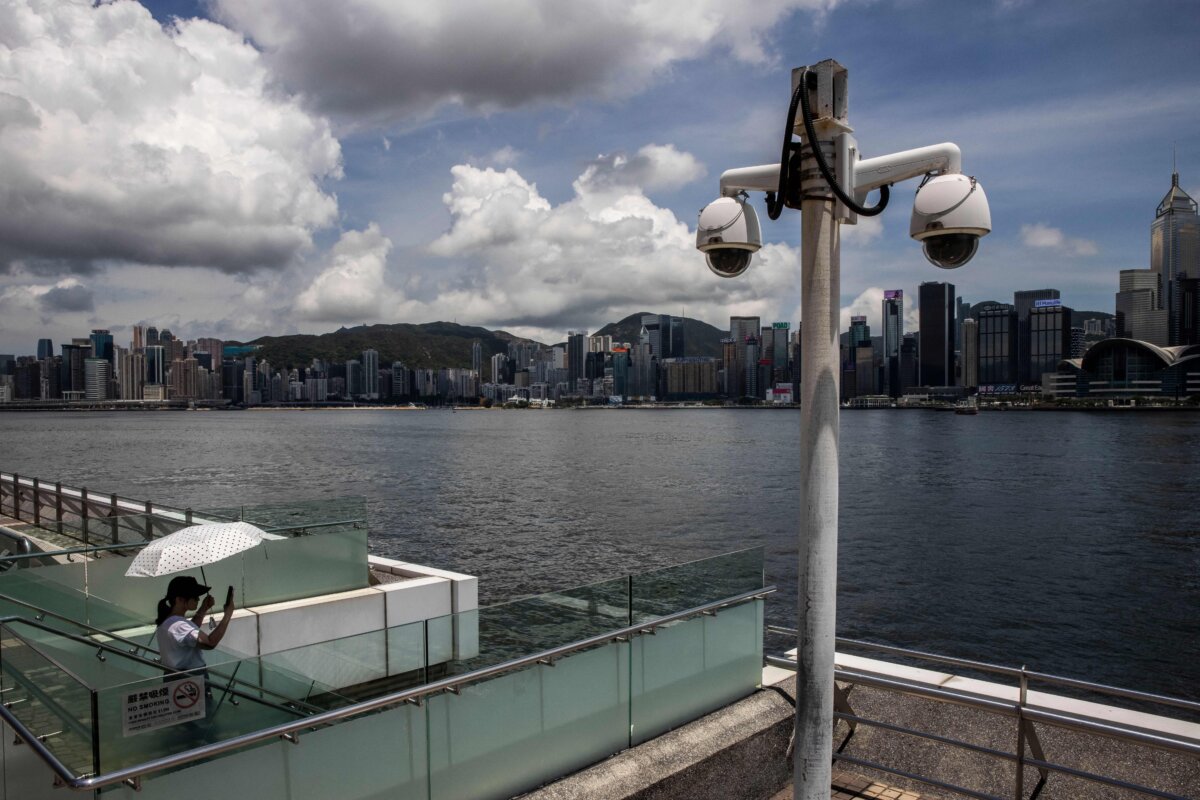
 CCTV cameras are seen above Democracy Wall at Hong Kong University, in Hong Kong, on Oct. 19, 2021. (Tyrone Siu/Reuters)
“That will have a chilling effect on any talk of security or other sensitive issues, and privacy will no longer count for anything.”
Sang Pu said that, when it comes to the police, individual surveillance requests are not independently vetted.
“Residents have already taken to social media to voice fears that their biometric and location data could leak or be misused,” he said.
Hui said authorities want to use the system to stamp out dissent before it can take root.
“Past protests often grew from the grassroots in public spaces. I believe the authorities want to detect criticism and emerging protests earlier so they can suppress them sooner,” he said.
Shrinking Freedoms
Hui said the rollout will further chill free expression, since under the national security law, just feeling watched is enough to change how people behave.
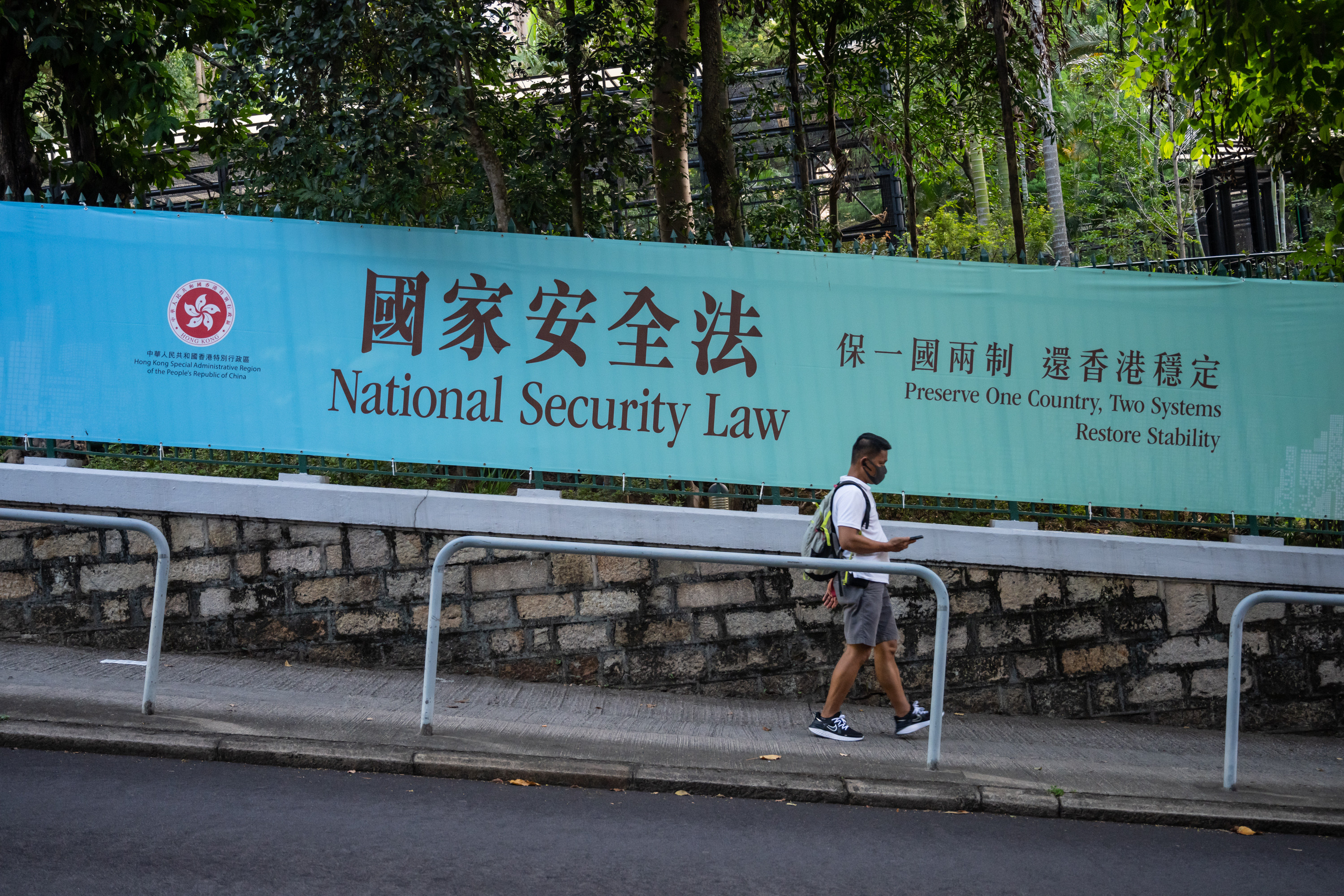 Pedestrians walk past a government-sponsored advertisement promoting a new national security law on June 30, 2020, in Hong Kong, China. (Photo by Billy H.C. Kwok/Getty Images)
“People will be more guarded about what they say and do in public, especially when it comes to criticizing the government.”
The Hong Kong Police Force states on its website that it “will not conduct indiscriminate surveillance” using facial recognition and that three tiers of safeguards govern the system, including prior authorization from a senior officer.
But Sang Pu said such pledges do not dispel human rights concerns.
“When officials oversee themselves and the Party claims to ‘govern itself strictly,’ there are no real checks and no free speech,” he said.
“Without them, every promised safeguard is a lie, no matter how many layers are piled on.”
Chung Kim-wah, an exiled Hong Kong-born scholar now based in the UK, said the authorities clearly have political aims in deploying the technology, a move that has already cost the police both their reputation and their credibility.
“Whenever the police see a need, I believe they will push this system to its limits,” Chung told The Epoch Times.
“With no scrutiny from civil society or the media, no one can step in and stop them even if they do.”