
Americans have a long tradition of sharing food, dating back to the first Thanksgiving in 1621.
The event was recorded by Edward Winslow, who had come to America on the Mayflower and was present at that gathering in Plymouth.
After a bountiful harvest, the colonists held a community feast. Massasoit, chief of the Wampanoag tribe, and some 90 of his men joined in, contributing five deer.
Weeks later, Winslow was still flush with the spirit of Thanksgiving when he wrote to a friend in England.
“We are so far from want, that we often wish you partakers of our plenty,” he wrote.
That spirit continued as the Continental Congress called for a national day of thanksgiving in 1777, which was repeated in 1789 by President George Washington, who asked the people to thank God for the blessings and opportunities provided to the young nation.
Today, Americans still display the generous spirit of those early Americans.
Edward Winslow, pilgrim
Blessed with an abundance of food, they take delight in sharing it with each other.
Beyond the millions of family gatherings that take place on the Thanksgiving holiday, many communities have a strong tradition of—and well-developed systems for—providing holiday meals to those who are less fortunate.
Thanksgiving Meals
Every year, some 5,300 meal sites around the country prepare more than 173 million dinners. That’s about 473,000 every day.
That number is from the last federal study of this subject more than two decades ago, so it could be even higher now.
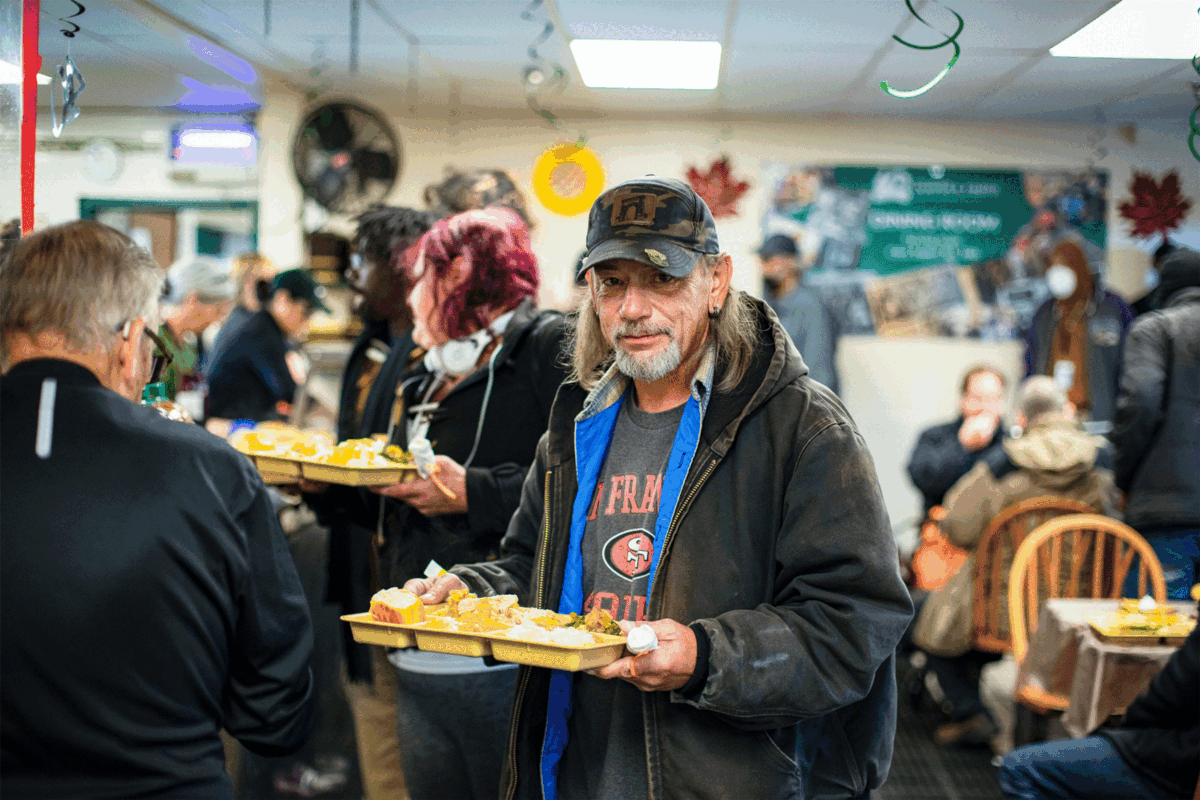
Many of those sites, such as Loaves & Fishes of Sacramento, California, offer a traditional Thanksgiving feast.
Loaves & Fishes serves lunch to about 600 people every day in its dining room. For Thanksgiving, it’s preparing dinner for about 800.
The meal is offered on the Tuesday before the holiday to coordinate with several other food programs in the community, each taking a day that week.
Loaves & Fishes, like many meal sites, has a paid staff but relies on volunteers year-round for most of the labor.
Angela Hassell, executive director of Loaves & Fishes, told The Epoch Times that volunteerism increases around Thanksgiving.
“We see an overwhelming generosity from folks wanting to come and help,” she said, expressing gratitude for one donor who recently dropped off a carload of frozen turkeys.
Working at the Thanksgiving meal is especially popular, Hassell said.
“It can get pretty competitive to get one of those coveted serving spots,” she said.
Americans volunteer about 70 hours per year, or 1.3 hours per week, on average, according to Census Bureau and AmeriCorps research. And the most popular volunteer activity is preparing, serving, and distributing food.
Also, the number of people seeking food assistance is increasing in some communities.
A Washington nonprofit that started in 1989 expects to serve a record number of dinners this year.
“We think we’ll serve just over 72,000 Thanksgiving holiday meals,” Alexander Justice Moore of DC Central Kitchen told The Epoch Times.
“And we are one organization in one city.
“There’s an opportunity for everybody who is concerned about the rising rates of hunger to find organizations close to them and get involved.”
Food Distribution
In addition to meal sites, more than 32,000 food pantries distribute nearly 3 billion pounds of bulk food every year—enough to prepare more than 2 billion meals.
One of those community pantries is Our Daily Bread in Stillwater, Oklahoma, which operates a store where guests come to pick out a week’s worth of food. The nonprofit provides groceries to about 1,300 households per month.
Trevor Steward, who manages the organization’s warehouse, said demand is expected to increase through the holiday months.
“We try to provide some of the holiday-type items when we can,” Steward told The Epoch Times.
That depends partly on what’s available through regional food banks and from corporate food donors such as Aldi and Walmart, he said.
Community members also pitch in.
“Groups will make boxes, like a turkey and all the trimmings, which we give out,” Steward said.
The Society of St. Vincent de Paul Cincinnati plans to distribute more than 1,000 Thanksgiving meal kits this year, made possible by community donations. That generosity enables people to enjoy the holiday traditions that mean much to them, the group’s CEO, Brad McMonigle, said.
Flint Hills Breadbasket in Manhattan, Kansas, had provided groceries to nearly 3,000 families in 2026 as of October, engagement manager Jennie Jordan told The Epoch Times.
She said the group expects to reach 40,000 unique visits by year-end—that’s about 770 families seeking help with groceries every week.
Fortunately for food pantries, the supply increases with the demand around the holidays.
“October into November is the beginning of giving season, and the beginning of the busy season,” Jordan said.
That includes community food drives and fundraisers. She said the mayor’s holiday food and fund drive brought in about $200,000 last year.
“This time of year, people are naturally thinking about neighbors who may not have access to the same food that they do,” Jordan said, adding that it increases volunteerism, especially from families who want to get their children involved.
Creating Community
People who lack adequate food are missing more than calories, said Jon West, interim CEO at Atlanta Community Food Bank, a regional distribution center for charitable food donations.
“This work is certainly about helping people have energy to make it through the day, and to care for their children and themselves,” West told The Epoch Times. “But it’s also what we need as humans: connection.”
Part of the mission, West said, is to create spaces for people to come together and care for one another.
Atlanta Community Food Bank serves 29 counties in Georgia, distributing food to 700 community-based partners such as food pantries, senior centers, and community kitchens.
Jon West, interim CEO, Atlanta Community Food Bank
About 60 percent of the food is donated by large retailers who don’t want unsold groceries to go to waste, West said. The rest must be purchased.
The 300 largest food banks in the United States had revenue of nearly $18 billion in 2024. That includes government and corporate funding, yet individual contributors are the largest revenue source for most food banks, West said.
“People are making hard trade-offs because of [the economy], and a lot of them are finding themselves needing help for the very first time,” he said.
It’s the end-user distribution points that can provide human connection and dignity to those seeking help, he said.
Loaves & Fishes asks only the person’s name when serving a meal. That’s partly to get to know them, Hassell said.
“Our core mission is serving people out of hospitality, welcoming people in, understanding where they come from, and who they are,” she said.
That mission extends to having fresh flowers on the tables and using real cutlery to create a restaurant-like experience for guests.
Jon West, interim CEO, Atlanta Community Food Bank
Our Daily Bread pairs volunteers with guests who come for groceries, helping them navigate the store shelves and providing personal connection.
“When you’re shopping with a guest, you’re talking to them, and you learn a lot about them,” Steward said.
Many who come for help feel stigmatized after a layoff, hospital bill, or unexpected car repair left them unable to feed their family, he added.
“We don’t usually think about how close we are to being in a situation where we need help like that,” Steward said. “We’re trying to give our guests the best food and the best experience that we can.”
Providing Opportunity
Many organizations go beyond offering food to provide services that help people deal with circumstances that contribute to their need.
“Food alone cannot end hunger. So we have always oriented our work around our culinary job training program,” Moore said about DC Central Kitchen. “And we hire from our own training program.”
Those graduates have all faced hunger at some point, Moore said, and many have overcome other challenges such as incarceration, homelessness, or addiction.
The organization serves about 17,000 meals per day in a variety of settings, including public schools. Half of the paid kitchen staff are graduates of the training program.
In Detroit, since beginning operations in 1929, Capuchin Soup Kitchen has grown into a multi-tier food operation, including a food distribution center, a store-like food pantry, and a meal site serving about 1,000 people per day, according to the organizers.
It also operates a clothing pantry, a residential treatment center for substance use disorder, an urban farm, and a workforce development and re-entry program for men returning from incarceration or substance abuse treatment.
Other organizations take a similar approach, adding additional services to address underlying needs.
“We’re not doing just food,” Jordan said.
Flint Hills Breadbasket offers other core services that address poverty and food insecurity, sometimes by referral to other organizations.
Loaves & Fishes offers a variety of services primarily geared to the homeless, including medical and legal clinics, a drop-in center, and a women’s shelter.
Trevor Steward, warehouse manager, Daily Bread community pantry
The spirit of giving can become contagious, as those being served often become volunteers, Jordan said.
“Some of our guests will donate back in some way,” she said. “If someone has a bunch of bags from the grocery store, they may bring them back to donate or donate their time.”
That’s the heart of Thanksgiving, West said.
“People who don’t have resources to put food on the table have that same need for connection and for community and for sharing that we do. This time of year, there’s a lot of opportunity around this issue,” he said.