
Happy New Year! Welcome to the first edition of Constitution Avenue of 2024. With election season starting in less than two weeks, it’s sure to be a banger of a year, so let’s get straight into it.
CONGRESS’ JANUARY TO-DO LIST
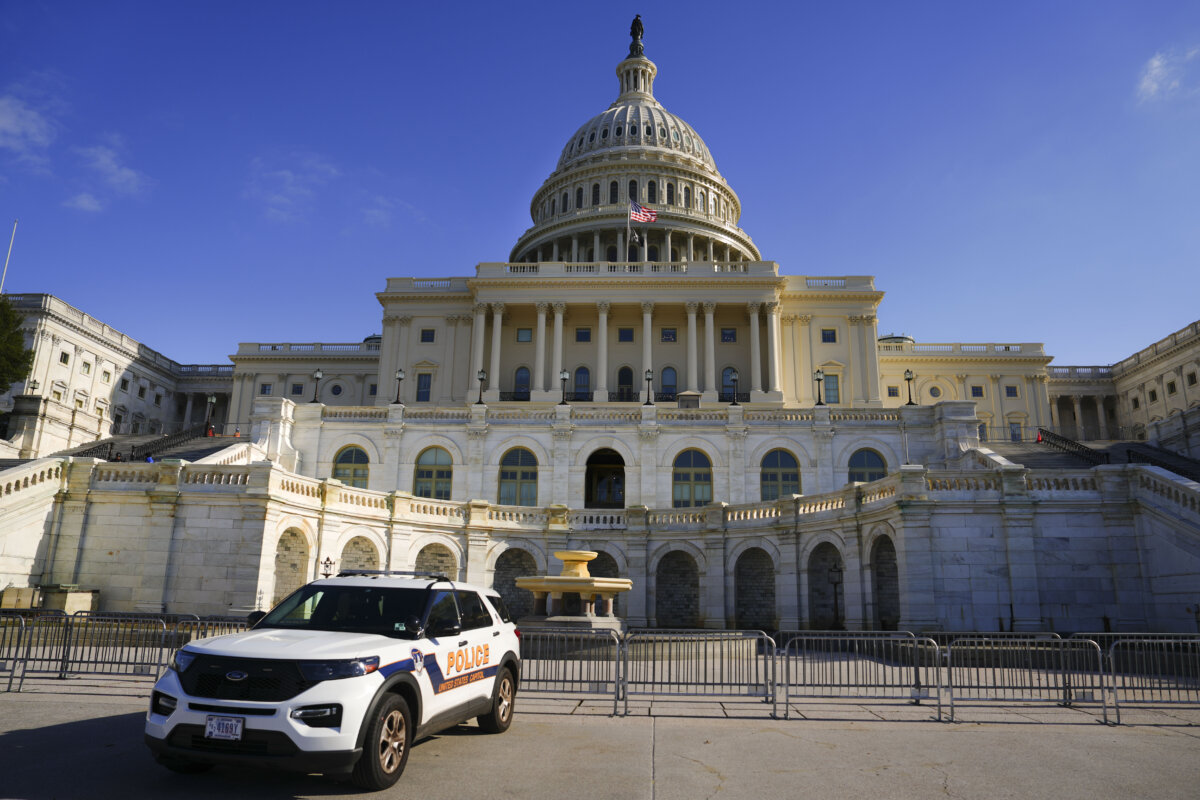
When Congress returns next week, House Speaker Mike Johnson (R-La.) and Senate Majority Leader Chuck Schumer (D-N.Y.) will try to find out if the 188th Congress is capable of making any major decisions.
The fractured House majority and lethargic Senate completed half of their two-year without enacting any of the 12 spending bills required each year, agreeing on assistance to foreign allies, securing the southern border, or definitively reauthorizing a key counterintelligence law and the FAA.
They have made history in other ways. Namely by unseating a House speaker for the first time in history, expelling a member for the first time in 20 years, and tying a record set in 1870 by censuring three members in a single year.
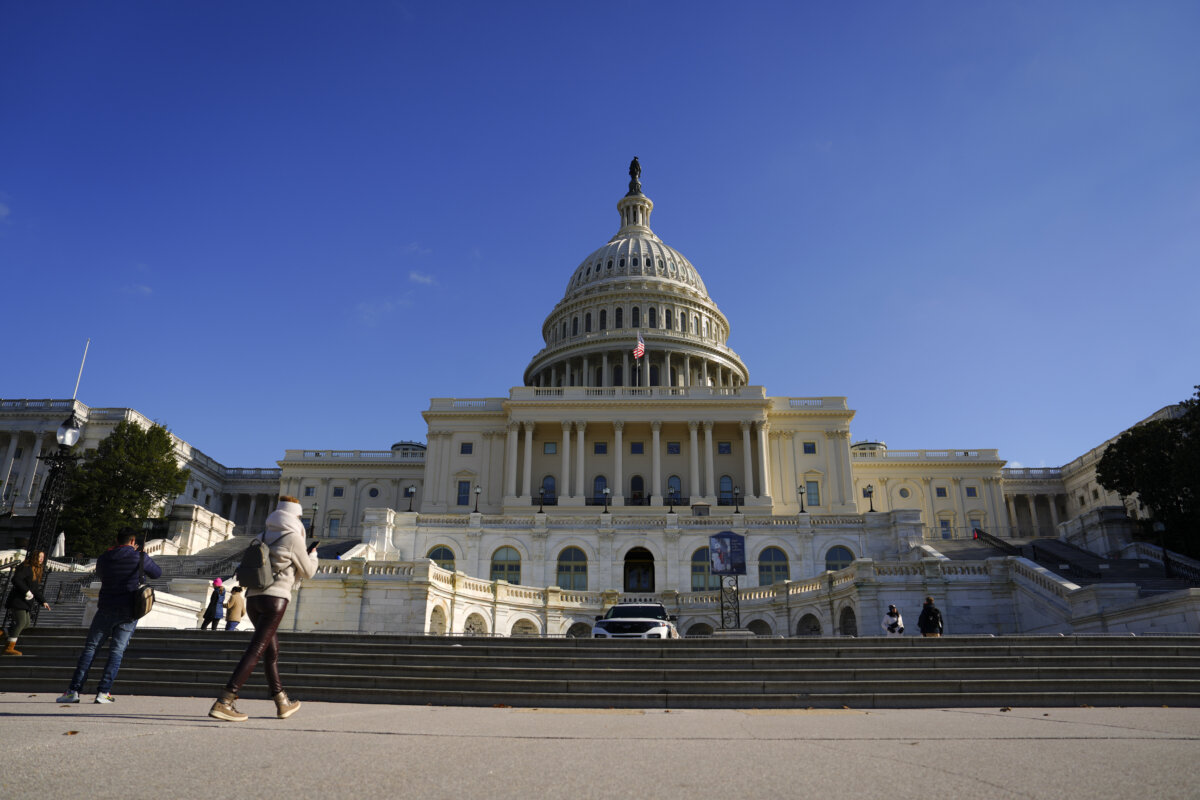
Here’s a short list of the major issues awaiting Johnson and Schumer upon their return—which are the same ones they kicked down the road last fall.
A third (and fourth) potential government shutdown. Four spending laws expire—for the third time this fiscal year—on Jan. 19. These are Agriculture, Energy and Water, Military Construction and Veterans Affairs, and Transportation and Housing and Urban Development.
Eight more laws expire on Feb. 2.
Congress has three options: pass 12 bills into law, approve another short-term extension, or shut down the government.
The real problem here is that the House and Senate have not yet agreed on a total spending amount for FY 2024, which began three months ago. So it seems unlikely that these bills will be passed, conferenced, and signed into law in the nine legislative days remaining.
The $106 billion supplemental aid package requested months ago by President Joe Biden gets more urgent by the day. The Senate is ready to sign on the dotted line, but not the House.
Johnson made it clear that the Senate must pass the provisions of H.R. 2, the Secure the Border Act, or the House won’t send more money to Ukraine.
Previous aid to Ukraine, authorized over a year ago, was exhausted last month.
Israel is caught up in this standoff also. House Republicans approved over $14 billion in aid to Israel but want to pay for it by clawing back funding for additional IRS agents. That’s a hard no for Senate Democrats, who want an up-or-down vote on the entire supplemental aid package.
Johnson is upping the ante on this negotiation today by leading a congressional delegation to visit the southern border and highlight the problem.
Democrats agree that more should be done to secure the border but say H.R. 2 is a nonstarter. Schumer called it “extreme” in a floor speech last month, and added, “We are willing to make compromises and concessions to meet our Republican colleagues, as long as they are willing to do the same.” So far, neither side is moving.
Congress punted FAA reauthorization, which comes up every five years, until Mar. 8. The previous law expired on Dec. 21. That’s another $107 billion spending deadline.
Congress also punted FISA reauthorization, granting a temporary extension through mid-April. Section 702 of this law allows warrantless searches of electronic communications by some foreigners that include texts, conversations, emails, and the like from Americans.
This one has supporters and detractors on both sides of the aisle. National security hawks want to keep it intact. Others, concerned with government overreach and invasion of privacy, want it scrapped or overhauled.
—Lawrence Wilson
HARVARD PRESIDENT RESIGNS
Good riddance and long overdue.
That was the message critics, including members of Congress, had in response to the resignation of Harvard President Claudine Gay.
Gay was accused of plagiarizing on multiple occasions.
According to a report from The Washington Free Beacon, there were six new plagiarism charges against Gay in a report submitted anonymously to the school’s Faculty of Arts and Sciences Dean Hopi Hoekstra, the Research Integrity Office, and the Committee on Professional Conduct.
The initial plagiarism allegations were flagged by conservative activist and Manhattan Institute fellow Christopher Rufo and journalist Christopher Brunet.
Additionally, she came under fire for refusing to say outright during a Congressional hearing last month that calling for the genocide of Jews constitutes bullying or harassment.
Rep. Elise Stefanik (R-N.Y.), chairwoman of the House GOP conference and a Harvard alum, took the biggest victory lap. In a statement, she called Gay’s decision “long overdue.”
“Claudine Gay’s morally bankrupt answers to my questions made history as the most viewed Congressional testimony in the history of the U.S. Congress,” she said.
“Her answers were absolutely pathetic and devoid of the moral leadership and academic integrity required of the President of Harvard.”
Stefanik called the resignation “just the beginning of what will be the greatest scandal of any college or university in history.”
The Anti-Defamation League posted on X, formerly Twitter, that Gay’s resignation “reminds us that leaders at the highest level are accountable to the highest standards. Whoever emerges to lead the university must embody the highest ideals of integrity and demonstrate moral clarity and total commitment to fight antisemitism with #ZeroTolerance in a way we have not fully seen at Harvard.”
In her resignation, Gay did not acknowledge the plagiarism or antisemitism controversies and instead deflected blame and called the attacks against her racially motivated.
Rep. Virginia Foxx (R-N.C.), chairwoman of the House Education and Workforce Committee, which is investigating Harvard, the University of Pennsylvania and the Massachusetts Institute of Technology over its response to antisemitism on their campuses, said in a statement that “while President Gay’s resignation is welcome news, the problems at Harvard are much larger than one leader and the committee’s oversight will continue.”
Gay’s tenure was just over six months, the shortest in the university’s 387-year history.
The fallout from the hearing did not only apply to Gay. UPenn President Liz Magill resigned, like Gay, after saying that it depends on the context whether calling for the annihilation of Jews is bullying or harassment. Both will remain faculty members at their respective universities as they both have tenure.
—Jackson Richman
GRITTY WORK FOR GRITTY PEOPLE
It’s been a decade since the Bakken Boom ended and four years since North Dakota’s oil production peaked at 1.53 million barrels a day (mbd).
Whereas in 2015 there were 180 rigs anchored on the prairie across western North Dakota, on Dec. 22, 2023 there were 31, nearly all in the state’s “core four” oil and gas-producing counties.
Yet the state’s $43 billion oil industry, driven by locally-owned independents led by lifelong North Dakotans and entrepreneurial newcomers, is bullish about 2024 and beyond.
During the week before Christmas, The Epoch Times visited oilfield service companies, independent contractors, rig-sites, and a mancamp along a 120-mile span of State Highway 2 between Minot and Williston.
From business owners to hotel clerks, all shared an ambiance of confidence. After all, this is where hydraulic fracturing, or fracking, was perfected to make previously inaccessible shale oil commercially extractable and where, sometime in early 2024, a rig will be among the world’s first—if not first—to laterally drill beyond four miles.
The infrastructure constrictions that plagued the boom, when oil was largely shipped by rail and truck, have been partially relieved by the Dakota Access Pipeline, which carries 680,000 barrels of oil a day out of the state, the founding of two North Dakota refineries, and by increasing demand from growing local communities and the industry itself.
It’s still more expensive to ship oil and natural gas from North Dakota than from other oil and gas producing states. The Bakken’s 2023 “break even” cost was $58.86 per barrel. It was $50.69 in Texas’ Permian Basin, according to Rystad Energy data. But with oil prices expected to hover in the $70-to-$85 per barrel “sweet spot,” demand for North Dakota’s Bakken is expected to stay steady between 1.25 and 1.3 mbd in 2024.
That confidence has been boosted by the availability of walk-on jobs into a culture and workforce with starting annual salaries of $115,000 in supporting rigs drilling new wells and maintaining the 19,000 wells now pumping 1.25 mbd in North Dakota.
That optimism is manifest in the stories workers, entrepreneurs, ranchers shared with The Epoch Times.
Among them, there is the story of the Southern California tennis coach with no oilfield experience now supervising a 20-worker shop that builds high-pressure “frack tree” fittings; or the Arizona cosmetologist working shifts in a rig gate that accommodate her schedule as a single mom looking to buy her first home; the New Jersey geologist who built a company that employs 300 and galvanized a community where she’s hailed as a hometown hero; and the “disgruntled” airman from Cincinnati stationed at Minot Air Force Base who carved a niche and then expanded it into a broadening entrepreneurial enterprise generating hundreds of high-paying jobs.
There are also the stories of local independents struggling with workforce shortages despite the salaries and opportunities, of 20/30-something-year-olds buying homes, of ranchers finding jobs in the oil patch to save their agricultural heritage, of derrick hands, roustabouts, and roughnecks working 12-hour days separated from families on Christmas, and of Ukrainians finding “humanitarian parole” and work in North Dakota’s oilfields.
They are all the story of energy. In North Dakota’s Bakken, the story of energy is all the people telling the story.
—John Haughey
WHAT’S HAPPENING
- House Speaker Mike Johnson (R-La.) and a group of Republican lawmakers hold a press conference on the border crisis in Eagle Pass, Texas.
- Robert F. Kennedy Jr. holds a press conference on his ballot status in Utah.
- South Dakota Gov. Kristi Noem, who tops the betting odds list as a potential running mate for Trump, rallies supporters for Trump in Sioux Falls, Iowa.
BOOKMARKS
Welcome to the new year, same as the old year. Or maybe not.
At UnHerd, Aris Roussinos makes a grim prediction about the months to come: “The year 2023 saw the greatest global resurgence of armed conflict since 1945: 2024 will be worse.”
Closer to home, the U.S. Supreme Court could significantly curtail federal bureaucracy through decisions this year. The Epoch Times’ Jack Phillips lays out the cases and their implications.
Speaking of 2024, Trump is poised to ramp up his campaign, including in some unconventional locales. Breitbart reveals that he will be touring New York, New Jersey, and other states that pundits assume are solidly Democrat. He’s even thinking of holding an event at Madison Square Garden, according to the report.
Trump on Jan. 2 also appealed against the Maine secretary of state’s decision to remove him from the state’s ballot.
The Epoch Times’ Allan Stein has us sitting shotgun on a road trip through New England. Ahead of what could be a rocky election year, Americans shared their hopes, and fears, for the country.
It’s official: Harvard University President Claudine Gay has resigned. Gay, who first attracted negative attention for her Congressional testimony on anti-Israel speech by college students, was subsequently consumed by a plagiarism scandal that is still unfolding. She’s been replaced by interim president Alan Garber, an economist who, like Gay, co-signed a joint statement in protest of the Supreme Court’s anti-affirmative action ruling in 2023.
Another economist, John Cochrane of the Hoover Institution, weighed in on the Gay controversy at his blog: “Gay is exactly what Harvard wanted, and a look-alike is exactly what it will get unless it wants something different.”
And the Daily Caller News Foundation reports that Border Patrol agents were ordered to curtail their vetting of Chinese illegal immigrants in April 2023, asking just five questions of each individual instead of the approximately 40 that were previously asked. If 2024 is as bad as Roussinos predicts, the open southern border could well be a culprit.
—Nathan Worcester







